
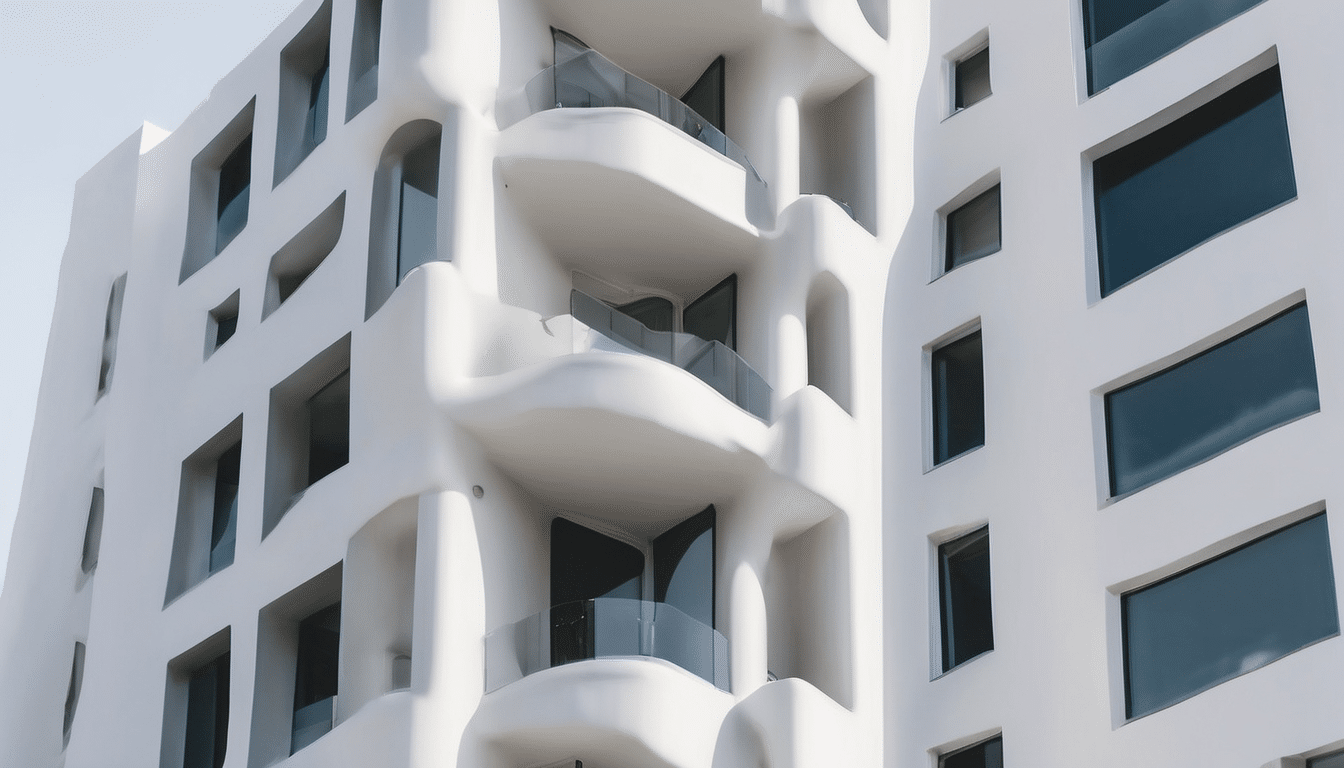
Understanding Exterior Wall Insulation Mold Dubai Buildings is essential. Exterior wall insulation mold in Dubai buildings is one of the most consistently misdiagnosed problems in UAE residential and commercial properties. Residents notice dark patches near bathroom walls, a persistent musty odour, or peeling paint near the perimeter of a room — and the instinct is to clean the surface and move on. That approach almost never works, because the contamination is not on the wall. It is within it.
In buildings like Dubai Gate 1 in Jumeirah Lake Towers, Cluster Q in Discovery Gardens, or any high-rise apartment constructed in the 2000s to 2010s boom era, exterior wall insulation mold is a direct consequence of how the building envelope was designed, what materials were used, and how the internal HVAC system interacts with the outdoor climate. When those variables misalign — and in Dubai’s climate, they frequently do — mold becomes inevitable. This relates directly to Exterior Wall Insulation Mold Dubai Buildings.
This article identifies seven critical failure points that drive exterior wall insulation mold in Dubai buildings, explains the building science behind each one, and outlines what a science-based resolution actually requires.
Exterior Wall Insulation Mold Dubai Buildings – Why Exterior Walls Fail in Dubai’s Climate
Dubai’s outdoor environment is thermally extreme. Summer temperatures regularly exceed 45°C with relative humidity frequently surpassing 80% during the coastal months. The interior of an air-conditioned apartment, by contrast, is typically maintained at 20°C to 23°C. That temperature differential — sometimes exceeding 25°C across a wall assembly — creates an intense hygrothermal gradient.
Warm, moisture-laden outdoor air is continuously driven towards the cooler interior. When the wall assembly cannot manage this moisture migration effectively, condensation forms within the insulation layer or at the wall surface. Condensation feeds mould. Exterior wall insulation mold in Dubai buildings is, in most cases, a predictable physics outcome — not a maintenance failure or a cleaning problem. When considering Exterior Wall Insulation Mold Dubai Buildings, this becomes clear.
Understanding this is the foundation of any credible solution.
Exterior Wall Insulation Mold Dubai Buildings – Fix 1 — Thermal Bridging Through Structural Elements
Thermal bridging occurs when a thermally conductive material — typically steel or concrete — penetrates the insulation layer and creates a direct pathway for heat transfer. In Dubai high-rises, reinforced concrete columns, floor slabs, and structural beams routinely extend to the outer face of the building. These elements bypass the insulation entirely. The importance of Exterior Wall Insulation Mold Dubai Buildings is evident here.
The result is localised cold spots on interior wall surfaces. In a heavily air-conditioned bathroom or bedroom, these cold spots regularly fall below the dew point temperature of the indoor air. Condensation forms, the wall stays persistently damp, and mold colonises the area.
Exterior wall insulation mold in Dubai buildings is disproportionately concentrated at column junctions and slab edges for precisely this reason. A thermal imaging survey will reveal these bridging points clearly, even when they are invisible to the naked eye. Understanding Exterior Wall Insulation Mold Dubai Buildings helps with this aspect.
Correction Approach
Thermal bridge correction requires either internal insulation applied across the bridge zone, aerogel insulation strips at structural junctions, or an external insulation composite system (EICS) applied to the façade. The right approach depends on the building’s construction method and ownership structure.
Fix 2 — Insulation Positioned on the Wrong Side of the Wall
In hot-humid climates like Dubai, insulation must be positioned correctly relative to the moisture drive direction. Outdoor moisture is driven inward. This means insulation should ideally be placed on the exterior face of the wall assembly, with the vapour control layer positioned towards the warm, humid side — which in Dubai means the outside. Exterior Wall Insulation Mold Dubai Buildings factors into this consideration.
Many buildings constructed during the rapid development era placed insulation internally, behind the dry lining. This positions the cold surface of the insulation layer within the wall cavity, exactly where warm outdoor moisture migrates to. Condensation within the insulation layer is the direct consequence.
Exterior wall insulation mold in Dubai buildings with internally positioned insulation is a structural design problem. No amount of surface treatment will resolve it without addressing the wall assembly configuration. This relates directly to Exterior Wall Insulation Mold Dubai Buildings.
Fix 3 — Missing or Incorrectly Installed Vapour Barriers
A vapour barrier’s role is to restrict moisture migration through the wall assembly. In Dubai’s climate, this barrier must be placed on the exterior-facing side of the insulation — or immediately behind the exterior cladding system — to prevent humid outdoor air from reaching the cooler insulation surface.
In many UAE residential buildings, vapour barriers are either absent, incorrectly positioned, or have degraded over time due to construction movement and building settlement. Once the vapour barrier fails, the insulation becomes a moisture reservoir. Mineral wool, expanded polystyrene, and polyurethane foam all support mold growth when persistently damp. When considering Exterior Wall Insulation Mold Dubai Buildings, this becomes clear.
Exterior wall insulation mold in Dubai buildings with failed vapour control is one of the more complex remediation scenarios, because the problem requires opening the wall assembly to correct. Laboratory analysis of sampled materials will typically confirm fungal contamination within the insulation itself.
Fix 4 — HVAC Overcooling Creating Wall Surface Condensation
This is one of the most common contributors to exterior wall insulation mold in Dubai buildings, and one of the most overlooked. When central air conditioning or split units are set to very low temperatures — commonly 18°C to 20°C in UAE apartments — the interior wall surfaces can drop below the dew point of the ambient indoor air. The importance of Exterior Wall Insulation Mold Dubai Buildings is evident here.
In bathrooms, which generate additional humidity from showers and hand washing, this effect is amplified. The exterior-facing bathroom wall becomes a condensation surface, particularly overnight when the HVAC runs continuously at low set points. Moisture accumulates. Mold follows.
The fix here is not mold removal. It is HVAC recalibration. Raising thermostat set points to 23°C to 24°C, ensuring adequate return air circulation, and correcting supply diffuser placement relative to exterior walls are all part of the intervention. Exterior wall insulation mold in Dubai buildings connected to HVAC overcooling will recur unless the thermal conditions are corrected. Understanding Exterior Wall Insulation Mold Dubai Buildings helps with this aspect.
Fix 5 — Inadequate Bathroom Ventilation Driving Moisture Into Walls
Dubai Gate 1 in JLT and many similar high-rise residential towers use a central exhaust ventilation system for bathrooms. These systems are managed at the building level, and individual apartment owners have limited control over their performance. When the central exhaust system is under-performing — due to duct blockage, fan degradation, or insufficient negative pressure — bathroom moisture is not extracted.
Instead, moisture migrates through the path of least resistance: into the wall assembly. Exterior-facing bathroom walls absorb this moisture over years of accumulated exposure. The tile substrate, adhesive layer, and backing plasterboard all become progressively wetter. Exterior wall insulation mold in Dubai buildings located in bathrooms is frequently the direct result of failed central exhaust ventilation. Exterior Wall Insulation Mold Dubai Buildings factors into this consideration.
Verification requires measuring exhaust airflow at the bathroom grille. Acceptable performance is typically 15 to 25 litres per second for a standard residential bathroom. Values significantly below this indicate ventilation failure.
Interim Mitigation
Where central exhaust remediation is not immediately available, supplementary exhaust fans installed at the ceiling level can provide meaningful short-term relief. However, they do not substitute for correcting the building-level ventilation deficiency. This relates directly to Exterior Wall Insulation Mold Dubai Buildings.
Fix 6 — Façade Water Ingress and Sealant Failure
Dubai’s exterior building envelopes are exposed to intense UV radiation, thermal cycling, and periodic wind-driven rain events. Sealant joints around windows, curtain wall panels, and façade cladding systems degrade over time. Once sealant integrity fails, liquid water can enter the wall assembly directly.
Liquid water ingress is far more damaging than condensation-driven moisture, because it saturates materials rapidly and penetrates deeply. Exterior wall insulation mold in Dubai buildings with active water ingress will typically show staining, bubbling paint, and efflorescence in addition to mold growth. The contamination zone is often larger than visually apparent. When considering Exterior Wall Insulation Mold Dubai Buildings, this becomes clear.
Façade inspection using borescope cameras, moisture meters, and thermal imaging is necessary to confirm the ingress pathway. Sealant replacement alone is insufficient if insulation or structural elements have already been wetted.
Fix 7 — Unconfirmed Hidden Mold Behind Tiles and Plasterboard
Surface mold on bathroom wall tiles or grout is visible and measurable. What is not visible is what exists behind the tiles, within the adhesive layer, and on the plasterboard or blockwork substrate. In exterior wall assemblies, these concealed surfaces are often significantly more contaminated than the visible surface suggests. The importance of Exterior Wall Insulation Mold Dubai Buildings is evident here.
Exterior wall insulation mold in Dubai buildings is frequently underestimated in scope because the investigation stops at the surface. A forensic investigation uses borescope access points to inspect concealed cavities, combined with air sampling and surface sampling sent to a microbiology laboratory. This confirms whether remediation is required and defines the actual extent of affected material.
Remediation without laboratory-confirmed scope definition risks either over-demolition or, more commonly, incomplete removal — leaving viable mold colonies behind finished surfaces that will re-emerge within months. Understanding Exterior Wall Insulation Mold Dubai Buildings helps with this aspect.
How to Properly Diagnose Exterior Wall Insulation Mold Dubai Buildings
A credible investigation of exterior wall insulation mold in Dubai buildings requires a combination of diagnostic tools working together. No single instrument provides the complete picture.
- Thermal imaging camera: Identifies cold spots, thermal bridges, and moisture-affected zones within the wall assembly without destructive access.
- Pin and pinless moisture meters: Quantifies moisture content in wall materials at multiple depths.
- Borescope inspection: Provides visual access to concealed cavities through small access points, minimising damage.
- Air sampling (spore traps): Measures airborne fungal spore concentrations inside the affected room and within cavities.
- Surface sampling (tape lift or swab): Confirms species identity for laboratory analysis.
- Exhaust ventilation flow measurement: Verifies bathroom exhaust performance against design specification.
- HVAC assessment: Reviews thermostat settings, supply diffuser positions, and relative humidity levels in affected spaces.
Exterior wall insulation mold in Dubai buildings investigated with this multi-tool protocol produces findings that are defensible, accurate, and sufficient to define a remediation scope that will actually succeed. Exterior Wall Insulation Mold Dubai Buildings factors into this consideration.
Professional investigation costs for a typical one-bedroom or two-bedroom apartment in Dubai typically range from AED 800 to AED 2,500 depending on the scope and number of diagnostic tools deployed. This investment prevents far more costly remediation failures later.
Expert Tips for Residents and Property Managers
Based on field investigations across Dubai Gate 1, Discovery Gardens, JLT, and similar residential clusters, these are the most consistent practical recommendations:
- Do not set your AC below 22°C in rooms with exterior-facing walls. The energy saving is negligible compared to the condensation risk created at lower set points.
- Run bathroom exhaust fans for at least 30 minutes after every shower, even if the central exhaust appears functional.
- Report sealant failures around windows immediately to building management. Early sealant repair costs a fraction of what remediation costs after water ingress has occurred.
- Do not paint over mold on exterior-facing walls. Anti-mold paint does not address the moisture source. It temporarily covers contamination while conditions continue to worsen.
- Request an exhaust ventilation performance report from your building management. You have a right to know whether the system meets design specification.
- If mold returns within six months of professional cleaning, the root cause has not been addressed. A building science investigation is required.
- Invest in a calibrated digital hygrometer. Maintaining indoor relative humidity below 60% is the single most effective preventive measure available to residents. Units cost approximately AED 50 to AED 150 and provide continuous monitoring.
Conclusion
Exterior wall insulation mold in Dubai buildings is not a cosmetic problem. It is a building science problem with biological consequences. The seven critical failure points outlined in this article — thermal bridging, insulation positioning, vapour barrier failure, HVAC overcooling, ventilation deficiency, façade water ingress, and unconfirmed hidden mold — are all measurable, diagnosable, and correctable. But they require systematic investigation, not surface treatment.
For residents of buildings like Dubai Gate 1 in Cluster Q or comparable high-rise apartments across JLT, Discovery Gardens, or any UAE urban cluster, exterior wall insulation mold is a shared building envelope problem. Individual apartment remediation will achieve limited and short-lived results unless the building-level contributing factors are simultaneously addressed.
Exterior wall insulation mold in Dubai buildings demands the same rigour applied to any engineering failure: identify the mechanism, confirm the extent, correct the root cause, and verify the outcome through post-remediation testing. Anything less is not remediation — it is temporary concealment.
If you are experiencing persistent mold on exterior-facing walls in a Dubai apartment or commercial property, a science-based investigation is the appropriate first step. Measurement and evidence should drive every decision that follows. Understanding Exterior Wall Insulation Mold Dubai Buildings is key to success in this area.