
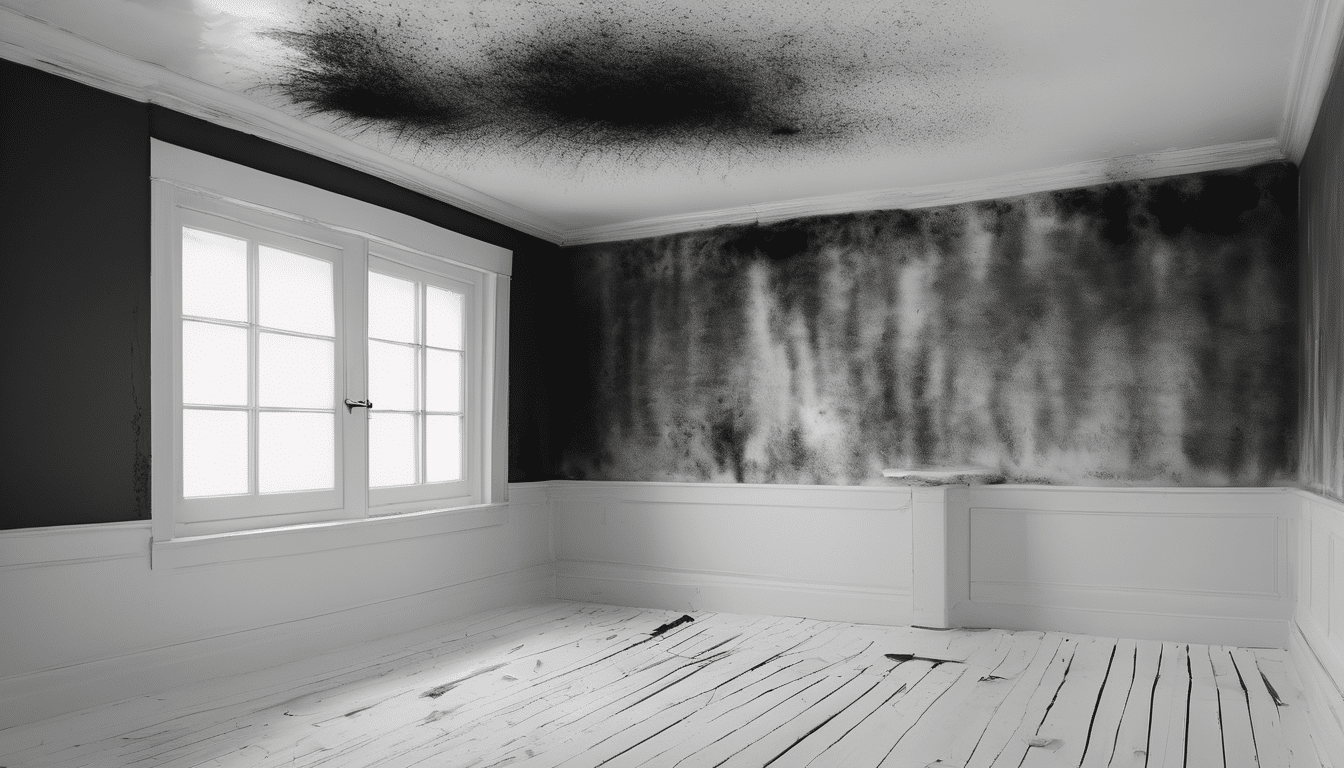
Understanding Black Mold Remediation Steps: What Happens During Removal is essential. Black Mold Remediation steps are not a single action — they are a structured, sequential process that begins long before any surface is touched and ends only after laboratory-confirmed clearance. In Dubai’s climate, where indoor humidity routinely drives condensation inside sealed, air-conditioned buildings, black mold removal is more complex than it appears from the outside. Understanding what happens during removal helps you evaluate service providers, ask the right questions, and avoid paying for incomplete work.
As an IAC2 Certified Indoor Air Consultant with over 20 years of field investigations across UAE properties, the most common failure Saniservice encounters is remediation that addresses visible mould without resolving the moisture conditions that caused it. This guide is designed to close that knowledge gap. Whether you are dealing with mould on a bathroom ceiling in a Dubai apartment or hidden contamination behind tiles in an Ajman villa, knowing the correct sequence of events is your most important consumer protection tool. This relates directly to Black Mold Remediation Steps: What Happens During Removal.
The black mold remediation steps outlined here follow internationally recognised standards, adapted for UAE building conditions — sealed envelopes, centralised HVAC, high ambient humidity, and construction materials common to the region. Use this as a practical buyer’s guide before you commit to any service.
Black Mold Remediation Steps: What Happens During Removal – What Black Mold Remediation Steps Actually Mean
The phrase “black mold removal” is used loosely in the UAE market, often to describe anything from wiping a surface with bleach to full containment-based remediation. The black mold remediation steps that meet professional standards are considerably more involved. They are designed to protect occupants during removal, eliminate contamination at the source, and verify the result scientifically.
Black mold — most commonly Stachybotrys chartarum or darker species of Cladosporium and Aspergillus — is not simply a cosmetic problem. It produces spores and, in some cases, mycotoxins that remain biologically active long after visual removal. This is why each stage of the black mold remediation steps matters, not just the cleaning phase. When considering Black Mold Remediation Steps: What Happens During Removal, this becomes clear.
Black Mold Remediation Steps: What Happens During Removal – Step 1: Inspection and Assessment — The Foundation of Remo
Every legitimate black mold remediation process begins with a thorough inspection. This is not a quick visual scan. A proper assessment uses thermal imaging to detect moisture trapped behind walls and ceilings, borescope cameras to examine cavities without unnecessary demolition, and moisture metres to map the extent of water-damaged materials.
In UAE properties — particularly Dubai apartments and Sharjah villas built with gypsum board interiors — moisture frequently accumulates inside wall cavities due to vapour drive reversals caused by air conditioning. Black mold grows in these hidden zones long before it becomes visible. An inspection that does not include thermal imaging and cavity sampling is incomplete. The importance of Black Mold Remediation Steps: What Happens During Removal is evident here.
From field investigations, Saniservice consistently finds that the visible mould area represents roughly 30–40% of the actual contaminated zone in UAE residential properties. The remaining contamination is hidden. Assessment must account for both.
Black Mold Remediation Steps: What Happens During Removal – Step 2: Testing and Sampling Before Remediation Begins
Before removal begins, baseline sampling establishes the type and concentration of mould present. This serves two purposes: it confirms the species involved, which informs the remediation approach, and it creates a pre-remediation benchmark against which post-clearance results can be compared. Understanding Black Mold Remediation Steps: What Happens During Removal helps with this aspect.
Black mold remediation steps carried out without pre-testing are scientifically unverifiable. You cannot prove success if you never measured the starting condition.
Air Sampling Versus Surface Sampling
Air sampling using spore trap cassettes captures airborne spore counts and species distribution across affected rooms. Surface sampling — either tape lift or swab — identifies what is growing directly on materials. Both methods provide different data and are often used together in complex cases. Black Mold Remediation Steps: What Happens During Removal factors into this consideration.
Laboratory analysis of these samples, ideally conducted in an in-house microbiology facility, determines whether the mould species present require standard or enhanced remediation protocols. Species such as Stachybotrys or toxigenic Aspergillus strains require more controlled conditions and stricter containment.
Step 3: Containment Setup — Protecting the Rest of Your Property
Containment is one of the most critical — and most frequently omitted — black mold remediation steps in the UAE market. Without it, the act of disturbing mould colonies releases millions of spores into the air, spreading contamination to previously clean areas of the property. This relates directly to Black Mold Remediation Steps: What Happens During Removal.
Professional containment involves sealing the affected area with polyethylene sheeting, taping off HVAC supply and return vents to prevent spore distribution through the duct system, and establishing a controlled entry and exit protocol for remediation workers. In occupied buildings — which most Dubai apartments and Abu Dhabi villas are — containment is not optional.
When Full Containment Is Required
Full containment is required whenever the contaminated area exceeds approximately 0.84 square metres, when the species identified include Stachybotrys, or when occupants — particularly children, elderly individuals, or those with respiratory conditions — remain in the property during work. Partial containment is sometimes appropriate for small, isolated surface mould in well-ventilated areas. When considering Black Mold Remediation Steps: What Happens During Removal, this becomes clear.
Step 4: HEPA Filtration and Negative Pressure During Removal
Alongside containment, the correct black mold remediation steps require HEPA air filtration units operating at negative pressure inside the contained zone. Negative pressure means air flows into the contaminated area rather than out of it, preventing spore migration into clean spaces.
HEPA filters capture particles as small as 0.3 microns at 99.97% efficiency. Mould spores range from 2 to 100 microns, making HEPA filtration highly effective when correctly deployed. Companies that clean mould without HEPA-filtered air scrubbers are not following professional remediation standards. The importance of Black Mold Remediation Steps: What Happens During Removal is evident here.
In Dubai’s climate — where ambient air temperatures regularly reach 45°C outdoors — indoor air-conditioning systems can inadvertently circulate spores if vents are not sealed during removal. This is a specific risk factor for UAE properties that is frequently underestimated.
Step 5: Physical Removal and Surface Treatment
This is the stage most people picture when they think of mould removal, but it is the middle of the black mold remediation steps — not the beginning or the end. Physical removal involves mechanically removing contaminated materials that cannot be effectively cleaned, followed by treatment of remaining surfaces. Understanding Black Mold Remediation Steps: What Happens During Removal helps with this aspect.
What Gets Removed Versus What Gets Treated
Porous materials — gypsum board, ceiling tiles, MDF skirting, insulation — that are deeply contaminated must be physically removed and disposed of in sealed bags. Non-porous surfaces — tiles, glass, metal — can be cleaned using appropriate antimicrobial agents and HEPA-vacuumed.
A common mistake in UAE remediation projects is applying paint or sealant over mould on gypsum board rather than removing and replacing the affected section. This approach fails within weeks to months because the biological material beneath the coating remains active under UAE humidity conditions. Black Mold Remediation Steps: What Happens During Removal factors into this consideration.
Antimicrobial Treatment
Following mechanical removal, remaining structural surfaces — timber framing, concrete, grout — are treated with EPA-registered or equivalent antimicrobial agents. The agent selected should be appropriate for the substrate and the mould species identified in pre-testing. Bleach, despite its popularity, is not effective on porous surfaces and does not address mycotoxin contamination.
Step 6: Moisture Correction — The Step Most Companies Skip
This is the stage that determines whether the black mold remediation steps will produce lasting results or temporary ones. Mould cannot be permanently removed from a building that still provides the moisture conditions necessary for regrowth. In UAE properties, moisture sources are frequently structural or mechanical — not simply a matter of occupant behaviour. This relates directly to Black Mold Remediation Steps: What Happens During Removal.
Common moisture sources in Dubai and Sharjah bathrooms include inadequate ventilation fan capacity, cold-water pipe condensation inside wall cavities, failed waterproofing at wet zone junctions, and HVAC systems running at excessively cold temperatures that cause surface condensation on walls and ceilings.
Based on Saniservice field data, approximately 70% of recurring mould cases in UAE residential properties involve an unresolved mechanical or building envelope moisture source. Correcting these conditions before reconstruction is essential. Remediation without moisture correction is a temporary treatment. When considering Black Mold Remediation Steps: What Happens During Removal, this becomes clear.
Step 7: Post-Remediation Verification and Clearance Testing
The final — and scientifically most important — stage of the black mold remediation steps is independent clearance testing. After removal, containment is still in place, and post-remediation air and surface samples are collected and sent to a laboratory for analysis.
Clearance criteria require that post-remediation spore counts are comparable to or lower than outdoor baseline counts, and that no elevated levels of the target species remain. A mould clearance certificate should be issued only after laboratory results confirm these conditions are met. The importance of Black Mold Remediation Steps: What Happens During Removal is evident here.
In the UAE, very few remediation companies conduct genuine post-remediation verification. Many issue completion certificates based on visual inspection alone, which is not a scientifically valid clearance standard. When evaluating providers, ask specifically whether clearance testing is included and whether it is conducted by an independent laboratory.
What to Look for in a Black Mold Remediation Provider in the UAE
Selecting a provider to carry out black mold remediation steps in your Dubai apartment or Abu Dhabi villa requires more than comparing prices. The following features distinguish professional remediation from cosmetic cleaning. Understanding Black Mold Remediation Steps: What Happens During Removal helps with this aspect.
- Certified professionals: Look for IAC2 certification or equivalent indoor environmental credentials. General cleaning company certifications do not qualify.
- Pre-remediation testing: Any credible provider will test before removal begins. If testing is not offered, the scope of work cannot be properly defined.
- Written remediation protocol: A detailed scope of work outlining containment design, removal methods, and post-clearance criteria should be provided in writing before work begins.
- HEPA equipment: Confirm that HEPA-filtered air scrubbers and negative pressure equipment will be used.
- Post-remediation clearance: Laboratory-confirmed clearance should be included or offered as a documented add-on. Visual inspection alone is not acceptable.
- Moisture root-cause identification: The provider should identify and advise on the moisture source — not just remove the visible mould.
Common Mistakes UAE Homeowners Make When Hiring for Removal
The most expensive mistake is selecting a provider based on the lowest quote without understanding what the quote includes. Black mold remediation steps performed incompletely cost less upfront but frequently result in repeat contamination within three to six months — and a second round of spending.
- Accepting visual inspection as the sole basis for scope definition
- Not asking whether containment and negative pressure will be used
- Allowing remediation to proceed without pre-testing in cases of significant contamination
- Treating mould removal as a painting or cleaning job rather than a building science intervention
- Neglecting to address the HVAC system when mould is found in bathrooms or near vents
- Accepting a completion certificate that is not backed by laboratory clearance data
Pricing Expectations for Black Mold Remediation in Dubai and the UAE
Professional black mold remediation steps in the UAE vary in cost depending on the scale of contamination, the materials involved, and whether laboratory testing is included. The following ranges reflect typical market pricing for residential properties in Dubai, Abu Dhabi, and Sharjah as of 2025/2026. Black Mold Remediation Steps: What Happens During Removal factors into this consideration.
- Small bathroom mould remediation (under 2 sq m): AED 800 – AED 1,800
- Medium bathroom with hidden wall contamination (2–6 sq m): AED 2,000 – AED 4,500
- Multi-room or whole-apartment remediation: AED 5,000 – AED 15,000+
- Pre-remediation air and surface testing: AED 600 – AED 1,500 depending on sample count
- Post-remediation laboratory clearance testing: AED 500 – AED 1,200
Be cautious of quotes significantly below these ranges. Legitimate black mold remediation steps — with containment, HEPA filtration, proper removal, and clearance testing — have a genuine cost floor. Providers quoting AED 200–300 for bathroom mould removal are almost certainly offering surface-only cleaning, not remediation.
Frequently Asked Questions
How long do black mold remediation steps take in a Dubai apartment bathroom?
A standard bathroom mould remediation in a Dubai apartment typically takes one to three days, depending on the extent of contamination. Day one usually covers inspection, containment setup, and removal. Day two covers treatment and drying. Post-remediation clearance testing adds one to three business days for laboratory turnaround. Larger or hidden contamination cases may take longer. This relates directly to Black Mold Remediation Steps: What Happens During Removal.
Do I need to leave my Dubai home during black mold removal?
For small, contained remediation areas, temporary relocation from the affected room is usually sufficient. For larger projects — particularly those involving Stachybotrys or multi-room contamination — vacating the property during active removal is strongly recommended, especially for children, elderly occupants, or individuals with respiratory conditions. A professional assessment will clarify this based on your specific situation.
What is the difference between mold cleaning and black mold remediation?
Mold cleaning typically refers to surface wiping or applying biocidal products to visible mould — it does not address hidden growth, containment, or root-cause correction. Black mold remediation steps include assessment, testing, containment, HEPA filtration, physical removal, moisture correction, and laboratory-confirmed clearance. The two approaches produce significantly different outcomes over time. When considering Black Mold Remediation Steps: What Happens During Removal, this becomes clear.
Why does black mold keep coming back in UAE bathrooms after removal?
Recurrence is almost always caused by an unresolved moisture source. In UAE bathrooms, common causes include inadequate ventilation, cold-water pipe condensation inside wall cavities, failed waterproofing at tile junctions, and HVAC systems generating excess condensation. If the moisture condition is not corrected as part of the black mold remediation steps, regrowth within three to six months is predictable.
Is post-remediation testing required in the UAE?
There is currently no UAE-wide regulatory requirement mandating post-remediation clearance testing for residential properties. However, from a scientific and consumer-protection standpoint, laboratory-confirmed clearance is the only way to verify that the black mold remediation steps were effective. Saniservice recommends clearance testing as a standard component of every remediation project, regardless of scale. The importance of Black Mold Remediation Steps: What Happens During Removal is evident here.
Can I stay in a hotel and claim mold remediation costs from my Dubai landlord?
Tenancy disputes related to mould in Dubai fall under RERA and the Dubai Rental Dispute Centre framework. If a landlord fails to address a confirmed mould problem that renders a property uninhabitable, tenants may have grounds for a claim. However, the mould condition typically must be documented — ideally through an independent professional inspection report and laboratory data — to support any formal dispute. Legal advice specific to your situation should be sought separately.
How do I know if black mold in my Sharjah or Abu Dhabi home is dangerous?
Visual identification alone cannot confirm whether mould is producing mycotoxins or poses a specific health risk. Species identification through laboratory analysis is required. Certain species — particularly Stachybotrys chartarum growing on water-damaged cellulose materials — are associated with mycotoxin production under specific conditions. If occupants are experiencing persistent respiratory symptoms, headaches, or fatigue that resolve when they leave the property, this warrants professional investigation and targeted sampling rather than assumptions based on colour alone. Understanding Black Mold Remediation Steps: What Happens During Removal is key to success in this area.