
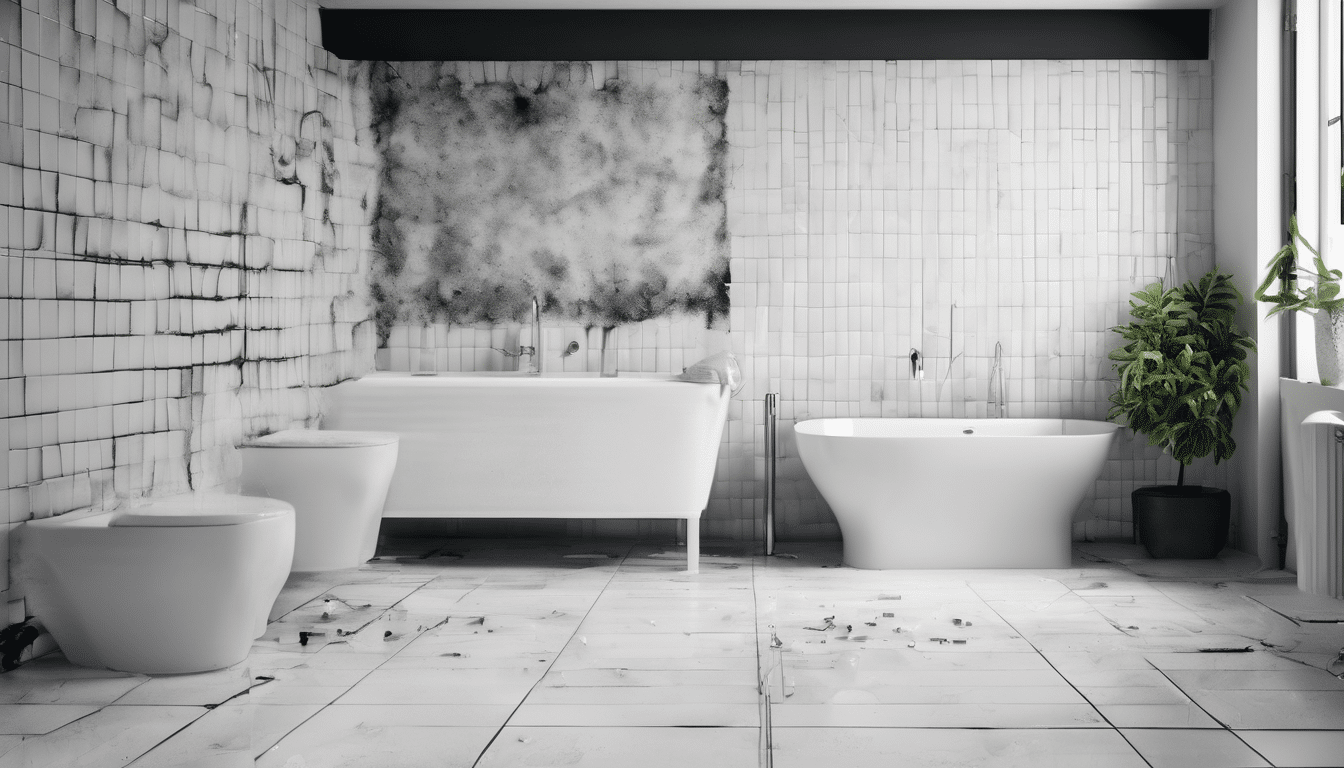
Understanding Black Mold Symptoms In Bathrooms: Health Risks Uae is essential. In the UAE, Black Mold Symptoms in bathrooms represent one of the most commonly misunderstood indoor health concerns. Bathrooms in Dubai apartments, Abu Dhabi villas, and Sharjah townhouses share a common set of conditions — sealed construction, recirculated air-conditioned environments, high ambient humidity, and frequent condensation — that create near-ideal conditions for Stachybotrys chartarum and related mould species to establish and persist. Understanding the health risks UAE residents face from bathroom mould requires more than recognising dark stains. It requires understanding the biology behind exposure and what it means for the people living in affected spaces.
As an IAC2 Certified Indoor Air Consultant with over 20 years of field investigation experience in the UAE, I have assessed hundreds of bathroom mould cases where occupants reported symptoms long before any visible growth was identified. In many instances, the mould was hidden — behind tiles, inside cavity walls, or within poorly ventilated ceiling voids. Black mold symptoms in bathrooms: health risks UAE professionals must communicate clearly, because delayed recognition leads to prolonged exposure and worsening outcomes.
This article is designed to help UAE homeowners, property managers, and building professionals understand the full picture — from the biology of black mould to the specific symptoms associated with bathroom exposure in the UAE climate.
Black Mold Symptoms In Bathrooms: Health Risks Uae – What Is Black Mould in Bathrooms
The term “black mould” is frequently applied to any dark-coloured fungal growth found in bathrooms. However, from a microbiological standpoint, black mould specifically refers to Stachybotrys chartarum — a toxigenic species that produces trichothecene mycotoxins under the right conditions. Other species such as Aspergillus niger, Cladosporium, and Alternaria can also appear black or dark green and carry their own health implications.
In bathroom environments, these organisms colonise surfaces with sustained moisture — grout lines, silicone seals, ceiling plaster, MDF cabinetry, and gypsum board partitions behind tiles. Laboratory analysis conducted at Saniservice’s in-house microbiology facility in Dubai consistently identifies Aspergillus and Penicillium species as the most prevalent bathroom isolates in UAE residential properties. Stachybotrys, while less common, is confirmed in cases involving prolonged water intrusion or leaking pipes within walls. This relates directly to Black Mold Symptoms In Bathrooms: Health Risks Uae.
Why UAE Bathrooms Are High Risk
Dubai’s climate imposes specific challenges on bathroom environments. Outdoor temperatures regularly exceed 42°C in summer, whilst indoor air conditioning maintains temperatures between 20–24°C. This thermal differential drives condensation on cold surfaces — particularly bathroom walls, ceiling panels, and window surrounds. When relative humidity inside bathrooms rises above 70% — which occurs within minutes of showering in a poorly ventilated space — mould growth conditions are established rapidly.
Construction Factors Specific to UAE Buildings
Many UAE residential buildings constructed before 2015 used gypsum board partitions with minimal or no vapour barriers. These materials absorb moisture readily and sustain mould growth invisibly for months or years. Bathroom exhaust fans in UAE apartments frequently exhaust into ceiling voids rather than outdoors, creating pockets of humid, stagnant air where mould colonies establish without any visible surface indication. When considering Black Mold Symptoms In Bathrooms: Health Risks Uae, this becomes clear.
Based on field investigations conducted across Dubai, Sharjah, and Abu Dhabi, approximately 60–70% of bathrooms in villas built before 2012 show evidence of concealed mould growth when borescope inspection is performed behind tile installations. This figure rises significantly in ground-floor or podium-level bathrooms with direct ground contact.
Black Mold Symptoms in Bathrooms: Respiratory Health Risks UAE
The respiratory system is the primary exposure pathway for black mold symptoms in bathrooms. Health risks UAE residents face are compounded by the fact that UAE buildings are tightly sealed for air conditioning efficiency, meaning mould spores and mycotoxin particles recirculate rather than dispersing outdoors. This creates an accumulation effect that increases exposure dose over time. The importance of Black Mold Symptoms In Bathrooms: Health Risks Uae is evident here.
Common Respiratory Symptoms
- Persistent or worsening nasal congestion, particularly upon waking
- Chronic sinusitis that does not respond to standard antibiotic treatment
- Unexplained coughing or throat irritation, most pronounced at home
- Wheezing or shortness of breath during or after bathroom use
- Exacerbation of pre-existing asthma without identifiable trigger
A key diagnostic pattern seen across Saniservice investigations in Dubai is the location-dependent nature of these symptoms. Occupants report improved respiratory function during travel or work hours, with symptoms returning consistently upon re-entering the residence — particularly after bathroom use. This pattern strongly suggests indoor biological contamination as a contributing factor.
Black Mold Symptoms in Bathrooms: Systemic Health Risks UAE
Beyond respiratory symptoms, black mold symptoms in bathrooms can manifest systemically, particularly where mycotoxin-producing species are involved. Health risks UAE residents face from systemic exposure are often misattributed to stress, vitamin deficiency, or unrelated medical conditions — delaying both diagnosis and environmental investigation. Understanding Black Mold Symptoms In Bathrooms: Health Risks Uae helps with this aspect.
Neurological and Fatigue Symptoms
Mycotoxin exposure has been associated in peer-reviewed literature with cognitive effects including difficulty concentrating, memory disruption, and persistent fatigue. UAE residents reporting these symptoms alongside musty bathroom odours should consider indoor environmental assessment as part of a broader health investigation. These symptoms are not diagnostic of mould exposure on their own, but their co-occurrence with a mould-positive environment warrants careful evaluation.
Dermatological Responses
Skin irritation, unexplained rashes, or worsening eczema can occur in occupants with prolonged mould exposure. In bathroom environments, direct skin contact with mould-colonised surfaces — grout, bath mats, toilet cisterns — represents an additional exposure pathway beyond inhalation. Dermatological responses are more commonly associated with Aspergillus and Fusarium species than with Stachybotrys. Black Mold Symptoms In Bathrooms: Health Risks Uae factors into this consideration.
Black Mold Symptoms in Bathrooms: Health Risks UAE for Vulnerable Groups
Not all occupants respond equally to mould exposure. Black mold symptoms in bathrooms carry differentiated health risks for UAE residents depending on individual vulnerability. Understanding who faces elevated risk is essential for prioritising investigation and remediation timelines.
Children and Infants
Children in UAE households spend proportionally more time indoors than adults, given the extreme summer heat. Developing respiratory systems are significantly more sensitive to mould spore inhalation. Recurrent respiratory infections, persistent cough, or unexplained allergic symptoms in children sharing a bathroom with visible or suspected mould should be treated as a priority health signal. This relates directly to Black Mold Symptoms In Bathrooms: Health Risks Uae.
Elderly Residents and Immunocompromised Individuals
Elderly UAE residents and those undergoing immunosuppressive therapies face elevated risk of invasive fungal infection from opportunistic species including Aspergillus fumigatus. Aspergillosis — a serious pulmonary infection — can be life-threatening in immunocompromised individuals. Laboratory-confirmed Aspergillus presence in bathrooms used by high-risk individuals should be treated as a medical and environmental emergency requiring immediate professional intervention.
When There Is No Visible Growth: Hidden Mould Risk
One of the most significant diagnostic challenges in UAE bathroom mould cases is the absence of visible growth in the presence of active biological contamination. Hidden mould — colonising the substrate behind ceramic tiles, inside wall cavities, or above false ceilings — releases spores into bathroom air continuously without producing visible surface indicators. Occupants experiencing black mold symptoms in bathrooms with no apparent mould should not dismiss the environment as the source of their health risks. UAE properties with this presentation require borescope inspection, thermal imaging, and air sampling to determine contamination status. When considering Black Mold Symptoms In Bathrooms: Health Risks Uae, this becomes clear.
In Saniservice investigations across Dubai Marina, Jumeirah, and Arabian Ranches, a notable proportion of cases confirmed active hidden mould behind apparently clean bathroom tile installations. The substrate — typically gypsum board or sand-cement render — had been continuously wet from slow pipe leaks or failed waterproofing, often for years without the occupant’s knowledge.
The Role of Mycotoxins in Bathroom Exposure
Mycotoxins are secondary metabolites produced by certain mould species under conditions of resource competition or environmental stress. In bathroom environments, Stachybotrys chartarum and certain Aspergillus strains produce mycotoxins that can be detected on surfaces and in airborne dust. Unlike mould spores, mycotoxins are not biological particles — they are chemical compounds that adsorb onto particulate matter and remain active even after mould colonies are removed without proper remediation. The importance of Black Mold Symptoms In Bathrooms: Health Risks Uae is evident here.
This is a critical point: surface cleaning without addressing the contaminated substrate does not eliminate mycotoxin exposure. UAE homeowners who have bleached bathroom surfaces and reported persistent symptoms are likely still being exposed to mycotoxins within the building materials. Proper remediation requires removal and replacement of contaminated substrate, not surface treatment alone.
Black Mold Symptoms in Bathrooms: Health Risks UAE Residents Often Dismiss
Several black mold symptoms in bathrooms are routinely dismissed by UAE residents as unrelated to their home environment. Health risks UAE occupants most commonly underestimate include the following presentations. Understanding Black Mold Symptoms In Bathrooms: Health Risks Uae helps with this aspect.
- Persistent eye irritation or conjunctivitis — frequently attributed to screen time or air conditioning, but potentially linked to mould spore exposure
- Morning headaches — particularly in households where the bathroom is adjacent to the bedroom and shares a wall
- Unusual fatigue after showering — inhalation of aerosolised spores is highest during hot showers in poorly ventilated bathrooms
- Recurring ear infections — particularly in children, where Aspergillus species are implicated in otomycosis
- Household-wide illness patterns — when multiple family members share similar symptoms without a shared external exposure, the home environment warrants investigation
The symptom cluster most strongly associated with indoor mould exposure in clinical literature is: upper respiratory symptoms + fatigue + headache + symptom relief during time away from the property. This pattern, when present in UAE households, should prompt indoor air quality testing before any other environmental cause is ruled out.
When to Seek Professional Assessment in Dubai and UAE
Professional indoor environmental assessment is warranted when visible mould exceeds 0.1 square metres, when symptoms are persistent and location-dependent, or when water intrusion events have occurred in the past 12 months. In Dubai and across the UAE, professional mould investigation typically costs between AED 800 and AED 2,500 depending on property size and the complexity of testing required. This investment provides laboratory-confirmed data rather than visual assumptions — a necessary foundation for any medically or legally relevant decision. Black Mold Symptoms In Bathrooms: Health Risks Uae factors into this consideration.
Assessment should include air sampling using calibrated spore trap cassettes, surface sampling for species identification, thermal imaging to identify concealed moisture, and in cases of suspected hidden mould, borescope inspection through non-invasive access points. Results should be interpreted by a certified indoor environmental consultant — not a remediation contractor whose financial interest lies in identifying problems requiring paid treatment.
Black mold symptoms in bathrooms represent health risks UAE families should not manage through assumption. Laboratory-confirmed species identification, combined with a building science evaluation of moisture sources and airflow, is the only defensible basis for remediation decisions. This relates directly to Black Mold Symptoms In Bathrooms: Health Risks Uae.
Frequently Asked Questions
How quickly can black mould in a Dubai bathroom cause health symptoms?
Symptom onset varies by individual sensitivity and exposure level. In field investigations across Dubai, some occupants report symptoms within weeks of mould establishment following a water leak, whilst others in long-term mould-positive environments report gradual onset over months. Immunocompromised individuals and children typically show earlier and more pronounced responses. There is no universally safe exposure threshold established for mould spores.
What are the most common black mold symptoms in bathrooms for UAE residents?
Black mold symptoms in bathrooms most frequently reported by UAE residents include persistent nasal congestion, chronic sinusitis, unexplained coughing, eye irritation, morning headaches, and fatigue that improves when away from the property. These health risks UAE residents face are often misattributed to general allergies or air conditioning effects, delaying environmental investigation. When considering Black Mold Symptoms In Bathrooms: Health Risks Uae, this becomes clear.
Is black mould in a UAE bathroom dangerous if I can only see a small amount?
Visible surface area is not a reliable indicator of total contamination. In UAE bathrooms, small visible patches frequently represent surface-level evidence of far larger colonies behind tiles or within wall cavities. Additionally, even limited quantities of toxigenic species such as Stachybotrys chartarum or Aspergillus fumigatus carry disproportionate health risk for sensitive individuals. Professional testing is required to assess true contamination extent.
Can air conditioning spread black mould spores from a bathroom to other rooms in a UAE home?
Yes. In UAE homes with centralised HVAC systems, mould spores released in a contaminated bathroom can be drawn into return air pathways and redistributed throughout the property. This is a particularly significant concern in Dubai high-rise apartments where bathroom exhaust systems connect to shared vertical ducts. Cross-contamination via HVAC is a confirmed finding in multiple Saniservice case investigations. The importance of Black Mold Symptoms In Bathrooms: Health Risks Uae is evident here.
What makes UAE bathrooms more susceptible to black mould than bathrooms in other climates?
The combination of extreme outdoor heat (exceeding 45°C in summer), aggressive indoor air conditioning, and sealed building construction creates high condensation potential on bathroom surfaces. Relative humidity inside UAE bathrooms can reach 90–100% during showering, with slow drying rates due to limited natural ventilation. These conditions, sustained over time, create a near-continuous mould growth environment that bathrooms in naturally ventilated climates rarely experience.
How do I know if my health symptoms are caused by black mould in my bathroom?
No symptom cluster is exclusively diagnostic of mould exposure. However, the pattern most suggestive of indoor mould as a contributing factor is: respiratory or neurological symptoms that are present at home, worsen after time spent in the bathroom, and improve during time away from the property. This pattern, combined with a musty odour or visible mould, warrants professional air and surface sampling for laboratory confirmation. Understanding Black Mold Symptoms In Bathrooms: Health Risks Uae helps with this aspect.
What does professional black mould testing cost in Dubai?
Professional indoor environmental assessment in Dubai, including air sampling, surface sampling, and laboratory analysis, typically ranges from AED 800 to AED 2,500 for residential bathrooms and adjacent spaces. Larger properties or investigations requiring thermal imaging and borescope inspection may fall in the AED 2,500 to AED 5,000 range. This testing provides the laboratory-confirmed data necessary for accurate remediation scoping and occupant health decision-making. Understanding Black Mold Symptoms In Bathrooms: Health Risks Uae is key to success in this area.