
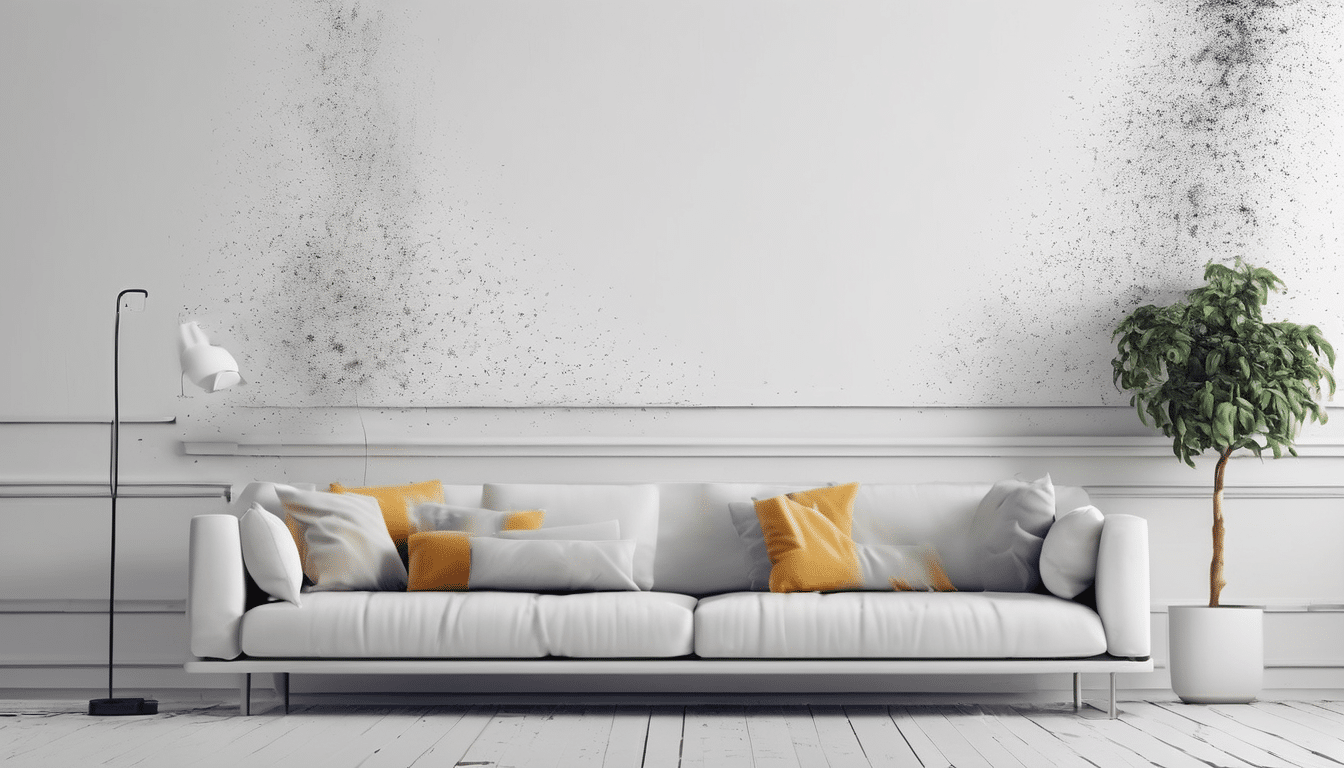
Understanding Hidden Mold Behind Walls: Detection Methods Uae is essential. Hidden mold behind walls is one of the most clinically significant and technically challenging scenarios in indoor environmental science. In Dubai’s climate — where buildings operate under continuous air-conditioning, high ambient humidity, and significant thermal gradients — mould can establish itself deep within building assemblies long before it becomes visible. This case study documents a real investigation carried out by Saniservice’s Indoor Sciences Division in a residential villa in the Jumeirah district of Dubai, where Hidden Mold Behind walls detection methods UAE-standard protocols were applied to resolve a case that had stumped two previous service providers.
The occupants — a family of four — had lived in the property for approximately three years. Over the preceding eight months, they had reported escalating symptoms: nasal congestion, skin irritation, and persistent fatigue, particularly in the master bedroom and the adjoining bathroom corridor. Two prior inspections had found nothing. The walls looked clean. The ceiling showed no staining. Yet the biology told a different story. This relates directly to Hidden Mold Behind Walls: Detection Methods Uae.
This article traces the full investigative process: the initial assessment, the diagnostic methods deployed, the laboratory findings, and the remediation approach that followed. It is intended to illustrate why hidden mold behind walls detection methods in UAE properties require a systematic, multi-instrument protocol — not a visual walkthrough. When considering Hidden Mold Behind Walls: Detection Methods Uae, this becomes clear.
Hidden Mold Behind Walls: Detection Methods Uae – The Challenge: Symptoms Without Visible Evidence
When the Saniservice team first visited the property, the villa appeared well-maintained. The interior finishes were intact. There were no watermarks, no discolouration, and no musty odour detectable at the door. This is a scenario that is far more common than most homeowners realise in Dubai residential properties. The importance of Hidden Mold Behind Walls: Detection Methods Uae is evident here.
The occupants had already spent approximately AED 4,500 on two prior inspections that relied primarily on visual assessment and surface swabs from visible areas. Both returned negative findings. The family had also repainted one bedroom wall after noticing a faint grey tinge — a decision that concealed rather than resolved the problem. Understanding Hidden Mold Behind Walls: Detection Methods Uae helps with this aspect.
As an IAC2 Certified Indoor Air Consultant, my first response to this presentation is always the same: the absence of visible mould is not evidence of its absence. In UAE buildings specifically, hidden mold behind walls is frequently the primary contamination zone — not the surface. Hidden Mold Behind Walls: Detection Methods Uae factors into this consideration.
Hidden Mold Behind Walls: Detection Methods Uae – Why Hidden Mold Forms in UAE Buildings
Understanding why hidden mold develops inside wall cavities is essential before discussing hidden mold behind walls detection methods UAE investigators apply. In Dubai’s climate, the fundamental driver is a persistent moisture gradient across the building envelope. This relates directly to Hidden Mold Behind Walls: Detection Methods Uae.
Outdoor air in Dubai regularly reaches 85–95% relative humidity during summer months, with temperatures exceeding 40°C. Interior spaces are cooled to approximately 22–24°C. This creates a steep thermal gradient across walls, particularly in structures with inadequate vapour barriers or compromised insulation. When considering Hidden Mold Behind Walls: Detection Methods Uae, this becomes clear.
When warm, humid outdoor air contacts a cool surface — inside a wall cavity, behind a tile, or within a gypsum partition — it condenses. Over time, this interstitial condensation saturates porous materials such as gypsum board, cement plaster, and mineral wool insulation. Mould spore germination requires only 72 hours of sustained moisture above 70% relative humidity on a nutrient-rich substrate. In Dubai wall assemblies, those conditions can persist for weeks or months without any surface indicator. The importance of Hidden Mold Behind Walls: Detection Methods Uae is evident here.
In this particular villa, the master bedroom shared an external wall facing west — directly exposed to afternoon solar radiation. The thermal load on that wall was substantial, and the internal air-conditioning maintained a significant temperature differential across the assembly throughout the year. Understanding Hidden Mold Behind Walls: Detection Methods Uae helps with this aspect.
Hidden Mold Behind Walls: Detection Methods Uae – Hidden Mold Behind Walls Detection Methods UAE Professionals
Hidden mold behind walls detection methods UAE investigations should draw from a minimum of three diagnostic disciplines: physical diagnostics, environmental sampling, and biological confirmation. Relying on any single method introduces a significant probability of false negatives — as demonstrated by the prior inspections in this case. Hidden Mold Behind Walls: Detection Methods Uae factors into this consideration.
Thermal Imaging
Infrared thermography identifies thermal anomalies across wall surfaces. Moisture retains heat differently than dry materials, producing a measurable temperature differential that an infrared camera can capture. This is a non-invasive first-line tool for mapping suspect zones. This relates directly to Hidden Mold Behind Walls: Detection Methods Uae.
Air Sampling and Spore Trap Analysis
Volumetric air sampling collects airborne particulate matter — including fungal spores — onto cassettes that are subsequently analysed under microscopy in a certified laboratory. Comparing indoor spore concentrations and species profiles against outdoor control samples reveals whether a building has an active hidden source. Saniservice operates the UAE’s only in-house microbiology laboratory within an indoor environmental services company, which significantly reduces turnaround time and interpretation errors. When considering Hidden Mold Behind Walls: Detection Methods Uae, this becomes clear.
Borescope Inspection
A borescope — a rigid or flexible camera on an insertion probe — allows direct visual access to wall cavities through a minimal-diameter penetration. This method transitions diagnostic suspicion into visual confirmation without requiring destructive demolition of large surface areas. The importance of Hidden Mold Behind Walls: Detection Methods Uae is evident here.
Moisture Mapping
Calibrated pin and pinless moisture meters measure moisture content within surface materials. Readings above 17% in gypsum board or 19% in timber-framed assemblies typically indicate a chronic moisture problem requiring further investigation. Understanding Hidden Mold Behind Walls: Detection Methods Uae helps with this aspect.
Thermal Imaging Findings in the Jumeirah Villa
Thermal imaging of the master bedroom’s west-facing external wall revealed a distinct cold zone measuring approximately 1.2 metres wide by 0.9 metres high, located at approximately 600 mm above floor level. The surface temperature differential in that zone was 3.4°C cooler than the surrounding wall surface — a finding consistent with moisture accumulation within the wall assembly. Hidden Mold Behind Walls: Detection Methods Uae factors into this consideration.
A secondary anomaly appeared along the base of the wall adjacent to the ensuite bathroom, suggesting a lateral moisture migration pathway from a plumbing penetration. This pattern — moisture radiating from a point source along a horizontal pathway — is characteristic of a slow leak behind the wall rather than surface condensation. This relates directly to Hidden Mold Behind Walls: Detection Methods Uae.
Moisture meter readings confirmed elevated moisture content of 23% in the gypsum board at the primary thermal anomaly zone. This reading, significantly above the threshold for mould risk, provided the scientific basis for proceeding to air sampling and borescope inspection. When considering Hidden Mold Behind Walls: Detection Methods Uae, this becomes clear.
Air Sampling and Laboratory Results
Volumetric air sampling was conducted at three interior locations — the master bedroom, the corridor, and the living area — alongside an outdoor control sample collected from the garden. All samples were processed in Saniservice’s in-house microbiology laboratory within 24 hours of collection. The importance of Hidden Mold Behind Walls: Detection Methods Uae is evident here.
The results were unambiguous. The master bedroom sample showed a total spore count of 4,850 spores per cubic metre, compared to an outdoor control reading of 310 spores per cubic metre. The dominant species identified were Cladosporium and Chaetomium — the latter being particularly significant. Chaetomium is a cellulose-degrading fungus commonly found in water-damaged gypsum board and is rarely detected outdoors in UAE ambient air. Its indoor presence, at concentrations more than 15 times the outdoor baseline, strongly indicated an active hidden mold source within the building envelope. Understanding Hidden Mold Behind Walls: Detection Methods Uae helps with this aspect.
The corridor sample showed a secondary elevation of Aspergillus/Penicillium-type spores, suggesting airborne dispersal from the primary contamination zone through the HVAC return air pathway. This finding guided the subsequent scope of investigation to include the air-handling unit serving the master bedroom zone. Hidden Mold Behind Walls: Detection Methods Uae factors into this consideration.
Borescope Inspection Confirms Hidden Mold Behind Walls
Based on the thermal imaging and air sampling data, a targeted borescope inspection was conducted through two 12 mm access penetrations in the west-facing wall — one at the primary thermal anomaly zone and one at the bathroom-adjacent base anomaly. Both penetrations were made in locations selected to preserve wall integrity and facilitate later repair.
The camera feed from the first penetration revealed extensive dark mould colonisation on the interior face of the external gypsum board, extending across an estimated 0.8 square metres of surface area. The insulation material behind the board showed visible discolouration and partial degradation — consistent with chronic moisture exposure over an extended period. A second camera insertion at the lower anomaly confirmed mould growth along the base plate timber, with visible white mycelial growth consistent with early-stage structural timber colonisation.
This is a textbook example of why hidden mold behind walls detection methods UAE investigators must combine instruments. Neither thermal imaging alone, nor air sampling alone, nor borescope alone would have provided sufficient confidence for remediation scoping. The convergence of three independent data streams confirmed both the presence and the extent of contamination.
Root Cause Analysis and Building Failure
Once the contamination was confirmed and mapped, the investigation shifted to root cause analysis — a step that is frequently omitted by remediation companies focused solely on removal rather than prevention. Hidden mold behind walls detection methods UAE protocols should always include a causal investigation, otherwise remediation is likely to fail within 12–18 months.
In this villa, two contributing failures were identified. First, a compression fitting on a concealed cold-water supply line to the ensuite basin had developed a slow leak over an estimated 18–24 month period. The leak rate was insufficient to cause surface staining but sufficient to maintain chronic saturation of the adjacent wall cavity materials.
Second, the external wall’s vapour barrier had been incorrectly installed during the original construction — placed on the cold side of the insulation rather than the warm side. This configuration accelerated interstitial condensation during cooling season, creating a secondary moisture source independent of the plumbing leak. Both conditions had to be corrected before any remediation work commenced.
Remediation Approach and Verified Outcomes
Remediation was conducted over four working days under full containment with negative air pressure and HEPA filtration to prevent cross-contamination to unaffected areas. The affected gypsum board panels, insulation, and base plate timber sections were removed and disposed of as controlled waste in accordance with UAE environmental handling requirements.
The plumbing fault was repaired by a licensed MEP contractor prior to reinstatement. The vapour barrier was correctly repositioned during reconstruction. Following a mandatory 72-hour drying period verified by moisture meter, the cavities were treated with an EPA-registered fungicidal encapsulant before new materials were installed.
Post-remediation air sampling, conducted 48 hours after work completion, returned a master bedroom spore count of 280 spores per cubic metre — within normal range relative to the outdoor control of 340 spores per cubic metre. The Chaetomium species was no longer detected. The family received a formal clearance report documenting all pre- and post-remediation data, which also served as the basis for a mold clearance certificate submission. The total remediation cost for this project was AED 12,800, inclusive of diagnostics, containment, removal, reconstruction, and post-remediation verification.
Key Takeaways for Dubai Homeowners
- Visual inspections are insufficient. In UAE buildings, the majority of significant mould contamination exists within wall assemblies, not on surfaces. Hidden mold behind walls detection methods UAE-standard require instrument-based diagnostics.
- Symptoms matter. Persistent respiratory or dermatological symptoms in occupants are a valid reason to investigate further, even when no visible mould is present.
- Multiple instruments are required. Thermal imaging, air sampling, and borescope inspection each provide different data. Their value compounds when used together.
- Root cause correction is non-negotiable. Mould removal without addressing the moisture source will result in recurrence, typically within one to two cooling seasons in Dubai properties.
- Post-remediation verification is essential. A clearance report based on laboratory-confirmed post-remediation air sampling is the only credible evidence that remediation has succeeded.
- Budget for the full process. In Dubai villas, a comprehensive hidden mold investigation and remediation can range from AED 8,000 to AED 25,000 depending on contamination extent, property size, and remediation complexity.
Frequently Asked Questions
How do I know if there is hidden mold behind the walls of my Dubai home?
Persistent unexplained symptoms — respiratory irritation, skin reactions, or fatigue — combined with a history of moisture events or a musty odour are key indicators. In Dubai properties specifically, hidden mold behind walls detection methods UAE investigators use include thermal imaging, air sampling, and borescope inspection. A visual inspection alone is rarely sufficient to confirm or rule out concealed contamination.
What detection methods are used for hidden mold behind walls in UAE properties?
Hidden mold behind walls detection methods UAE investigators apply typically include infrared thermal imaging to identify moisture anomalies, volumetric air sampling for laboratory spore analysis, moisture meter mapping, and borescope inspection to visually confirm contamination within wall cavities. Using all four methods together provides the most reliable and defensible findings.
How much does a hidden mold investigation cost in Dubai?
A comprehensive hidden mold investigation in a Dubai villa using thermal imaging, air sampling, and borescope inspection typically costs between AED 2,500 and AED 6,000, depending on property size and the number of suspect zones. This is a diagnostic investment that prevents incorrect remediation scoping and significantly reduces the risk of mould recurrence.
Can mold grow behind walls without any visible signs?
Yes. In UAE buildings, hidden mold behind walls frequently develops without any surface indicator for months or even years. The combination of air-conditioned interiors, high outdoor humidity, and thermal bridging through building envelopes creates conditions for interstitial condensation and mould growth entirely within wall cavities. This is precisely why hidden mold behind walls detection methods UAE protocols prioritise instrument-based diagnostics over visual assessment.
Is Chaetomium mold dangerous, and what does it indicate?
Chaetomium is a cellulose-degrading fungus consistently associated with water-damaged building materials. Its presence in elevated indoor air concentrations strongly suggests active hidden mold growth on gypsum board or similar materials within the building envelope. Some Chaetomium species produce mycotoxins. Its detection in UAE indoor environments warrants a thorough hidden mold behind walls investigation and prompt remediation.
How long does mold remediation take in a Dubai villa?
For a hidden mold remediation project of moderate scope — such as the Jumeirah villa described in this case study — the active remediation phase typically requires three to five working days. This includes containment setup, controlled removal of affected materials, surface treatment, and reconstruction. Post-remediation verification sampling should follow at least 48 hours after work completion before the clearance report is issued.
Does mold behind walls affect the whole house or just one area?
Hidden mold behind walls can remain localised or disperse throughout a property depending on airflow patterns, HVAC configuration, and contamination duration. In Dubai buildings with centralised air-conditioning, spores from a hidden source in one room are frequently detected in connected spaces through the return air network. Hidden mold behind walls detection methods UAE investigators always include air sampling in multiple rooms to map the full dispersal pattern.
Hidden mold behind walls is not an exceptional problem in UAE residential properties — it is a predictable consequence of the building physics and climatic conditions that define this region. What determines the outcome is whether the investigation is conducted with sufficient rigour to find it, map it, understand its cause, and verify that it has been properly resolved. Based on field investigations spanning more than a decade in Dubai and across the UAE, the cases that fail are almost always the ones where one of those steps was skipped. Understanding Hidden Mold Behind Walls: Detection Methods Uae is key to success in this area.