
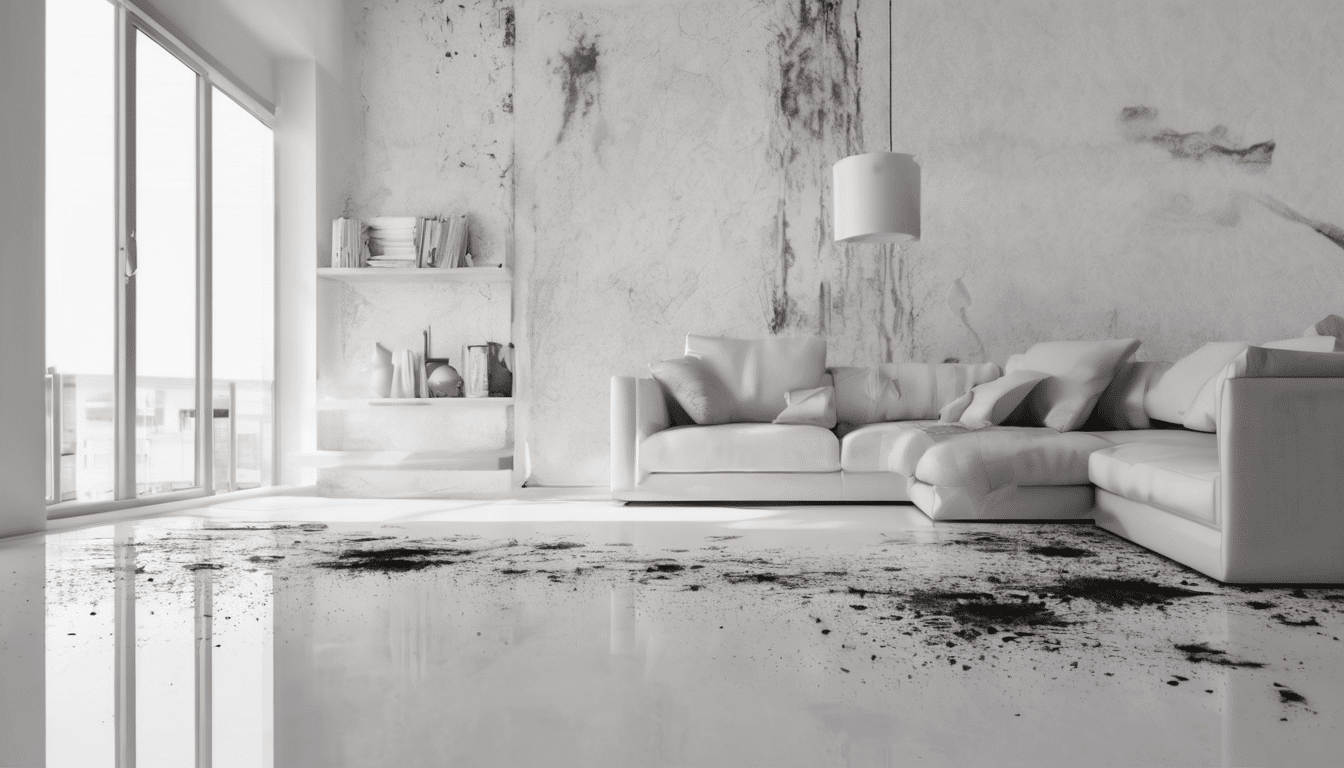
A professional mold inspection in Dubai begins long before anyone lifts a sample swab. In Dubai’s climate, where outdoor temperatures regularly exceed 45°C and indoor relative humidity can spike above 80% during the summer months, the conditions that drive mold growth are persistent and structural. Mold Inspection Dubai: What the Process Includes is not a single action — it is a sequenced, evidence-based investigation that maps moisture, identifies biological contamination, and traces root causes through the building envelope, HVAC system, and material assemblies. The result is not just a report. It is a diagnostic picture of your property’s indoor environmental condition.
Based on field investigations across Dubai villas, high-rise apartments, and commercial fit-outs, most mold problems are not random. They are predictable outcomes of building physics — condensation on cold surfaces, water intrusion through envelope failures, or chronically over-humidified interiors. Understanding what a thorough mold inspection actually includes helps property owners evaluate the quality of the service they receive and make confident decisions about remediation scope and timing. This relates directly to Mold Inspection Dubai: What The Process Includes.
Mold Inspection Dubai: What The Process Includes – Why Dubai Properties Need a Structured Mold Inspection
Dubai’s built environment creates specific conditions that make mold inspection both necessary and technically demanding. The combination of high ambient humidity outdoors, aggressive air conditioning indoors, and rapid construction timelines means that building envelope failures — gaps in vapour barriers, cold bridging, improperly sealed windows — translate almost immediately into condensation problems inside walls and ceilings.
According to field investigations conducted across Dubai Marina, Jumeirah, Arabian Ranches, and Downtown Dubai, properties built between 2005 and 2015 show a disproportionate rate of hidden mold growth behind gypsum board partitions. The issue is rarely visible from the interior surface. This is precisely why Mold Inspection Dubai: What the Process Includes must go beyond a visual sweep and into diagnostic instrumentation.
A structured inspection also protects property owners legally. Dubai Municipality guidelines and DHA clearance requirements for residential handover increasingly require documented, lab-verified assessments. A thorough mold inspection produces the evidence base needed to satisfy those requirements.
Mold Inspection Dubai: What The Process Includes – Stage One — Intake and Occupant History
Every credible mold inspection in Dubai begins with a structured intake conversation. As an IAC2 Certified Indoor Air Consultant, I treat this stage as diagnostic intelligence-gathering. Occupant symptom history — persistent coughing, eye irritation, fatigue that resolves when leaving the property — can be the first indicator of a biological contamination problem before any instrumentation confirms it.
The intake phase also captures building history: previous water leaks, recent renovations, flooding events, AC failures, and changes in occupancy patterns. In Dubai villas specifically, swimming pool proximity, planters against exterior walls, and shaded north-facing elevations frequently appear in the case histories of properties with recurring mold issues. When considering Mold Inspection Dubai: What The Process Includes, this becomes clear.
This information shapes the inspection protocol. It tells the inspector where to look first, which surfaces warrant sampling, and which building systems need closer scrutiny.
Mold Inspection Dubai: What The Process Includes – Understanding Mold Inspection Dubai — The Visual Assessmen
The visual assessment is systematic, not casual. A qualified inspector moves through the property following a documented checklist that covers every room, wet area, ceiling plane, skirting line, and window reveal. Mold Inspection Dubai: What the Process Includes at this stage is a trained eye reading the building for signatures of moisture stress — staining, efflorescence, paint bubbling, substrate warping, and discolouration patterns that reveal hygrothermal failure.
Thermal Imaging as a Visual Extension
Infrared thermal imaging extends the visual phase beyond what the eye can see. Cold surfaces within walls show as thermal anomalies on a calibrated camera. In Dubai properties, this technique consistently identifies condensation zones behind master bedroom walls, under bathroom floors, and around window frame junctions — locations where mold growth is confirmed by subsequent sampling even when the surface appears clean. The importance of Mold Inspection Dubai: What The Process Includes is evident here.
Thermal imaging is not a substitute for sampling. It is a hypothesis-generation tool that directs where physical investigation and sampling are most warranted.
Borescope Inspection for Concealed Cavities
Where thermal imaging suggests hidden moisture, a borescope camera — inserted through a small access point — allows direct visual confirmation of conditions inside wall cavities and above ceiling tiles. Borescope inspection has been decisive in numerous Dubai villa cases where surface conditions appeared normal but cavity inspection revealed extensive mold growth on timber noggings and the back face of plasterboard.
Moisture Mapping — The Technical Core of Mold Inspection Dubai
Moisture mapping is the most technically demanding phase of Mold Inspection Dubai: What the Process Includes. It uses calibrated moisture metres — both pin-type and non-invasive RF models — to quantify moisture content in building materials across every suspect surface. Readings are recorded spatially and mapped against the floor plan to create a moisture gradient picture of the property.
Materials are assessed against species-specific thresholds. Gypsum board above 1% moisture content by weight is considered at risk. Timber above 19% is in the active growth zone for wood-decay fungi. Readings above these thresholds, clustered in defined areas, indicate active moisture loading rather than historical dampness.
Humidity profiling at multiple heights within each room — floor level, mid-level, and ceiling — reveals stratification patterns. In Dubai apartments where HVAC systems are undersized or improperly balanced, humidity gradients within a single room can span 20 percentage points. That gradient determines where condensation forms and where mold follows.
Air Sampling and Surface Sampling — What Mold Inspection Dubai Includes
Air sampling and surface sampling are the biological measurement stages of Mold Inspection Dubai: What the Process Includes. They convert observations and moisture data into quantified evidence of contamination.
Spore Trap Air Sampling
Spore trap cassettes — using devices such as the Air-O-Cell — are deployed with calibrated pumps at a standard flow rate of 15 litres per minute over a timed sample period. Samples are collected in each suspect room and at an outdoor reference location. The outdoor control is critical: it establishes the background spore burden against which indoor counts are compared. An indoor spore count elevated significantly above the outdoor reference, particularly for non-climacladosporium genera, indicates an indoor amplification source.
Surface Sampling Methods
Surface sampling uses tape lifts, swabs, or bulk material samples depending on the surface type. Tape lifts are effective on smooth surfaces and confirm the species present. Swab sampling is used in HVAC ducts and textured materials. Bulk sampling of suspect material — a section of drywall, carpet, or acoustic tile — provides the most definitive identification of species and approximate surface density.
All samples from Saniservice inspections are processed through the company’s in-house microbiology laboratory — the only such facility operated by an indoor environmental services company in the UAE. On-site laboratory capacity means faster turnaround and direct consultation between the field inspector and the laboratory analyst. Understanding Mold Inspection Dubai: What The Process Includes helps with this aspect.
HVAC and Duct Assessment Within Mold Inspection Dubai
No mold inspection in Dubai is complete without a dedicated HVAC assessment. The air conditioning system is simultaneously the property’s primary moisture management tool and its primary mold distribution risk. In Dubai’s climate, fan coil units, split systems, and centralised ducted systems run almost continuously from April through October — typically seven to eight months per year.
The HVAC assessment within Mold Inspection Dubai: What the Process Includes covers drain pan condition and drain line flow, evaporator coil visual status, supply and return duct lining integrity, and supply grille contamination. Swab sampling of the evaporator coil and duct interior is performed when visual conditions suggest amplification. A contaminated HVAC system can distribute spores to every conditioned space in the property, which explains why mold problems in Dubai apartments frequently appear simultaneously in multiple rooms despite a single source.
Laboratory Analysis and Species Identification
Laboratory analysis transforms field samples into actionable data. Mold Inspection Dubai: What the Process Includes at the laboratory stage involves microscopic spore identification, colony counts where culture-based methods are used, and species-level identification wherever clinically or remedially significant genera are present.
Species identification matters because remediation decisions depend on it. Stachybotrys chartarum requires a different containment and material-removal protocol than elevated Cladosporium. Aspergillus species require mycotoxin-aware handling protocols in properties occupied by immunocompromised individuals. The question is not simply whether mold is present — it is what type, at what concentration, and what the lab results indicate about risk and remediation scope.
Industry standards reference Environmental Relative Mouldiness Index (ERMI) methodology and ACGIH guidelines for interpreting airborne fungal data. Saniservice’s laboratory applies these interpretive frameworks to every case, producing findings that are meaningful rather than merely numerical.
The Inspection Report — What Mold Inspection Dubai Delivers
The deliverable of Mold Inspection Dubai: What the Process Includes is a structured written report — not a verbal summary, not a photograph folder. A comprehensive inspection report includes annotated floor plans showing moisture readings, thermal imaging captures with interpretation, sample locations, laboratory results with interpretation commentary, root-cause analysis, and a prioritised remediation scope of work.
This document serves multiple purposes. It is the basis for remediation planning, the reference document for contractor scope development, and — where DHA mold clearance certificates are required — the submission document for regulatory review. A well-constructed inspection report also protects property owners from over-scope remediation proposals that go beyond what the evidence supports.
Post-Remediation Verification — The Final Step in the Process
Mold Inspection Dubai: What the Process Includes does not end when remediation work is completed. Post-remediation verification (PRV) is the confirmatory stage that validates whether the remediation achieved its intended outcome. Without PRV, there is no scientific basis for declaring a property clear.
PRV repeats air sampling and targeted surface sampling after remediation is complete and the containment is removed. Clearance criteria require that indoor spore counts have returned to or below outdoor reference levels, and that no viable mold growth remains on previously affected surfaces. Only lab-verified PRV results should be the basis for a DHA mold clearance certificate or a property handover declaration. Mold Inspection Dubai: What The Process Includes factors into this consideration.
Expert Takeaways for Dubai Property Owners
- Demand documentation at every stage. A credible mold inspection in Dubai produces a written report with annotated floor plans, moisture readings, and laboratory results — not just a verbal assessment.
- Outdoor reference samples are non-negotiable. Any air sampling protocol without an outdoor control cannot be meaningfully interpreted.
- Moisture mapping precedes sampling. Sampling without moisture data misses the root cause and risks incomplete remediation scope.
- HVAC must be included. An inspection that does not evaluate the air conditioning system is structurally incomplete for Dubai’s climate conditions.
- Species identification changes the protocol. Knowing which mold genera are present determines how remediation is designed and how occupants are protected during the process.
- Post-remediation verification is the closing evidence. It is what separates a completed remediation from a confirmed remediation.
Frequently Asked Questions
How long does a mold inspection in Dubai typically take?
For a standard Dubai villa or apartment up to 250 square metres, a thorough mold inspection including visual assessment, thermal imaging, moisture mapping, and sample collection typically takes between 2.5 and 4 hours on-site. Larger or more complex properties with multiple suspect zones may require a full day. Laboratory results are generally returned within 3 to 5 working days from sample submission.
What does mold inspection in Dubai include that a basic visual check does not?
Mold Inspection Dubai: What the Process Includes goes significantly beyond visual observation. A professional inspection adds thermal imaging to detect hidden moisture zones, calibrated moisture metre mapping across all building materials, spore trap air sampling with outdoor reference controls, surface sampling for species identification, HVAC system assessment, and a laboratory-verified report. A visual check alone cannot confirm the presence or absence of mold contamination.
Is a mold inspection required before remediation in Dubai?
While not universally mandated for all property types, a mold inspection is the scientifically correct starting point before any remediation work begins. Without inspection data, remediation scope is based on assumption rather than evidence. For DHA mold clearance certificates and for properties involved in tenancy disputes or insurance claims in Dubai, a documented inspection report is typically required. This relates directly to Mold Inspection Dubai: What The Process Includes.
Can mold be present in a Dubai property that looks clean?
Yes — and this is one of the most common findings in Dubai field investigations. Mold growth behind gypsum board, inside wall cavities, within HVAC duct linings, and under raised flooring is frequently confirmed by sampling even when interior surfaces appear visually clean. In Dubai’s climate, condensation forms inside building assemblies, not just on visible surfaces, making hidden growth structurally predictable in certain building types.
How often should Dubai properties undergo a professional mold inspection?
Based on field investigations, Dubai properties with a history of water leaks, recurring AC issues, or previous mold remediation should undergo inspection annually or following any water intrusion event. Properties without known issues benefit from an inspection every two to three years, particularly before major renovation work that involves opening wall or ceiling assemblies. Post-summer inspections — around October or November — capture the cumulative effect of the high-humidity season.
What is the difference between a mold inspection and a mold test in Dubai?
A mold test typically refers to sample collection and laboratory analysis only. Mold Inspection Dubai: What the Process Includes encompasses the full diagnostic sequence — intake, visual assessment, thermal imaging, moisture mapping, sample collection, laboratory analysis, root-cause interpretation, and a remediation scope report. Testing without inspection context produces data without diagnosis. The inspection is the framework that makes the test results meaningful.
Does Saniservice conduct mold inspections across all Dubai areas?
Saniservice conducts mold inspections across Dubai including Palm Jumeirah, Downtown Dubai, Dubai Marina, Jumeirah, Arabian Ranches, Mirdif, Al Barsha, and Dubai Hills Estate, as well as properties in Abu Dhabi, Sharjah, and Ajman. The in-house microbiology laboratory in Dubai means samples are processed locally, without the delays or chain-of-custody risks associated with overseas laboratory shipping. Understanding Mold Inspection Dubai: What The Process Includes is key to success in this area.