
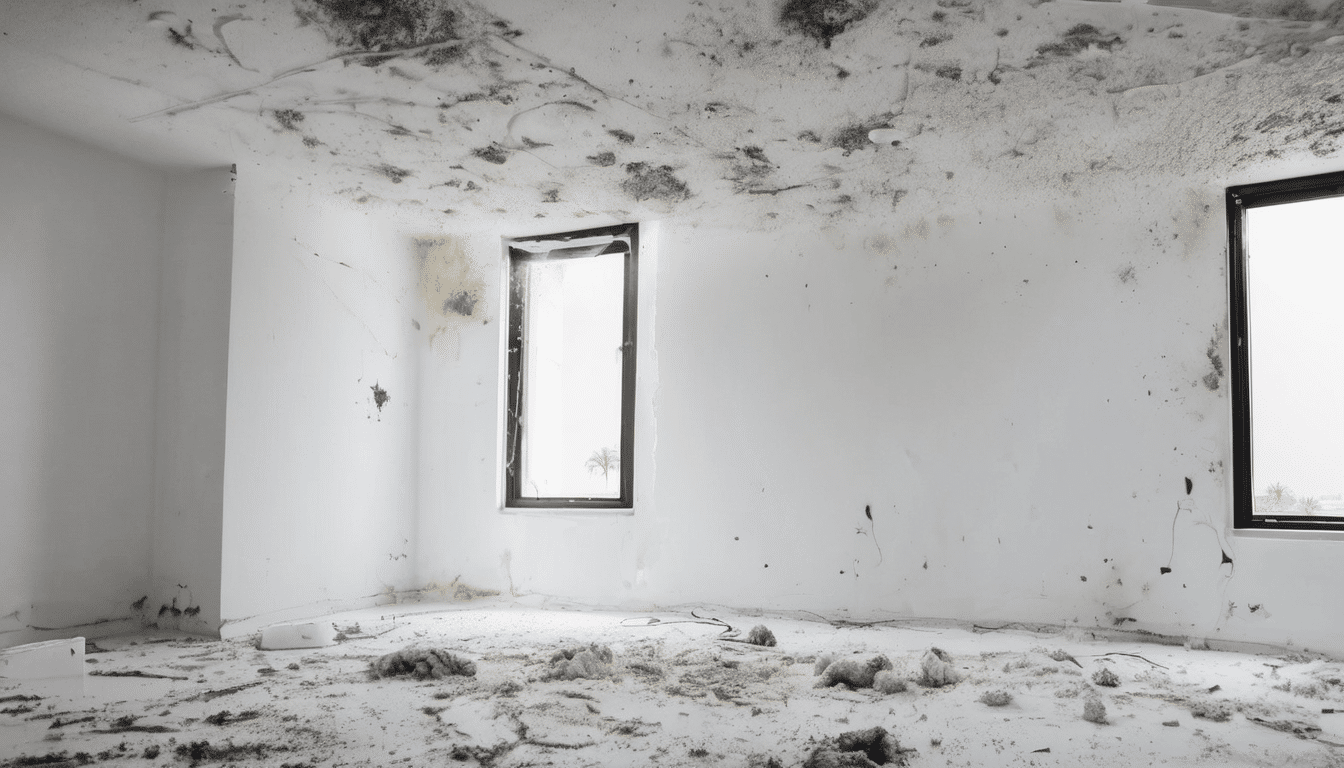
Understanding Mold Remediation Scope: How Size Affects Dubai Pricing is essential. Mold remediation scope determines pricing more than any other single variable in Dubai properties. When homeowners in Dubai, Abu Dhabi, and Sharjah contact Saniservice about mould removal, the first question is rarely “how much does it cost?” — it is “how much mould is actually there?” Those two questions are inseparable. Understanding mold remediation scope and how size affects Dubai pricing gives property owners a framework to evaluate quotes honestly, avoid under-scoped work, and invest appropriately in their indoor environment.
Based on field investigations conducted across Dubai villas, high-rise apartments, and commercial facilities, the relationship between scope and cost follows predictable patterns rooted in building science, not guesswork. A bathroom ceiling patch and a whole-villa HVAC-linked mould event are not comparable problems — and their remediation costs should not be compared on the same scale. This relates directly to Mold Remediation Scope: How Size Affects Dubai Pricing.
This guide walks through how scope is defined, how size translates to labour, materials, and verification requirements, and what Dubai property owners should expect at each level of contamination.
Mold Remediation Scope: How Size Affects Dubai Pricing – What Is Remediation Scope and Why It Matters
Remediation scope is a technical term that describes the total extent of work required to address mould contamination — including affected area size, material types involved, access complexity, containment requirements, and post-remediation verification. It is the professional equivalent of a building diagnosis, not merely a surface measurement.
In Dubai’s climate, where outdoor humidity regularly reaches 85–95% during summer months and buildings are cooled aggressively by HVAC systems, mould growth rarely stays confined to one surface. Thermal bridging, condensation on cold walls, and moisture migration through building envelopes create contamination patterns that extend well beyond the visible patch. When considering Mold Remediation Scope: How Size Affects Dubai Pricing, this becomes clear.
As an IAC2-certified mould professional, my experience across hundreds of Dubai investigations confirms that under-scoped work is the primary reason mould returns after remediation. When scope is defined accurately from the outset, remediation outcomes are measurable and durable.
Mold Remediation Scope: How Size Affects Dubai Pricing – How Size Affects Dubai Pricing in Mould Remediation
The relationship between contamination size and mold remediation scope — and how size affects Dubai pricing — is not simply linear. A larger affected area requires more labour hours, more containment materials, more air filtration capacity, and longer post-remediation drying periods. Each of these cost components scales with scope. The importance of Mold Remediation Scope: How Size Affects Dubai Pricing is evident here.
Laboratory analysis also increases with scope. Larger remediation projects require baseline air sampling, clearance air sampling at multiple locations, and often surface sampling to confirm that specific materials have been adequately treated. Saniservice operates its own in-house microbiology laboratory, which allows for faster turnaround and integrated reporting — but the number of samples required still scales directly with affected area.
Dubai’s villa typology creates particular complexity. Properties in Jumeirah, Arabian Ranches, The Springs, and similar villa communities often have multi-level layouts, shared HVAC zones, and complex roof structures. When mould colonises a roof cavity or an HVAC plenum in these properties, the scope can expand rapidly — and so does the cost. Understanding Mold Remediation Scope: How Size Affects Dubai Pricing helps with this aspect.
Mold Remediation Scope: How Size Affects Dubai Pricing – Scope Categories Used in Dubai Remediation Projects
Professional mould remediation in Dubai is typically organised into scope levels that correspond to contamination area and complexity. These categories align broadly with international IAC2 and IICRC S520 frameworks, adapted for the UAE’s building stock and climate conditions.
Level 1 — Small Isolated Areas (Under 1 m²)
This scope level covers isolated surface mould on bathroom grout, tile edges, or window frames — typically caused by condensation or localised moisture. Containment requirements are minimal, and remediation can often be completed within a single visit. Verification is straightforward. This is the most cost-efficient scope level in the Dubai pricing structure. Mold Remediation Scope: How Size Affects Dubai Pricing factors into this consideration.
Level 2 — Moderate Isolated Areas (1–3 m²)
At this scope level, containment sheeting, negative pressure setup, and HEPA air scrubbing become standard practice. Affected materials such as painted plasterboard or skirting sections may require removal and replacement. Laboratory verification via air sampling is strongly recommended at this scope level.
Level 3 — Large or Multi-Surface Areas (3–10 m²)
Level 3 scope involves significant material removal — wall panels, ceiling sections, flooring substrates, or HVAC duct lining. Full containment with critical barriers, decontamination chambers for remediation workers, and continuous negative pressure is required. Post-remediation clearance testing is essential at this scope. In Dubai villas, Level 3 projects often span multiple rooms when an HVAC system has distributed spores through connected spaces. This relates directly to Mold Remediation Scope: How Size Affects Dubai Pricing.
Level 4 — Extensive or Systemic Contamination (Over 10 m²)
This scope level represents systemic building failures — roof membrane breaches, chronic HVAC condensation, or post-flooding events. Remediation at this level requires full project management, phased execution, and ongoing moisture monitoring during and after the work. The mold remediation scope and how size affects Dubai pricing is most pronounced at this level, where costs reflect the true complexity of the building system failure.
Hidden Contamination and Its Effect on Scope
One of the most consequential factors in mold remediation scope — and one that directly affects Dubai pricing — is the presence of hidden contamination. In my field investigations, it is common to find that visible mould represents only 20–30% of the actual affected area. The remainder exists behind wall cavities, within HVAC ductwork insulation, beneath floor screeds, or inside ceiling voids. When considering Mold Remediation Scope: How Size Affects Dubai Pricing, this becomes clear.
Thermal imaging and borescope investigation are the tools used to detect this hidden growth before remediation begins. Without these diagnostics, scope assessments are incomplete — and incomplete scope leads to failed remediation outcomes.
In Dubai properties built between 2000 and 2015, internal wall insulation and cavity construction methods frequently trap moisture in ways that are invisible to the naked eye. A borescope insertion into a wall cavity revealing 40 cm of black-stained substrate changes the scope classification — and the associated remediation cost — entirely. The importance of Mold Remediation Scope: How Size Affects Dubai Pricing is evident here.
Mold Remediation Scope Pricing Breakdown for Dubai
The following table reflects general scope-based cost ranges for mould remediation in Dubai properties. These ranges incorporate labour, containment, materials, HEPA filtration, and standard post-remediation verification. They are indicative figures based on field experience and should not replace a site-specific professional assessment.
| Scope Level | Affected Area | Typical Cost Range (AED) | Key Cost Drivers |
|---|---|---|---|
| Level 1 — Isolated Surface | Under 1 m² | AED 800 – AED 1,800 | Surface treatment, minimal containment, site protection |
| Level 2 — Moderate Isolated | 1 – 3 m² | AED 1,800 – AED 4,500 | Containment, HEPA filtration, material removal, air sampling |
| Level 3 — Large Multi-Surface | 3 – 10 m² | AED 4,500 – AED 12,000 | Full containment, negative pressure, material replacement, clearance testing |
| Level 4 — Extensive / Systemic | Over 10 m² | AED 12,000 – AED 45,000+ | Project management, phased execution, HVAC remediation, moisture correction |
| HVAC System Remediation | Per system / zone | AED 3,000 – AED 18,000 | Duct access, coil treatment, drain pan correction, air sampling |
It is important to understand that mold remediation scope and how size affects Dubai pricing extends beyond square metres alone. A 2 m² area inside an HVAC air handling unit costs significantly more to remediate than a 2 m² area on a bathroom wall — because access, containment, and verification requirements are entirely different. Understanding Mold Remediation Scope: How Size Affects Dubai Pricing helps with this aspect.
Factors Beyond Size That Influence Remediation Cost
While area size is the primary driver, several additional variables shape the final scope and cost of mould remediation in Dubai properties.
Material Porosity and Substrate Type
Porous materials such as gypsum board, MDF, and acoustic ceiling tiles cannot be cleaned — they must be removed and replaced. Non-porous materials such as ceramic tile, glass, and metal can be treated in place. When a remediation area contains predominantly porous substrates, material replacement costs can represent 40–60% of the total project cost. Mold Remediation Scope: How Size Affects Dubai Pricing factors into this consideration.
Property Access and Logistics
High-rise apartments in Dubai Marina, Downtown Dubai, or Business Bay introduce logistical constraints that affect pricing. Building management approvals, goods lift scheduling, waste disposal routes, and noise restrictions during remediation work all add time and coordination cost to the project.
Occupancy Status During Remediation
Remediating an occupied property — particularly one with children, elderly occupants, or individuals with respiratory sensitivities — requires enhanced containment protocols. This protects building occupants but increases the cost of the scope through additional barrier materials, HEPA air scrubbing capacity, and stricter decontamination procedures. This relates directly to Mold Remediation Scope: How Size Affects Dubai Pricing.
Root Cause Complexity
Addressing the root cause of mould is not optional — it is the difference between remediation and temporary cosmetic treatment. When root cause involves HVAC design faults, vapour barrier failures, or chronic plumbing leaks, the scope must include correction of these building defects. This adds to the remediation cost but is the only approach that prevents recurrence.
Why Scope Verification Protects Your Investment
Post-remediation verification is the scientific confirmation that the mold remediation scope was executed correctly. It involves laboratory-analysed air sampling and surface swab sampling, compared against baseline conditions and outdoor reference samples. Without verification, remediation is a claim — with verification, it is a documented outcome. When considering Mold Remediation Scope: How Size Affects Dubai Pricing, this becomes clear.
In Dubai, post-remediation clearance testing through an accredited laboratory provides property owners with defensible evidence that the remediation was successful. This matters for property transactions, tenant handovers, insurance documentation, and Dubai Health Authority-related occupancy requirements in specific building categories.
The cost of post-remediation verification — typically AED 800 to AED 2,500 depending on the number of sampling locations — is modest relative to the cost of re-doing failed remediation work. Based on field data from Saniservice investigations, properties that skip verification have a significantly higher rate of reported mould recurrence within 12 months. The importance of Mold Remediation Scope: How Size Affects Dubai Pricing is evident here.
Expert Tips on Managing Scope and Cost
- Request a scope document before any work begins. A professional remediation company should provide a written scope of work specifying affected areas, materials to be removed, containment approach, and verification plan.
- Insist on thermal imaging as part of the investigation. Thermal imaging reveals moisture patterns that change the scope classification — and catching hidden contamination early prevents costly mid-project scope changes.
- Understand the difference between remediation and cleaning. Surface cleaning of mould without addressing material porosity, containment, and root cause is not remediation — it is cosmetic treatment that will not hold in Dubai’s climate.
- Verify that post-remediation air sampling is lab-processed, not field-assessed. Saniservice’s in-house microbiology laboratory processes clearance samples with documented chain of custody, providing results that carry evidential weight.
- Factor HVAC scope separately. HVAC systems are a distinct scope category. A mould event that originated in or spread through an HVAC system requires duct-specific remediation protocols — not standard surface treatment.
Frequently Asked Questions
What does mold remediation scope mean in Dubai properties?
Mold remediation scope describes the full extent of work required to address mould contamination — including affected surface area, material types, containment requirements, access complexity, and post-remediation verification. In Dubai properties, scope is influenced by climate-driven moisture patterns, HVAC design, and building construction methods. Accurate scope definition is essential before any remediation work begins.
How does the size of mould contamination affect pricing in Dubai?
Mold remediation scope and how size affects Dubai pricing is directly proportional up to a point — larger areas require more labour, more containment materials, more HEPA filtration capacity, and more laboratory sampling. Additionally, larger scope levels introduce project management complexity and phased execution requirements, which add cost beyond simple area scaling. Understanding Mold Remediation Scope: How Size Affects Dubai Pricing helps with this aspect.
What is the typical cost of mould remediation in Dubai villas?
For Dubai villas, mould remediation costs typically range from AED 4,500 for moderate isolated contamination up to AED 45,000 or more for systemic contamination involving HVAC systems, roof cavities, or multiple rooms. The exact figure depends on scope level, material types, access complexity, and whether HVAC remediation is included. A professional site assessment is required for accurate pricing.
Does hidden mould cost more to remediate than visible mould?
Yes. Hidden mould contamination — behind walls, inside HVAC ductwork, or beneath floor screeds — requires investigative diagnostics such as thermal imaging and borescope inspection before remediation begins. Once discovered, hidden contamination typically involves more complex access, greater material removal, and more extensive containment than equivalent visible surface areas, all of which increase the overall remediation cost. Mold Remediation Scope: How Size Affects Dubai Pricing factors into this consideration.
Is post-remediation testing worth the additional cost in Dubai?
Post-remediation verification is an essential part of the scope for any Level 2 remediation and above in Dubai. Without laboratory-confirmed clearance sampling, there is no objective evidence that remediation was successful. The cost of verification — typically AED 800 to AED 2,500 — is significantly lower than the cost of repeated remediation work caused by unverified outcomes.
How does HVAC mould contamination affect remediation scope in Dubai apartments?
HVAC mould contamination in Dubai apartments creates a distinct and often more expensive scope category. Contaminated ductwork, coil housings, and drain pans require specialist access, chemical treatment compatible with HVAC materials, and air sampling at supply registers to confirm clearance. HVAC remediation scope typically adds AED 3,000 to AED 18,000 to a project, depending on system size and contamination extent. This relates directly to Mold Remediation Scope: How Size Affects Dubai Pricing.
What happens if mould remediation scope is underestimated?
Under-scoped remediation is the primary cause of mould recurrence in Dubai properties. When the affected area is smaller than the actual contamination, untreated mould continues to grow and colonise adjacent materials. Within 3–6 months, the problem typically returns — often larger in scale — requiring a second remediation project at higher cost than the correctly scoped original work would have required.
Conclusion
Understanding mold remediation scope and how size affects Dubai pricing is not simply a budgeting exercise — it is the foundation of an informed decision about your property and indoor environment. The difference between a Level 1 bathroom patch and a Level 4 systemic villa remediation is not just a matter of cost; it is a reflection of entirely different building science problems that demand entirely different solutions. When considering Mold Remediation Scope: How Size Affects Dubai Pricing, this becomes clear.
Mold remediation scope in Dubai is shaped by contamination area, material porosity, access complexity, HVAC involvement, and the rigour of post-remediation verification. Each of these variables interacts with the others, and none can be accurately assessed without a professional site investigation using thermal imaging, borescope diagnostics, and laboratory-supported sampling.
When property owners in Dubai, Sharjah, Abu Dhabi, and across the UAE approach remediation with a clear understanding of scope, the outcome changes — from reactive and repeated intervention to a single, verified resolution supported by data. That is the standard Saniservice applies to every mould investigation: not estimates, but evidence. Understanding Mold Remediation Scope: How Size Affects Dubai Pricing is key to success in this area.