
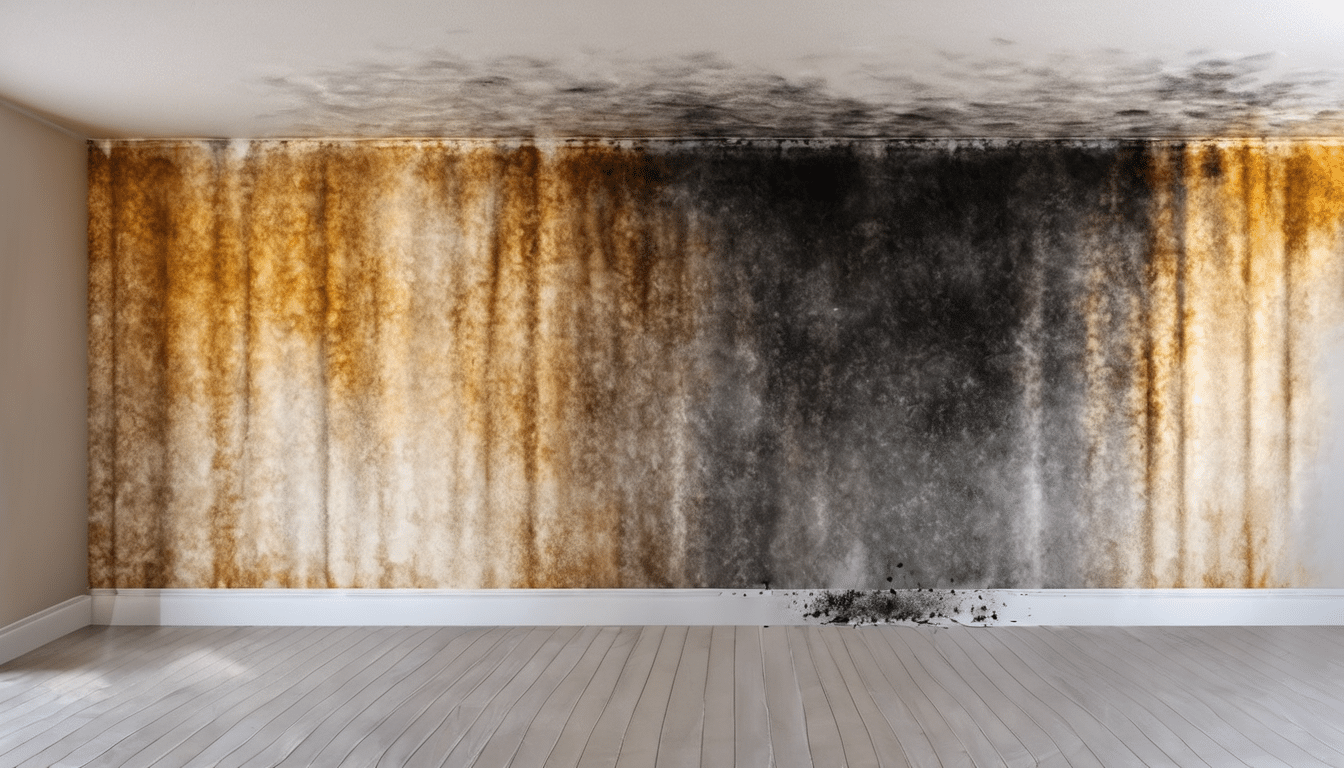
Understanding Deal with Black Mold on Wall Safely 2026 is essential. There is a particular kind of clarity that comes when you finally understand what you are looking at on a wall. Not panic — clarity. Knowing How to Deal with black mold on wall safely in 2026 begins exactly there: with accurate identification, measured thinking, and a protocol grounded in building science rather than guesswork. In Dubai, Abu Dhabi, Sharjah, and Ajman, the conditions that produce mold on walls are not random. They are the predictable outcome of humidity, condensation, and moisture interacting with building materials over time.
This guide is written for homeowners, property managers, and facility teams who want to understand the full picture — not just the surface. How to deal with black mold on wall safely requires more than wiping down a surface. It requires understanding why the mold formed, what species may be present, what risks exist during removal, and how to verify that the problem has been properly resolved. Every section below addresses one of those dimensions in depth. This relates directly to Deal with Black Mold on Wall Safely 2026.
As an IAC2 Certified Indoor Air Consultant with more than 20 years of cross-disciplinary experience in building science and microbiology, I have investigated hundreds of mold cases across UAE properties. The pattern is consistent: the properties that experience recurring mold growth are almost always those where the root cause was never identified. The properties that remain mold-free after remediation are those where the building system was corrected, not just the wall. When considering Deal with Black Mold on Wall Safely 2026, this becomes clear.
Deal with Black Mold on Wall Safely 2026 – What Black Mold on Walls Actually Means in a UAE Context
The term “black mold” is widely used but scientifically imprecise. In public conversation, it typically refers to Stachybotrys chartarum, a dark-pigmented species associated with prolonged water damage and cellulose-rich materials. However, field investigations in UAE properties — particularly Dubai villas, Sharjah apartment blocks, and Abu Dhabi high-rises — frequently reveal that dark-coloured wall growth includes Cladosporium, Aspergillus niger, Ulocladium, and other species that appear visually similar. The importance of Deal with Black Mold on Wall Safely 2026 is evident here.
Colour alone does not confirm species. Laboratory analysis does. This distinction matters enormously when planning how to deal with black mold on wall safely, because different species carry different risk profiles, respond differently to remediation methods, and require different levels of containment during removal. Understanding Deal with Black Mold on Wall Safely 2026 helps with this aspect.
Why UAE Climate Accelerates Mold Growth on Walls
Dubai’s outdoor relative humidity routinely exceeds 80% during summer months, and indoor surfaces — particularly those adjacent to poorly insulated external walls or chilled water pipes — frequently reach dew point temperatures. When a wall surface drops to or below dew point, moisture condenses. That condensation, combined with ambient dust (which carries organic material), creates a growth substrate for mold. Deal with Black Mold on Wall Safely 2026 factors into this consideration.
UAE buildings also experience a unique hygrothermal stress: the combination of extreme outdoor heat, aggressive air-conditioning, and frequent door and window movement creates continuous cycles of warm humid air meeting cold surfaces. This is why mold on walls in UAE properties is so often found near AC vents, on north-facing internal walls, behind furniture placed against external walls, and around window frames. This relates directly to Deal with Black Mold on Wall Safely 2026.
Building Materials Common in UAE Construction
Gypsum board, cement plaster, and certain paints used widely across UAE residential and commercial construction provide sufficient nutrient bases for mold colonisation when moisture is present. Gypsum board in particular — used extensively in partition walls and ceiling linings — is highly susceptible to mold growth once its paper facing absorbs moisture. Understanding these material vulnerabilities is foundational to knowing how to deal with black mold on wall safely. When considering Deal with Black Mold on Wall Safely 2026, this becomes clear.
Deal with Black Mold on Wall Safely 2026 – How to Identify Black Mold on Wall Before Taking Action
Correct identification precedes correct action. Rushing into removal without understanding what you are dealing with is the single most common reason mold problems recur in UAE properties. Identification involves both visual assessment and, where warranted, laboratory confirmation. The importance of Deal with Black Mold on Wall Safely 2026 is evident here.
Visual Assessment Protocol
When conducting a preliminary visual inspection, examine the following indicators systematically. Note the growth pattern: is it circular and spreading (suggesting active moisture), linear (suggesting condensation along a cold bridge), or diffuse and widespread (suggesting elevated ambient humidity)? Note the substrate: is the mold growing on paint, on bare plaster, or has it penetrated into the wall material? Note the texture: powdery, velvety, or slimy growth each suggests different species. Understanding Deal with Black Mold on Wall Safely 2026 helps with this aspect.
Also look beyond the visible area. Mold growth on a wall surface is frequently the visible expression of a larger hidden colony — behind the wall lining, within the wall cavity, or inside the HVAC system serving that zone. Based on field investigations across Dubai villas and Abu Dhabi apartments, the visible growth area commonly represents only a fraction of the actual contaminated zone. Deal with Black Mold on Wall Safely 2026 factors into this consideration.
When Laboratory Analysis Is Warranted
Laboratory analysis is warranted when: the affected area exceeds approximately 0.1 square metres; the occupants are experiencing health symptoms (headaches, respiratory irritation, fatigue) that may correlate with indoor exposure; the property has a history of water damage or flooding; or the mold is located within or adjacent to HVAC components. Saniservice’s in-house microbiology laboratory — the only facility of its kind operated by an indoor environmental services company in the UAE — provides surface sampling and air sampling analysis that identifies species and quantifies spore concentrations, giving remediation teams the data they need to plan appropriately. This relates directly to Deal with Black Mold on Wall Safely 2026.
Deal with Black Mold on Wall Safely 2026 – How to Deal with Black Mold on Wall Safely — Step-by-Step
Understanding how to deal with black mold on wall safely in 2026 means following a structured protocol, not improvising a response. The protocol below reflects IICRC S520 remediation principles adapted for UAE building conditions and occupancy patterns. When considering Deal with Black Mold on Wall Safely 2026, this becomes clear.
Step 1 — Establish Containment
Before any disturbance of mold-affected material, containment must be established. Containment prevents spore dispersal to unaffected areas of the property. For small areas (under 1 square metre), a localised containment barrier using heavy-duty polyethylene sheeting and negative pressure is typically sufficient. For larger affected areas — commonly encountered in Dubai villas with whole-room contamination — full negative pressure containment with HEPA-filtered air scrubbers is required. The importance of Deal with Black Mold on Wall Safely 2026 is evident here.
Negative pressure means the contained work zone is maintained at a lower air pressure than the surrounding areas, so airflow moves into the containment rather than out of it. This prevents cross-contamination. Saniservice remediation teams establish and verify negative pressure as a non-negotiable first step in every mold removal project. Understanding Deal with Black Mold on Wall Safely 2026 helps with this aspect.
Step 2 — Personal Protective Equipment
Workers and homeowners attempting any level of mold removal must wear appropriate personal protective equipment. This includes: a minimum N95 respirator (P100 half-face respirator for larger jobs), disposable Tyvek coveralls, nitrile gloves, and eye protection. Standard dust masks are insufficient. Mold spores range from 2 to 20 microns in diameter and pass through standard paper masks without resistance. Deal with Black Mold on Wall Safely 2026 factors into this consideration.
Step 3 — Source Moisture Identification and Interruption
This step is non-negotiable and is the point at which most DIY attempts fail. Mold cannot grow without moisture. If the moisture source is not identified and corrected before remediation begins, regrowth is inevitable. Thermal imaging, moisture metres, and hygrometer readings are used at this stage to map moisture pathways. In UAE properties, common moisture sources behind wall mold include: condensation on chilled water pipes, HVAC duct leaks, plumbing sweating, roof membrane failures, and façade water ingress during rainfall. This relates directly to Deal with Black Mold on Wall Safely 2026.
Step 4 — Controlled Removal of Affected Materials
Once containment is established and moisture is addressed, affected materials are removed under controlled conditions. Porous materials — gypsum board, insulation, wooden elements — that show mold penetration beyond the surface are typically removed entirely. Surface mold on non-porous substrates (concrete, ceramic tile) can be mechanically cleaned and treated. All removed material is double-bagged in heavy-duty polyethylene bags and disposed of per UAE waste management protocols before containment barriers are removed. When considering Deal with Black Mold on Wall Safely 2026, this becomes clear.
Step 5 — Surface Treatment and Antimicrobial Application
Cleaned surfaces receive antimicrobial treatment appropriate to the substrate and the species identified in laboratory analysis. There is no universal biocide appropriate for all mold types and all surfaces. Selection of treatment agents based on laboratory-confirmed species identification is a distinguishing feature of science-backed remediation versus generic spray-and-wipe approaches. The importance of Deal with Black Mold on Wall Safely 2026 is evident here.
Step 6 — HEPA Vacuuming and Air Scrubbing
Following material removal and surface treatment, HEPA vacuuming removes residual spore matter from all surfaces within the containment zone. Air scrubbers with HEPA filtration run continuously during this phase and for a defined period afterward, reducing airborne spore concentrations to background levels before containment is removed. Understanding Deal with Black Mold on Wall Safely 2026 helps with this aspect.
How to Deal with Black Mold on Wall Safely When Hidden Growth Is Suspected
In many UAE properties investigated by Saniservice, the wall surface mold is a secondary indicator of a more significant hidden problem. Understanding how to deal with black mold on wall safely when hidden growth is suspected requires diagnostic tools beyond the naked eye. Deal with Black Mold on Wall Safely 2026 factors into this consideration.
Borescope Investigation
A borescope — a flexible fibre-optic camera inserted through a small access point in the wall — allows visual inspection of wall cavities without full demolition. This is particularly valuable in luxury Dubai villas where preservation of finishes is a client priority. Borescope investigation has revealed extensive hidden mold growth in wall cavities that showed only minor surface discolouration. This relates directly to Deal with Black Mold on Wall Safely 2026.
Thermal Imaging Diagnostics
Infrared thermal imaging identifies cold surfaces and moisture accumulation patterns that are invisible to the naked eye. A wall surface that appears dry may show a clear thermal anomaly indicating condensation accumulation within the wall assembly. As a thermally certified building scientist, I routinely use thermal imaging as a first-pass diagnostic on any UAE property with recurring mold on walls. When considering Deal with Black Mold on Wall Safely 2026, this becomes clear.
Air Sampling for Hidden Contamination
If a wall cavity contains active mold growth, spore concentrations in the adjacent room air will typically be elevated compared to outdoor reference samples. Air sampling — using calibrated impactor or cassette technology — provides quantified data on indoor spore concentrations. Laboratory analysis of these samples informs both the extent of hidden contamination and the remediation scope required. The importance of Deal with Black Mold on Wall Safely 2026 is evident here.
Root-Cause Correction — The Step That Determines Long-Term Success
Knowing how to deal with black mold on wall safely in 2026 is incomplete without understanding root-cause correction. This is the building system intervention that prevents recurrence. Without it, even technically excellent remediation will produce mold regrowth within months in UAE climate conditions. Understanding Deal with Black Mold on Wall Safely 2026 helps with this aspect.
HVAC and Ventilation Correction
In Dubai and across the UAE, HVAC systems are the single most common contributing factor in wall mold problems. Oversized AC units that short-cycle (cool rapidly without adequately dehumidifying), ductwork that sweats due to poor insulation, and supply air registers positioned to blow cold air directly onto walls — all create the condensation conditions that feed mold. Post-remediation HVAC correction is not optional. It is the foundation of a durable result. Deal with Black Mold on Wall Safely 2026 factors into this consideration.
Building Envelope Assessment
UAE properties — particularly older villas in Jumeirah, Mirdif, and Deira, as well as apartment blocks in Sharjah and Ajman — frequently have building envelope deficiencies: inadequate vapour barriers, thermal bridges at structural elements, and compromised waterproofing at roof and façade level. These deficiencies must be identified and corrected as part of a complete mold remediation outcome. This relates directly to Deal with Black Mold on Wall Safely 2026.
Humidity Management Strategies
Target indoor relative humidity of 50–55% in UAE properties. Above 60%, mold colonisation risk increases substantially. Supplementary dehumidification — either portable or integrated into the HVAC system — is frequently recommended following wall mold remediation in properties with demonstrated humidity control deficiencies. When considering Deal with Black Mold on Wall Safely 2026, this becomes clear.
Post-Remediation Verification — How to Confirm the Work Is Done
How to deal with black mold on wall safely in 2026 must include post-remediation verification (PRV). PRV is the objective, laboratory-confirmed confirmation that remediation has achieved its intended outcome. Without PRV, there is no verifiable standard against which the work can be measured.
Post-remediation verification typically involves: visual inspection by an independent assessor; clearance air sampling compared against outdoor baseline samples; surface sampling of remediated areas; and review of moisture readings to confirm the moisture source has been resolved. Saniservice provides independent PRV services and, where required, issues documentation aligned with DHA mold clearance certificate requirements for UAE properties.
What Good PRV Results Look Like
Post-remediation air samples from the treated area should show indoor spore concentrations at or below outdoor reference concentrations, with no significant elevation of any single species. Surface samples from remediated substrates should show no viable mold growth. Moisture readings from previously affected wall areas should confirm readings within acceptable building science parameters — typically below 15% moisture content for most UAE wall construction materials.
How to Deal with Black Mold on Wall Safely — What Not to Do
As important as the correct protocol is an understanding of what to avoid. The following are the most common errors observed in UAE properties during Saniservice field investigations.
- Painting over mold: Encapsulation paint applied over active mold growth does not resolve the problem. It delays visible symptoms while allowing the colony to continue developing beneath the surface. Within months, mold growth typically penetrates or circumvents the paint layer.
- Using bleach on porous surfaces: Bleach (sodium hypochlorite) is effective on non-porous surfaces but does not penetrate porous materials like gypsum or concrete. It may bleach the surface pigmentation while leaving viable mold within the material.
- Removing mold without containment: Disturbing mold growth without establishing containment disperses spores throughout the property. This is the most common cause of cross-contamination observed in DIY mold removal attempts in UAE homes.
- Ignoring the moisture source: As noted throughout this guide, mold cannot persist without moisture. Any approach to how to deal with black mold on wall safely that does not address the moisture source will produce regrowth.
- Skipping laboratory analysis for large affected areas: Species identification changes the remediation approach. Skipping this step means planning remediation in the absence of critical information.
How to Deal with Black Mold on Wall Safely with Professional Support in Dubai
For property owners across Dubai, Abu Dhabi, Sharjah, and Ajman, the question of when to engage professional remediation support is straightforward: when the affected area exceeds 0.1 square metres, when occupants are experiencing health symptoms, when the mold is inside HVAC components, when the property has experienced water damage, or when previous remediation attempts have not prevented recurrence.
Saniservice’s Indoor Sciences Division approaches every wall mold investigation using the Architectural–Microbiological Investigation Protocol: building envelope analysis, HVAC and ventilation diagnostics, hygrothermal failure detection, and laboratory-confirmed mold and microbial testing. This integrated methodology is why Saniservice is regularly called in for complex cases — including properties where previous remediation companies delivered results that did not hold.
For property-specific assessment of how to deal with black mold on wall safely in your Dubai, Sharjah, Abu Dhabi, or Ajman property, a professional site investigation determines scope, species risk, and the appropriate remediation sequence for your specific building conditions.
Expert Takeaways — What 20 Years of UAE Mold Investigations Have Taught Me
- Mold on walls is never random. It is the predictable outcome of a building system failure. Find the failure, and you prevent recurrence.
- Visual inspection alone is insufficient. In a significant proportion of UAE mold cases investigated at Saniservice, the true extent of contamination was only revealed by borescope, thermal imaging, or laboratory analysis.
- The UAE climate is uniquely demanding. Remediation protocols developed for temperate European or North American climates do not translate directly to Dubai conditions without hygrothermal adaptation.
- Post-remediation verification is not a luxury. It is the only objective confirmation that the work achieved its purpose. Any remediation delivered without PRV documentation is unverified.
- Occupant health is the final metric. Every decision in how to deal with black mold on wall safely should ultimately be evaluated against whether it improves the indoor environment for the people living or working in it.
Frequently Asked Questions
How do I know if the dark marks on my Dubai villa wall are actually black mold?
Colour alone does not confirm mold species or type. Dark-coloured wall growth in Dubai villas can include multiple species, some of which require laboratory identification. A professional surface sample analysed by a certified microbiology laboratory is the only reliable method for confirming species. Visual assessment by a trained inspector can indicate likelihood but cannot substitute for laboratory confirmation.
Is black mold on walls dangerous to my family in the UAE?
Health risk depends on species, concentration, exposure duration, and individual sensitivity. Some mold species produce mycotoxins — secondary metabolites that can affect respiratory and immune function in susceptible individuals. Laboratory species identification and spore quantification, rather than visual assumption, determine the risk profile for a specific property. Occupants experiencing persistent respiratory symptoms, fatigue, or headaches should seek both medical and environmental assessment.
Can I remove black mold from my wall myself in Dubai?
For very small, isolated surface mold on non-porous substrates — under approximately 0.1 square metres — careful self-remediation with appropriate PPE may be feasible. For any area beyond that threshold, properties with HVAC involvement, or cases with occupant health symptoms, professional remediation with containment, HEPA equipment, and post-remediation verification is strongly recommended. DIY removal without containment is the most common cause of mold spread throughout a property.
Why does mold keep coming back on my walls after cleaning in Sharjah or Dubai?
Recurring mold growth is almost always the result of an unresolved moisture source. Cleaning or painting over mold without correcting the underlying cause — whether HVAC condensation, plumbing sweating, building envelope failure, or inadequate ventilation — guarantees regrowth. A root-cause investigation using moisture mapping, thermal imaging, and building diagnostics identifies and resolves the source, not just the symptom.
How long does professional black mold remediation take for a typical Dubai apartment?
Remediation duration depends on affected area, number of rooms involved, materials requiring removal, and whether hidden contamination is discovered during the process. A professional site assessment determines scope and timeline for each specific property. Attempting to estimate duration without an investigation produces unreliable expectations and often leads to incomplete remediation.
What is a DHA mold clearance certificate and do I need one in Dubai?
A DHA mold clearance certificate documents that a property has been assessed, remediated, and verified as meeting indoor environmental standards relevant to occupant health. This documentation is relevant for property transactions, tenancy disputes, and institutional or healthcare facilities in Dubai. Post-remediation verification sampling and reporting by a certified indoor environmental professional supports this documentation process.
How does Dubai’s humidity affect the risk of black mold returning after remediation?
Dubai’s outdoor relative humidity — frequently exceeding 80% during summer months — places sustained pressure on any building’s moisture management systems. After remediation, maintaining indoor relative humidity at 50–55%, correcting HVAC system deficiencies, and ensuring adequate ventilation are the primary factors that determine whether mold returns. Properties where these systems are optimised following remediation consistently demonstrate better long-term outcomes than those where remediation addressed only the surface contamination.
Understanding how to deal with black mold on wall safely in 2026 is ultimately an exercise in building science, not just cleaning chemistry. The walls of a Dubai villa or Abu Dhabi apartment are part of a connected system — of airflow, moisture, materials, and biology. When that system is understood and corrected, mold becomes not a recurring problem but a resolved one. That resolution, verified by laboratory data and building diagnostics, is what peace of mind in an indoor environment actually looks like. Understanding Deal with Black Mold on Wall Safely 2026 is key to success in this area.