
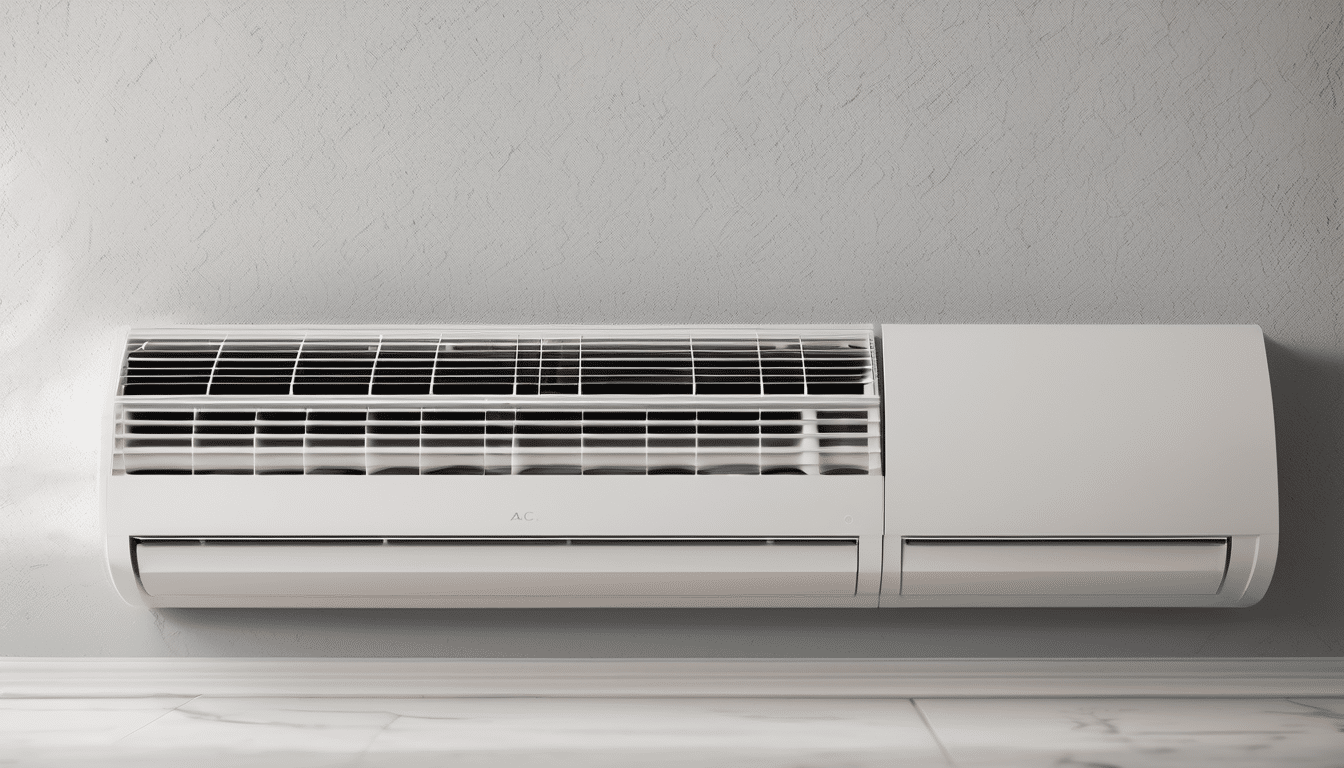
Understanding Mold in AC Ducts Dubai: Causes, Testing and Solutions is essential. There is a particular kind of indoor problem that is easy to overlook precisely because you cannot see it. Mould in AC ducts Dubai homes and commercial properties experience is not always visible on surfaces, and it does not always announce itself with obvious odours. Yet the causes, testing and solutions for mould in AC ducts Dubai residents need to understand are well-defined — and the decisions you make at each stage will determine whether the problem is genuinely resolved or simply deferred. This article compares the primary approaches side by side, so the evidence speaks clearly.
As an IAC2-certified indoor air consultant with more than 20 years of field and laboratory experience across Dubai and the wider UAE, I have investigated hundreds of HVAC-linked mould cases. What I consistently find is that the cause is rarely mysterious. Dubai’s climate — sustained outdoor humidity during summer months, temperatures exceeding 40°C, and near-continuous air conditioning operation — creates a predictable set of conditions inside duct systems. Understanding those conditions is the first step toward resolving them correctly. This relates directly to mold in AC Ducts Dubai: Causes, Testing and Solutions.
Mould in AC ducts Dubai: causes, testing and solutions is ultimately a building science question, not just a cleaning question. The comparison that follows addresses all three dimensions with the precision they deserve.
Mold in AC Ducts Dubai: Causes, Testing and Solutions – Why Mould Forms in AC Ducts in Dubai
The formation of mould inside ductwork follows a consistent logic: moisture, an organic substrate, and reduced airflow create the conditions biology requires. In Dubai properties, several factors compound this baseline.
Condensation Inside Duct Surfaces
When cold air passes through ducts routed through unconditioned ceiling voids — a common configuration in Dubai villas and mid-rise apartments — the exterior duct surface can drop below the dew point of surrounding air. Moisture condenses on the duct wall, migrates inward through poorly sealed joints, and deposits on interior lining materials. Flexible duct insulation and fibreglass lining are particularly susceptible. This is one of the most frequently confirmed findings in Saniservice laboratory casework. When considering Mold in AC Ducts Dubai: Causes, Testing and Solutions, this becomes clear.
Oversized or Mismatched HVAC Systems
Systems that cool a space too quickly — commonly described as “short-cycling” — do not run long enough to dehumidify the air effectively. Relative humidity inside the duct remains elevated, sometimes persistently above 70%, which is the threshold at which most mould species begin to proliferate on permeable surfaces.
Organic Debris Accumulation
Dust, skin cells, and fibrous particles that bypass filtration settle on duct surfaces and provide a nutrient source. Combined with moisture, this debris supports colonisation. Fibreglass duct lining is especially problematic because spores can penetrate the material rather than sitting only on its surface. The importance of Mold in AC Ducts Dubai: Causes, Testing and Solutions is evident here.
Mold in AC Ducts Dubai: Causes, Testing and Solutions – Mould in AC Ducts Dubai Testing Methods Compared
Testing approaches for mould in AC ducts Dubai properties require are not equivalent in what they reveal. Choosing the right method depends on the objective: screening, identification, or post-remediation verification.
Option 1 — Air Sampling (Spore Trap Analysis)
What it measures: Airborne spore concentrations inside the duct or at supply registers, compared against outdoor baseline samples.
Pros: Non-invasive. Provides a quantitative count of viable and non-viable spores. Useful for determining whether duct contamination is affecting occupied space. IAC2 standards support its use as a primary investigative tool.
Cons: Spore counts fluctuate with airflow conditions. A single sample point may not represent the full duct network. Does not confirm the species composition with the same resolution as culture-based analysis. Understanding Mold in AC Ducts Dubai: Causes, Testing and Solutions helps with this aspect.
Best suited for: Initial screening and post-remediation clearance testing.
Option 2 — Surface Sampling (Swab or Tape Lift)
What it measures: The mould load on a specific duct surface, analysed under laboratory microscopy and culture.
Pros: Identifies species present. Confirms active growth versus dormant spore deposition. Provides the most direct evidence of contamination at a sampled location. Saniservice’s in-house microbiology laboratory processes these samples with full chain-of-custody documentation.
Cons: Requires access to the duct interior at multiple points. Results are location-specific — contamination may be present in sections not sampled. Requires trained personnel for proper collection to avoid cross-contamination of the sample. Mold in AC Ducts Dubai: Causes, Testing and Solutions factors into this consideration.
Best suited for: Confirming species, guiding remediation scope, and validating clearance after treatment.
Option 3 — ERMI (Environmental Relative Mouldiness Index) Dust Analysis
What it measures: DNA-based identification of mould species in settled dust, typically collected from return air filters or duct interiors. This relates directly to Mold in AC Ducts Dubai: Causes, Testing and Solutions.
Pros: Highly sensitive. Detects species that may not be captured by standard spore trap methods. Provides a cumulative picture of what has been circulating through the system over time.
Cons: More resource-intensive than conventional sampling. Results reflect historical contamination rather than current active growth exclusively. Interpretation requires familiarity with ERMI scoring methodology. When considering Mold in AC Ducts Dubai: Causes, Testing and Solutions, this becomes clear.
Best suited for: Complex investigations where conventional sampling has not resolved the clinical or environmental picture.
Comparative Verdict on Testing
No single method is universally superior. In field investigations across Dubai villas and high-rise apartments, the most diagnostic outcomes come from combining air sampling with targeted surface sampling — using the air data to identify affected zones and the surface data to confirm what is growing there. ERMI is a valuable third-tier tool when the investigation requires deeper resolution. The importance of Mold in AC Ducts Dubai: Causes, Testing and Solutions is evident here.
Mold in AC Ducts Dubai: Causes, Testing and Solutions – Mould in AC Ducts Dubai Solutions Compared
The solutions available for mould in AC ducts Dubai properties range from surface sanitisation to full duct replacement. Each has a defined appropriate application — and a clearly defined limit.
Option 1 — Chemical Sanitisation Without Mechanical Cleaning
What it involves: Application of an antimicrobial agent to duct surfaces, typically by fogging or ULV spraying, without prior mechanical debris removal. Understanding Mold in AC Ducts Dubai: Causes, Testing and Solutions helps with this aspect.
Pros: Lower cost. Less disruptive. Can be completed quickly.
Cons: Established NADCA methodology is explicit: sanitisation applied over accumulated debris is ineffective. Organic material neutralises the biocide before it contacts the mould colony. This approach addresses surface contamination only and leaves the nutrient substrate and underlying colonisation intact. In Saniservice case investigations, properties treated by sanitisation alone consistently show mould recurrence within one to two seasons. Mold in AC Ducts Dubai: Causes, Testing and Solutions factors into this consideration.
Appropriate for: Lightly soiled ducts where air sampling has confirmed low-level surface contamination and no fibreglass lining damage. Not appropriate as a standalone treatment for confirmed active mould growth.
Option 2 — Mechanical NADCA-Aligned Duct Cleaning with Source Removal
What it involves: Full mechanical agitation and negative-pressure extraction of debris, followed by HEPA-filtered vacuuming and application of an EPA-registered antimicrobial agent to clean surfaces. NADCA standards define this as source removal — the only method that physically eliminates the contamination. This relates directly to Mold in AC Ducts Dubai: Causes, Testing and Solutions.
Pros: Removes the organic substrate that supports mould growth. Verifiable through post-cleaning inspection and air sampling. Aligned with industry standards. When combined with moisture control corrections, produces durable outcomes. Saniservice’s NADCA accreditation means this methodology is applied with documented accountability.
Cons: More resource-intensive than fogging alone. Requires proper containment to prevent cross-contamination to occupied spaces during the process. Access to all duct sections must be achievable. When considering Mold in AC Ducts Dubai: Causes, Testing and Solutions, this becomes clear.
Appropriate for: Confirmed active mould growth, moderate-to-heavy debris accumulation, and systems with fibreglass lining that remains structurally intact.
Option 3 — Duct Lining Removal and Replacement
What it involves: Physical removal of contaminated fibreglass duct liner, disinfection of the bare duct substrate, and re-lining with antimicrobial-treated or closed-cell alternative materials. The importance of Mold in AC Ducts Dubai: Causes, Testing and Solutions is evident here.
Pros: Eliminates the contaminated substrate entirely. Appropriate where mould has penetrated fibreglass lining material — a condition where surface cleaning cannot achieve full remediation. Provides a genuinely clean starting point for the system.
Cons: Higher resource investment. Requires partial duct system access or replacement. More extensive project management. Not necessary in every case — over-scoping increases cost without proportional benefit. Understanding Mold in AC Ducts Dubai: Causes, Testing and Solutions helps with this aspect.
Appropriate for: Cases where laboratory analysis confirms deep fibreglass colonisation, or where surface sampling post-cleaning continues to return elevated counts.
Comparative Verdict on Solutions
The decision tree is logical. If testing confirms surface-level contamination on non-porous duct components with no fibreglass involvement, mechanical cleaning with antimicrobial application is the appropriate response. If fibreglass lining is colonised, removal and replacement is scientifically justified. Sanitisation without source removal is rarely the right answer for confirmed mould — though it is frequently the cheapest option offered. The distinction matters because mould in AC ducts Dubai residents experience is rarely resolved by chemistry alone. Mold in AC Ducts Dubai: Causes, Testing and Solutions factors into this consideration.
Moisture Control — The Decisive Variable
Every remediation approach will underperform if the moisture condition driving mould growth is not corrected. This is the most important principle in managing mould in AC ducts Dubai: causes, testing and solutions must always include a moisture audit.
Duct insulation integrity, vapour barrier continuity, condensate drain function, and HVAC sizing all require assessment. A system that is producing condensation on interior duct surfaces due to inadequate insulation will re-contaminate a freshly remediated duct within months. Building science analysis — including thermal imaging to detect cold-surface condensation zones — is the tool that makes the difference between a durable outcome and a repeated service call. This relates directly to Mold in AC Ducts Dubai: Causes, Testing and Solutions.
Post-Remediation Verification
Verification sampling after treatment is not optional if the objective is a confirmed outcome. Air sampling and surface sampling conducted 24 to 48 hours after remediation, under conditions that represent normal system operation, provides the objective data that distinguishes a completed remediation from an assumed one.
In Dubai properties managed under DHA or municipality compliance requirements, post-remediation documentation may also be required as part of formal clearance. Saniservice’s laboratory reporting format supports this requirement with traceable, A4-formatted reports that document pre- and post-remediation spore counts, species identification, and methodology. When considering Mold in AC Ducts Dubai: Causes, Testing and Solutions, this becomes clear.
Expert Takeaways for Dubai Property Owners and Managers
- Mould in AC ducts Dubai is a building science problem first. Testing before treatment is non-negotiable.
- Air sampling and surface sampling together give you a more complete picture than either method alone.
- Sanitisation without mechanical source removal is not equivalent to remediation — the evidence is consistent on this point.
- Fibreglass duct lining that has been colonised cannot be adequately cleaned; it must be replaced.
- Moisture control correction is the intervention that determines whether remediation lasts.
- Post-remediation air sampling closes the loop. Without it, the outcome is opinion, not data.
- Request documentation. A credible mould in AC ducts Dubai: causes, testing and solutions service produces a traceable written record, not a verbal assurance.
Frequently Asked Questions
How do I know if there is mould in my AC ducts in Dubai?
Common indicators include a musty or earthy odour at supply registers, visible discolouration around vent grilles, and occupant symptoms that improve when the AC is switched off. However, laboratory-confirmed air sampling and surface swabs from duct interiors are the only reliable method for confirming the presence, species, and concentration of mould in AC ducts Dubai properties experience.
What causes mould to grow inside AC ducts in the UAE climate?
Dubai’s high outdoor humidity, combined with continuously operating air conditioning systems, creates condensation risk on cooled duct surfaces routed through unconditioned ceiling voids. Short-cycling oversized systems fail to dehumidify air adequately. Organic debris accumulation on fibreglass duct lining provides the nutrient base. These three factors together make mould in AC ducts Dubai a predictable building science outcome rather than a random occurrence. The importance of Mold in AC Ducts Dubai: Causes, Testing and Solutions is evident here.
Is fogging or chemical spraying enough to remove mould from AC ducts?
No. Per NADCA methodology, applying an antimicrobial agent over accumulated debris does not constitute mould removal. The organic material neutralises the biocide before it reaches the colony. Mechanical source removal — physical extraction of debris under negative pressure — must precede any antimicrobial application for the treatment to produce a verifiable result.
How long does AC duct mould remediation take in a Dubai villa?
Project duration depends on the duct network size, the extent of contamination confirmed by testing, and whether fibreglass lining replacement is required. A professional assessment of the property determines the scope. Variables including floor area, number of AHUs, and access conditions all affect the timeline. Contact Saniservice for a property-specific evaluation.
Can mould in AC ducts affect my family’s indoor air quality in Dubai?
Confirmed active mould growth inside ductwork circulates spores through the conditioned space during system operation. Laboratory analysis of air samples taken at supply registers frequently shows elevated spore concentrations relative to outdoor baseline levels in affected properties. The significance of this for occupant wellbeing depends on species identified, concentration levels, and individual sensitivity — all of which are determined through professional sampling and lab interpretation.
Do I need a mould clearance certificate after AC duct remediation in Dubai?
For commercial premises, healthcare facilities, and properties subject to DHA or Dubai Municipality inspection requirements, post-remediation documentation confirming that mould levels have returned to acceptable parameters is typically required. Saniservice produces laboratory-backed clearance reports that meet these documentation standards. For residential properties, a formal clearance report provides the verifiable evidence that remediation was successful.
How often should AC ducts be inspected for mould in UAE properties?
Based on field investigations across Dubai and Sharjah properties, HVAC systems in the UAE benefit from annual inspection and cleaning, with targeted mould testing recommended whenever occupants report persistent odours, unexplained symptoms, or following any water intrusion event near the air handling unit or duct network. Properties with fibreglass-lined ductwork warrant more frequent monitoring given the material’s susceptibility to colonisation.
Conclusion
Mould in AC ducts Dubai: causes, testing and solutions is a topic where the comparison between approaches has a clear evidence-based outcome. Testing methods differ in resolution and appropriate application — and combining air sampling with surface sampling produces the most actionable data. Remediation approaches differ fundamentally in whether they remove contamination or only mask it — and source removal, aligned with NADCA methodology, is the standard that delivers verifiable results. Moisture control is the variable that determines whether the outcome lasts.
The question is never simply whether mould is present. It is what type, at what concentration, confirmed by which methodology, and addressed through which verified process. That is the standard Saniservice applies across every mould in AC ducts Dubai investigation — because a measurable outcome is the only one worth delivering. If you suspect your duct system warrants a closer look, the next step is an assessment, not an assumption. Understanding Mold in AC Ducts Dubai: Causes, Testing and Solutions is key to success in this area.