
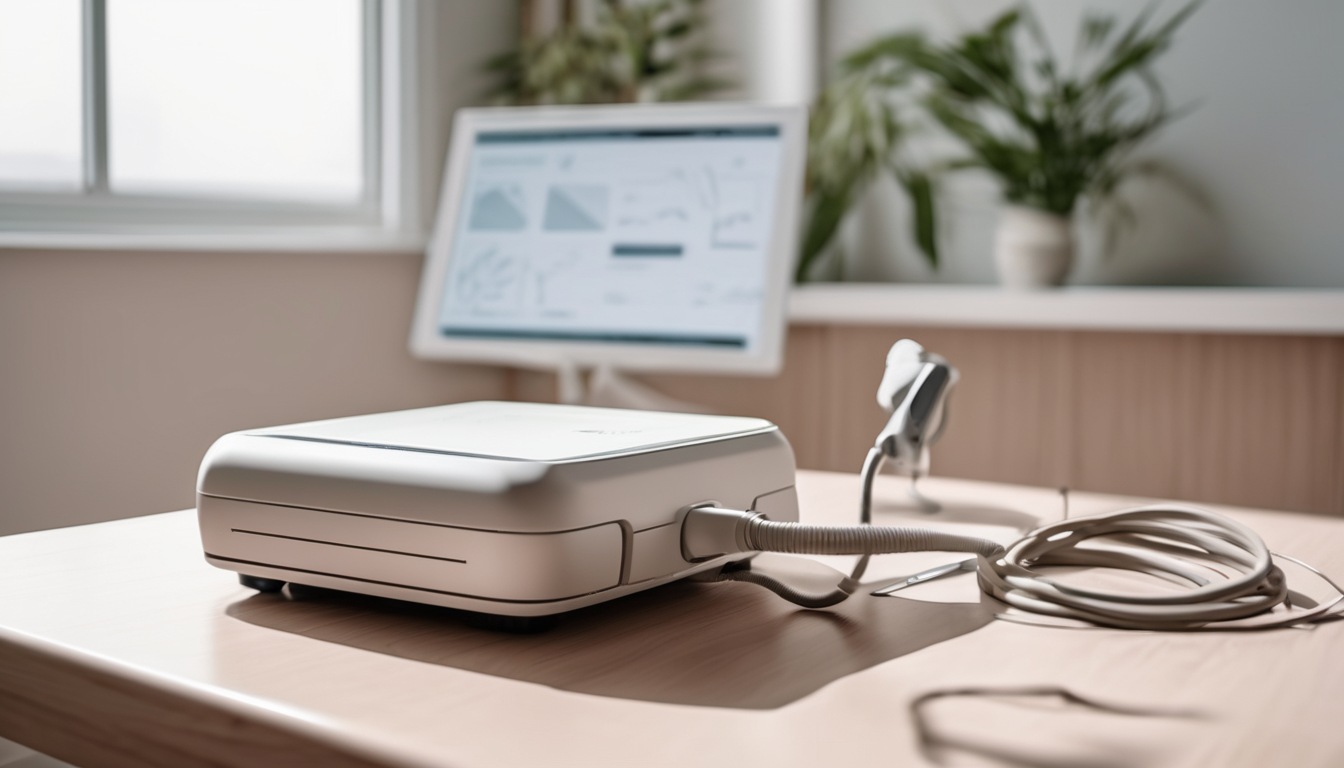
Understanding Mold Inspection Dubai: What the Process Reveals is essential. A mold inspection in Dubai is a structured diagnostic process that combines building science, environmental sampling, and laboratory analysis to identify the presence, source, and extent of mould contamination within an indoor environment. It is not a surface-level visual check. A professional mold inspection Dubai reveals information that no unaided eye can gather — moisture conditions inside wall cavities, spore concentrations in circulating air, and microbial species that determine both health risk and remediation strategy. Understanding what this process involves, and what it consistently uncovers, is the first step toward making sound decisions about your property.
Dubai’s climate creates conditions that accelerate mould development in ways that many residents do not anticipate. Ambient humidity frequently exceeds 80% during summer months, and interior surface temperatures fluctuate sharply where air-conditioned spaces meet poorly insulated building envelopes. These are not random occurrences — they are predictable outcomes of building physics interacting with one of the world’s most demanding outdoor environments. A professional mold inspection Dubai is designed specifically to map those interactions and trace contamination back to its origin. This relates directly to Mold Inspection Dubai: What the Process Reveals.
As an IAC2 Certified Indoor Air Consultant with over 20 years of cross-disciplinary experience, I have conducted mold inspections across Dubai villas, high-rise apartments, and commercial facilities throughout the UAE. The findings are rarely what residents expect. Hidden growth behind cladding, contaminated HVAC ductwork serving multiple rooms simultaneously, and moisture intrusion from neighbouring units are among the most frequently identified — and most frequently overlooked — conditions that only a rigorous mold inspection Dubai process can confirm. When considering Mold Inspection Dubai: What the Process Reveals, this becomes clear.
Mold Inspection Dubai: What the Process Reveals – What a Mold Inspection Dubai Actually Involves
The mold inspection Dubai process begins before a single sample is collected. A qualified inspector reviews the building’s age, construction type, occupancy history, and any prior water damage or remediation events. This background analysis shapes the entire investigation. Without it, sampling becomes guesswork rather than targeted science. The importance of Mold Inspection Dubai: What the Process Reveals is evident here.
The physical inspection follows a structured protocol that covers all surfaces, junctions, and systems where mould growth is known to initiate. Inspectors examine bathrooms, kitchens, utility rooms, HVAC components, and the building envelope — including window frames, external wall ties, and roof interfaces. In Dubai properties, particular attention is given to split AC units and centralised duct systems, where condensation accumulation creates sustained moisture reservoirs that support mould colonisation over extended periods. Understanding Mold Inspection Dubai: What the Process Reveals helps with this aspect.
The Role of Moisture Mapping
Moisture mapping is among the most revealing components of a professional mold inspection Dubai. Using calibrated moisture meters and thermal imaging cameras, inspectors identify elevated moisture readings within wall assemblies, floor slabs, and ceiling voids without requiring destructive access. In Dubai villas constructed with lightweight drywall partitions, moisture can migrate laterally across significant distances from an initial intrusion point. Mold Inspection Dubai: What the Process Reveals factors into this consideration.
Thermal imaging is particularly valuable in this climate because temperature differentials between conditioned interiors and unconditioned envelope surfaces produce condensation patterns that appear clearly on infrared scans. A cold-spot visible on a thermal image often correlates with elevated moisture and, in many cases, with active mould growth occurring on the concealed face of the surface. Moisture mapping transforms these invisible conditions into measurable, mappable data. This relates directly to Mold Inspection Dubai: What the Process Reveals.
Mold Inspection Dubai: What the Process Reveals – Sampling Methods the Mold Inspection Dubai Process Uses
Environmental sampling is where the mold inspection Dubai process moves from observation to laboratory-confirmed evidence. Sampling methods are selected based on the specific questions the investigation needs to answer — not applied uniformly to every surface in every room. When considering Mold Inspection Dubai: What the Process Reveals, this becomes clear.
Air Sampling and Spore Trap Analysis
Air sampling collects airborne particulates — including fungal spores — at a calibrated volume and flow rate. Spore trap cassettes are analysed under microscopy to identify fungal genera and quantify spore concentrations per cubic metre of air. Inspectors take both indoor samples from areas of concern and outdoor control samples to establish a baseline. The comparison between indoor and outdoor spore profiles is what matters: elevated indoor counts, or the presence of atypical species not commonly found outdoors, indicate an active interior contamination source. The importance of Mold Inspection Dubai: What the Process Reveals is evident here.
In Dubai apartments with sealed, air-conditioned environments and limited natural ventilation, airborne spore concentrations can accumulate significantly before occupants notice any visible growth. Air sampling during a mold inspection Dubai frequently reveals elevated counts in spaces that appear visually clean — a finding that demonstrates precisely why surface observation alone is insufficient. Understanding Mold Inspection Dubai: What the Process Reveals helps with this aspect.
Surface and Bulk Sampling
Surface sampling — typically tape lifts or swabs — collects material directly from suspected growth areas for microscopic or culture-based laboratory analysis. Bulk sampling involves collecting a physical section of affected material, such as drywall or ceiling tile, for deeper examination. These methods confirm species identification and distinguish between active growth and dormant or dead spore deposits from a prior event. Mold Inspection Dubai: What the Process Reveals factors into this consideration.
Species identification matters because different mould genera carry different health implications and respond differently to remediation approaches. Identifying Stachybotrys chartarum, for instance, requires a different remediation protocol than Cladosporium or Penicillium. At Saniservice’s in-house microbiology laboratory — the only one of its kind operated by an indoor environmental services company in the UAE — samples are processed with full chain-of-custody documentation, ensuring results are both accurate and defensible. This relates directly to Mold Inspection Dubai: What the Process Reveals.
Mold Inspection Dubai: What the Process Reveals – What the Mold Inspection Dubai Process Reveals About HVAC Sy
Dubai properties rely almost entirely on mechanical cooling for air management, and HVAC systems are among the most consequential findings in any mold inspection Dubai investigation. Air handling units, fan coil units, supply and return ductwork, and drainage trays all represent surfaces where sustained moisture, organic debris, and low-light conditions create ideal mould growth conditions. When considering Mold Inspection Dubai: What the Process Reveals, this becomes clear.
A mold inspection Dubai that includes HVAC evaluation typically reveals one or more of the following: biological growth on the internal surfaces of fan coil units, blocked or overflowing condensate drains that allow water to pool within the unit, and particulate accumulation within ducts that serves as a nutrient substrate for fungal colonisation. When mould establishes within an HVAC system, every room served by that system receives a continuous supply of airborne spores regardless of where the growth is physically located. The importance of Mold Inspection Dubai: What the Process Reveals is evident here.
Borescope inspection — inserting a flexible fibre-optic camera into ductwork — allows inspectors to visualise internal duct conditions without requiring duct disassembly. Combined with NADCA-aligned assessment methodology, this component of the mold inspection Dubai process frequently reveals contamination that would otherwise remain entirely undetected. Understanding Mold Inspection Dubai: What the Process Reveals helps with this aspect.
Hidden Mould Detection During a Dubai Inspection
One of the most consistent findings across mold inspection Dubai casework is that significant mould growth is present in locations that are not visible during routine occupant observation. Dubai’s construction methods — which frequently use double-skin cladding systems, suspended ceilings, and hollow partition walls — create enclosed voids where moisture accumulates and mould establishes without any surface indicator. Mold Inspection Dubai: What the Process Reveals factors into this consideration.
Thermal imaging, moisture mapping, and targeted borescope inspection work together to interrogate these concealed spaces systematically. When a reading or visual anomaly indicates a concern, a small, targeted intrusive inspection — a pinhole camera access point or a contained section of drywall removal — confirms the finding and documents it photographically. This approach minimises unnecessary demolition while maximising diagnostic accuracy. This relates directly to Mold Inspection Dubai: What the Process Reveals.
Based on field investigations conducted across Dubai and the wider UAE, hidden mould growth is frequently found behind bathroom tile systems where waterproofing membranes have failed, within suspended ceiling voids above kitchen areas, and inside external wall cavities where condensation cycles have been ongoing for extended periods. These findings only emerge through a structured mold inspection Dubai process — not through visual surface assessment. When considering Mold Inspection Dubai: What the Process Reveals, this becomes clear.
Laboratory Analysis and What It Tells You
The laboratory phase of a mold inspection Dubai is where raw samples become actionable information. Analysis outcomes confirm which fungal genera are present, at what concentration relative to outdoor controls, and whether the contamination profile suggests an active growth source or historic deposition. This distinction directly determines remediation scope and urgency. The importance of Mold Inspection Dubai: What the Process Reveals is evident here.
At Saniservice’s in-house microbiology laboratory, samples collected during mold inspections across Dubai villas and apartments are processed under controlled conditions with documented methodology. Results are interpreted within the context of the full site investigation — not in isolation. A spore count is only meaningful when it is understood alongside the moisture data, the building context, and the occupant’s health observations. That integrated interpretation is what separates a professional mold inspection Dubai from a simple sampling exercise.
Read more: Mold Clearance Certificate
The Mold Inspection Report and What It Contains
A professional mold inspection Dubai concludes with a detailed written report that documents every finding, measurement, sample result, and recommendation. This report serves multiple purposes: it guides remediation planning, supports insurance claims where applicable, satisfies regulatory requirements for DHA mold clearance certification where required, and provides a baseline for post-remediation verification.
A complete inspection report includes moisture mapping data with annotated floor plans, thermal images with corresponding surface readings, laboratory results with interpretation, photographic documentation of all observed conditions, and a prioritised list of recommended actions. The report is not a sales document — it is a scientific record. Its value lies in the clarity and precision of what it documents.
Expert Takeaways From the Mold Inspection Dubai Process
- A mold inspection Dubai is a multi-phase diagnostic process, not a single site visit with a torch and a clipboard.
- Moisture mapping and thermal imaging reveal conditions inside wall assemblies that no surface observation can identify.
- Air sampling compares indoor and outdoor spore profiles — elevated indoor counts or atypical species confirm an active interior source.
- HVAC systems in Dubai properties are among the most frequently implicated contamination pathways identified during professional inspections.
- Laboratory analysis confirms species identity, which directly determines remediation methodology and health risk interpretation.
- The inspection report is the foundation for every subsequent decision — remediation scope, clearance testing, and long-term prevention.
- Post-remediation verification through a repeat mold inspection Dubai is the only scientifically valid way to confirm that remediation has been successful.
Why the Mold Inspection Dubai Process Matters for Long-Term Outcomes
Remediation without a preceding professional inspection is, at best, an educated guess. Without confirmed moisture sources, mapped contamination extent, and laboratory-identified species, remediation teams are working without a blueprint. The result is frequently incomplete remediation — visible growth removed, but the underlying moisture condition and concealed growth left unaddressed — followed by recurrence within months.
A properly conducted mold inspection Dubai establishes the foundation for remediation that actually resolves the problem rather than postponing it. It identifies which building systems require correction alongside material removal, which spaces require containment and negative pressure during remediation, and what the post-remediation air quality baseline should look like. The inspection is not a cost added to the process — it is the information that makes every subsequent step purposeful.
For property managers overseeing multiple units in Dubai and Abu Dhabi developments, periodic mold inspection as part of a preventive maintenance protocol consistently identifies conditions before they escalate — reducing remediation scope, protecting building value, and maintaining indoor environments that occupants can trust.
Frequently Asked Questions
What does a professional mold inspection Dubai involve?
A professional mold inspection Dubai combines visual building assessment, moisture mapping with calibrated instruments, thermal imaging, environmental air and surface sampling, and laboratory analysis. The process identifies mould presence, contamination extent, active moisture sources, and HVAC contributions. Results are documented in a formal report that guides remediation planning and supports post-remediation verification.
How long does a mold inspection take in a typical Dubai villa?
A comprehensive mold inspection Dubai for a standard villa typically requires between two and four hours on-site, depending on property size, building complexity, and the number of areas of concern. Laboratory analysis of collected samples adds additional time before final results are available. A preliminary site briefing is usually provided at the end of the inspection visit.
Can mould be present in Dubai apartments that look visually clean?
Yes. Based on field investigations conducted across Dubai and Sharjah apartments, mould growth is frequently identified in concealed locations — within HVAC systems, inside wall cavities, and above suspended ceilings — in spaces that appear visually clean. Air sampling during a mold inspection Dubai routinely reveals elevated airborne spore concentrations in properties with no visible surface mould.
Why is HVAC inspection included in a mold inspection Dubai?
Dubai properties rely on continuous mechanical cooling, and HVAC systems are among the most commonly identified contamination sources during professional inspections. Mould established within a fan coil unit or supply duct distributes airborne spores to every room served by that system. A mold inspection Dubai that excludes HVAC evaluation provides an incomplete picture of indoor contamination.
What is the difference between a mold inspection and mold testing?
Mold testing refers specifically to the collection and laboratory analysis of environmental samples. A mold inspection Dubai encompasses the full diagnostic process — building assessment, moisture mapping, thermal imaging, sampling, laboratory interpretation, and reporting. Testing is one component of the inspection. Conducting sampling without the broader investigation context significantly limits the accuracy and usefulness of results.
Is a mold inspection required before obtaining a DHA mold clearance certificate in Dubai?
A DHA mold clearance certificate documents that an indoor environment meets defined standards following remediation. A professional mold inspection Dubai — including post-remediation air sampling and laboratory analysis — is the primary means by which clearance is confirmed. The inspection report and laboratory results form the evidentiary basis for any formal clearance documentation.
How does Dubai’s climate affect what a mold inspection reveals?
Dubai’s combination of extreme outdoor humidity, prolonged air-conditioning dependence, and construction methods using lightweight partitions and cladding systems creates specific moisture accumulation patterns. A mold inspection Dubai conducted in this climate frequently reveals condensation-driven growth at envelope interfaces, drainage failures within HVAC systems, and hidden moisture within sealed wall and ceiling voids — conditions shaped directly by the UAE’s thermal environment. Understanding Mold Inspection Dubai: What the Process Reveals is key to success in this area.