
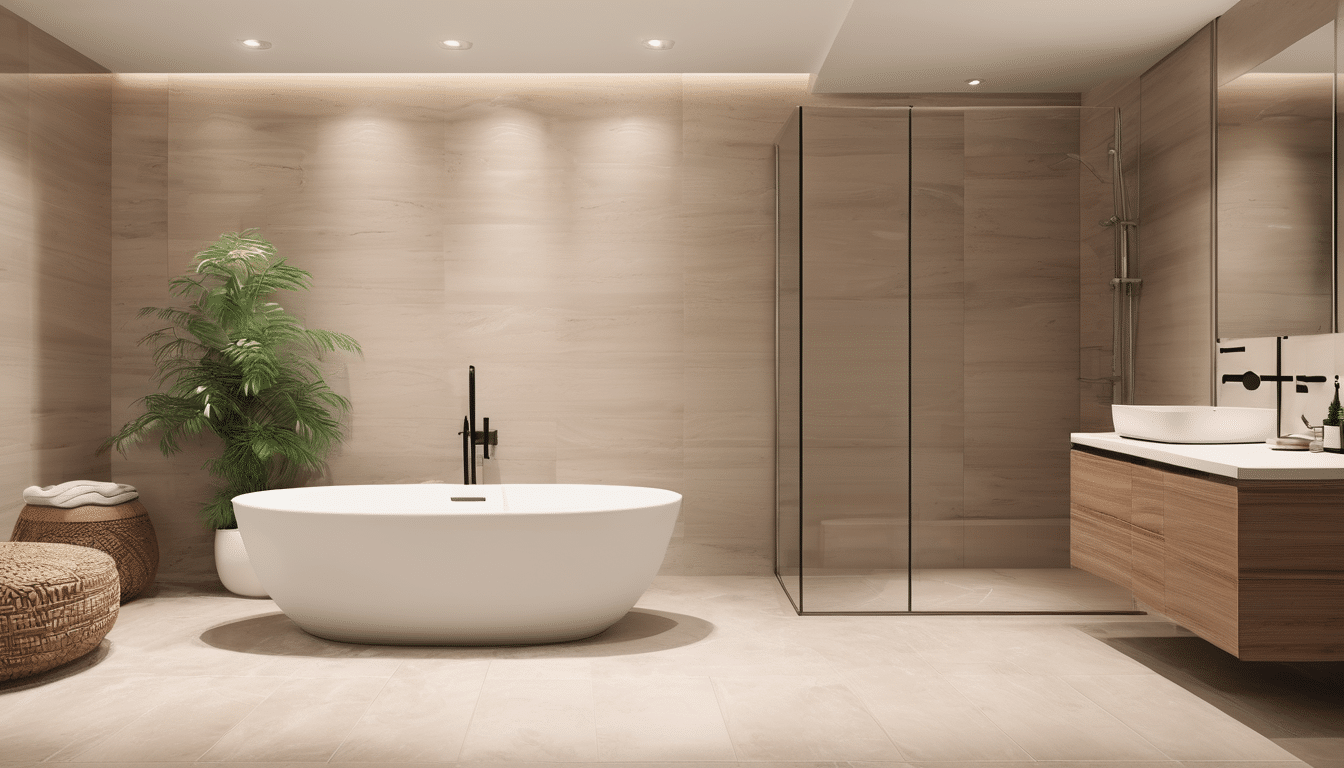
There is a moment when you notice dark lines along your bathroom grout and reach for a spray bottle, expecting a quick fix. In Dubai’s climate — where indoor relative humidity frequently sits between 60% and 85% during summer months — that moment arrives regularly, and the spray bottle rarely solves the problem completely. A reliable mold cleaner for bathroom tiles Dubai guide must address more than product selection. It must explain why tile mould returns, what surface conditions make it persistent, and how to match the right intervention to what the laboratory and your eyes are actually telling you.
As an IAC2 Certified Indoor Air Consultant and mould science practitioner based in Dubai, I have assessed hundreds of bathrooms where repeated cleaning had not resolved the underlying pattern. The findings are consistent: surface treatment without moisture control and ventilation correction produces temporary visual improvement, not genuine remediation. This guide distills those field observations into practical, evidence-grounded guidance for UAE homeowners across Dubai, Abu Dhabi, Sharjah, Ajman, and Ras Al Khaimah. This relates directly to mold Cleaner for Bathroom Tiles Dubai Guide.
Understanding the Mold Cleaner for bathroom tiles Dubai context means accepting that product chemistry, application method, tile porosity, grout condition, and ambient humidity all interact. Get one factor wrong, and mould reappears within weeks.
Why Bathroom Tile Mould Behaves Differently in Dubai
Dubai’s indoor environment creates conditions that differ substantially from temperate climates where most mould remediation products are formulated and tested. Outdoor temperatures regularly exceed 40°C in summer, which forces air conditioning systems to run continuously. The resulting temperature differential between cool tile surfaces and warm, humid air produces surface condensation — the primary moisture source for tile and grout mould. When considering Mold Cleaner for Bathroom Tiles Dubai Guide, this becomes clear.
Bathroom exhaust fans in many UAE villas and apartments are either undersized, poorly positioned, or ducted incorrectly — sometimes terminating inside ceiling cavities rather than to the building exterior. This means moisture generated by showering recirculates rather than evacuating the space. No mold cleaner for bathroom tiles, regardless of formulation, will deliver lasting results in this condition.
Grout is also highly relevant. Most bathroom tile grout is cementitious and inherently porous. Mould hyphae penetrate beneath the surface layer within days of initial colonisation, meaning visible black or grey staining represents the exterior of a much deeper growth pattern. Surface-only applications address what you can see, not what has already migrated into the grout matrix.
Mold Cleaner for Bathroom Tiles Dubai Guide to Severity Assessment
Before selecting any cleaning product or method, assess what you are actually dealing with. Severity determines scope. A mold cleaner for bathroom tiles Dubai homeowners can apply safely at home is appropriate for early-stage, surface-confined growth. Deeper contamination requires professional intervention. The importance of Mold Cleaner for Bathroom Tiles Dubai Guide is evident here.
Early-Stage Surface Growth
Thin grey or black lines confined to grout joints, no odour, no visible spread to wall surfaces behind tiles, and a shower or bathroom used regularly — this pattern is typically early-stage. Spore counts in this scenario are generally low when air sampling is conducted. Surface cleaning with an appropriate product, followed by ventilation improvement, is a reasonable first response.
Established Mould Patterns
Widespread black staining across multiple grout lines, fuzzy or raised growth texture, a persistent musty odour even after cleaning, and recurrence within two to three weeks of treatment — these are indicators of established colonisation. At this stage, professional assessment using moisture mapping and surface sampling is warranted before any further cleaning is attempted.
Concealed or Structural Growth
Where tiles feel hollow when tapped, where grout is crumbling or lifting, or where an odour persists despite visible surfaces appearing clean, growth behind the tile substrate is possible. This is a building science problem, not a cleaning problem. A mold cleaner for bathroom tiles Dubai guide cannot substitute for borescope inspection and laboratory-confirmed sampling in these cases.
Product Chemistry for Bathroom Tile Mould in UAE Conditions
Not all mould cleaning products are formulated equivalently. The UAE market includes a wide range of imported and locally distributed options with varying active ingredient concentrations. Understanding the chemistry helps homeowners choose appropriately.
Hypochlorite-Based Cleaners
Sodium hypochlorite (bleach-based) products are the most commonly used mold cleaner for bathroom tiles across Dubai households. They are effective at deactivating surface mould cells on non-porous tile faces. However, hypochlorite has limited penetration depth into porous cementitious grout. The visible staining may lighten or disappear while viable hyphae remain below the surface layer, explaining rapid recurrence.
Additionally, hypochlorite degrades quickly in high-temperature environments. Products stored in warm conditions or applied to sun-heated tile surfaces may have substantially reduced active ingredient concentration at the point of use. Understanding Mold Cleaner for Bathroom Tiles Dubai Guide helps with this aspect.
Hydrogen Peroxide-Based Cleaners
Hydrogen peroxide formulations offer better material compatibility with coloured grout and are less likely to cause bleaching or discolouration. They provide moderate mould cell disruption and are appropriate for early-stage surface growth. Higher concentration formulations (above 6%) should be handled with appropriate personal protective equipment and are not typically available in consumer retail formats in the UAE.
Quaternary Ammonium Compounds
Quat-based disinfectants are frequently found in UAE cleaning supply stores and are effective against bacterial biofilm but demonstrate variable performance against fungal colonies. For bathroom tile mould specifically, they are best understood as a maintenance product rather than a primary remediation tool.
Enzyme and Biological Cleaners
Enzyme-based products break down organic material that supports mould growth. They work more slowly than hypochlorite but offer sustained effect on the organic substrate within grout. In field observations across Dubai properties, enzyme cleaners used as part of a maintenance programme — after primary remediation — have contributed to longer intervals between mould recurrence. Mold Cleaner for Bathroom Tiles Dubai Guide factors into this consideration.
Mold Cleaner for Bathroom Tiles Dubai Guide to Safe Application
Product selection matters less than application discipline. A correctly applied moderate-strength cleaner outperforms an incorrectly used premium product consistently.
- Ventilate the bathroom fully before applying any mould cleaning product. Open windows where available and run the exhaust fan. Chemical vapour concentration in an enclosed bathroom rises quickly.
- Wear nitrile gloves and, for spray applications, a properly fitted P2 or P3 respirator. Mould spores become airborne during agitation and cleaning.
- Apply product to dry tile and grout surfaces. Wet surfaces dilute active ingredients and reduce contact time effectiveness.
- Allow adequate dwell time — typically 10 to 15 minutes — before agitating with a stiff-bristled brush. Grout requires mechanical action to physically disrupt hyphae that bleach alone cannot fully penetrate.
- Rinse thoroughly and allow surfaces to dry completely before assessing results.
- Do not mix cleaning products. Hypochlorite combined with ammonia-based cleaners or acidic tile cleaners creates hazardous reaction products.
As a mold cleaner for bathroom tiles Dubai homeowner practice, these steps represent responsible self-management for early-stage, surface-confined growth. They are not a substitute for professional remediation when growth extent exceeds what can be confirmed as surface-only.
When a Mould Cleaner Is Not Enough
The most important section of any honest mold cleaner for bathroom tiles Dubai guide is the one that explains when to stop cleaning and start investigating. Surface treatment has defined limits, and exceeding those limits while continuing to clean produces false confidence rather than genuine remediation.
Professional mould remediation for bathroom tiles involves moisture mapping using calibrated instruments, surface and air sampling interpreted by a registered microbiology laboratory, containment of the work area to prevent cross-contamination to adjacent rooms, and mechanical removal of compromised grout followed by appropriate surface treatment before regrouting. These steps follow IICRC S520 and IAC2 remediation standards — the same frameworks applied by Saniservice specialists during bathroom mould assessments in Dubai.
Post-remediation verification through independent air sampling and surface testing confirms whether remediation has been effective. A clearance result provides documented evidence — not assumption — that the bathroom is safe to return to normal use. This verification step is what distinguishes professional mould remediation from repeated surface cleaning.
Mold Cleaner for Bathroom Tiles Dubai Guide to Preventing Recurrence
Prevention in Dubai bathrooms requires addressing the conditions that enable mould growth, not merely treating the evidence of it. The following measures are consistently effective when implemented together. This relates directly to Mold Cleaner for Bathroom Tiles Dubai Guide.
Ventilation Correction
Exhaust fans should be rated for the bathroom volume and should terminate to the exterior of the building. In Dubai apartment buildings, this is frequently not the case. Verify duct termination as part of any mould prevention strategy. Where mechanical ventilation is inadequate, even the best mold cleaner for bathroom tiles will not prevent recurrence.
Humidity Management
Indoor relative humidity should be maintained below 60% to limit mould growth potential. In bathrooms, this means running the exhaust fan during and for at least 20 minutes after showering. A portable hygrometer placed in the bathroom provides ongoing visibility of conditions.
Grout Sealing
Sealing cementitious grout with a penetrating silicone or epoxy-based sealer reduces porosity and limits mould’s ability to colonise below the surface. Sealing should be applied to clean, dry grout only — sealing over existing mould growth traps viable cells and does not constitute remediation. When considering Mold Cleaner for Bathroom Tiles Dubai Guide, this becomes clear.
Maintenance Cleaning Frequency
In Dubai’s climate, bathroom tile maintenance cleaning every 10 to 14 days is more appropriate than monthly schedules common in cooler climates. A light application of a hydrogen peroxide or enzyme-based product used at this frequency, combined with proper drying practices, reduces the interval during which mould can establish a persistent colony.
Mold Cleaner for Bathroom Tiles Dubai Guide for Sensitive Occupants
Households with occupants who have asthma, allergic rhinitis, or immune compromise require additional consideration. Mould cleaning activities generate significant spore dispersal. Sensitive occupants should not be present in or adjacent to the bathroom during cleaning, and the space should be allowed to ventilate fully before re-entry.
Strong hypochlorite products also release chlorine vapour, which is irritating to airways. For households with sensitive occupants, hydrogen peroxide or enzyme-based alternatives applied with careful ventilation are more appropriate choices within a mold cleaner for bathroom tiles Dubai home management plan. The importance of Mold Cleaner for Bathroom Tiles Dubai Guide is evident here.
Where a sensitive occupant is experiencing symptoms that correlate with bathroom use — eye irritation, throat discomfort, or respiratory changes — professional air sampling is warranted before further self-cleaning attempts. Symptoms are data. They deserve laboratory-level investigation, not another spray bottle.
Expert Takeaways
- No mold cleaner for bathroom tiles works sustainably without moisture and ventilation control. Chemistry alone does not resolve a building physics problem.
- Grout porosity limits what surface application can achieve. Mechanical agitation and adequate dwell time are as important as product selection.
- Recurrence within three weeks of cleaning is a diagnostic signal, not a product failure. It indicates growth depth exceeds surface treatment capability.
- Sensitive occupants should not be present during mould cleaning, and ventilation must be managed carefully regardless of product type.
- Post-remediation verification through laboratory-confirmed testing is the only reliable way to confirm that mould has been genuinely resolved rather than temporarily suppressed.
Frequently Asked Questions
What is the most effective mold cleaner for bathroom tiles in Dubai?
Effectiveness depends on growth severity, grout porosity, and application discipline. For early-stage surface growth, hypochlorite-based products with adequate dwell time and mechanical agitation perform well. For persistent or recurring mould in Dubai bathrooms, professional assessment and laboratory-confirmed remediation deliver more reliable and lasting results than any retail product alone.
Why does mould keep coming back in my Dubai bathroom even after cleaning?
Recurrent bathroom mould in Dubai is almost always linked to inadequate ventilation, persistent surface condensation, or growth that has penetrated below the grout surface. Surface cleaning removes visible growth but does not address the moisture conditions enabling it. Ventilation correction and moisture mapping are required to break the recurrence cycle. Understanding Mold Cleaner for Bathroom Tiles Dubai Guide helps with this aspect.
Is bleach safe to use on bathroom tiles in UAE homes?
Sodium hypochlorite is safe on most ceramic and porcelain tiles when used with adequate ventilation and protective equipment. It is not recommended for coloured grout, as it can cause irreversible bleaching. It should never be mixed with other cleaning products. For households with sensitive occupants, hydrogen peroxide alternatives are more appropriate.
How do I know if mould in my Dubai bathroom needs professional remediation?
Professional remediation is warranted when mould reappears within two to three weeks of thorough cleaning, when a musty odour persists despite clean visible surfaces, when growth covers an area exceeding 0.1 square metres, or when a sensitive occupant reports symptoms correlated with bathroom use. A professional assessment using moisture mapping and surface sampling provides an evidence-based scope.
Can I seal bathroom grout to prevent mould in Dubai?
Yes. Applying a penetrating silicone or epoxy grout sealer significantly reduces grout porosity and limits mould colonisation below the surface. However, sealing must be applied to clean, completely dry grout only. Sealing over existing mould growth does not remediate it and traps viable fungal material beneath the surface. Mold Cleaner for Bathroom Tiles Dubai Guide factors into this consideration.
Do Dubai apartments typically have adequate bathroom ventilation for mould prevention?
Commonly observed during field investigations in Dubai apartments and villas, bathroom exhaust systems are frequently undersized, poorly positioned, or ducted to ceiling cavities rather than building exteriors. This is a recurring finding in laboratory-supported mould investigations across Dubai, Sharjah, and Abu Dhabi properties. Verifying exhaust fan specification and duct termination is an essential first step in any mould prevention programme.
What certification should I look for in a mould remediation specialist in Dubai?
Look for IAC2 certification (International Association of Certified Indoor Air Consultants) and IICRC S520 standard compliance. In the UAE, professional mould remediators operating to these frameworks apply documented protocols including containment, laboratory-confirmed sampling, and post-remediation verification — not simply cleaning and reporting the job complete.
The mold cleaner for bathroom tiles Dubai guide that serves homeowners most honestly is one that begins with what you can see, explains what is likely happening below the surface, and draws a clear line between responsible self-management and the point where professional science is the appropriate tool. Dubai’s indoor climate is demanding. Bathrooms bear the most sustained moisture exposure of any room in the home. The cleaner in your hand is one part of the answer — understanding the building system it is operating within is the rest.