
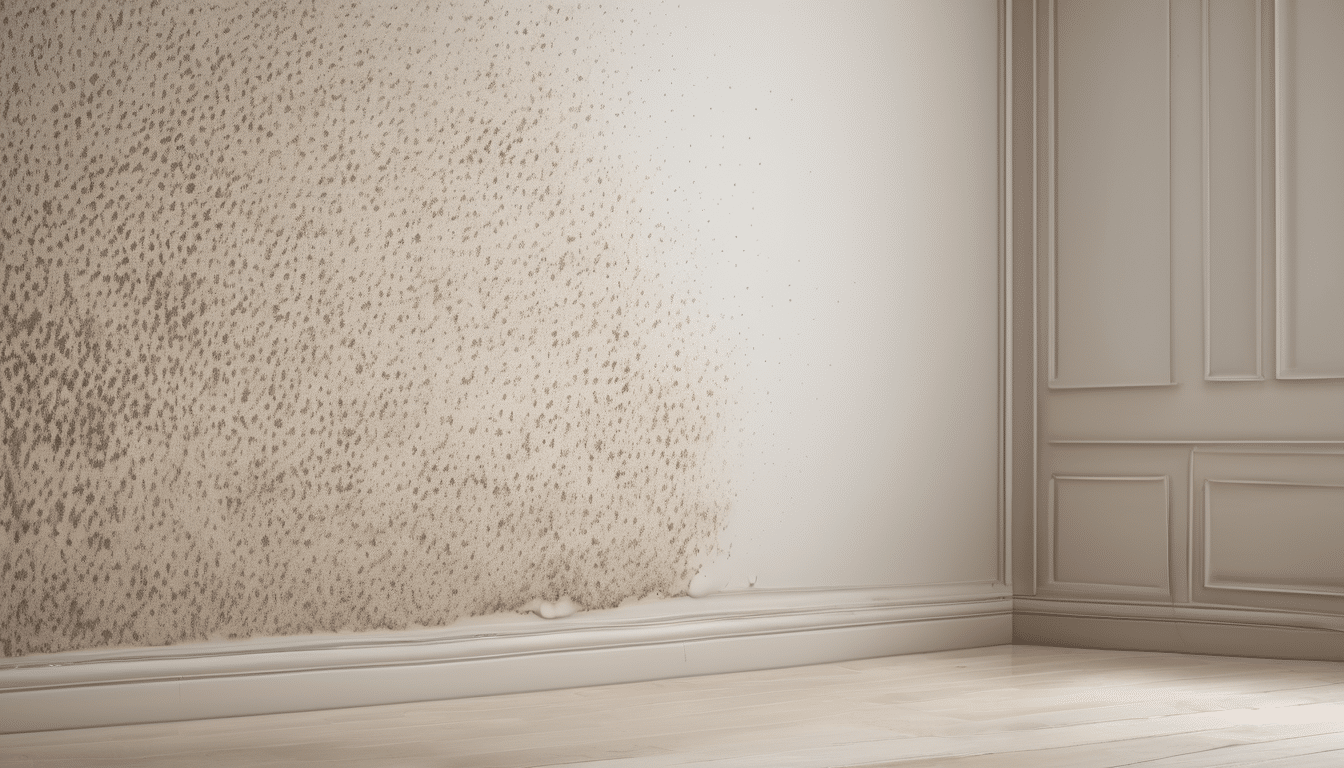
Understanding Mould After Water Leak Uae: Step-by-Step Response is essential. When water intrudes into a UAE property, the clock starts immediately. Mould after water leak UAE response must begin within 24 to 48 hours — because in Dubai’s year-round humidity, the conditions for fungal colonisation are already present before the leak even occurs. The building materials, the ambient moisture levels, and the temperature inside most UAE villas and apartments create an environment where dormant spores need only one trigger: liquid water on a porous surface. Understanding the correct sequence of actions — and why each step matters biologically — is what separates a contained incident from a recurring contamination problem.
In over 20 years of building investigations across Dubai, Abu Dhabi, Sharjah, and Ras Al Khaimah, I have observed the same pattern repeatedly. The water event itself is addressed. The visible damage is repaired. But the mould investigation is skipped, or rushed, or handed to a general maintenance contractor without microbiological competence. Months later, the occupants notice a persistent musty odour, dark staining behind a repaired wall, or unexplained respiratory irritation. The root cause was never truly resolved. This relates directly to Mould After Water Leak Uae: Step-by-Step Response.
This guide outlines a methodical, science-first approach to mould after water leak UAE situations. Each step is sequenced based on building science, microbiology, and field-validated protocol — not cosmetic convenience. When considering Mould After Water Leak Uae: Step-by-Step Response, this becomes clear.
Mould After Water Leak Uae: Step-by-Step Response – Why UAE Leaks Create Mould Faster Than Most Climates
Dubai and the wider UAE operate at ambient outdoor relative humidity that frequently exceeds 80 to 90 percent during summer months. Even with air conditioning running, indoor surfaces near exterior walls, inside HVAC cavities, and beneath floor screeds often hold residual moisture from previous condensation cycles. When a pipe bursts, a roof membrane fails, or a water heater drains unexpectedly, that moisture finds materials already primed for biological activity. The importance of Mould After Water Leak Uae: Step-by-Step Response is evident here.
Common fungal species identified in UAE post-leak investigations include Aspergillus, Cladosporium, and Penicillium. These species are characteristically humidity-tolerant and begin colonising porous substrates — drywall, ceiling tile, timber framing, insulation, grout — within one to two days of sustained wetting. The mould after water leak UAE step-by-step response protocol accounts for this accelerated timeline. Understanding Mould After Water Leak Uae: Step-by-Step Response helps with this aspect.
Mould After Water Leak Uae: Step-by-Step Response – Step 1 — Stop the Source Before Anything Else
No mould investigation or remediation programme produces lasting results if the water source remains active. This sounds obvious, but it is frequently overlooked in the urgency of managing visible damage. A slow pipe seep, a failing balcony waterproofing membrane, or a rooftop drainage blockage can sustain moisture levels inside wall cavities long after the obvious flooding has been mopped up. Mould After Water Leak Uae: Step-by-Step Response factors into this consideration.
Identify the Exact Water Origin
Leaks in UAE properties often originate from three primary sources: plumbing supply or drainage failures, HVAC condensate line overflows, and envelope breaches through facades, roofs, or podium decks. Each source type has a different moisture penetration pattern and a different remediation implication. A condensate overflow from a ceiling-mounted fan coil unit, for instance, saturates ceiling tiles and the structural soffit above — materials that are rarely inspected during a standard repair. This relates directly to Mould After Water Leak Uae: Step-by-Step Response.
Confirm the source is fully resolved — not just slowed — before proceeding. Request a pressure test or flow verification from your plumbing contractor if the origin is uncertain. When considering Mould After Water Leak Uae: Step-by-Step Response, this becomes clear.
Mould After Water Leak Uae: Step-by-Step Response – Step 2 — Assess Moisture Extent with Instruments
Visual inspection alone is unreliable. Water migrates through capillary action into wall assemblies, floor screeds, and ceiling voids well beyond the visible wet zone. The correct mould after water leak UAE step-by-step response requires calibrated moisture measurement tools to map the true extent of saturation. The importance of Mould After Water Leak Uae: Step-by-Step Response is evident here.
Moisture Meters and Thermal Imaging
Calibrated pin and pinless moisture meters measure moisture content within building materials. Acceptable thresholds vary by substrate: for standard gypsum board, moisture content above 20 percent is a concern; for timber framing, above 19 percent signals elevated biological risk. Thermal imaging adds a spatial dimension — temperature differentials on wall and ceiling surfaces reveal hidden moisture migration paths that meters alone may not reach. As an IAC2 Certified Indoor Air Consultant, I routinely combine both tools on every post-leak assessment because each reveals what the other misses. Understanding Mould After Water Leak Uae: Step-by-Step Response helps with this aspect.
Document all readings with date, time, and GPS-tagged photography. This moisture map becomes the baseline against which drying progress is measured — a critical record for the mould after water leak UAE step-by-step response file. Mould After Water Leak Uae: Step-by-Step Response factors into this consideration.
Step 3 — Establish Controlled Drying Conditions
Once the moisture extent is mapped, structural drying must begin immediately using commercial-grade equipment. Household fans and open windows are insufficient in UAE conditions — they introduce humid outdoor air and may drive moisture deeper into building assemblies. This relates directly to Mould After Water Leak Uae: Step-by-Step Response.
Commercial desiccant or refrigerant dehumidifiers, positioned correctly for airflow volume relative to the affected space, extract moisture from both air and materials simultaneously. Air movement from axial fans accelerates surface evaporation, while negative air pressure containment (where applicable) prevents humid air from migrating into unaffected zones. Target indoor relative humidity below 50 percent and material moisture content within acceptable thresholds before drying is declared complete. When considering Mould After Water Leak Uae: Step-by-Step Response, this becomes clear.
Drying validation is not a visual judgement. Moisture readings must confirm acceptable levels across all affected substrates before any reconstruction begins. Premature encapsulation of wet materials is among the most common causes of post-remediation mould recurrence in UAE properties. The importance of Mould After Water Leak Uae: Step-by-Step Response is evident here.
Step 4 — Conduct a Mould Investigation Before Removing Materials
This step is where many property managers and maintenance contractors diverge from best practice. In the mould after water leak UAE step-by-step response protocol, mould investigation precedes material removal — not the reverse. Tearing out drywall, ceiling tiles, or flooring without knowing what is behind them risks releasing concentrated spore loads into the occupied environment. Understanding Mould After Water Leak Uae: Step-by-Step Response helps with this aspect.
Surface Sampling and Air Testing
Surface swab or tape-lift samples collected from suspect areas provide direct evidence of fungal colonisation and, when processed in a laboratory, identify the species present. Air sampling using spore trap cassettes and a calibrated pump captures the airborne fungal load — both within the affected zone and in adjacent occupied spaces. Comparing indoor spore counts against an outdoor baseline establishes whether the building interior is elevated relative to the normal environmental background. Mould After Water Leak Uae: Step-by-Step Response factors into this consideration.
At Saniservice’s in-house microbiology laboratory — the UAE’s only such facility operated by an indoor environmental services company — these samples are processed and reported with species-level identification. That granularity matters because different species carry different risk profiles and respond differently to remediation methods. This relates directly to Mould After Water Leak Uae: Step-by-Step Response.
Step 5 — Design and Execute Mould Remediation Properly
Remediation scope is determined by investigation findings, not by estimate. The mould after water leak UAE step-by-step response protocol distinguishes clearly between surface contamination (typically addressable without material removal) and deep substrate colonisation (which requires controlled demolition and disposal). When considering Mould After Water Leak Uae: Step-by-Step Response, this becomes clear.
Containment and Negative Pressure
Before any disturbing work begins, the affected area is isolated with polyethylene sheeting and negative air pressure is established using HEPA-filtered air scrubbers. This prevents cross-contamination to clean zones — particularly important in occupied villas in Dubai neighbourhoods such as Arabian Ranches, Jumeirah, or Mirdif, where families may be present in adjacent rooms during works.
Material Removal and Surface Treatment
Contaminated porous materials — gypsum board, ceiling tiles, insulation batts — are removed, double-bagged, and disposed of per UAE waste management guidelines. Structural surfaces are HEPA-vacuumed, wiped with appropriate antimicrobial agents registered for use in the UAE, and allowed to fully dry. The goal is to reduce fungal burden to background-equivalent levels, verified by post-remediation testing — not simply to eliminate visible discolouration.
Step 6 — Post-Remediation Verification Through Laboratory Testing
Remediation is not complete until post-remediation verification (PRV) sampling confirms acceptable indoor fungal levels. This is a non-negotiable step in any science-based mould after water leak UAE step-by-step response programme. Without PRV, remediation success is assumed rather than measured.
Post-clearance air samples from the remediated zone are compared against the pre-remediation baseline and the outdoor control. A remediated space should show spore counts within normal background range, with no elevation of water-damage-indicator species such as Stachybotrys or Chaetomium. If lab results confirm clearance, reconstruction can proceed. If not, the investigation and remediation cycle continues until the data supports closure.
Step 7 — Address Root Causes to Prevent Recurrence
The mould after water leak UAE step-by-step response does not end with clearance sampling. Root cause correction — the building defect that allowed the water intrusion in the first place — must be addressed before the response can be considered complete. Mould is a result, not the problem itself.
Common root causes identified in UAE field investigations include failed waterproofing membranes on rooftop plantrooms, improperly sloped balcony screed allowing water ponding against facade penetrations, undersized HVAC condensate drain lines that overflow under peak cooling demand, and inadequate vapour control in cold supply duct assemblies causing persistent condensation on duct surfaces. Correcting these conditions is what distinguishes a resolved case from a recurring problem.
Expert Takeaways for UAE Property Owners
- Begin the mould after water leak UAE step-by-step response within 24 hours of the water event — do not wait for visible mould to appear.
- Never rely on visual inspection alone — moisture mapping with calibrated instruments is essential.
- Do not reconstruct over wet materials — verify dryness with readings before closing any wall or ceiling assembly.
- Require laboratory-confirmed results both before and after remediation — not just a visual sign-off.
- Engage a building science professional with indoor environmental credentials, not a general cleaning or maintenance contractor.
- Retain all documentation — moisture maps, lab reports, and post-remediation clearance certificates — especially in DHA or Dubai Municipality regulated properties.
Frequently Asked Questions
How quickly does mould develop after a water leak in Dubai?
In Dubai’s climate, mould can begin colonising porous building materials within 24 to 48 hours of sustained wetting. The combination of warm temperatures and high ambient humidity accelerates fungal growth significantly compared to temperate climates. This is why the mould after water leak UAE step-by-step response protocol prioritises immediate action over a wait-and-see approach.
What is the first step to take after a water leak in a UAE apartment?
The first step is to confirm and eliminate the water source completely. A leak that appears resolved visually may still be feeding moisture into wall cavities or under floor screeds. Until the source is confirmed stopped and moisture content of affected materials is measured with calibrated instruments, any remediation effort is premature.
Can mould grow inside walls after a water leak without being visible?
Yes. Hidden mould growth behind gypsum board, within ceiling voids, and beneath floor assemblies is among the most commonly identified findings in post-leak building investigations across UAE properties. Laboratory air sampling and borescope inspection are used to detect concealed colonisation that visual assessment cannot reveal.
Is mould testing necessary after every water leak in Dubai?
Not every minor surface splash warrants formal testing. However, any water intrusion that saturates building materials — particularly gypsum board, insulation, or timber framing — for more than 24 to 48 hours in a UAE environment warrants professional assessment, including air and surface sampling, to determine whether biological activity has begun.
How do I know if mould remediation after a water leak was successful?
Success is confirmed through post-remediation verification sampling. Laboratory air samples from the treated zone are compared against pre-remediation baseline results and an outdoor control sample. Acceptable clearance is achieved when indoor spore counts fall within normal background range and no water-damage-indicator species are elevated. Visual inspection alone does not confirm success.
How does UAE humidity affect mould growth after a water leak compared to other countries?
UAE’s summer relative humidity frequently exceeds 80 percent outdoors, and many building assemblies hold residual moisture from condensation even without active leaks. When a water event occurs, building materials are often already at or near biological risk thresholds. This accelerates colonisation timelines considerably and is a central reason why the mould after water leak UAE step-by-step response must be more aggressive than protocols designed for drier climates.
Does Saniservice provide post-remediation clearance certificates for Dubai properties?
Saniservice provides laboratory-supported post-remediation verification reports through the UAE’s only in-house microbiology laboratory operated by an indoor environmental services company. These reports document air sampling results, species identification, and clearance status. Contact Saniservice for a property-specific assessment and to understand what documentation is applicable to your building type and regulatory context.
Completing the Mould After Water Leak UAE Step-by-Step Response
Every water event in a UAE property carries the potential for biological consequences that outlast the visible damage. The mould after water leak UAE step-by-step response outlined here — from source elimination and moisture mapping through remediation design, material removal, and laboratory-verified clearance — reflects what building science and microbiology together require for a genuinely resolved outcome.
When you return to a repaired room in your Dubai villa or Sharjah apartment and breathe in without noticing anything, that absence of odour, irritation, or uncertainty is the real measure of success. It is not visible. It is not cosmetic. It is confirmed in a lab report, supported by calibrated data, and built on a sequence of decisions made correctly from the first hour after the leak was discovered.
If a water event has occurred in your property and you are uncertain whether the response was thorough, a Saniservice indoor environmental assessment can establish what the data shows — not what was assumed. Understanding Mould After Water Leak Uae: Step-by-Step Response is key to success in this area.