
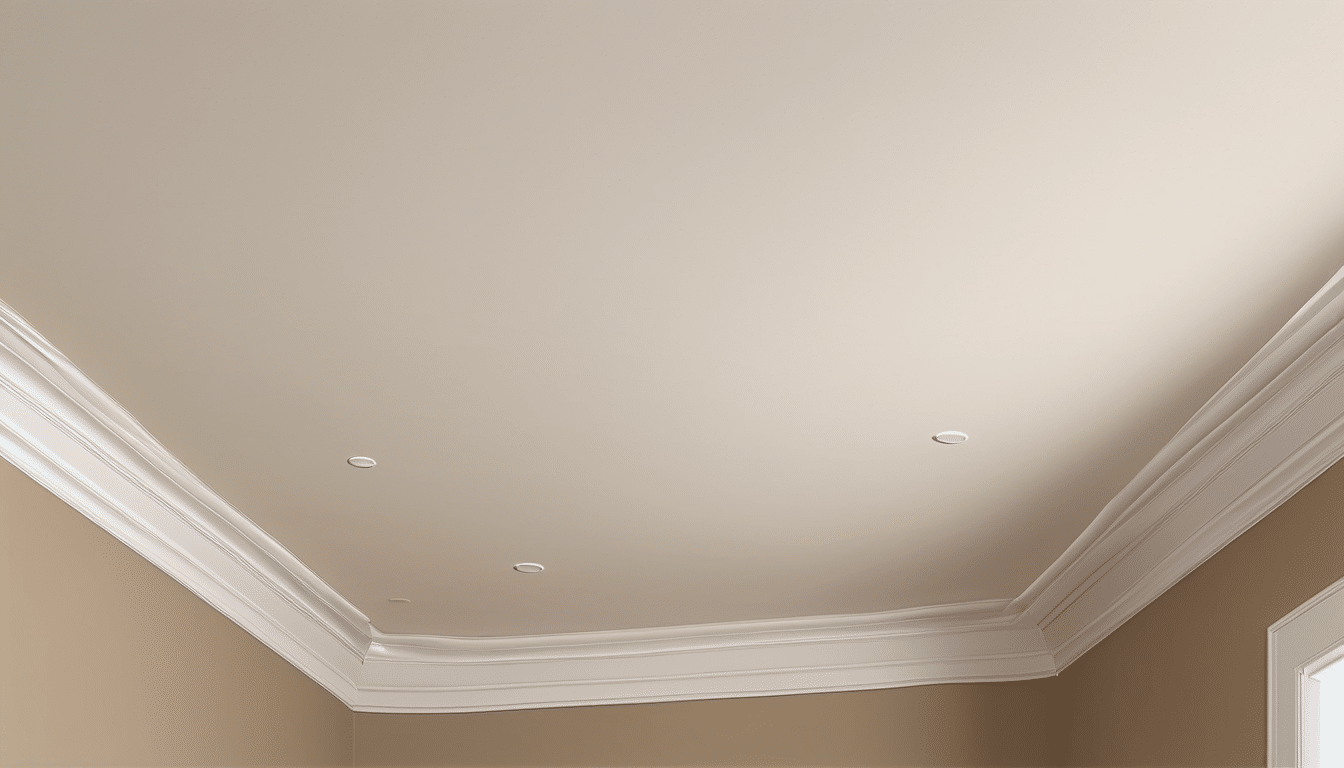
Understanding Mould Behind Gypsum Board Ceilings Dubai is essential. Mould behind gypsum board ceilings in Dubai is rarely visible until it has already established itself across a significant surface area. The gypsum board — the flat, smooth surface you see overhead — conceals a cavity where building services, insulation, and structural elements all meet. In Dubai’s climate, that cavity can become one of the most moisture-prone spaces in any home or apartment. Understanding why mould forms there, how to detect it, and what remediation actually requires is the foundation of any responsible response.
As an IAC2 Certified Indoor Air Consultant with more than 20 years of field and laboratory experience, I have investigated mould behind gypsum board ceilings across Dubai villas, Sharjah apartments, Abu Dhabi commercial buildings, and high-rise residential towers from Ajman to Ras Al Khaimah. The pattern is remarkably consistent: the mould is never random. It is always the predictable outcome of moisture accumulating where building science and HVAC design have not been fully reconciled. This relates directly to Mould Behind Gypsum Board Ceilings Dubai.
This article draws on those field investigations to give you a clear, science-grounded understanding of mould behind gypsum board ceilings in Dubai — why it forms, what warning signs to look for, how detection works, and what a properly sequenced remediation looks like.
Why Gypsum Board Ceilings Create Concealed Mould Conditions
Gypsum board — sometimes called drywall, plasterboard, or by the trade name Gyproc — is the dominant ceiling material in modern UAE construction. It is lightweight, relatively affordable, and easy to finish to a smooth surface. However, it is also hygroscopic, meaning it absorbs and retains moisture from the surrounding environment.
When moisture enters the ceiling cavity above a gypsum board installation, the board itself becomes a substrate. Gypsum provides both moisture retention and the paper facing — a cellulose-based material — that serves as a nutrient source for mould colonisation. The combination of absorbed moisture and available organic material creates precisely the conditions mould requires to establish and expand. When considering Mould Behind Gypsum Board Ceilings Dubai, this becomes clear.
In Dubai’s built environment, ceiling cavities are rarely airtight. They typically contain insulation batts, electrical conduit, data cabling, and — critically — sections of the HVAC distribution system including supply and return air ducts, flexible duct connections, and condensate drain lines. Each of these introduces a potential pathway for moisture.
The Primary Moisture Sources Driving Mould Behind Gypsum Board Ceilings Dubai
Based on field investigations across the UAE, the moisture sources responsible for mould behind gypsum board ceilings in Dubai fall into three principal categories. Understanding which source is active in a given property determines the correct remediation sequence. The importance of Mould Behind Gypsum Board Ceilings Dubai is evident here.
Condensate Line Failures and AC Drain Leaks
The most frequently identified cause of mould behind gypsum board ceilings in Dubai is a leak from the air conditioning condensate drainage system. Every split or ducted AC unit produces condensate — water extracted from the humid indoor air during cooling. This condensate is collected in a drip tray and drained away through PVC piping that typically runs through the ceiling cavity.
When condensate lines crack, become disconnected, or develop blockages that cause overflow, water releases directly into the ceiling cavity. The gypsum board absorbs it from above. Insulation becomes saturated and retains the moisture for extended periods. Mould colonisation can begin within 24 to 48 hours of the initial wetting event, and without a visible water stain on the ceiling surface, the contamination can develop silently for weeks or months. Understanding Mould Behind Gypsum Board Ceilings Dubai helps with this aspect.
Duct Surface Condensation
A second and frequently underappreciated moisture pathway is condensation forming on the outer surface of cold supply air ducts. In Dubai’s climate, where outdoor temperatures commonly exceed 40°C and relative humidity rises significantly during summer and during the seasonal humid period, the temperature differential between a chilled duct surface and the surrounding ceiling cavity air can be sufficient to cause condensation to form continuously on the duct exterior.
This is particularly common where duct insulation is damaged, thinning, or was never installed to an adequate specification. Moisture migrates from the duct surface into adjacent insulation and eventually contacts the gypsum board above. Laboratory analysis of samples collected from these cases commonly identifies Aspergillus and Penicillium species as the dominant colonisers. Mould Behind Gypsum Board Ceilings Dubai factors into this consideration.
Roof and Building Envelope Infiltration
A third source of moisture behind gypsum board ceilings in Dubai is water infiltration from above — through roof membrane failures, waterproofing defects at parapet walls, or inadequate sealing around roof penetrations. In villas and low-rise properties, rainwater intrusion during the UAE’s short but occasionally intense rainfall events can saturate ceiling insulation and initiate mould growth that then becomes a chronic contamination source as the materials remain damp between rain events.
Detecting Mould Behind Gypsum Board Ceilings Dubai Properties
The central challenge with mould behind gypsum board ceilings in Dubai is that the contamination is architecturally hidden. Visual inspection of the ceiling surface may reveal nothing more than a faint discolouration, a slight bowing of the board, or a hairline crack at a joint. In many cases, even these subtle signs are absent. This relates directly to Mould Behind Gypsum Board Ceilings Dubai.
Moisture Mapping as the Foundation of Detection
Professional detection begins with non-invasive moisture mapping using calibrated moisture metres and thermal imaging. Thermal imaging — conducted during periods of HVAC operation when temperature differentials are greatest — can reveal anomalous cold or damp zones behind the ceiling surface that correspond to moisture-laden insulation or wet gypsum board. Moisture metre readings at multiple grid points across the ceiling provide a spatial map of where elevated moisture content is concentrated.
This mapping phase is diagnostic, not confirmatory. A moisture anomaly indicates a zone of concern, not a confirmed mould colony. Laboratory analysis is required to confirm the presence, species composition, and relative concentration of mould. When considering Mould Behind Gypsum Board Ceilings Dubai, this becomes clear.
Air Sampling and Surface Sampling
Air sampling — using calibrated spore trap cassettes drawn at a controlled flow rate — can detect elevated airborne spore concentrations within a room that suggest active mould growth in the ceiling cavity above. However, airborne spore counts fluctuate with HVAC operation, door and window status, and activity levels. A single air sample provides a point-in-time measurement.
Surface sampling, collected through a small access point created in the gypsum board or through an existing HVAC access panel, provides direct evidence of mould colonisation. Tape lift or swab samples submitted to Saniservice’s in-house microbiology laboratory in Al Quoz can identify the specific mould species present, informing both risk assessment and remediation protocol design. The importance of Mould Behind Gypsum Board Ceilings Dubai is evident here.
Borescope Inspection
Where access points are limited, a borescope — a flexible camera on a thin probe — can be inserted through a small pilot hole in the gypsum board to visually inspect the ceiling cavity without requiring full removal of the ceiling panels. Borescope inspection allows direct visual confirmation of mould growth on duct surfaces, insulation batts, and the reverse face of the gypsum board itself.
Health Relevance of Mould Behind Gypsum Board Ceilings Dubai Homes
The health significance of mould behind gypsum board ceilings in Dubai depends on several variables: the mould species present, the concentration of viable spores, the extent of colonisation, and the degree to which spores are being entrained into the breathing zone through air movement in the ceiling cavity. Understanding Mould Behind Gypsum Board Ceilings Dubai helps with this aspect.
HVAC return air pathways that pass through a contaminated ceiling cavity can actively transport spores into the occupied space. Occupants may experience persistent respiratory irritation, recurrent allergic responses, unexplained fatigue, or worsening of asthma symptoms without being able to identify an obvious environmental cause. The question, as I frequently explain to clients, is not simply whether mould is present — it is what species, at what concentration, and what the laboratory results indicate about exposure risk for the specific occupants.
Certain species identified in UAE ceiling investigations — including Stachybotrys chartarum, Chaetomium, and heavily sporulating Aspergillus niger colonies — warrant a more detailed risk assessment, particularly where immunocompromised individuals, infants, or elderly occupants are present. Mould Behind Gypsum Board Ceilings Dubai factors into this consideration.
Remediation of Mould Behind Gypsum Board Ceilings Dubai Properties
Remediation of mould behind gypsum board ceilings in Dubai is not a single-step treatment. It is a sequenced protocol that must address the moisture source, the contaminated materials, and the airborne contamination simultaneously.
Containment and Negative Pressure
Before any ceiling panels are removed, the work area must be contained to prevent spore dispersal into adjacent occupied spaces. Poly sheeting barriers, negative air pressure maintained by HEPA-filtered air scrubbers, and controlled access protocols are the industry-standard approach aligned with IICRC S520 guidance. In occupied buildings in Dubai — where families or employees may be present in adjacent rooms — containment design is a non-negotiable element of the remediation scope. This relates directly to Mould Behind Gypsum Board Ceilings Dubai.
Material Removal and Surface Treatment
Gypsum board that has been wetted and colonised is non-salvageable and must be removed and disposed of as contaminated material. Insulation that has absorbed moisture and shows mould growth is similarly removed. Hard surfaces — concrete ceiling slabs, metal duct surfaces, structural members — that show surface mould growth are treated using a protocol appropriate to the surface porosity and species identified in laboratory analysis.
Root Cause Correction Before Reinstatement
No ceiling should be reinstated until the moisture source has been identified and corrected. Replacing gypsum board over a still-active condensate leak or a continuing duct condensation issue will produce exactly the same contamination outcome within weeks to months. Root cause correction — whether that is repairing the condensate line, replacing duct insulation, or engaging a waterproofing contractor for the roof membrane — is an essential prerequisite, not an optional addition. When considering Mould Behind Gypsum Board Ceilings Dubai, this becomes clear.
Post-Remediation Verification for Mould Behind Gypsum Board Ceilings Dubai
Post-remediation verification is the laboratory-supported confirmation that mould behind gypsum board ceilings in Dubai has been successfully resolved before new materials are installed and the ceiling is closed. This verification step is frequently skipped by remediation contractors who prioritise completion speed over documented outcomes. It should not be skipped.
Verification involves clearance air sampling and surface sampling conducted by an independent assessor — not the same party who performed the remediation. Saniservice’s Indoor Sciences division provides post-remediation clearance testing with laboratory analysis performed in-house, with results documented in a formal clearance report. This report can serve as supporting documentation for property management requirements, insurance claims, or DHA Mould Clearance Certificate applications where applicable. The importance of Mould Behind Gypsum Board Ceilings Dubai is evident here.
Key Takeaways for Dubai Property Owners and Managers
- Mould behind gypsum board ceilings in Dubai is a building science problem, not simply a cleaning task. The moisture source must be identified and eliminated before any remediation can be considered complete.
- Musty odours emanating from ceiling-level vents or a general staleness in a room that worsens when the AC operates are reliable early indicators of ceiling cavity contamination.
- Thermal imaging and moisture mapping are the appropriate first diagnostic tools — not assumptions based on visual inspection alone.
- Laboratory analysis determines which mould species are present and at what concentration, which informs both the health risk assessment and the remediation protocol.
- Post-remediation verification by an independent assessor is the only way to confirm that mould behind gypsum board ceilings in Dubai has been fully resolved before the ceiling cavity is closed and new materials are installed.
Frequently Asked Questions
How can I tell if there is mould behind my gypsum board ceiling in Dubai?
Common indicators include a persistent musty odour at ceiling level, faint discolouration or bowing of the ceiling surface, and respiratory symptoms that worsen when the AC is running. Professional detection requires moisture mapping, thermal imaging, and laboratory-supported sampling — visual inspection of the surface alone is rarely sufficient to confirm or rule out concealed mould.
What causes mould behind gypsum board ceilings in Dubai specifically?
Dubai’s climate — high summer temperatures, seasonal humidity, and near-continuous AC operation — creates consistent pressure on ceiling cavity moisture management. The most common causes identified in field investigations are AC condensate line leaks, condensation on cold duct surfaces due to inadequate insulation, and roof waterproofing failures. Each moisture pathway requires a different corrective response. Understanding Mould Behind Gypsum Board Ceilings Dubai helps with this aspect.
Is it necessary to remove the gypsum board to remediate ceiling mould?
In most confirmed contamination cases, yes. Gypsum board that has been wetted and colonised by mould is a porous, cellulose-rich material that cannot be reliably disinfected in place. Removal, correct disposal, and reinstatement with new board — after the moisture source is resolved — is the approach aligned with IICRC S520 remediation standards.
Can mould behind the ceiling affect air quality throughout my Dubai home?
Yes. HVAC return air pathways and natural air movement through gaps in the ceiling construction can transport mould spores from the ceiling cavity into the breathing zone of occupied rooms. Laboratory air sampling commonly identifies elevated spore counts in rooms directly below or adjacent to contaminated ceiling cavities, particularly when the AC system is operating.
How long does remediation of mould behind gypsum board ceilings typically take?
Project duration depends on the extent of contamination, the number of ceiling panels affected, and the complexity of the moisture source correction required. A single-room ceiling investigation and remediation may require several days, while multi-room or full-floor contamination in a Dubai villa or apartment can require significantly longer. A site assessment determines scope before any timeline commitment is made.
Do I need a mould clearance certificate after ceiling mould remediation in Dubai?
A formal post-remediation clearance report with laboratory results is strongly advisable regardless of regulatory requirement, as it documents that the contamination has been resolved before new materials are installed. For properties subject to DHA oversight or tenancy dispute processes in Dubai, documented clearance sampling provides the evidence base that both landlords and tenants may require.
Can mould behind gypsum board ceilings in Dubai return after remediation?
Mould will return if the underlying moisture source is not permanently corrected. Remediation without root cause correction is a temporary cosmetic intervention. Once the moisture pathway — whether a condensate leak, duct insulation deficiency, or roof waterproofing failure — is addressed and verified, the risk of recurrence is substantially reduced. Long-term monitoring of ceiling cavity moisture levels is a recommended preventive measure in properties with a history of ceiling contamination.
Conclusion
Mould behind gypsum board ceilings in Dubai is one of the most reliably misunderstood indoor contamination problems in the UAE property sector. It is hidden by design, driven by the intersection of Dubai’s climate with the specific vulnerabilities of ceiling cavity construction, and frequently addressed with surface treatments that leave the underlying moisture pathway intact. The result is predictable: recurrence, continued occupant exposure, and escalating remediation costs.
The correct approach to mould behind gypsum board ceilings in Dubai begins with evidence — moisture mapping, thermal imaging, and laboratory-confirmed sampling — not assumptions. It continues with a sequenced remediation protocol that prioritises containment, material removal, and root cause correction. And it concludes with independent post-remediation verification that confirms the contamination has been resolved before any ceiling is reinstated.
If you are experiencing signs of ceiling cavity contamination in a Dubai villa, Sharjah apartment, or Abu Dhabi commercial property, a professional assessment is the appropriate first step. Saniservice’s Indoor Sciences division conducts ceiling mould investigations with in-house laboratory analysis, documented reporting, and an architectural-microbiological approach that addresses the building system behind the biology. Contact Saniservice to arrange a property-specific assessment. Understanding Mould Behind Gypsum Board Ceilings Dubai is key to success in this area.