
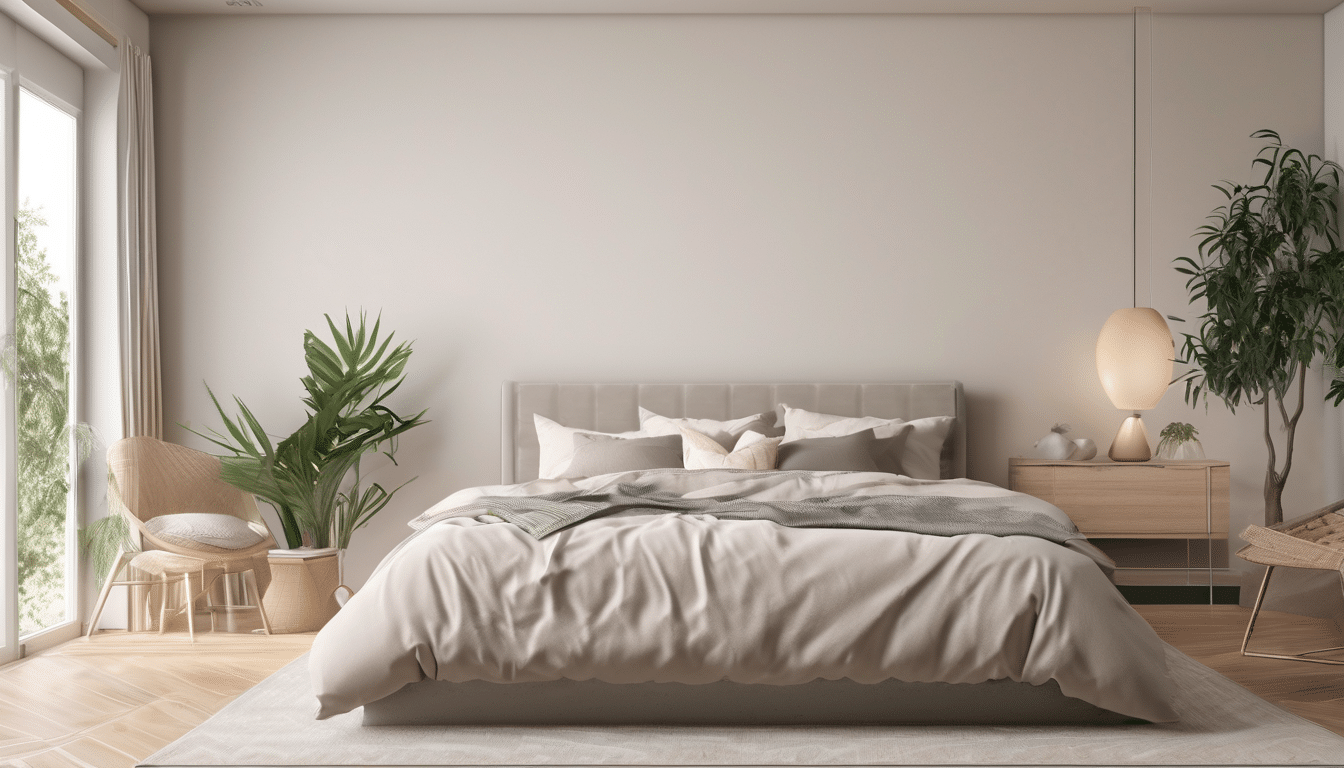
Air Purifier Placement for mold in bedrooms and living rooms is one of the most consistently misunderstood aspects of indoor environmental management in UAE homes. Most residents purchase a capable device, place it in the corner, and expect results — only to find that spore counts remain elevated and the musty smell persists. Placement is not incidental. It is, in many cases, the deciding factor between a purifier that measurably reduces airborne spore load and one that operates continuously without meaningful effect.
Dubai’s climate creates conditions that amplify this problem. Humidity levels can climb above 80% during summer months, and sealed, air-conditioned interiors — while thermally comfortable — often trap moisture near walls, inside ceiling cavities, and around AC discharge points. Mold spores dislodged from these surfaces become airborne and circulate through living spaces. A correctly positioned air purifier can intercept a significant portion of those spores before they are inhaled. An incorrectly placed one cannot. This relates directly to Air Purifier Placement for Mold in Bedrooms and Living Rooms.
This guide walks through the precise steps for air purifier placement for mold in bedrooms and living rooms, covering airflow principles, room-specific positioning, common errors, and the limits of what any purifier can achieve without professional mold assessment behind it.
Air Purifier Placement for Mold in Bedrooms and Living Rooms – What You Need Before You Begin
Before positioning any device, a brief audit of your space will determine which placement strategy is appropriate. You do not need specialist equipment for this initial review — observation and a basic understanding of airflow is sufficient. When considering Air Purifier Placement for Mold in Bedrooms and Living Rooms, this becomes clear.
- A HEPA-filter air purifier rated for your room’s square meterage (check the CADR rating against room volume)
- Knowledge of where your AC supply and return vents are located
- Awareness of any visible mold, condensation staining, or discolouration on walls, ceilings, or around window frames
- A hygrometer to monitor relative humidity (target: below 60% indoors)
- Approximately 30 minutes to map airflow patterns in each room
If visible mold is present on any surface in the room, note its location precisely. The air purifier placement for mold in bedrooms and living rooms must account for suspected source zones, not just general room coverage.
Air Purifier Placement for Mold in Bedrooms and Living Rooms – Step 1 — Map the Airflow Pattern in Each Room
Air in any enclosed room does not circulate randomly. It follows predictable paths governed by your AC system, window positions, and internal heat sources. Understanding this pattern is the foundation of effective placement.
How to identify your room’s air circulation pattern
Stand in the centre of the room and observe where cool air enters (typically from AC supply vents near the ceiling) and where it falls as it warms. In most Dubai apartments and villas, cool air enters from ceiling cassettes or wall-mounted split units and travels horizontally before descending. This creates a circulation loop from supply vent to return vent. The importance of Air Purifier Placement for Mold in Bedrooms and Living Rooms is evident here.
Mold spores follow this same loop. They are lifted from surfaces, carried by airflow, and deposited where air slows — typically in corners, along skirting boards, and beneath furniture. Your air purifier needs to be positioned where it intercepts spores while they are still airborne, not after they have settled.
Step 2 — Correct Air Purifier Placement for Mold in Bedrooms
Bedrooms present a particular concern because occupants spend six to nine hours in them while asleep — a period of sustained, uninterrupted inhalation. Getting air purifier placement for mold in bedrooms and living rooms right in sleeping spaces directly protects respiratory health during the most vulnerable hours.
Primary positioning rule for bedrooms
Place the purifier on a raised surface — a bedside table or low shelf — rather than on the floor. Floor-level placement misses the breathing zone, which in a sleeping adult is typically 30 to 50 centimetres above mattress height. Elevating the device to approximately 60 to 90 centimetres brings the clean air output directly into the occupied breathing zone. Understanding Air Purifier Placement for Mold in Bedrooms and Living Rooms helps with this aspect.
Distance from walls and furniture
Maintain a minimum of 30 centimetres of clearance on all sides of the unit. Placing a purifier flush against a wall or inside a wardrobe alcove restricts intake airflow and reduces effective coverage by a measurable margin. The device draws in room air through its intake panel — obstruction forces it to recirculate partially cleaned air rather than drawing fresh contaminated air from across the room.
Positioning relative to mold source zones
If discolouration or spore presence has been identified on a bedroom wall — commonly behind headboards, around AC units, or on external-facing walls in Dubai villas — position the purifier between that surface and the room’s sleeping zone. This places the device in the path spores travel from source to occupant, maximising interception before inhalation occurs.
Do not place the purifier directly against the affected wall. This draws spore-laden air through the device but also concentrates airflow near the source, which can disturb surface deposits and temporarily elevate spore counts in the immediate area. Air Purifier Placement for Mold in Bedrooms and Living Rooms factors into this consideration.
Step 3 — Correct Air Purifier Placement for Mold in Living Rooms
Living rooms present different challenges. They are typically larger, occupied intermittently, and often connected to dining areas, hallways, or open-plan kitchens. Effective air purifier placement for mold in bedrooms and living rooms in open-plan configurations requires accounting for the full air volume, not just the primary seating area.
Central positioning for open-plan spaces
In living rooms exceeding 30 square metres, a single device placed in one corner will not achieve uniform coverage. Position the purifier approximately one-third of the room’s length from the primary occupied zone — typically the main sofa arrangement. This allows the device’s clean air discharge to sweep across the seating area before returning to the intake.
Avoid positioning the purifier behind sofas or entertainment units. These furniture arrangements create airflow shadows — zones where the device’s effective draw is blocked by a physical barrier. The air behind a sofa can have a measurably higher spore concentration than the open room if the purifier is placed on the opposite side of that barrier. This relates directly to Air Purifier Placement for Mold in Bedrooms and Living Rooms.
Proximity to AC supply vents
In living rooms with ceiling cassette AC units — common in Dubai villas and larger apartments — position the air purifier away from the direct discharge path of the AC. Cold air blasting directly into the purifier’s intake distorts its internal airflow and can reduce HEPA filter efficiency. A lateral offset of approximately 1.5 to 2 metres from the AC supply vent is generally sufficient.
Step 4 — Account for Mold Source Zones in Your Placement Decision
Air purifier placement for mold in bedrooms and living rooms must always be informed by where mold is actually growing, not just where it is most convenient to place a device. In Dubai properties, commonly identified source zones include:
- External-facing walls in older villas where insulation has degraded
- Bathroom-adjacent bedroom walls where moisture migrates through partitions
- Ceiling areas directly beneath roof terraces or above concealed plumbing runs
- Areas around split AC units, particularly where condensate drainage is restricted
- Under-window sills in apartments where condensation accumulates during summer
Positioning the purifier to intercept spore travel from these zones — rather than simply placing it in the geometric centre of the room — produces considerably better outcomes in field investigations conducted by Indoor Sciences assessment teams across Dubai, Sharjah, and Abu Dhabi properties. When considering Air Purifier Placement for Mold in Bedrooms and Living Rooms, this becomes clear.
Step 5 — Avoid These Common Placement Errors
Even a high-specification purifier will underperform if positioning errors are present. The following mistakes are consistently observed during IAC2-certified indoor air quality assessments in UAE residential properties.
Placing the purifier inside a wardrobe or enclosed cabinet
This effectively isolates the device from the room’s general air volume. The unit cleans the air inside the cabinet repeatedly but draws almost nothing from the occupied living space. This error is surprisingly common in Dubai apartments where residents attempt to reduce visual clutter.
Using a purifier rated below the room’s actual volume
Correct air purifier placement for mold in bedrooms and living rooms also depends on choosing a device with an appropriate Clean Air Delivery Rate (CADR) for the room. A purifier designed for 20 square metres placed in a 40-square-metre living room will cycle the room’s air approximately half as many times per hour as required. ASHRAE guidelines and IAC2 standards recommend a minimum of four to six air changes per hour in rooms with known or suspected mold presence.
Positioning on the floor in high-ceiling rooms
Many Dubai villas have ceiling heights of 3 metres or more. A floor-placed purifier in such a space draws and discharges air only in the lower 60 centimetres of the room volume. Spores suspended at mid-room or ceiling height — common with HVAC-driven circulation — remain largely uncaptured. Elevation matters significantly in high-ceiling rooms.
Step 6 — Adjust Placement When Running AC and Purifier Simultaneously
In UAE homes, the AC system and the air purifier operate simultaneously for most of the year. These two systems must work with each other, not against each other. Air purifier placement for mold in bedrooms and living rooms should account for AC-driven airflow patterns.
When the AC system is running, cool air discharged from the supply vent creates a dominant airflow path in the room. Position the purifier so that its intake faces the direction from which air is moving — essentially letting the AC-driven circulation carry contaminated air toward the purifier’s intake. This passive alignment improves capture efficiency without requiring any change to device settings. The importance of Air Purifier Placement for Mold in Bedrooms and Living Rooms is evident here.
At night when AC systems cycle to a lower output, the dominant airflow pattern weakens. A purifier positioned for daytime AC-active conditions may become less effective during low-cycle periods. If you have a programmable purifier, increasing fan speed during overnight low-cycle AC periods compensates for the reduced natural air movement.
Step 7 — Monitor, Verify, and Reassess Regularly
Effective air purifier placement for mold in bedrooms and living rooms is not a one-time decision. Dubai’s seasonal humidity shifts — particularly the transition into and out of summer — change the moisture dynamics in rooms and can shift spore source activity. Reassess positioning at least twice per year, aligned with these seasonal transitions.
A hygrometer placed in each room provides ongoing data. If relative humidity consistently exceeds 60% despite dehumidification efforts, this signals an active moisture source that a purifier alone cannot address. In these cases, professional investigation to locate and remediate the moisture source is required before air purification can achieve meaningful, sustained results. Understanding Air Purifier Placement for Mold in Bedrooms and Living Rooms helps with this aspect.
Expert Takeaways for Dubai and UAE Homes
- Elevate the purifier to breathing zone height — floor placement wastes most of its capacity in high-ceiling rooms
- Maintain 30 centimetres of clearance on all sides for unobstructed intake
- Position between suspected mold source zones and occupied areas, not directly against the affected surface
- In open-plan living rooms, offset from the AC supply vent by at least 1.5 metres
- Check CADR ratings against actual room volume — undersized devices are a consistent finding in UAE residential assessments
- Reassess placement seasonally, particularly when Dubai’s humidity profile changes between April and September
- Treat persistent musty odour as a signal for professional mold assessment — a purifier addresses airborne spores, not the colony producing them
When Air Purifier Placement for Mold in Bedrooms and Living Rooms Is Not Enough
Air purifier placement for mold in bedrooms and living rooms is a meaningful component of an indoor wellbeing strategy, but it has a defined ceiling of effectiveness. A purifier captures spores that are already airborne. It cannot address the colony actively producing those spores, the moisture enabling that colony, or the structural defect allowing moisture to persist.
As an IAC2-certified indoor air consultant with over 20 years of field investigation experience across Dubai, Abu Dhabi, and Sharjah properties, I have observed consistently that purifier-only strategies in rooms with active mold growth produce temporary improvements in air quality followed by recurrence. The spore load returns because the source remains. Effective management requires mold investigation, identification of the moisture root cause, and remediation before air purification becomes a sustainable long-term tool.
If you are experiencing persistent musty odour, occupant symptoms consistent with mold exposure, or visible discolouration despite purifier use, a professional indoor environmental assessment — including air sampling and laboratory analysis — will provide the data needed to address the problem at its origin rather than at the symptom level. Air Purifier Placement for Mold in Bedrooms and Living Rooms factors into this consideration.
Frequently Asked Questions
Where is the best position for an air purifier in a bedroom with mold?
Position the purifier on a raised surface approximately 60 to 90 centimetres from the floor, between any suspected mold source zone and the sleeping area. Maintain at least 30 centimetres of clearance on all sides. Avoid floor placement in rooms with ceiling heights above 2.7 metres, as the device will not effectively capture spores at mid-room and ceiling elevation where AC circulation suspends them.
How far should an air purifier be from the wall when targeting mold spores?
A minimum of 30 centimetres from any wall or furniture surface. This clearance ensures the intake draws room air freely rather than recirculating the same localised air mass. In rooms where mold is present on a specific wall, place the purifier in the path between that wall and the occupied zone — not flush against the affected surface, which can disturb settled deposits.
Can an air purifier remove mold from a Dubai apartment completely?
No. An air purifier captures airborne mold spores but cannot eliminate the mold colony growing on surfaces. In Dubai apartments, where high humidity and condensation-prone external walls are common, visible mold or persistent musty odour requires professional investigation and remediation. The purifier supports indoor wellbeing after remediation — it does not replace it. This relates directly to Air Purifier Placement for Mold in Bedrooms and Living Rooms.
How many air changes per hour does a bedroom air purifier need for mold control?
Industry guidance from organisations including IAC2 and ASHRAE recommends a minimum of four to six air changes per hour in rooms with known or suspected mold presence. Check the device’s CADR rating against your room volume in cubic metres. Many UAE residents use purifiers rated for smaller spaces than their actual rooms, which significantly reduces effectiveness regardless of placement.
Does it matter where I place my air purifier in an open-plan Dubai living room?
Yes. In open-plan living rooms, floor-plan geometry and AC airflow patterns both influence capture efficiency. Position the purifier approximately one-third of the room’s length from the primary seating zone, laterally offset from the AC supply vent by at least 1.5 metres. Avoid placement behind sofas or in enclosed alcoves, where airflow shadows prevent the device from drawing contaminated air from across the full room volume.
Should I run my air purifier continuously in a Dubai home with mold concerns?
Continuous operation on a medium fan setting is generally more effective than periodic high-speed operation. In Dubai’s climate, where AC systems cycle frequently and outdoor humidity can infiltrate during door and window use, continuous purifier operation maintains a more consistent baseline reduction in airborne spore concentration. Most modern HEPA purifiers are designed for continuous use with energy-efficient motor systems.
When should a Dubai homeowner call a professional instead of relying on air purifier placement alone?
Seek professional indoor environmental assessment when musty odour persists despite purifier use, when occupants report respiratory symptoms or headaches that improve outside the home, when visible discolouration appears on walls or ceilings, or when a hygrometer consistently records indoor relative humidity above 60%. These indicators suggest active mold growth that requires investigation, laboratory sampling, and remediation — not repositioning of a purifier. Understanding Air Purifier Placement for Mold in Bedrooms and Living Rooms is key to success in this area.