
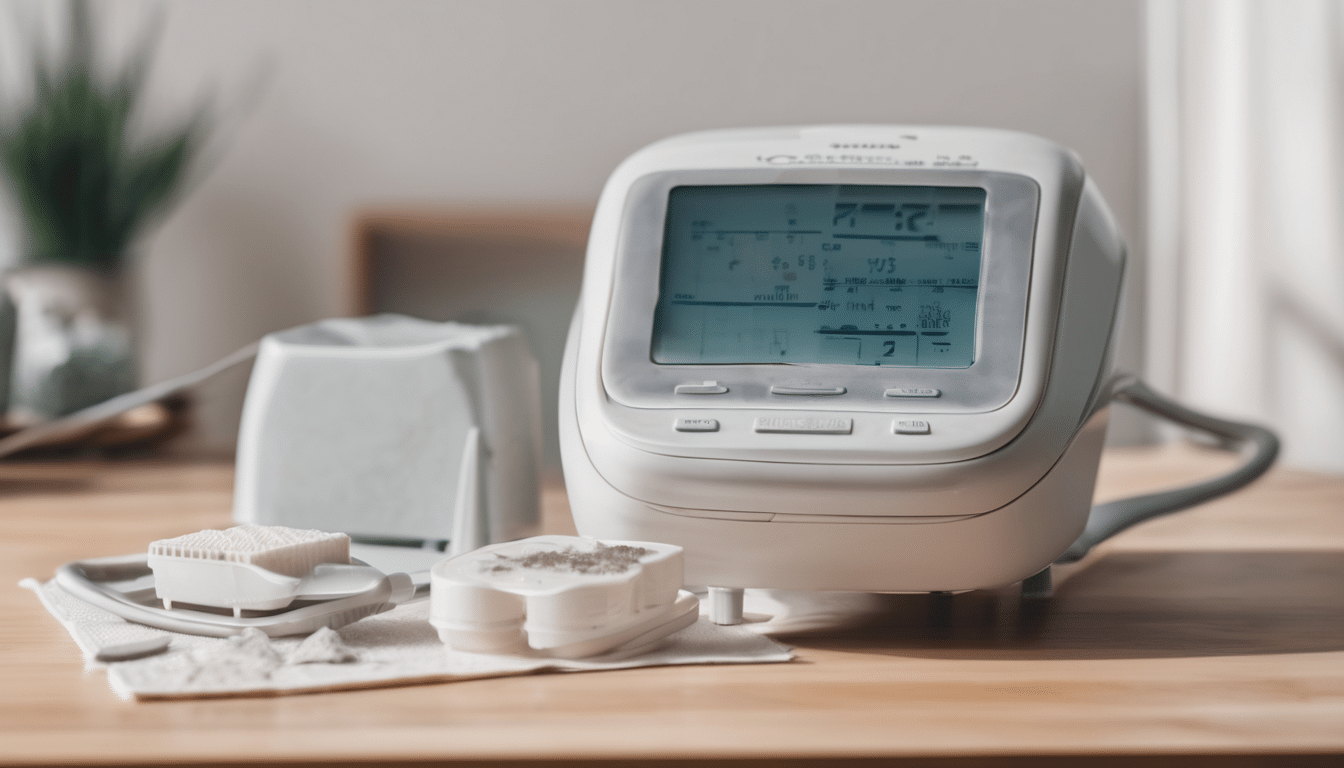
Understanding Mold Testing vs Mold Inspection: Key Differences is essential. Understanding the mold testing vs mold inspection key differences is one of the most practical pieces of knowledge a Dubai homeowner or property manager can have. These two services are frequently used interchangeably, yet they serve different purposes, answer different questions, and produce different types of evidence. Getting the distinction wrong means either spending money on data you cannot act upon, or acting without the data you actually need.
In Dubai and across the UAE, where indoor humidity can climb above 80% for months at a stretch and air conditioning systems run continuously for the better part of the year, mould-related problems are not occasional. They are predictable outcomes of building physics interacting with climate. Having clarity on mold testing vs mold inspection key differences is therefore not just a matter of academic interest — it is a practical tool for making better decisions. This relates directly to Mold Testing vs Mold Inspection: Key Differences.
This article examines both services in depth, lays out their respective strengths and limitations, and provides a clear framework for understanding when to use each one — and when to combine them. When considering Mold Testing vs Mold Inspection: Key Differences, this becomes clear.
Mold Testing vs Mold Inspection: Key Differences – What Mold Inspection Actually Means
A mold inspection is a physical, on-site investigation of a building. A qualified inspector visits the property, examines structural and mechanical systems, identifies conditions that support mould growth, and documents visible or suspected contamination. The inspection is observational and diagnostic in character. The importance of Mold Testing vs Mold Inspection: Key Differences is evident here.
During a professional mould inspection, the assessor typically examines the building envelope for moisture intrusion, evaluates HVAC and ventilation performance, uses tools such as thermal imaging cameras and moisture metres to detect hidden damp, and assesses materials — walls, ceilings, flooring — for signs of microbial colonisation. The output is a professional opinion grounded in building science and physical evidence. Understanding Mold Testing vs Mold Inspection: Key Differences helps with this aspect.
What an Inspection Tells You
An inspection identifies where a problem exists and, critically, why it exists. A trained building scientist can connect a visible mould patch on a bedroom wall to a condensation failure in the HVAC duct above it. That causal link — the root cause — is what separates a professional inspection from a visual walkthrough. Mold Testing vs Mold Inspection: Key Differences factors into this consideration.
An inspection does not, on its own, tell you which mould species are present, at what concentration, or whether airborne spore levels are elevated. For that, you need testing. This relates directly to Mold Testing vs Mold Inspection: Key Differences.
Mold Testing vs Mold Inspection: Key Differences – What Mold Testing Actually Means
Mold testing is a laboratory-based process. Samples are collected from surfaces, air, or materials and sent to a certified laboratory for analysis. The results identify which fungal species are present and, depending on the method used, at what concentration. Testing turns a visual suspicion into measurable, documented evidence. When considering Mold Testing vs Mold Inspection: Key Differences, this becomes clear.
Several collection methods exist. Air sampling uses calibrated impaction samplers or cassette-based spore traps to capture airborne particles over a timed period. Surface sampling uses swabs or tape lifts to collect material directly from suspected areas. Bulk sampling involves removing a physical sample — a piece of drywall, ceiling tile, or flooring — for laboratory analysis. ERMI (Environmental Relative Mould Index) testing uses settled dust collected via vacuum to build a species profile for an entire interior environment. The importance of Mold Testing vs Mold Inspection: Key Differences is evident here.
What Testing Tells You
Testing answers questions that no visual assessment can resolve. It confirms whether mould is present even when nothing is visible. It identifies whether a species of concern — Stachybotrys, Aspergillus, Chaetomium — is part of the contamination signature. It establishes baseline and post-remediation counts so that clearance can be verified scientifically rather than assumed. Understanding Mold Testing vs Mold Inspection: Key Differences helps with this aspect.
Testing does not, however, explain why contamination is present. A laboratory report showing elevated Cladosporium counts does not tell you where the moisture source is or which building system has failed. Context requires an inspection. Mold Testing vs Mold Inspection: Key Differences factors into this consideration.
Mold Testing vs Mold Inspection: Key Differences – Mold Testing vs Mold Inspection Key Differences at a Glance
The mold testing vs mold inspection key differences become clearest when the two services are placed side by side. Both contribute to understanding an indoor mould problem — but they operate on entirely different planes of information. This relates directly to Mold Testing vs Mold Inspection: Key Differences.
- Inspection is observational, building-science-led, and root-cause-oriented. It answers: where is the problem and why does it exist?
- Testing is laboratory-led, species-specific, and concentration-quantified. It answers: what is present, at what level, and is it confirmed?
- Inspection requires a qualified assessor on-site. Testing requires certified laboratory analysis of collected samples.
- Inspection produces a written assessment with findings and recommendations. Testing produces a laboratory report with species identification and counts.
- Inspection guides remediation strategy. Testing confirms the need for remediation and verifies its success.
Understanding these mold testing vs mold inspection key differences helps property owners and facilities managers ask better questions and commission the right service at the right stage of a mould investigation. When considering Mold Testing vs Mold Inspection: Key Differences, this becomes clear.
When to Choose Inspection First
In most residential and commercial cases, a mould inspection is the appropriate starting point. If you can see discolouration on a wall, smell a persistent musty odour in a room, or know that a water leak occurred recently, an inspection provides the foundational understanding needed to plan any intervention. The importance of Mold Testing vs Mold Inspection: Key Differences is evident here.
For Dubai villas with complex building envelopes — particularly older villas in areas such as Jumeirah, Al Barsha, or Mirdif — an inspection using thermal imaging and moisture mapping often reveals contamination pathways that would never be captured by surface sampling alone. Mould behind a wall cavity cannot be sampled until it is first located. Understanding Mold Testing vs Mold Inspection: Key Differences helps with this aspect.
Inspection is also the appropriate first step when the property is being assessed prior to purchase or tenancy, when recurring mould growth has been treated previously without resolution, or when occupant health symptoms have been reported and a building investigation has been requested. Mold Testing vs Mold Inspection: Key Differences factors into this consideration.
When Testing Is the Right Tool
Testing becomes essential when visual evidence is absent but concern remains. This situation is common in the UAE, where mould can develop inside HVAC ductwork, behind vapour-retarder layers, or within wall cavities constructed from materials that do not exhibit visible surface growth until contamination is advanced. This relates directly to Mold Testing vs Mold Inspection: Key Differences.
Air sampling and ERMI analysis are particularly valuable in scenarios where occupants report health symptoms — respiratory irritation, persistent coughing, headaches on prolonged exposure to a specific room — but no visible growth can be identified during a physical walkthrough. Laboratory results either confirm or rule out elevated spore loads, providing an evidence basis for next steps. When considering Mold Testing vs Mold Inspection: Key Differences, this becomes clear.
Testing is also the correct tool at the conclusion of any remediation project. Post-remediation verification sampling, conducted by an independent assessor, confirms that airborne spore counts have returned to acceptable levels before a remediated space is reoccupied. This is not optional — it is the only way to demonstrate that remediation was successful. The importance of Mold Testing vs Mold Inspection: Key Differences is evident here.
The Dubai Climate Factor in Mold Testing vs Mold Inspection Key Differences
Dubai’s climate creates conditions that amplify the importance of both services. Outdoor temperatures regularly exceed 40°C during summer months, and relative humidity can stay above 75% along the coastal strip through the June-to-September period. Buildings are sealed tightly for air conditioning efficiency, and when vapour barriers, insulation, or duct sealing underperform, moisture migrates through the building fabric in ways that are not immediately visible. Understanding Mold Testing vs Mold Inspection: Key Differences helps with this aspect.
In this environment, the mold testing vs mold inspection key differences have a particular relevance. An inspection conducted by a building scientist who understands hygrothermal dynamics — the interaction between heat, moisture, and building materials — can predict where mould will form before it becomes visible. Testing then provides the laboratory confirmation that either validates or refines the inspection findings.
High-rise apartments in Dubai Marina, Business Bay, and Jumeirah Lake Towers often present with HVAC-related contamination that is only discovered through a combination of duct inspection and air sampling. Neither service alone tells the complete story in these complex, mechanically intensive buildings.
Pros and Cons Summary
Mold Inspection — Strengths and Limitations
Strengths: Identifies root causes. Maps the extent of visible and suspected contamination. Integrates building science tools including thermal imaging, borescope investigation, and moisture mapping. Produces actionable remediation recommendations. Can detect hidden conditions before they escalate.
Limitations: Cannot confirm species identity or measure airborne concentrations without laboratory support. Visual findings are professional opinion, not laboratory-verified data. A thorough inspection requires a skilled, credentialled assessor — the quality of findings depends directly on the assessor’s training and experience.
Mold Testing — Strengths and Limitations
Strengths: Provides laboratory-confirmed, species-specific evidence. Quantifies airborne spore concentrations for comparison against reference samples. Documents pre- and post-remediation conditions. Supports health-exposure assessments for sensitive occupants. ERMI analysis provides a comprehensive interior fungal profile.
Limitations: Testing without inspection context can produce data that is difficult to interpret or act upon. A single air sample is a snapshot — it captures conditions at one point in time. Testing does not identify moisture sources or explain why contamination is present. Sampling methodology significantly affects results; poorly collected samples produce unreliable data.
Expert Perspective on Mold Testing vs Mold Inspection Key Differences
As an IAC2-certified Indoor Air Consultant, my position on the mold testing vs mold inspection key differences is straightforward: these are complementary services, not competing ones. The question is not which to choose — it is understanding the sequence and purpose of each.
In field investigations conducted across Dubai, Abu Dhabi, and Sharjah, the cases that produce the most actionable outcomes consistently follow the same structure. The inspection establishes the building context: where moisture is entering, which materials are affected, what the airflow patterns reveal. The testing confirms the biological reality: what species are present, at what concentration, and whether post-intervention results meet clearance standards.
Cases where only testing is commissioned — without a prior inspection — frequently produce laboratory reports that cannot be connected to a corrective action plan. The report may confirm mould is present, but without knowing the source, remediation addresses symptoms rather than causes.
Key Takeaways for UAE Property Owners
- Commission a mould inspection first when you suspect a problem but need to understand its source and extent.
- Commission mould testing when you need laboratory confirmation of species and concentration, particularly before or after remediation.
- Combine both services for complex investigations — hidden mould, recurring problems, health-symptom cases, or post-remediation clearance.
- Ensure that any testing is conducted using calibrated, accredited methods and sent to a certified laboratory — not a home kit.
- In Dubai’s climate, the building science context provided by a qualified inspector is often the difference between resolving a problem and repeating the same remediation cycle.
- For post-remediation clearance in particular, independent laboratory testing is not negotiable — it is the only evidence that confirms a remediation was successful.
Frequently Asked Questions
What is the main difference between mold testing and mold inspection?
Mold inspection is a physical, on-site assessment conducted by a building specialist to identify contamination, locate moisture sources, and understand root causes. Mold testing is a laboratory process that confirms which species are present and at what concentration. Understanding mold testing vs mold inspection key differences helps you choose the right service — or know when to commission both.
Do I need both mold testing and a mold inspection for a Dubai property?
In most cases involving Dubai properties — particularly villas with complex envelopes or apartments with continuous HVAC use — combining inspection and testing produces the most actionable outcome. An inspection establishes the building context; testing provides laboratory-confirmed evidence. Neither service tells the complete story on its own in a climate where hidden mould is a consistent finding.
Can mold testing find mould that is not visible?
Yes. Air sampling and ERMI testing can detect elevated airborne spore concentrations even when no visible growth is present. However, testing without an accompanying inspection cannot identify where the contamination originates or which building systems have failed. For hidden mould behind walls or inside ductwork, a combination of borescope inspection and air sampling provides the most reliable evidence.
What does a mold inspection report include?
A professional mould inspection report documents observed conditions, suspected contamination areas, moisture readings, thermal imaging findings, probable moisture sources, and recommended remediation or further investigation steps. It is a professional assessment rather than a laboratory report. The quality and depth of the report depends directly on the assessor’s qualifications and the diagnostic tools used during the inspection.
How long does mold testing take to produce results in the UAE?
Sample collection for air or surface testing typically takes one to two hours on-site. Laboratory turnaround time depends on the analytical method — standard spore trap analysis is commonly completed within two to five working days, while more detailed analyses such as ERMI testing may take longer. Your testing provider should confirm turnaround times at the point of commissioning.
When should I commission post-remediation mold testing in Dubai?
Post-remediation testing should be conducted after remediation work is complete, containment has been removed, and the space has been allowed to stabilise — typically 24 to 48 hours after work concludes. Air sampling compared against outdoor baseline samples and pre-remediation counts is the standard approach. Independent testing, commissioned separately from the remediation contractor, produces the most credible clearance documentation.
Is a home mold testing kit reliable enough for a Dubai apartment?
Consumer mold testing kits are not a reliable substitute for professional laboratory analysis. Settle plate kits used in home testing are not calibrated for air volume, which means results cannot be meaningfully quantified or compared against any recognised standard. For a property in Dubai — where HVAC-related contamination and hidden moisture are common findings — professional sampling using calibrated equipment and certified laboratory analysis is the appropriate approach.
Verdict — Which Should You Commission?
The mold testing vs mold inspection key differences ultimately point toward a clear framework for decision-making. If you are at the beginning of an investigation and need to understand what is happening in your property and why, start with a professional inspection. If you need laboratory confirmation of species identity and concentration — whether to justify remediation, assess health risk, or verify that remediation succeeded — commission testing.
For the majority of meaningful mould investigations in Dubai, Abu Dhabi, Sharjah, and across the UAE, both services contribute. The inspection is the diagnostic intelligence; the testing is the laboratory verification. Treating them as a combined protocol rather than competing alternatives produces findings that are both actionable and defensible. That combination is the foundation of any serious mould investigation — and the only approach that produces results you can trust. Understanding Mold Testing vs Mold Inspection: Key Differences is key to success in this area.