
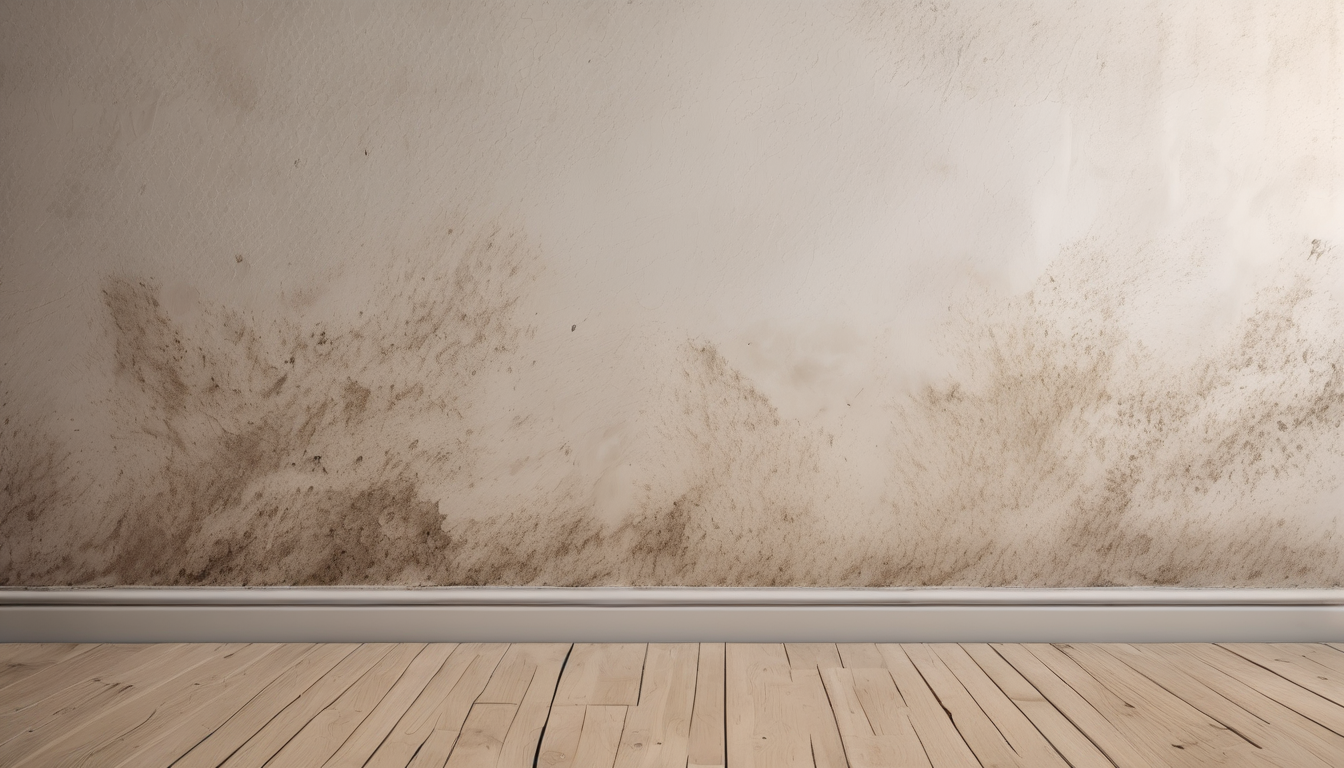
Understanding Mold on Walls After a Water Leak: What Happens Next is essential. Mold on walls after a water leak follows a predictable biological sequence — one that most homeowners in Dubai do not see coming. Within 24 to 48 hours of a moisture event, dormant fungal spores already present in the indoor environment begin to germinate on wet surfaces. What appears to be a resolved leak is often the beginning of a microbial problem concealed inside the wall assembly. Understanding what happens next is essential for making decisions that protect both the building and the people inside it.
In Dubai’s climate, the process accelerates. Ambient temperatures regularly exceed 35°C for months at a time, and relative humidity indoors — particularly in properties with under-performing HVAC systems — can remain elevated well above the 60% threshold that supports sustained mold growth. A water leak in these conditions is not simply a maintenance issue. It is a timed biological event. This relates directly to Mold on Walls After a Water Leak: What Happens Next.
This article walks through the full sequence: what occurs inside your walls after a leak, how mold spreads, what the signs mean, and what a professional investigation actually involves. The question is never simply whether mold is present after a water leak. It is what type is growing, how far it has progressed, and what the structure looks like beneath the surface. When considering Mold on Walls After a Water Leak: What Happens Next, this becomes clear.
Mold on Walls After a Water Leak: What Happens Next – Why Mold on Walls After a Water Leak Develops So Quickly
Fungal spores are ubiquitous. They exist in virtually every indoor environment at low background concentrations, dormant and harmless until the conditions supporting germination are met. Those conditions are straightforward: a moisture source, an organic substrate, and a temperature range compatible with growth. Drywall, timber framing, paint, adhesives, and dust trapped within wall cavities all qualify as organic substrates. The importance of Mold on Walls After a Water Leak: What Happens Next is evident here.
When a leak saturates a wall — whether from a burst pipe, a failed plumbing joint, a roof intrusion, or a condensation-driven failure — the internal materials reach the moisture content levels at which germination begins. This threshold is typically a water activity level above 0.80. At that point, colonies can establish within 24 hours and produce visible surface growth within 48 to 72 hours under warm conditions. Understanding Mold on Walls After a Water Leak: What Happens Next helps with this aspect.
In Dubai properties, the combination of high ambient temperature and episodes of elevated indoor humidity means the germination window is compressed further. Mold on walls after a water leak does not wait for weeks. It begins within hours. Mold on Walls After a Water Leak: What Happens Next factors into this consideration.
Mold on Walls After a Water Leak: What Happens Next – What Happens Inside the Wall You Cannot See
The visible surface of a wall is the last place mold appears — not the first. Fungal colonisation begins at the interior face of building materials where moisture is highest. By the time discolouration, spotting, or musty odour becomes apparent at the painted surface, the colony is already established within the substrate. This relates directly to Mold on Walls After a Water Leak: What Happens Next.
The Hidden Progression Within Building Materials
Drywall (gypsum board) absorbs moisture rapidly through its paper facing. The paper layer provides an ideal cellulose substrate for common indoor molds including Aspergillus, Penicillium, and Stachybotrys chartarum. In laboratory analysis, Saniservice’s in-house microbiology team frequently identifies colonisation extending 50 to 100 millimetres beyond the visually affected boundary. The material looks clean. The spore counts tell a different story. When considering Mold on Walls After a Water Leak: What Happens Next, this becomes clear.
Timber framing and battens behind the wall face absorb moisture more slowly but retain it longer. Once the wood reaches a moisture content above 19%, fungal decay organisms can also become established, compromising structural integrity over time. This is a common finding in Dubai villas where water has tracked along hidden pathways for weeks before discovery. The importance of Mold on Walls After a Water Leak: What Happens Next is evident here.
How Far Does Mold Spread After a Water Leak
Spread depends on the source and duration of the moisture event. A pinhole leak running for two weeks behind a bathroom wall will produce a very different contamination footprint than a condensation-driven failure at an HVAC duct connection. Both qualify as mold on walls after a water leak scenarios, but they require different investigation scopes. Understanding Mold on Walls After a Water Leak: What Happens Next helps with this aspect.
Moisture mapping using calibrated moisture meters and thermal imaging cameras is the only reliable method for defining the true boundary of affected material. Visual inspection alone routinely underestimates the scope by a significant margin — a finding consistently observed during forensic building investigations in properties across Dubai and Sharjah. Mold on Walls After a Water Leak: What Happens Next factors into this consideration.
Mold on Walls After a Water Leak: What Happens Next – Mold on Walls After a Water Leak — The Signs to Read Corre
The most commonly misread sign is a musty odour without visible mold. This typically indicates that colonisation is active within the wall cavity but has not yet broken through to the surface. Homeowners frequently attribute the smell to general humidity or older buildings, delaying investigation until the problem is substantially more advanced. This relates directly to Mold on Walls After a Water Leak: What Happens Next.
Visible signs include irregular dark spotting (commonly grey, green, or black), surface bubbling or peeling of paint, efflorescence on plaster, or persistent discolouration returning weeks after surface cleaning. Surface staining alone does not confirm mold — mineral deposits and algae can produce similar appearances. Laboratory analysis of a collected sample is the only method that confirms genus and species with certainty. When considering Mold on Walls After a Water Leak: What Happens Next, this becomes clear.
Physical symptoms experienced by occupants — persistent respiratory irritation, unexplained fatigue, recurrent sinus congestion, or skin reactions — can also correlate with active mold contamination. These symptoms are not diagnostic in isolation, but they are a meaningful data point in a structured investigation. The importance of Mold on Walls After a Water Leak: What Happens Next is evident here.
Why Dubai Properties Are Particularly Vulnerable After a Water Leak
Several building and climate factors combine to make mold on walls after a water leak a particularly persistent problem in UAE properties. Understanding Mold on Walls After a Water Leak: What Happens Next helps with this aspect.
- HVAC condensation: Chilled air distribution systems create cold surfaces within wall and ceiling assemblies. When humid external air contacts these surfaces — through envelope imperfections or poor vapour management — condensation occurs at wall interfaces, independent of any plumbing failure.
- Building envelope performance: Many mid-rise and villa properties in Dubai incorporate façade materials and joint sealants that degrade under prolonged UV and thermal cycling. Failed sealants create direct water intrusion pathways during infrequent but intense rainfall events.
- High-humidity seasons: The months of June through September routinely see outdoor relative humidity exceeding 80% during overnight and early morning hours. Properties with intermittent cooling — or those that rely on natural ventilation — experience sustained indoor humidity levels that support mold growth without any plumbing event.
- Rapid construction timelines: Field investigations in newer developments across Dubai, Abu Dhabi, and Sharjah occasionally identify building materials installed at elevated moisture content during construction. These properties can present mold within months of handover, appearing to follow a minor leak when the substrate was already compromised.
What Mold on Walls After a Water Leak Means for Your Health
The health significance of mold exposure depends on three variables: the fungal species present, the concentration of spores and metabolites in the indoor air, and the sensitivity of the occupants. These three factors cannot be determined by visual inspection. They require air sampling, surface sampling, and laboratory identification. Mold on Walls After a Water Leak: What Happens Next factors into this consideration.
Common indoor molds such as Cladosporium and Penicillium species are widespread and typically managed through standard remediation. However, certain species — including Stachybotrys chartarum and some Aspergillus strains — produce mycotoxins that have documented effects on respiratory and neurological health. Stachybotrys requires sustained saturation to establish, which makes it a particularly relevant concern in cases of long-running concealed leaks. This relates directly to Mold on Walls After a Water Leak: What Happens Next.
Occupants who are immunocompromised, asthmatic, pregnant, very young, or elderly face elevated risk at lower exposure thresholds. In these cases, professional mycotoxin assessment alongside standard spore count analysis is a warranted step rather than an optional one. When considering Mold on Walls After a Water Leak: What Happens Next, this becomes clear.
What a Professional Investigation of Mold on Walls After a Water Leak Involves
A professional response to mold on walls after a water leak is a structured diagnostic process, not a cleaning visit. The sequence matters. The importance of Mold on Walls After a Water Leak: What Happens Next is evident here.
Step One — Source Identification and Moisture Mapping
Before any remediation begins, the moisture source must be confirmed and, where controllable, addressed. Removing mold from a wall while the source of moisture remains active is not remediation — it is maintenance. Thermal imaging and calibrated moisture metre readings across affected and adjacent areas define the true boundary of elevated moisture within the building assembly.
Step Two — Air and Surface Sampling
Spore trap air sampling and surface swab or tape lift samples are collected prior to any disturbance. These pre-remediation samples establish the contamination baseline and guide species-specific decisions. In Saniservice’s Architectural-Microbiological Investigation Protocol, samples are processed through the in-house microbiology laboratory in Al Quoz, with results returned as part of a documented report rather than a verbal summary.
Step Three — Containment and Remediation
IICRC S520-aligned remediation protocols require physical containment of affected areas to prevent cross-contamination during removal. Negative air pressure, HEPA filtration, and appropriate personal protective equipment are standard requirements. Material decisions — what to clean, what to remove, what to treat — are made based on material type, contamination depth, and laboratory findings rather than visual assessment alone.
Step Four — Post-Remediation Verification
Clearance sampling after remediation confirms that spore concentrations in the treated area have returned to or below the background levels recorded in unaffected rooms. A mold clearance certificate issued on the basis of laboratory-verified post-remediation results provides documented confirmation — not an assumption — that the remediation was effective.
Key Takeaways for Dubai Homeowners
- Mold on walls after a water leak can begin within 24 hours of a moisture event — the visible sign is not the starting point.
- Musty odour without visible mold is a strong indicator of active colonisation within the wall assembly.
- Moisture mapping is essential — visual inspection consistently underestimates the true extent of affected material.
- Dubai’s climate — high temperatures, seasonal humidity, and HVAC condensation — accelerates fungal growth and makes containment more challenging.
- Species identification through laboratory analysis determines the appropriate remediation scope and assesses mycotoxin risk for sensitive occupants.
- Post-remediation clearance testing is the only way to confirm that a remediation has been effective.
Frequently Asked Questions
How quickly does mold grow on walls after a water leak?
Under warm conditions — which are typical in Dubai properties — fungal germination can begin within 24 hours of a moisture event. Visible surface growth commonly appears within 48 to 72 hours on porous building materials such as drywall and plaster. At elevated indoor temperatures above 30°C, this timeline compresses further, making rapid response critical after any water intrusion event.
What does mold on walls after a water leak look like?
Early mold growth appears as irregular spotting in grey, green, black, or white tones, sometimes accompanied by surface paint bubbling, peeling, or persistent discolouration. A musty, earthy odour is frequently the first detectable sign — often present before any visible growth breaks through to the painted surface. Not all wall discolouration is mold; laboratory analysis confirms species identity.
Can I clean mold on walls after a water leak myself?
Surface cleaning may address what is visible but rarely resolves colonisation that has penetrated into the substrate. In Dubai, where ambient conditions actively support regrowth, surface-only treatment without moisture source correction and material assessment typically results in recurrence within weeks. Professional assessment determines whether the affected area can be cleaned in place or requires material removal.
Is mold on walls after a water leak dangerous in Dubai homes?
Health significance depends on the species present, airborne concentration, and occupant sensitivity — none of which can be determined by visual inspection alone. Certain species produce mycotoxins with documented respiratory and neurological effects. Occupants who are asthmatic, immunocompromised, pregnant, very young, or elderly face higher risk at lower exposure thresholds and warrant priority assessment.
How far does mold spread inside a wall after a leak in Dubai?
Colonisation routinely extends beyond the visually affected boundary. In field investigations conducted across Dubai and Sharjah properties, laboratory analysis has identified active contamination 50 to 100 millimetres beyond visually clean material. Thermal imaging and moisture mapping are the standard tools for defining the true contamination boundary before remediation scope is set.
Do I need a mold clearance certificate after remediation in Dubai?
A clearance certificate issued on the basis of post-remediation laboratory sampling provides documented, verifiable evidence that spore concentrations have returned to acceptable levels. For tenants, landlords, real estate transactions, and insurance purposes in Dubai and across the UAE, a laboratory-verified clearance report carries significantly more evidentiary weight than a verbal assurance from the remediation contractor.
What type of professional should I call for mold on walls after a water leak in Dubai?
An IAC2-certified indoor environmental consultant or a building diagnostics specialist with in-house laboratory capability is the appropriate starting point. Mold on walls after a water leak requires investigation — not just cleaning. Combining moisture mapping, species identification, and remediation verification in a documented protocol is the standard expected under IICRC S520 guidelines and the approach practised by Saniservice’s Indoor Sciences Division in Dubai.
What Happens After the Remediation Is Complete
Mold on walls after a water leak is a resolved episode, not a permanently closed chapter, unless the underlying conditions that allowed it to occur are also corrected. This means confirming that the moisture source is controlled, that the building envelope or plumbing system is repaired, and that indoor relative humidity is maintained below 60% through adequate HVAC performance and, where necessary, supplemental dehumidification.
Long-term monitoring — periodic air sampling or the use of calibrated indoor humidity sensors — provides early warning if conditions begin to drift back toward the thresholds that support regrowth. In Dubai villas and high-rise apartments with complex building envelopes, this kind of ongoing environmental awareness is the difference between a one-time remediation and a cycle of recurring treatment.
The wall is white again. The cause is resolved. The laboratory report confirms it. That is what a complete response to mold on walls after a water leak looks like — measured, documented, and verified rather than assumed. Understanding Mold on Walls After a Water Leak: What Happens Next is key to success in this area.