
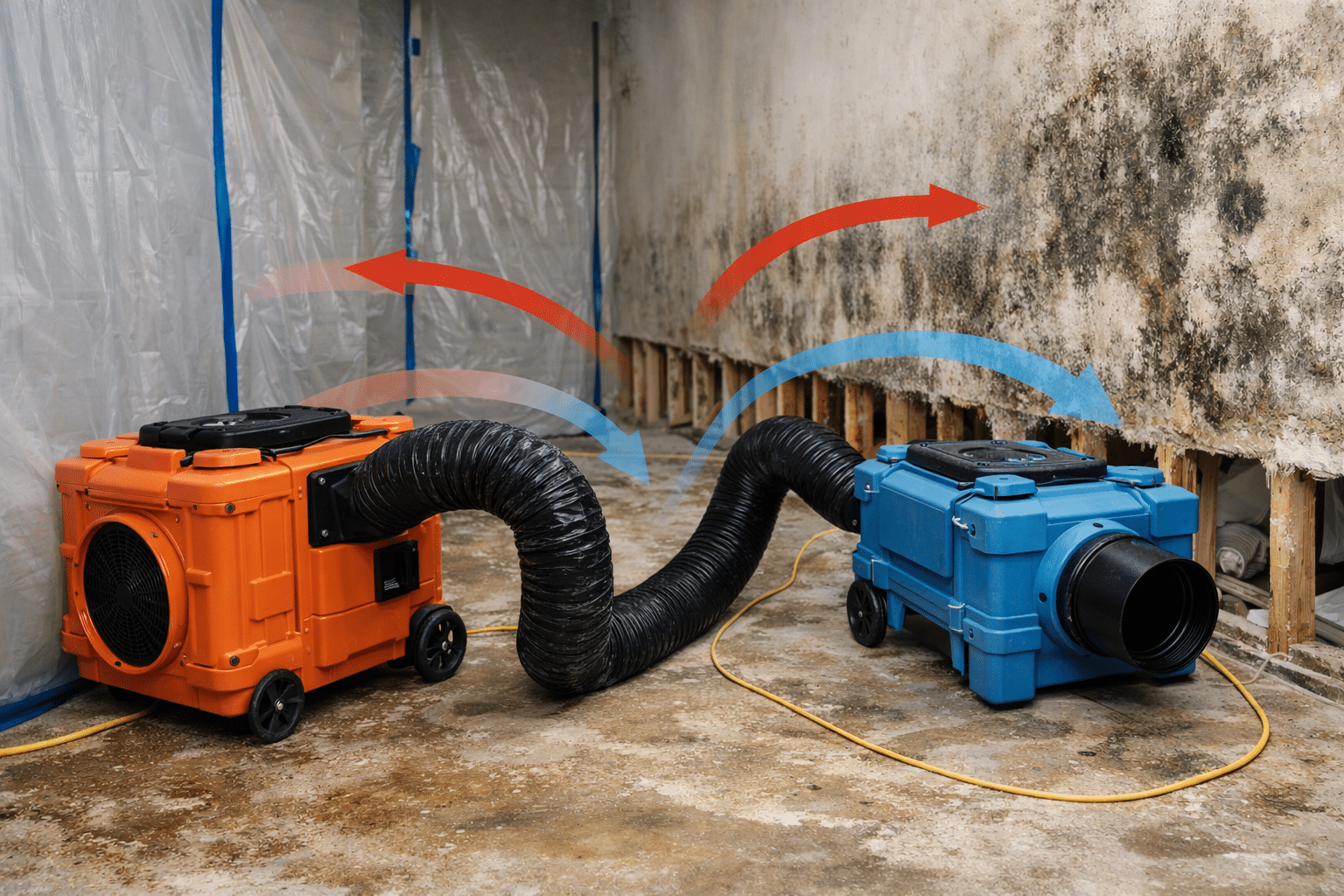
Proper placement of air scrubbers for maximum effectiveness is critical in Dubai’s challenging climate. Incorrect positioning leads to poor air quality and higher costs during mold remediation. This complete guide reveals 9 proven strategies for air scrubbers for maximum performance in Dubai homes and commercial buildings.
Table of Contents
- Understanding Air Scrubbers for Maximum Efficiency
- Importance of Ventilation and Circulation in Dubai
- Placement Strategies for Heavy Mold Contamination
- Handling Light to Moderate Contamination Scenarios
- Strategic Placement Around Ventilation Systems
- Monitoring and Verification of Air Quality
- Expert Tips for Maximum Results
- Frequently Asked Questions
- Conclusion on Maximum Performance
Understanding Air Scrubbers for Maximum Efficiency
In Dubai’s indoor environmental health, particularly during mold remediation jobs, the placement of air scrubbers for maximum effectiveness plays a crucial role. Incorrect placement can lead to inadequate air quality and increased operational costs. This guide covers best practices for placing units in your Dubai property.
Importance of Ventilation and Circulation in Dubai
Ventilation is a key component in any mold remediation strategy. Proper airflow can help disperse spores, reduce humidity levels, and improve overall air quality. HEPA air scrubbers for maximum effectiveness are essential tools as they capture microscopic particles, including mold spores, from the air.
Placement of these units should consider the natural flow of air in Dubai properties to ensure contaminated air is effectively captured and cleaned before circulating back into occupied areas. For example, placing units near mold growth sources or at strategic airflow points can significantly enhance system effectiveness.
Placement Strategies for Heavy Mold Contamination
When dealing with heavy mold contamination in Dubai, it is crucial to place air scrubbers for maximum results strategically. Consider the following:
Near Active Source of Mold Growth
Position units as close as possible to areas where active mold growth is observed. This ensures spores are captured before they disperse into the environment.
At Key Entry Points
Place units near doorways and windows, especially if these are significant entry points for contaminated air. This helps maintain a clean air buffer zone within occupied areas of Dubai properties.
Along Airflow Paths
Identify primary airflow paths through the space and position air scrubbers for maximum efficiency at key junctures to capture contaminants efficiently.
Handling Light to Moderate Contamination Scenarios
For less severe contamination cases in Dubai, the placement can be adjusted:
Distributed Placement
In smaller areas with moderate mold growth, consider placing multiple units at strategic locations. This ensures comprehensive coverage and reduces the risk of missed spores.
Near Work Areas
Place units near work areas where remediation activities are taking place to ensure these zones remain clean and safe for workers in Dubai properties.
By distributing the equipment, you can create a more uniform airflow pattern and enhance overall air quality in the space.
Strategic Placement Around Ventilation Systems
Ventilation systems are critical components in maintaining indoor air quality in Dubai, and their placement can significantly influence performance:
Before Filters
Place air scrubbers for maximum filtration before HVAC filters to capture larger particles first, reducing the load on downstream filters.
Near Return Air Grills
Position units near return air grills where contaminated air is drawn into the system. This ensures spores are captured as they enter the HVAC, preventing their recirculation in Dubai buildings.
Monitoring and Verification of Air Quality
To ensure air scrubbers for maximum results are performing as expected, it is essential to monitor and verify air quality regularly in Dubai properties:
- Air Sampling: Conduct regular air sampling using spore traps or surface swabs to measure mold spores presence.
- Thermal Imaging: Use thermal imaging cameras to identify areas with high humidity and potential mold growth.
- Continuous Monitoring Systems: Install continuous monitoring systems in key areas to provide real-time data on air quality and adjust placement as needed.
Expert Tips for Maximum Results
- Consult Professional Experts: Engage experienced professionals who can provide tailored advice for positioning air scrubbers for maximum effectiveness based on Dubai building conditions.
- Use Advanced Technology: Leverage advanced technology such as remote monitoring systems and smart sensors to optimize placement and operation.
- Regular Maintenance: Regularly clean and maintain HEPA filters to ensure units continue functioning at peak efficiency.
Frequently Asked Questions
Q: How long should I run air scrubbers for maximum effectiveness after mold remediation in Dubai?
A: The duration depends on contamination severity and extent. Typically, continue running for at least 30 days to ensure all spores are captured and air quality returns to normal levels in Dubai properties.
Q: Can units be used with other remediation methods?
A: Yes, they can work effectively alongside surface cleaning, source removal, and moisture control. The combined approach ensures a more comprehensive solution to indoor environmental issues in Dubai.
Q: Are air scrubbers for maximum efficiency suitable for all types of mold contamination?
A: While effective against most molds, they may not be sufficient in cases of severe or hidden contamination. A thorough investigation and targeted remediation strategies should always be employed in Dubai properties.
Conclusion on Maximum Performance
The proper placement of air scrubbers for maximum effectiveness is essential during mold remediation jobs in Dubai. By understanding the importance of ventilation, strategic placement, and continuous monitoring, you can create a healthier indoor environment and reduce operational costs. Following expert tips and leveraging advanced technologies will further enhance your efforts in achieving optimal results.