
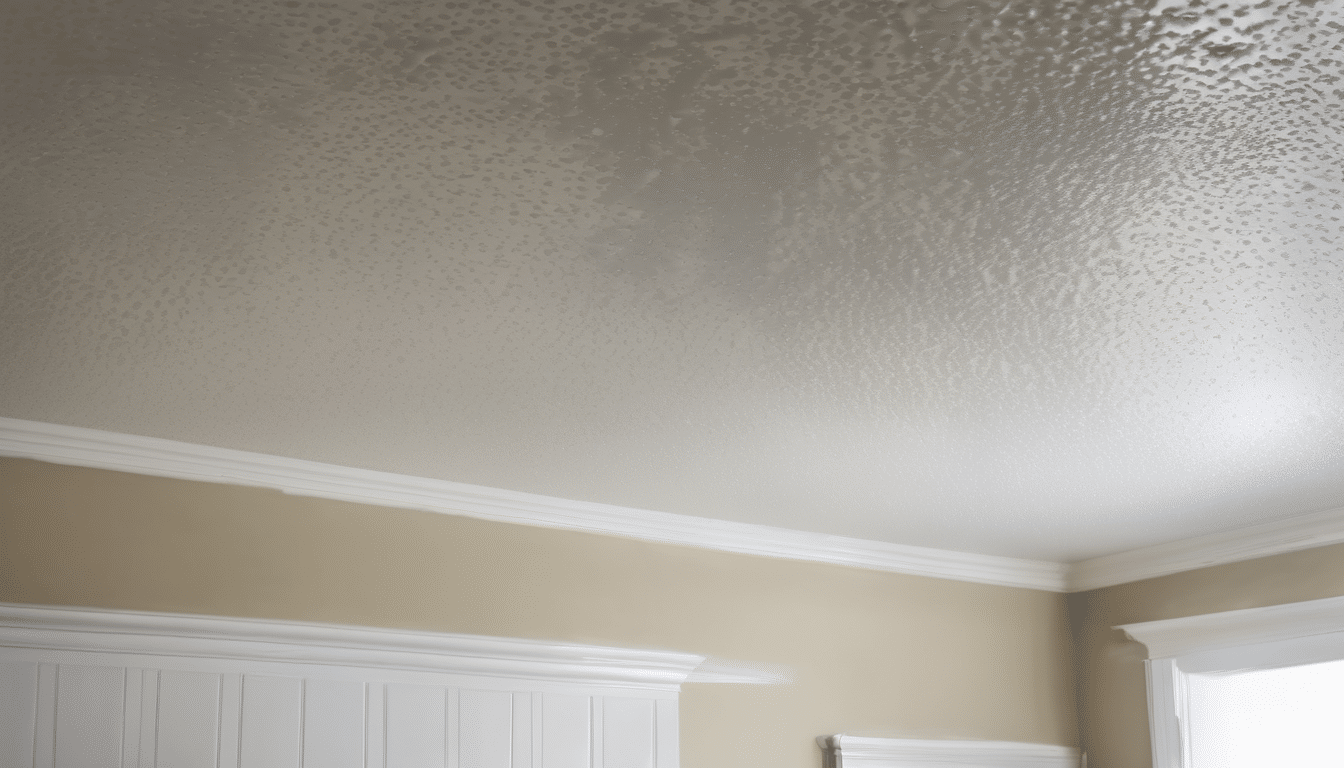
Preventing condensation mold after ceiling repairs represents one of the most critical yet overlooked aspects of indoor environmental management in Dubai’s challenging climate. This specific type of mold growth occurs when moisture from humidity condenses on recently repaired ceiling surfaces, creating ideal conditions for microbial colonization. Unlike leak-related mold that stems from water intrusion, condensation mold develops due to temperature differentials and inadequate moisture control within the building envelope.
In Dubai’s extreme humidity conditions, where indoor relative humidity often exceeds 60% despite air conditioning, preventing condensation Mold After Ceiling repairs requires specialized understanding of building physics and moisture dynamics. The problem becomes particularly acute when repairs involve materials with different thermal properties or when ventilation systems are improperly balanced. Many homeowners and contractors focus solely on the visual repair without addressing the underlying environmental conditions that led to the initial moisture problem.
Effective Preventing Condensation Mold after ceiling repairs involves a systematic approach that begins before demolition and continues long after the last coat of paint dries. This comprehensive guide will explore the science behind condensation formation, the specific challenges in UAE construction, and the practical strategies that ensure your ceiling repairs remain mold-free for years to come.
Preventing Condensation Mold After Ceiling Repairs – Understanding Condensation Mold Formation Mechanism
Condensation occurs when warm, moisture-laden air contacts a cooler surface, causing water vapour to change from gas to liquid form. In ceiling systems, this typically happens when indoor humidity meets cooler ceiling materials, particularly in air-conditioned Dubai homes where temperature differentials can be significant. The dew point temperature—the point at which condensation forms—becomes the critical factor in preventing condensation mold after ceiling repairs.
Several architectural elements contribute to this phenomenon. Thermal bridging, where structural elements create cold spots, often occurs around concrete beams, metal framing, or poorly insulated areas. These cold surfaces become condensation magnets, especially when relative humidity exceeds 55%. In many Dubai properties, the combination of high outdoor humidity (often 80-90%) and aggressive air conditioning (typically 20-22°C) creates perfect conditions for condensation problems.
The biological process begins when condensation provides the moisture necessary for mold spores to germinate. These microscopic spores exist everywhere in the environment but remain dormant until moisture, organic material (such as dust, cellulose, or paint), and suitable temperatures converge. Preventing condensation mold after ceiling repairs requires interrupting this chain by controlling moisture availability through proper material selection, insulation, and ventilation strategies.
Preventing Condensation Mold After Ceiling Repairs – Pre-Repair Assessment Critical Steps
Thorough assessment before beginning ceiling repairs forms the foundation of successful preventing condensation mold after ceiling repairs. This process should include comprehensive moisture mapping using professional-grade thermal imaging cameras that identify temperature variations and hidden moisture patterns. These diagnostic tools reveal cold spots and moisture accumulation that visual inspection alone cannot detect.
HVAC system evaluation represents another critical component. The air conditioning system must be balanced to ensure proper air movement across ceiling surfaces without creating stagnant zones where humidity can accumulate. Ductwork should be inspected for condensation issues, and supply diffuser positioning should be assessed to prevent direct cold air impingement on ceiling surfaces. In many Dubai properties, simple adjustments to airflow patterns can significantly reduce condensation risk.
Environmental monitoring provides quantitative data essential for preventing condensation mold after ceiling repairs. Professional assessment should include measurement of indoor relative humidity, temperature differentials between air and surface temperatures, and dew point calculations. This data informs decisions about insulation requirements, ventilation rates, and material specifications. Without this baseline understanding, repairs often address symptoms rather than underlying causes, leading to recurrent mold problems.
Preventing Condensation Mold After Ceiling Repairs – Material Selection for Preventing Condensation Mold
Material compatibility plays a crucial role in preventing condensation mold after ceiling repairs. Traditional gypsum board, while common, possesses hygroscopic properties that absorb moisture and support mold growth when condensation occurs. In high-humidity environments like Dubai, moisture-resistant gypsum board with fiberglass facing and mold-inhibiting additives provides significantly better performance for preventing condensation mold after ceiling repairs.
Insulation selection directly impacts surface temperatures and condensation risk. Closed-cell spray foam insulation applied to the ceiling cavity creates both thermal barrier and vapour retarder properties, raising surface temperatures above dew point. Alternatively, rigid foam insulation boards with proper R-values appropriate for Dubai’s climate help maintain consistent surface temperatures. The key lies in continuous insulation without thermal bridges that create cold spots.
Surface finishes and paints contribute significantly to preventing condensation mold after ceiling repairs. Microporous paints allow moisture vapour transmission while preventing liquid water penetration, reducing surface moisture accumulation. Antimicrobial primers and topcoats specifically formulated for high-humidity environments provide additional protection. For severe condensation risk areas, ceramic-based insulating paints can raise surface temperature by several degrees, moving them further from dew point conditions.
Ventilation Strategies for Dubai Climate
Mechanical ventilation systems require careful design and balancing for effective preventing condensation mold after ceiling repairs in Dubai’s climate. Supply and return air configurations must ensure adequate air movement across all ceiling surfaces without creating stagnant zones. In many cases, adding additional return air grilles or adjusting supply diffuser angles can dramatically improve air circulation and reduce humidity accumulation.
Energy recovery ventilation (ERV) systems offer particular advantages for preventing condensation mold after ceiling repairs in humid climates. These systems precondition incoming air by transferring humidity and temperature between incoming and exhaust air streams. By maintaining indoor humidity levels between 45-55%, ERV systems keep surface temperatures above dew point while providing fresh air exchange without the energy penalty of conventional ventilation.
Local exhaust ventilation proves essential in moisture-generating areas that affect ceiling environments. Bathrooms, kitchens, and laundry areas should have properly sized exhaust fans ducted directly outdoors rather than into ceiling cavities. Timer switches or humidity-sensing controls ensure adequate runtime to remove moisture at source. For whole-house strategies, positive pressure ventilation systems can help control humidity infiltration in Dubai’s climate.
Moisture Barrier Installation Techniques
Vapour barrier installation represents a critical technical aspect of preventing condensation mold after ceiling repairs. The placement of vapour barriers depends on climate conditions—in hot, humid climates like Dubai, the barrier should be installed on the exterior side of insulation to prevent warm, moist air from reaching cooler interior surfaces. Improper vapour barrier placement can trap moisture within wall and ceiling assemblies, creating ideal mold growth conditions.
Installation quality significantly impacts moisture barrier performance for preventing condensation mold after ceiling repairs. Seams must be properly lapped and sealed with appropriate tapes or mastics, and penetrations for electrical boxes, plumbing, and ventilation must be meticulously sealed. Even small gaps can allow sufficient moisture migration to cause condensation problems. Professional installation with attention to detail proves essential for long-term performance.
Advanced membrane technologies offer improved solutions for preventing condensation mold after ceiling repairs. Variable-permeance membranes (sometimes called “smart” vapour barriers) change their permeability based on humidity conditions, allowing drying in one direction while restricting moisture movement in the other. These systems provide dynamic moisture management that adapts to seasonal changes in Dubai’s climate, offering superior protection against condensation-related mold growth.
Post-Repair Monitoring and Maintenance
Continuous environmental monitoring provides the verification necessary for successful preventing condensation mold after ceiling repairs. Wireless data loggers that measure temperature and relative humidity should be installed in critical areas, with alerts set for conditions approaching dew point. Regular documentation creates a performance baseline and identifies trends that might indicate developing problems before visible mold appears.
HVAC maintenance schedules must be established and followed rigorously to support preventing condensation mold after ceiling repairs. Filter changes, coil cleaning, drain pan maintenance, and system balancing should occur at least quarterly in Dubai’s demanding climate. Neglected HVAC systems often become moisture generators themselves through clogged drain lines or dirty evaporator coils that reduce dehumidification capacity.
Occupant education completes the strategy for preventing condensation mold after ceiling repairs. Homeowners should understand the relationship between temperature settings, humidity levels, and ventilation practices. Simple behaviours like maintaining consistent temperature settings, using exhaust fans during moisture-generating activities, and reporting musty odours promptly can significantly contribute to long-term success. Professional annual inspections help identify potential issues before they develop into major problems.
Expert Tips for Preventing Condensation Mold
Professional-grade moisture meters provide essential data for preventing condensation mold after ceiling repairs. These tools measure moisture content within materials, not just surface dampness, revealing hidden problems before they become visible. Regular moisture mapping of ceiling surfaces, particularly along exterior walls and in corners, helps identify developing condensation issues early.
Thermal imaging cameras represent invaluable tools for preventing condensation mold after ceiling repairs. These devices visualize temperature variations that indicate thermal bridging, insulation gaps, and moisture accumulation. Annual thermal scans, particularly during seasonal transitions when condensation risk increases, provide proactive identification of problem areas before mold growth begins.
Humidity control systems offer automated solutions for preventing condensation mold after ceiling repairs. Stand-alone dehumidifiers with humidistat controls can maintain optimal humidity levels in problem areas, while whole-house dehumidification systems integrated with HVAC provide comprehensive moisture management. These systems prove particularly valuable in Dubai’s climate where outdoor humidity regularly exceeds indoor comfort levels.
Professional assessment by certified indoor environmental consultants provides the expertise necessary for complex cases of preventing condensation mold after ceiling repairs. These specialists combine building science knowledge with advanced diagnostic tools to identify root causes and develop comprehensive solutions. Investment in professional assessment typically costs between AED 1,500-3,000 but prevents far more expensive remediation and repair costs later.
Frequently Asked Questions
How long after ceiling repairs should I watch for condensation mold? The highest risk period for condensation mold development occurs during the first 6-12 months after repairs as materials equilibrate and seasonal humidity changes occur. However, ongoing vigilance remains important as building conditions and usage patterns change over time.
Can paint alone prevent condensation mold on repaired ceilings? While mold-resistant paints provide some protection, they cannot overcome fundamental building physics issues that cause condensation. Effective preventing condensation mold after ceiling repairs requires addressing temperature differentials, humidity control, and ventilation rather than relying solely on surface treatments.
What humidity level prevents condensation mold in Dubai homes? Maintaining indoor relative humidity below 55% generally prevents condensation on properly insulated surfaces. However, the specific target depends on surface temperatures and insulation quality. Professional assessment can determine the ideal humidity level for your specific property conditions.
How much does professional condensation prevention assessment cost? Comprehensive assessment for preventing condensation mold after ceiling repairs typically ranges from AED 1,500-3,000 depending on property size and complexity. This investment identifies root causes and provides specific solutions tailored to your property’s unique conditions.
Preventing condensation mold after ceiling repairs requires understanding the complex interaction between building materials, environmental conditions, and mechanical systems. In Dubai’s challenging climate, successful prevention strategies combine proper material selection, meticulous installation techniques, balanced ventilation, and ongoing monitoring. By addressing the root causes of condensation rather than just treating visible mold, homeowners can achieve lasting solutions that protect both property value and indoor air quality.
The most effective approach to preventing condensation mold after ceiling repairs involves professional assessment before beginning work, implementation of appropriate building science principles during repairs, and establishment of ongoing maintenance and monitoring protocols. This comprehensive strategy ensures that ceiling repairs remain mold-free and structurally sound for years to come, providing peace of mind and protecting your investment in your property.