
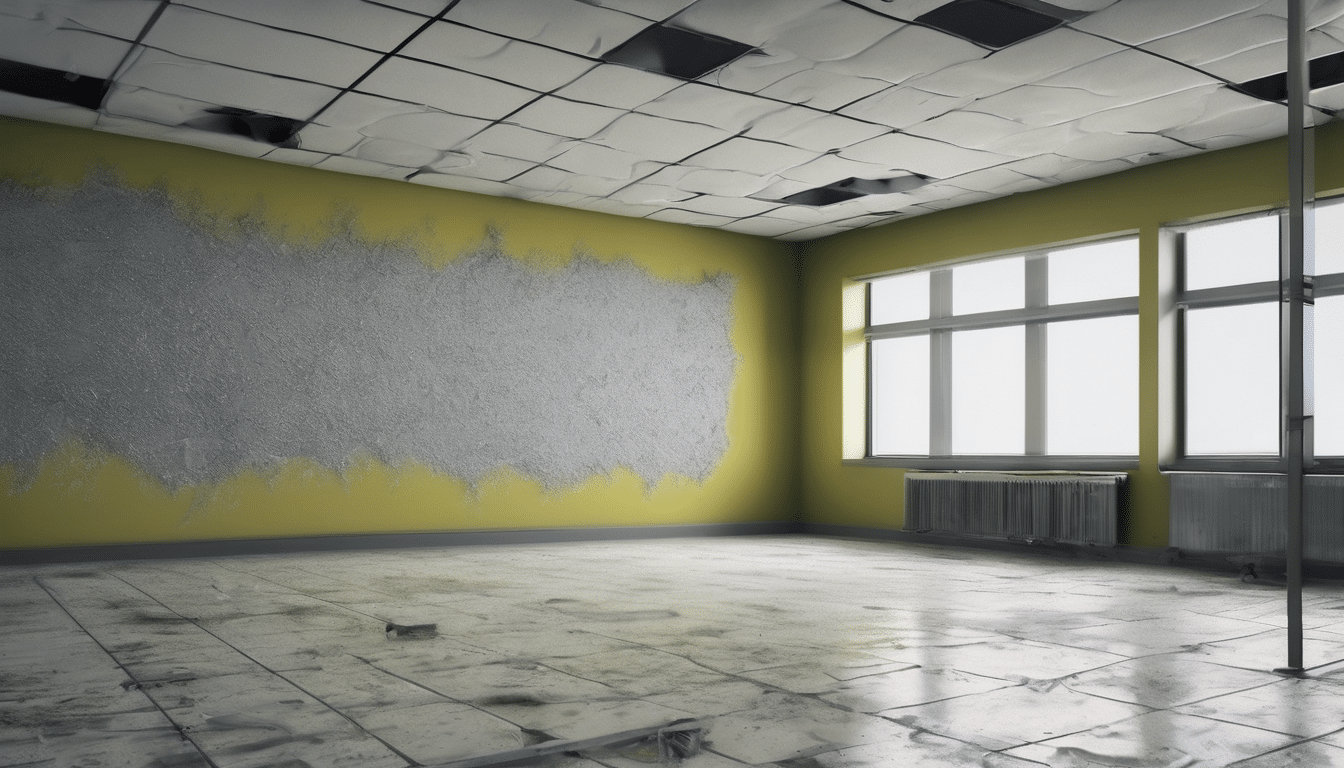
Commercial buildings across the UAE face significant challenges with hidden mold growth, particularly in Dubai’s humid climate where air-conditioned spaces create ideal conditions for concealed microbial development. Hidden Mold Detection techniques in commercial buildings require specialised approaches that go beyond visual inspection, especially in complex structures with extensive HVAC systems, false ceilings, and wall cavities. The combination of high outdoor humidity levels reaching 90% during summer months and aggressive cooling creates perfect conditions for condensation and hidden mold growth behind walls, above ceiling tiles, and within ventilation systems.
Proper hidden mold detection techniques in commercial buildings are essential for maintaining healthy indoor environments, protecting building integrity, and ensuring occupant wellbeing. Unlike residential properties, commercial structures often have larger air volumes, complex mechanical systems, and multiple zones that require sophisticated detection methodologies. In the UAE context, where many buildings operate 24/7 with continuous climate control, the risk of hidden mold development increases significantly due to constant temperature differentials and moisture accumulation in concealed spaces.
This comprehensive guide explores the most effective hidden mold detection techniques in commercial buildings, with specific attention to Dubai and UAE regional considerations. We will examine advanced technologies, professional assessment methods, and building-specific approaches that enable accurate identification of concealed mold growth before it becomes a major health or structural concern. Understanding these hidden mold detection techniques in commercial buildings is crucial for facility managers, property owners, and health and safety professionals operating in the Middle Eastern climate.
Understanding Hidden Mold Detection Techniques in Commercial Buildings
Effective hidden mold detection techniques in commercial buildings begin with understanding how and where mold develops in large structures. Commercial properties typically have complex building envelopes, extensive mechanical systems, and multiple occupancy zones that create numerous hidden spaces where mold can thrive undetected. The most common locations for hidden mold growth include behind wall coverings, above suspended ceilings, within HVAC ductwork, under raised floors, and inside wall cavities where temperature differentials cause condensation.
Professional hidden mold detection techniques in commercial buildings employ a systematic approach that combines visual assessment with technological tools and scientific analysis. Unlike visible mold growth, hidden contamination requires indirect detection methods that identify the conditions conducive to mold development rather than just the mold itself. This includes moisture mapping, thermal pattern analysis, and air quality assessment that can indicate microbial activity in concealed areas.
The complexity of hidden mold detection techniques in commercial buildings increases with building size and system complexity. Large office towers, shopping malls, and hospitality venues in Dubai often have centralised HVAC systems that can distribute mold spores throughout the building if contamination occurs in air handling units or ductwork. Proper detection requires understanding airflow patterns, pressure relationships between zones, and moisture migration pathways that are unique to each commercial structure.
Key Principles of Commercial Mold Detection
Successful hidden mold detection techniques in commercial buildings rely on several fundamental principles. Moisture is the primary driver of mold growth, so detection focuses on identifying elevated moisture levels in building materials and concealed spaces. Temperature differentials between conditioned spaces and external environments create condensation points where moisture accumulates without visible signs. Air movement patterns can carry mold spores from hidden sources to occupied areas, making air quality testing an essential component of detection strategies.
Hidden Mold Detection Techniques In Commercial Buildings – Thermal Imaging for Moisture Detection
Thermal imaging represents one of the most valuable hidden mold detection techniques in commercial buildings for identifying concealed moisture problems. Infrared cameras detect temperature variations in building materials that indicate moisture presence behind walls, above ceilings, or under floors. In Dubai’s climate, where exterior temperatures can reach 48°C while interior spaces are maintained at 22-24°C, significant thermal bridging occurs, creating ideal conditions for hidden condensation and mold growth.
Professional-grade thermal cameras used in hidden mold detection techniques in commercial buildings can identify temperature differentials as small as 0.1°C, allowing detection of moisture issues long before visible mold appears. The technology is particularly effective for scanning large areas quickly, making it ideal for commercial applications where thousands of square metres may need assessment. Thermal imaging can reveal plumbing leaks, roof leaks, condensation points, and building envelope failures that contribute to hidden mold development.
When implementing thermal imaging as part of hidden mold detection techniques in commercial buildings, professionals must understand building materials and construction methods common in UAE construction. Concrete structures with plaster finishes, glass curtain walls, and insulated panel systems each have different thermal properties that affect interpretation of infrared images. Proper training and experience are essential for accurate assessment, as temperature variations can have multiple causes beyond moisture presence.
Hidden Mold Detection Techniques In Commercial Buildings – Advanced Air Sampling Methods
Air quality testing forms a critical component of hidden mold detection techniques in commercial buildings, particularly for identifying microbial contamination in ventilation systems and concealed spaces. Professional mold investigators use several air sampling methods, including spore trap sampling, culturable air sampling, and particle counting, to assess airborne mold levels and identify hidden contamination sources. In commercial settings, air sampling helps determine if mold spores are being distributed from hidden locations through HVAC systems.
Spore trap sampling, one of the most common hidden mold detection techniques in commercial buildings, involves drawing air through a cassette that captures airborne particles on a sticky surface. The sample is then analysed microscopically to identify and quantify mold spores. This method provides a snapshot of airborne mold levels and can help pinpoint hidden sources when combined with air movement analysis. In large commercial buildings, strategic sampling locations throughout HVAC supply and return vents can reveal system contamination.
Culturable air sampling, another valuable approach in hidden mold detection techniques in commercial buildings, involves collecting air samples on growth media that allows mold colonies to develop. This method provides information about viable mold species present, which can be important for health assessments and remediation planning. However, culturable sampling requires longer processing times and may not capture all mold types, making it most effective when used alongside other detection methods.
Moisture Mapping and Hygrothermal Analysis
Moisture mapping represents a sophisticated approach among hidden mold detection techniques in commercial buildings that involves systematically measuring and documenting moisture levels throughout a structure. Professionals use moisture meters with various probe types to assess water content in building materials, creating detailed maps that show moisture patterns and potential problem areas. This method is particularly effective for identifying concealed leaks, condensation issues, and building envelope failures that contribute to hidden mold growth.
Hygrothermal analysis takes moisture mapping further by assessing temperature and humidity conditions within building assemblies. This advanced approach among hidden mold detection techniques in commercial buildings helps predict where condensation will occur based on material properties, temperature gradients, and humidity levels. In Dubai’s climate, where exterior and interior conditions differ dramatically, hygrothermal analysis can identify risk areas before mold develops, allowing preventive measures.
Professional moisture mapping for hidden mold detection techniques in commercial buildings typically uses non-invasive moisture meters with deep penetration capabilities for concrete and other common construction materials. Pin-type meters measure moisture content at specific depths, while non-pin meters use electromagnetic waves to assess moisture without damaging surfaces. The choice of equipment depends on building materials and the need for destructive versus non-destructive testing approaches.
Structural Investigation Techniques
Structural investigation forms an essential component of comprehensive hidden mold detection techniques in commercial buildings, particularly when other methods indicate potential problems behind walls or above ceilings. Controlled invasive testing allows professionals to access concealed spaces without unnecessary damage to building finishes. This may include removing small sections of drywall, creating inspection holes, or using borescopes to visually examine cavities without major demolition.
Borescope inspection represents one of the most valuable hidden mold detection techniques in commercial buildings for examining concealed spaces with minimal disruption. These flexible cameras can be inserted through small openings to visually assess conditions inside wall cavities, above ceilings, and within mechanical chases. Modern borescopes provide high-resolution imaging and even sampling capabilities, allowing professionals to document hidden conditions and collect evidence of mold growth without extensive demolition.
When structural investigation is necessary as part of hidden mold detection techniques in commercial buildings, professionals follow strict protocols to minimise damage and ensure proper restoration. This includes strategic placement of inspection openings based on other detection findings, careful documentation of all accessed areas, and proper sealing of openings after investigation. In commercial settings where business operations must continue, non-disruptive approaches are particularly important.
UAE-Specific Considerations for Mold Detection
The UAE’s unique climate and construction practices require specialised approaches to hidden mold detection techniques in commercial buildings. Dubai’s high humidity levels, particularly during summer months when relative humidity often exceeds 85%, create significant challenges for moisture control in air-conditioned buildings. The extreme temperature differential between outdoor conditions (frequently above 40°C) and indoor environments (typically 22-24°C) creates substantial condensation risks at building envelope interfaces.
Construction methods common in UAE commercial buildings also influence hidden mold detection techniques in commercial buildings. Glass curtain wall systems, while aesthetically impressive, often create thermal bridging and condensation issues at framing members. Concrete construction with plaster finishes can conceal moisture problems for extended periods before visible signs appear. Understanding these regional construction characteristics is essential for effective mold detection and moisture assessment.
Cultural and operational factors also affect hidden mold detection techniques in commercial buildings in the UAE. Many commercial properties operate 24/7 with continuous climate control, creating constant moisture challenges. Maintenance practices, cleaning protocols, and occupant densities all influence mold risk factors. Professionals conducting assessments must understand these local conditions to develop effective detection strategies and recommendations.
Professional Assessment Protocols
Professional hidden mold detection techniques in commercial buildings follow established protocols that ensure comprehensive assessment and accurate findings. These protocols typically begin with preliminary assessment including document review, interviews with building staff, and visual inspection of all accessible areas. This initial phase helps identify potential problem areas and develop a targeted investigation plan based on building characteristics and occupant concerns.
Systematic implementation of hidden mold detection techniques in commercial buildings involves strategic use of various technologies and methods based on initial findings. Professionals may combine thermal imaging, moisture mapping, air sampling, and limited invasive testing to build a complete picture of hidden conditions. Documentation throughout the process is critical, including photographs, moisture readings, air sample results, and detailed notes about all observations.
Interpretation of findings from hidden mold detection techniques in commercial buildings requires significant expertise, particularly in complex commercial environments. Professionals must distinguish between normal background conditions and significant contamination, understand building system interactions, and recognise patterns that indicate systemic versus localised problems. Final reporting should clearly communicate findings, interpretation, and recommendations in language understandable to building owners and facility managers.
Expert Tips for Effective Detection
Implementing effective hidden mold detection techniques in commercial buildings requires attention to several key factors. First, understand that mold needs moisture, so focus detection efforts on areas where water intrusion, condensation, or high humidity may occur. In UAE commercial buildings, pay particular attention to areas where cold air from HVAC systems contacts warm surfaces, creating condensation points.
Second, use multiple complementary hidden mold detection techniques in commercial buildings rather than relying on a single method. Thermal imaging might identify moisture patterns, but air sampling confirms whether microbial growth is present. Moisture mapping shows water distribution, but invasive testing may be needed to verify actual mold development. A multi-method approach provides the most reliable results.
Third, consider temporal factors when implementing hidden mold detection techniques in commercial buildings. Moisture conditions can change throughout the day based on occupancy patterns, HVAC operation, and external weather conditions. Conduct assessments at different times to capture variations, and consider seasonal factors that affect humidity levels and condensation risks in Dubai’s climate.
Fourth, document everything meticulously when performing hidden mold detection techniques in commercial buildings. Detailed records including photographs, moisture readings, sample locations, and environmental conditions provide essential data for analysis and future reference. Proper documentation also supports any necessary remediation planning and post-remediation verification efforts.
Finally, engage professionals with specific experience in hidden mold detection techniques in commercial buildings in the UAE context. Local knowledge of construction methods, climate challenges, and common failure points significantly enhances detection effectiveness and recommendation appropriateness for Dubai and UAE commercial properties.
Frequently Asked Questions
How often should commercial buildings in Dubai undergo mold detection assessments?
Commercial properties in Dubai should have professional mold assessments at least annually, with more frequent checks if the building has a history of moisture problems or operates in high-humidity conditions. Buildings with sensitive occupants or valuable contents may benefit from quarterly assessments.
What are the most common hidden mold locations in UAE commercial buildings?
The most frequent hidden mold locations include behind wall coverings in exterior walls, above ceiling tiles near air conditioning vents, within HVAC systems and ductwork, under raised floors in server rooms, and in building envelope interfaces where condensation occurs.
Can hidden mold detection be performed without business disruption?
Most hidden mold detection techniques in commercial buildings are non-disruptive and can be performed during normal business hours. Techniques like thermal imaging, moisture mapping, and air sampling require minimal access and don’t typically affect operations. Invasive techniques requiring access to concealed spaces can usually be scheduled for off-hours.
How much does professional mold detection cost for commercial buildings in Dubai?
Costs for comprehensive hidden mold detection in commercial buildings typically range from AED 5,000 to AED 20,000 depending on building size, complexity, and the specific techniques required. Larger buildings with complex systems generally require more extensive assessment and correspondingly higher investment.
What certifications should professionals have for commercial mold detection?
Look for professionals with IICRC certification in mold assessment, building science credentials, and specific training in the technologies used for detection. In the UAE, additional familiarity with local construction methods and climate considerations is essential for accurate assessment.
Effective hidden mold detection techniques in commercial buildings require a systematic, multi-method approach that addresses the unique challenges of large structures in Dubai’s climate. By combining advanced technologies with professional expertise and understanding of local conditions, building owners and facility managers can identify hidden mold problems before they impact occupant health or building integrity. Regular assessment using these hidden mold detection techniques in commercial buildings represents a valuable investment in maintaining healthy, sustainable commercial properties throughout the UAE.