
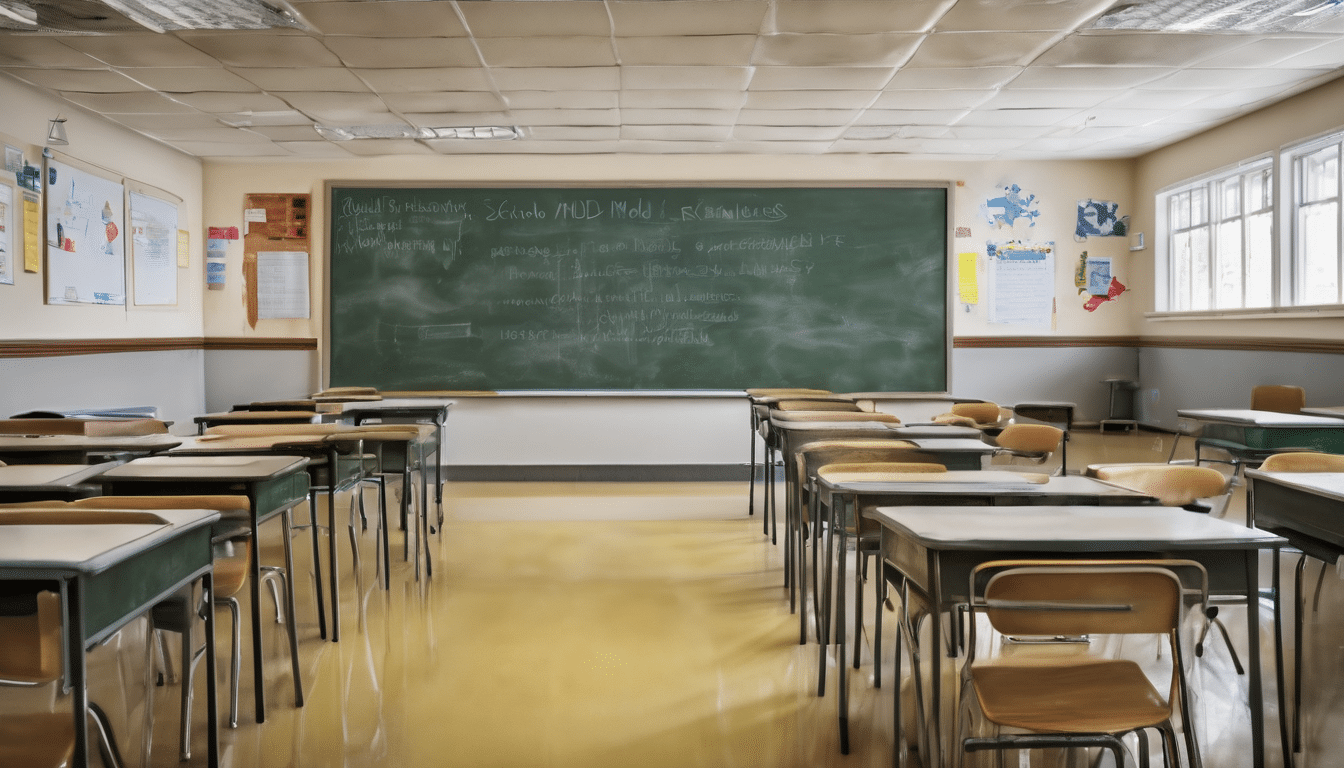
Mold contamination in educational facilities presents unique challenges that demand specialised School Mold Remediation Health and Safety Guidelines. In UAE schools, where air-conditioned environments and high humidity levels create ideal conditions for mold growth, implementing proper protocols becomes essential for protecting student health and maintaining educational continuity. These School Mold Remediation Health and Safety Guidelines address the specific requirements of classrooms, laboratories, libraries, and other educational spaces where young occupants spend significant time.
The importance of following established School Mold Remediation Health and Safety Guidelines cannot be overstated. Educational institutions must balance remediation effectiveness with minimal disruption to academic activities while ensuring complete safety for students, teachers, and staff. This comprehensive guide outlines the critical components of School Mold Remediation Health and Safety Guidelines, drawing from international standards adapted to UAE climate conditions and building practices.
Understanding School Mold Remediation Health and Safety Guidelines
School Mold Remediation Health and Safety Guidelines begin with recognising that educational environments require special considerations compared to other buildings. Children are more vulnerable to mold exposure due to developing respiratory systems and higher breathing rates relative to body size. These School Mold Remediation Health and Safety Guidelines must address both immediate remediation needs and long-term prevention strategies.
The foundation of effective School Mold Remediation Health and Safety Guidelines lies in understanding that mold growth indicates underlying moisture problems. In UAE schools, common moisture sources include HVAC condensation, plumbing leaks, roof leaks during rare rainfall events, and humidity infiltration through building envelopes. Proper School Mold Remediation Health and Safety Guidelines emphasise identifying and correcting these moisture issues before beginning remediation work.
Educational institutions must implement School Mold Remediation Health and Safety Guidelines that comply with local regulations while incorporating international best practices. These guidelines should address work scheduling to minimise disruption, communication protocols with parents and staff, and coordination with educational authorities. The School Mold Remediation Health and Safety Guidelines must also consider the diverse spaces within schools, from science laboratories with specific ventilation requirements to libraries containing sensitive materials.
School Mold Remediation Health And Safety Guidelines – Pre-Remediation Assessment and Planning
Comprehensive assessment forms the critical first step in School Mold Remediation Health and Safety Guidelines. This process involves visual inspection, moisture mapping, and environmental sampling to determine the extent of contamination. School Mold Remediation Health and Safety Guidelines require thorough documentation of all findings, including moisture readings, humidity levels, and visible mold growth patterns.
Proper planning under School Mold Remediation Health and Safety Guidelines includes developing detailed work plans that specify containment strategies, cleaning methods, and disposal procedures. These plans must account for school schedules, identifying appropriate times for remediation work that minimise student exposure. School Mold Remediation Health and Safety Guidelines recommend scheduling major work during holidays or weekends when possible.
Communication protocols are essential components of School Mold Remediation Health and Safety Guidelines. Parents, staff, and relevant authorities should receive clear information about the remediation process, safety measures being implemented, and expected timelines. Transparent communication helps maintain trust and ensures cooperation throughout the remediation process outlined in School Mold Remediation Health and Safety Guidelines.
School Mold Remediation Health And Safety Guidelines – Containment Protocols and Engineering Controls
Containment represents a cornerstone of School Mold Remediation Health and Safety Guidelines, preventing cross-contamination to unaffected areas. These guidelines specify different containment levels based on the extent of mold growth, with critical areas requiring full containment with negative air pressure systems. School Mold Remediation Health and Safety Guidelines mandate HEPA-filtered air scrubbers running continuously during remediation.
Engineering controls in School Mold Remediation Health and Safety Guidelines include maintaining negative pressure within containment areas, typically measured at -5 Pascals relative to adjacent spaces. These pressure differentials prevent mold spores from migrating to clean areas during remediation. School Mold Remediation Health and Safety Guidelines require regular monitoring of pressure differentials throughout the remediation process.
Entry and exit procedures form another critical aspect of School Mold Remediation Health and Safety Guidelines. Workers must pass through decontamination chambers with HEPA vacuum stations, protective clothing changes, and cleaning protocols. These School Mold Remediation Health and Safety Guidelines prevent workers from carrying contaminants outside the work area, protecting both the workers and the school environment.
Personal Protective Equipment Requirements
Personal protective equipment (PPE) specifications form a vital component of School Mold Remediation Health and Safety Guidelines. These guidelines mandate appropriate respiratory protection based on exposure levels, with N95 respirators for limited exposure and powered air-purifying respirators (PAPRs) for extensive remediation work. School Mold Remediation Health and Safety Guidelines require fit testing for all respiratory equipment.
Additional PPE requirements in School Mold Remediation Health and Safety Guidelines include disposable coveralls, gloves, and eye protection. These guidelines specify that all protective clothing must be disposed of or properly cleaned after each use. School Mold Remediation Health and Safety Guidelines emphasise proper donning and doffing procedures to prevent self-contamination.
Training requirements accompany PPE specifications in School Mold Remediation Health and Safety Guidelines. All personnel involved in remediation must receive comprehensive training on proper PPE use, limitations, and maintenance. These School Mold Remediation Health and Safety Guidelines ensure that workers understand how to protect themselves effectively during mold remediation activities.
Safe Remediation Methods and Techniques
School Mold Remediation Health and Safety Guidelines specify appropriate cleaning methods based on surface materials and contamination levels. For non-porous surfaces, these guidelines recommend HEPA vacuuming followed by damp wiping with appropriate cleaning solutions. Porous materials with extensive mold growth typically require removal and disposal according to School Mold Remediation Health and Safety Guidelines.
The selection of cleaning agents follows strict protocols within School Mold Remediation Health and Safety Guidelines. These guidelines discourage using bleach-based solutions for routine mold cleanup, instead recommending dedicated antimicrobial products approved for educational settings. School Mold Remediation Health and Safety Guidelines emphasise that cleaning alone cannot substitute for proper moisture control and material removal when necessary.
Waste handling and disposal procedures form critical components of School Mold Remediation Health and Safety Guidelines. Contaminated materials must be sealed in heavy-duty plastic bags before removal from containment areas. These School Mold Remediation Health and Safety Guidelines specify proper labelling and disposal methods in accordance with local waste management regulations.
<h2 id="post-remediation-verification”>Post-Remediation Verification and Clearance
Verification testing represents the final quality control step in School Mold Remediation Health and Safety Guidelines. These guidelines require visual inspection confirming the absence of visible mold and musty odours. Additionally, environmental sampling following School Mold Remediation Health and Safety Guidelines should demonstrate that spore counts in remediated areas match those in unaffected reference areas.
Clearance criteria in School Mold Remediation Health and Safety Guidelines include moisture verification showing that all materials have returned to appropriate dryness levels. These guidelines typically specify moisture content below 16% for wood materials and relative humidity below 60% in affected spaces. School Mold Remediation Health and Safety Guidelines require documentation of all verification results for regulatory compliance and future reference.
Ongoing monitoring recommendations form the concluding element of School Mold Remediation Health and Safety Guidelines. These guidelines suggest regular inspections and humidity monitoring to prevent recurrence. School Mold Remediation Health and Safety Guidelines help educational institutions maintain healthy indoor environments through proactive maintenance and quick response to new moisture issues.
Preventive Measures and Maintenance Protocols
Prevention strategies form an integral part of comprehensive School Mold Remediation Health and Safety Guidelines. These guidelines recommend regular HVAC system maintenance, including coil cleaning, drain pan inspection, and filter replacement. Proper School Mold Remediation Health and Safety Guidelines help schools implement preventive measures that reduce the likelihood of future mold problems.
Building envelope maintenance features prominently in School Mold Remediation Health and Safety Guidelines for UAE schools. These guidelines address proper sealing around windows, doors, and penetrations to prevent humid air infiltration. School Mold Remediation Health and Safety Guidelines also cover roof maintenance and plumbing system inspections to identify potential moisture sources before they cause problems.
Humidity control represents another critical preventive measure in School Mold Remediation Health and Safety Guidelines. These guidelines recommend maintaining indoor relative humidity between 30% and 50% through proper HVAC operation and ventilation. School Mold Remediation Health and Safety Guidelines help educational institutions establish monitoring programs to ensure humidity levels remain within acceptable ranges.
Expert Tips for School Administrators
School administrators should prioritise regular training on School Mold Remediation Health and Safety Guidelines for maintenance staff. Understanding basic moisture detection and response protocols can prevent small issues from becoming major problems. These guidelines help staff identify early signs of moisture intrusion before mold growth occurs.
Developing relationships with qualified professionals familiar with School Mold Remediation Health and Safety Guidelines ensures quick response when issues arise. Pre-qualifying remediation contractors saves valuable time during actual emergencies. These guidelines recommend maintaining contact information for certified mold remediation specialists who understand educational facility requirements.
Budgeting for preventive maintenance aligned with School Mold Remediation Health and Safety Guidelines represents a wise investment for educational institutions. Regular HVAC servicing, roof inspections, and plumbing maintenance typically cost significantly less than major remediation projects. These guidelines help schools allocate resources effectively for long-term indoor air quality management.
Documenting all maintenance activities and inspections supports compliance with School Mold Remediation Health and Safety Guidelines. Maintaining records helps demonstrate due diligence and provides valuable historical data for troubleshooting recurring issues. These guidelines recommend systematic record-keeping for all building systems related to moisture control.
Establishing clear communication protocols forms an essential part of implementing School Mold Remediation Health and Safety Guidelines. Designating spokespersons and preparing template communications ensures consistent messaging during mold incidents. These guidelines help maintain community confidence while addressing environmental health concerns.
Frequently Asked Questions
What immediate steps should schools take when discovering mold?
School Mold Remediation Health and Safety Guidelines recommend immediately isolating affected areas, assessing the extent of contamination, and consulting qualified professionals. Avoid disturbing mold growth until proper containment measures are implemented according to established guidelines.
How long does typical school mold remediation take?
Timelines vary based on contamination extent, but School Mold Remediation Health and Safety Guidelines suggest most projects require 3-7 days for completion. Complex cases with extensive hidden mold may take longer, particularly when addressing underlying moisture issues.
Can classrooms remain occupied during remediation?
School Mold Remediation Health and Safety Guidelines generally recommend vacating affected areas during active remediation. Limited projects with proper containment may allow partial occupancy, but student safety must remain the priority according to these guidelines.
What are the typical costs for school mold remediation?
Costs vary significantly based on project scope, but School Mold Remediation Health and Safety Guidelines indicate typical classroom remediation ranges from AED 15,000 to AED 45,000. Larger areas or complex cases may exceed AED 100,000 depending on containment requirements and reconstruction needs.
How often should schools conduct mold inspections?
School Mold Remediation Health and Safety Guidelines recommend visual inspections quarterly, with comprehensive assessments annually. Areas with historical moisture issues may require more frequent monitoring according to these established guidelines.
Implementing comprehensive School Mold Remediation Health and Safety Guidelines protects both student health and institutional liability. These guidelines provide structured approaches to addressing mold issues while minimising educational disruption. By following established School Mold Remediation Health and Safety Guidelines, educational institutions can maintain healthy learning environments that support academic achievement and wellbeing.