
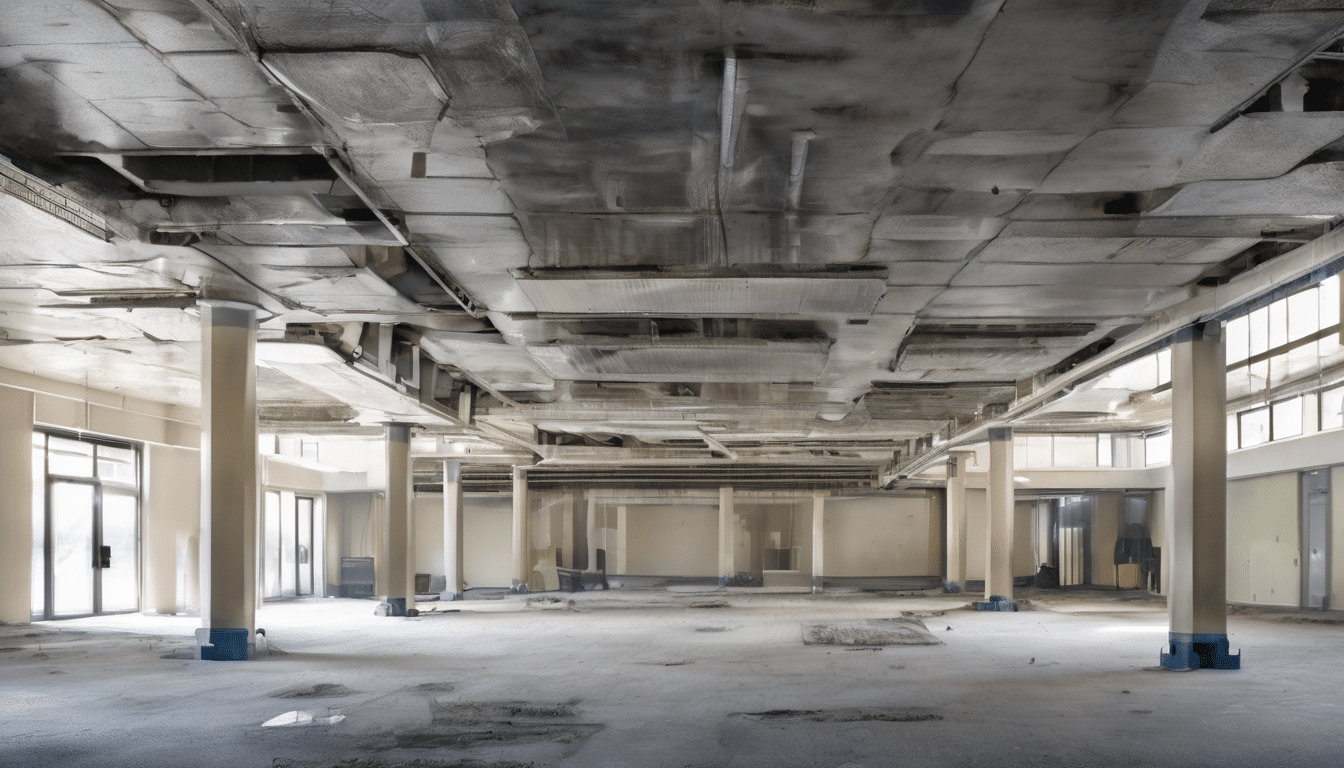
Commercial mold remediation for large buildings represents one of the most complex challenges in indoor environmental management. Unlike residential properties, large commercial structures in Dubai and across the UAE present unique complications due to their scale, complex HVAC systems, multiple occupancy zones, and business continuity requirements. When mold contamination occurs in office towers, shopping centres, hotels, or industrial facilities, the approach to commercial mold remediation for large buildings must be systematic, evidence-based, and minimally disruptive to operations.
The humid climate of the UAE, combined with air-conditioned environments and sometimes compromised building envelopes, creates ideal conditions for mold growth in commercial structures. Proper commercial mold remediation for large buildings requires understanding not just surface contamination but the underlying moisture dynamics, architectural vulnerabilities, and air movement patterns that allowed the problem to develop. This comprehensive guide covers the complete process from initial assessment through final verification for effective commercial mold remediation for large buildings.
Understanding Commercial Mold Remediation for Large Buildings
Commercial mold remediation for large buildings differs fundamentally from residential projects in scale, complexity, and stakeholder considerations. Where residential mold remediation might address a single affected room or area, commercial mold remediation for large buildings often involves multiple floors, complex mechanical systems, and the need to maintain business operations throughout the process. The approach to commercial mold remediation for large buildings must account for building occupancy, business interruption costs, and the interconnected nature of modern commercial structures.
In Dubai’s commercial real estate market, properties ranging from office towers to shopping malls present unique challenges for commercial mold remediation for large buildings. These structures often feature complex HVAC systems that can distribute mold spores throughout the building, creating widespread contamination from a localised moisture source. The scale of commercial mold remediation for large buildings requires specialised equipment, including industrial-grade HEPA filtration units, negative air machines capable of handling large volumes, and containment systems designed for multi-room applications.
The regulatory environment for commercial mold remediation for large buildings in the UAE continues to evolve, with increasing attention to indoor environmental quality in commercial spaces. Property managers and facility directors should understand that commercial mold remediation for large buildings is not merely about removing visible mold but addressing the systemic conditions that allowed growth to occur. This systems approach distinguishes professional commercial mold remediation for large buildings from superficial cleaning approaches that often lead to recurrence.
Commercial Mold Remediation For Large Buildings – Signs of Mold Problems in Commercial Buildings
Recognising the early signs of mold problems is crucial for effective commercial mold remediation for large buildings. Unlike residential settings where occupants might quickly notice musty odours or visible growth, commercial environments often mask these indicators through air fresheners, routine cleaning, and the scale of the space. The first signs of problems requiring commercial mold remediation for large buildings may include increased HVAC maintenance issues, tenant complaints about air quality, or visible water staining on ceilings and walls.
In many cases of commercial mold remediation for large buildings, the initial indicators are health-related. Office workers may report increased respiratory symptoms, headaches, or allergy exacerbation that improves when away from the building. These patterns often emerge gradually, making them easy to dismiss until the problem becomes severe enough to require comprehensive commercial mold remediation for large buildings. Facility managers should track such complaints spatially to identify potential zones requiring commercial mold remediation for large buildings.
Physical evidence preceding commercial mold remediation for large buildings includes persistent condensation on windows or cold surfaces, peeling paint or wallpaper, warping of building materials, and that characteristic musty odour that becomes noticeable in poorly ventilated areas. In commercial settings, these signs may appear in server rooms, basements, behind furniture, or in other infrequently accessed areas. Early detection can significantly reduce the scope and cost of commercial mold remediation for large buildings.
Commercial Mold Remediation For Large Buildings – Professional Assessment Process for Large Buildings
The assessment phase preceding commercial mold remediation for large buildings is arguably the most critical step in the process. Unlike visual inspections common in residential settings, commercial mold remediation for large buildings requires a systematic investigative approach that includes moisture mapping, thermal imaging, air quality testing, and sometimes destructive investigation. This comprehensive assessment informs the scope and methodology for commercial mold remediation for large buildings.
Professional assessment for commercial mold remediation for large buildings typically begins with document review, including building plans, maintenance records, and previous water incident reports. This historical context helps investigators understand potential vulnerability areas before commencing physical inspection. The assessment for commercial mold remediation for large buildings then progresses to visual examination, moisture measurement using specialised meters, and thermal imaging to identify temperature differentials that may indicate hidden moisture problems.
Air and surface sampling form an essential component of assessment for commercial mold remediation for large buildings. While visual identification provides some information, laboratory analysis of samples determines the species present, concentration levels, and potential health implications. This data-driven approach ensures that commercial mold remediation for large buildings addresses the actual contamination rather than assumed problems. The assessment report becomes the foundation for all subsequent commercial mold remediation for large buildings activities.
Remediation Protocol Development for Commercial Properties
Developing a comprehensive remediation protocol is essential for successful commercial mold remediation for large buildings. This document serves as the project blueprint, outlining specific procedures, safety measures, containment strategies, and clearance criteria. The protocol for commercial mold remediation for large buildings must address the unique characteristics of the property, including construction materials, occupancy patterns, and business operations that must continue during remediation.
The protocol for commercial mold remediation for large buildings typically includes detailed containment specifications, describing how affected areas will be isolated from uncontaminated spaces. This is particularly important in commercial settings where air movement through HVAC systems or elevator shafts could spread contamination. The protocol for commercial mold remediation for large buildings should specify negative air pressure requirements, air filtration specifications, and containment barrier materials appropriate for the scale of the project.
Work procedures within the commercial mold remediation for large buildings protocol detail the specific methods for material removal, surface cleaning, and disposal. These procedures must account for the different materials present in commercial buildings, from drywall and insulation to metal studs and concrete. The protocol for commercial mold remediation for large buildings also establishes personal protective equipment requirements, decontamination procedures for workers and equipment, and communication protocols with building occupants and management.
Containment Strategies for Large Buildings
Containment represents one of the most technically challenging aspects of commercial mold remediation for large buildings. Effective containment prevents cross-contamination to unaffected areas while allowing necessary business operations to continue in other parts of the building. The containment strategy for commercial mold remediation for large buildings must be tailored to the specific layout, HVAC configuration, and occupancy requirements of the property.
For commercial mold remediation for large buildings, containment typically involves multiple layers of protection. Critical containment includes isolating the immediate work area with polyethylene barriers maintained under negative pressure with HEPA-filtered air machines. Secondary containment may be necessary in commercial mold remediation for large buildings to create buffer zones between the work area and occupied spaces. These sophisticated containment systems require careful planning and execution to be effective in commercial settings.
HVAC system isolation is particularly important in commercial mold remediation for large buildings. Unlike residential systems, commercial HVAC systems are complex networks that can distribute contaminants throughout the building if not properly managed during remediation. The containment plan for commercial mold remediation for large buildings must include procedures for sealing vents, disabling affected HVAC zones, and protecting ductwork from contamination during remediation activities.
Remediation Techniques and Methods
The actual remediation techniques employed in commercial mold remediation for large buildings vary based on the materials affected, extent of contamination, and building use. Porous materials like drywall, insulation, and ceiling tiles typically require removal and disposal in commercial mold remediation for large buildings, while non-porous surfaces can often be cleaned and treated. The scale of commercial mold remediation for large buildings necessitates industrial-grade equipment and efficient work processes.
Surface cleaning methods in commercial mold remediation for large buildings include HEPA vacuuming, damp wiping with appropriate cleaning solutions, and abrasive cleaning for resistant growth. The selection of cleaning methods in commercial mold remediation for large buildings should be based on the surface type, mold species, and accessibility. Antimicrobial treatments may be applied following cleaning in commercial mold remediation for large buildings, though their use should be judicious and based on professional assessment rather than routine application.
Material removal in commercial mold remediation for large buildings requires careful planning to minimise disruption and contain dust. Affected materials must be sealed in plastic bags or containers before removal from the containment area. The waste management plan for commercial mold remediation for large buildings should address proper disposal methods according to local regulations. Throughout the remediation process, documentation including photographs, moisture readings, and work logs should be maintained to demonstrate the thoroughness of the commercial mold remediation for large buildings.
HVAC System Remediation in Commercial Buildings
HVAC system remediation represents a critical component of commercial mold remediation for large buildings. These complex systems can both contribute to mold problems through moisture issues and distribute contaminants throughout the building. Comprehensive commercial mold remediation for large buildings must address HVAC systems to prevent recontamination of cleaned areas and protect indoor air quality.
The assessment phase of commercial mold remediation for large buildings should include thorough inspection of HVAC components, including air handling units, ductwork, cooling coils, and drain pans. These areas often harbour hidden mold growth that can undermine other remediation efforts. The protocol for commercial mold remediation for large buildings should specify cleaning methods for different HVAC components, from HEPA vacuuming of ducts to professional cleaning of coils and drain pans.
Following remediation, HVAC systems in commercial mold remediation for large buildings may require modifications to prevent recurrence. These might include improving drainage, adding UV light systems for microbial control, or adjusting ventilation rates to maintain appropriate humidity levels. The post-remediation verification for commercial mold remediation for large buildings should include testing of the HVAC system to ensure it is not contributing to indoor air quality problems.
Verification and Clearance Testing
Verification through post-remediation testing is essential for confirming the success of commercial mold remediation for large buildings. This phase provides objective evidence that the remediation has effectively addressed the contamination and that the indoor environment has been restored to acceptable conditions. The verification process for commercial mold remediation for large buildings should be conducted by qualified professionals independent of the remediation team.
Clearance testing for commercial mold remediation for large buildings typically includes visual inspection, moisture measurement, and air sampling. The visual inspection confirms that all visible mold has been removed and that surfaces are free of dust and debris that might indicate inadequate cleaning. Moisture measurements verify that the underlying moisture problem has been resolved. Air sampling provides quantitative data on spore levels compared to outdoor air and unaffected indoor areas.
The criteria for successful commercial mold remediation for large buildings should be established before remediation begins. These criteria might include specific spore count thresholds, absence of indicator species, or visual cleanliness standards. The verification report for commercial mold remediation for large buildings provides documentation for property owners, insurers, and regulators demonstrating that the project has been completed to professional standards.
Prevention Strategies for UAE Commercial Buildings
Prevention is the most cost-effective approach to avoiding the need for commercial mold remediation for large buildings. In Dubai’s climate, where high outdoor humidity combines with air-conditioned interiors, specific prevention strategies are essential. Effective prevention of problems requiring commercial mold remediation for large buildings begins with understanding and controlling moisture sources throughout the building.
Routine building inspections can identify potential problems before they require commercial mold remediation for large buildings. These inspections should focus on areas prone to moisture issues, including roofs, plumbing systems, building envelope penetrations, and HVAC drainage. Preventive maintenance programs significantly reduce the likelihood of needing commercial mold remediation for large buildings by addressing small issues before they become major problems.
Humidity control represents a critical prevention strategy for avoiding commercial mold remediation for large buildings. Maintaining indoor relative humidity below 60% significantly inhibits mold growth. In commercial buildings, this may require properly sized and maintained HVAC systems, supplemental dehumidification in problem areas, and building pressurisation strategies to minimise humid air infiltration. These measures can prevent the conditions that necessitate commercial mold remediation for large buildings.
Cost Considerations for UAE Projects
The cost of commercial mold remediation for large buildings varies significantly based on the extent of contamination, accessibility, building type, and necessary containment measures. In the UAE market, property managers should budget between AED 50,000 and AED 500,000 for comprehensive commercial mold remediation for large buildings, with complex projects potentially exceeding AED 1,000,000. These costs reflect the specialised equipment, trained personnel, and time required for proper commercial mold remediation for large buildings.
Several factors influence the cost of commercial mold remediation for large buildings, including the need for business interruption planning, after-hours work requirements, and specialised access equipment for high ceilings or confined spaces. The assessment phase typically represents 10-15% of the total project cost for commercial mold remediation for large buildings but provides essential information for accurate budgeting and scope definition.
While the upfront cost of commercial mold remediation for large buildings may seem significant, it must be weighed against the potential costs of inadequate remediation, including health impacts on occupants, damage to building materials, business interruption, and liability issues. Property managers should view commercial mold remediation for large buildings as an investment in protecting both human health and property value.
Expert Tips for Commercial Mold Remediation
Based on two decades of experience with commercial mold remediation for large buildings in the UAE, several key insights can guide successful projects. First, invest in comprehensive assessment before developing remediation plans—what you don’t know will undermine your commercial mold remediation for large buildings efforts. Second, communicate transparently with all stakeholders throughout the commercial mold remediation for large buildings process to manage expectations and minimise disruption.
Third, prioritise containment design in commercial mold remediation for large buildings—effective isolation of work areas prevents cross-contamination and business interruption. Fourth, document every phase of commercial mold remediation for large buildings with photographs, moisture readings, and work logs—this documentation provides valuable evidence of thoroughness. Fifth, don’t neglect HVAC systems in commercial mold remediation for large buildings—they often harbour hidden contamination that can re-seed cleaned areas.
Sixth, plan for verification testing before beginning commercial mold remediation for large buildings—establishing clearance criteria upfront guides the remediation process. Seventh, address the underlying moisture problem, not just the visible mold—without moisture control, commercial mold remediation for large buildings will ultimately fail. Finally, consider long-term prevention strategies after commercial mold remediation for large buildings—regular maintenance and monitoring prevent recurrence.
Frequently Asked Questions
How long does commercial mold remediation for large buildings typically take?
The timeline for commercial mold remediation for large buildings varies from several days for localised problems to several weeks for extensive contamination. Assessment typically requires 2-3 days, with remediation taking 1-3 weeks depending on scope. Verification adds another 1-2 days.
Can businesses remain operational during commercial mold remediation for large buildings?
In many cases, businesses can continue operations with proper containment and work scheduling. Effective commercial mold remediation for large buildings includes planning to minimise disruption, often scheduling noisy or disruptive work during off-hours.
What certifications should I look for in a commercial mold remediation for large buildings provider?
Look for IICRC-certified firms with specific experience in commercial mold remediation for large buildings. Technicians should have appropriate certifications, and the company should have experience with buildings of similar scale and type to yours.
How often should commercial buildings in the UAE be inspected for mold prevention?
Commercial buildings in the UAE should undergo professional indoor environmental assessments annually, with more frequent self-inspections for moisture issues quarterly. High-risk areas like basements, mechanical rooms, and roofing systems may require more frequent attention.
Are there insurance considerations for commercial mold remediation for large buildings?
Insurance coverage for commercial mold remediation for large buildings varies significantly by policy. Most standard policies cover mold resulting from covered water events but exclude mold from long-term moisture issues. Consult your insurance provider before undertaking commercial mold remediation for large buildings.
Commercial mold remediation for large buildings requires specialised expertise, equipment, and protocols different from residential mold removal. The scale and complexity of commercial properties demand systematic assessment, careful planning, and thorough execution to effectively address mold problems while minimising business disruption. By understanding the complete process of commercial mold remediation for large buildings—from initial assessment through verification and prevention—property managers can protect both their investments and occupant health.
The unique climate conditions in the UAE make commercial mold remediation for large buildings an essential consideration for property management. With proper assessment, containment, remediation, and prevention strategies, commercial properties can maintain healthy indoor environments that support business operations and protect building integrity. Commercial mold remediation for large buildings represents not just a reactive measure but part of comprehensive property management in Dubai’s challenging environmental conditions.