
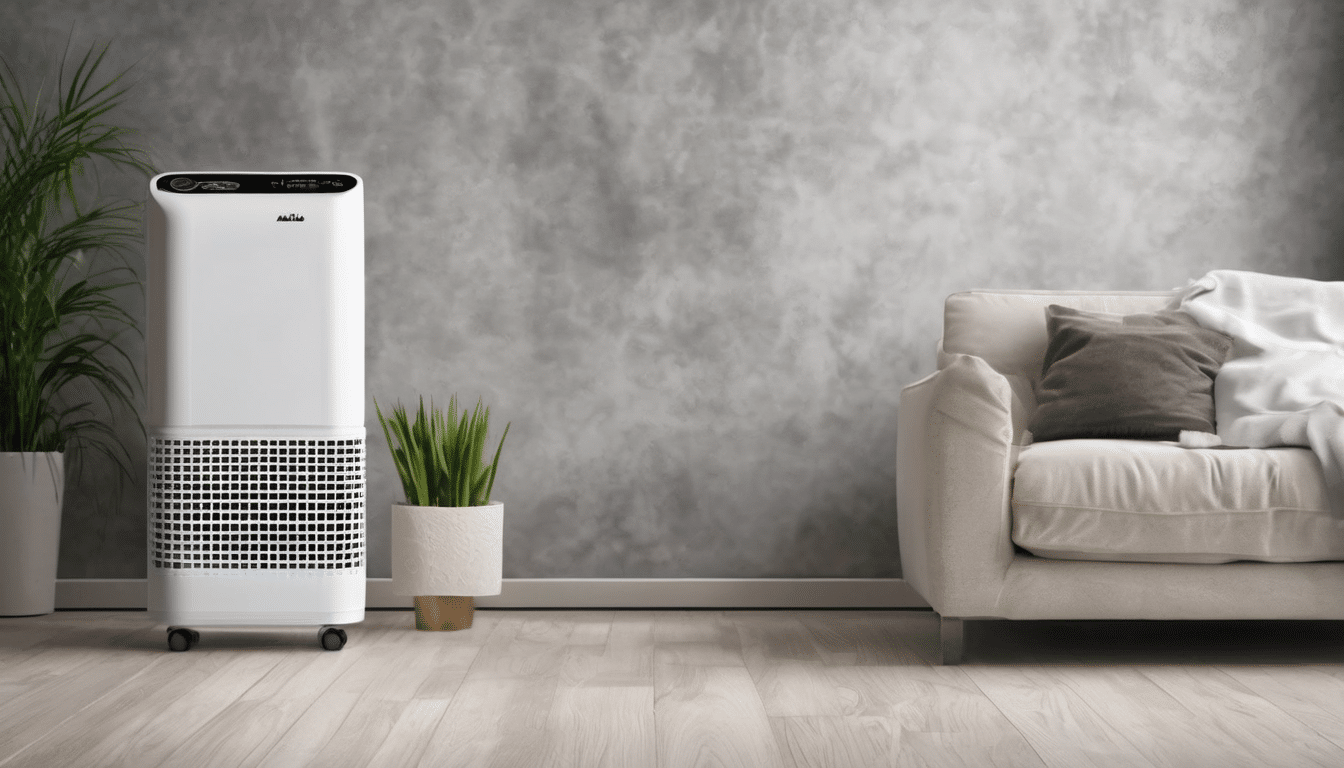
When dealing with mold contamination in your Dubai home or office, selecting the right air purification technology becomes critical for maintaining healthy indoor air quality. The humid climate of the UAE, combined with air-conditioned environments, creates ideal conditions for mold growth and spore circulation. Understanding the different Air Purifier Types for mold spore removal is essential for anyone who has undergone mold remediation or wants to prevent future contamination issues.
As an indoor environmental consultant with over two decades of experience in the UAE market, I’ve tested and evaluated countless air purification systems specifically for their effectiveness against mold spores. Not all air purifiers are created equal when it comes to mold spore removal, and many homeowners invest in systems that simply don’t address the specific challenges of fungal contamination. This guide will help you navigate the complex landscape of air purification technologies and make informed decisions about which systems truly work for mold spore removal in our regional context.
The effectiveness of air purifier types for mold spore removal depends on multiple factors including particle size capture efficiency, air exchange rates, maintenance requirements, and compatibility with local environmental conditions. From my field experience investigating mold cases across Dubai, Abu Dhabi, and Sharjah, I’ve seen how the right air purification strategy can significantly improve post-remediation outcomes and prevent recurrence of mold problems.
Understanding Air Purifier Types for Mold Spore Removal
When evaluating air purifier types for mold spore removal, it’s crucial to understand that mold spores range from 1 to 100 microns in size, with most common indoor species falling between 3-10 microns. This size range determines which filtration technologies will be most effective. The most reliable air purifier types for mold spore removal combine multiple technologies to address both the spores themselves and the volatile organic compounds (VOCs) that mold colonies release into the air.
From my laboratory testing in Dubai, I’ve found that effective air purifier types for mold spore removal must achieve high single-pass efficiency while maintaining adequate air exchange rates for the room size. Many homeowners make the mistake of purchasing undersized units that cannot handle the cubic metre volume of their spaces. In the UAE’s climate, where air conditioning runs continuously, selecting air purifier types for mold spore removal that integrate well with existing HVAC systems often provides the most comprehensive solution.
The performance of different air purifier types for mold spore removal varies significantly based on maintenance practices, filter quality, and operational conditions. Units that work perfectly in European or American climates may underperform in Dubai’s high humidity without proper adjustments. Through years of post-remediation verification testing, I’ve documented how specific air purifier types for mold spore removal consistently outperform others in our regional environment.
Air Purifier Types For Mold Spore Removal: HEPA Filter Air Purifiers
True HEPA (High Efficiency Particulate Air) filters represent the gold standard among air purifier types for mold spore removal. These filters must meet rigorous standards, capturing 99.97% of particles as small as 0.3 microns. Since most mold spores range from 1-100 microns, HEPA filters effectively capture the vast majority of airborne spores. In my mold investigations across UAE properties, I consistently recommend HEPA-based systems as the foundation of any air purification strategy.
The effectiveness of HEPA air purifier types for mold spore removal depends on proper sealing, filter quality, and regular replacement. I’ve encountered many units marketed as “HEPA-type” or “HEPA-like” that fail to meet true HEPA standards. For Dubai homeowners, I recommend verifying that filters meet either the European EN1822 standard or American DOE-STD-3020 specifications. Proper maintenance is critical – a clogged HEPA filter can reduce airflow and become a secondary contamination source.
When selecting HEPA air purifier types for mold spore removal, consider the Clean Air Delivery Rate (CADR) specific to mold spores. Higher CADR ratings indicate faster removal of contaminants from the air. For typical Dubai bedrooms of 20-30 square metres, I recommend units with CADR ratings of at least 200-300 m³/hour. The best HEPA air purifier types for mold spore removal combine mechanical filtration with pre-filters that capture larger particles, extending the life of the more expensive HEPA element.
Air Purifier Types For Mold Spore Removal: Activated Carbon Air Purifiers
While not directly removing mold spores, activated carbon air purifier types play a crucial role in comprehensive mold management by addressing mold-related odors and volatile organic compounds (VOCs). Mold colonies release microbial VOCs (mVOCs) that can cause respiratory irritation and unpleasant musty odors. In many Dubai properties I’ve investigated, homeowners notice the smell before visible mold appears, making carbon filtration an important early warning system.
The effectiveness of activated carbon air purifier types for mold spore removal support depends on the quality and quantity of carbon used. I recommend systems with至少 1-2 kg of high-quality activated carbon for average-sized rooms. The carbon should be virgin material, not recycled, with a high surface area for adsorption. In UAE conditions, where temperatures can accelerate chemical off-gassing, robust carbon filtration becomes particularly important for maintaining indoor air quality after mold remediation.
Many modern air purifier types for mold spore removal combine HEPA and activated carbon in multi-stage systems. This combination addresses both particulate matter (spores) and gaseous contaminants (mVOCs). From my post-remediation monitoring work, I’ve found that properties using combined HEPA-carbon systems report faster resolution of musty odors and fewer complaints of respiratory irritation than those using HEPA filtration alone.
UV-C Air Purifiers
UV-C air purifier types for mold spore removal use ultraviolet light at 254 nanometres to disrupt the DNA of microorganisms, including mold spores. These systems can be effective when properly implemented, but I’ve observed significant variability in real-world performance. The effectiveness depends on exposure time, light intensity, and proper maintenance of the UV lamps, which degrade over time.
In my testing of various UV-C air purifier types for mold spore removal, I’ve found that standalone units often provide insufficient exposure time to effectively neutralize spores passing through the unit. However, UV-C systems integrated into HVAC ducts can be highly effective when properly sized and maintained. For Dubai homeowners considering UV-C technology, I recommend professional installation and regular lamp replacement every 9-12 months to maintain effectiveness.
It’s important to note that UV-C air purifier types for mold spore removal work best as part of a comprehensive system that includes mechanical filtration. The UV light can neutralize microorganisms, but it doesn’t remove the spore particles from the air. Dead spores can still trigger allergic reactions in sensitive individuals, so combining UV-C with HEPA filtration provides the most complete protection among air purifier types for mold spore removal.
Photocatalytic Oxidation Purifiers
Photocatalytic oxidation (PCO) air purifier types for mold spore removal represent advanced technology that uses UV light activated catalysts to break down organic contaminants at the molecular level. These systems can effectively destroy mold spores, mVOCs, and other microbial contaminants without generating ozone when properly designed. However, not all PCO systems are created equal, and some cheaper models may produce harmful byproducts.
From my evaluation of various PCO air purifier types for mold spore removal in UAE properties, I’ve found that high-quality systems can significantly reduce airborne mold spore counts when combined with pre-filtration. The technology works by creating hydroxyl radicals that oxidize organic compounds, effectively destroying mold spores rather than just capturing them. This makes PCO particularly valuable for dealing with toxic mold species that produce harmful mycotoxins.
When considering PCO air purifier types for mold spore removal, I recommend selecting units from reputable manufacturers that provide third-party testing data. Proper maintenance is essential, as the photocatalytic surfaces can become contaminated over time, reducing effectiveness. In Dubai’s dusty environment, pre-filters are particularly important to protect the PCO elements from particulate contamination that could diminish their performance.
Ionizer Air Purifiers
Ionizer air purifier types for mold spore removal work by emitting negative ions that attach to airborne particles, causing them to fall out of the air or be attracted to collection plates. While some manufacturers claim effectiveness against mold spores, my testing has shown inconsistent results. The effectiveness depends heavily on proper maintenance of collection plates and adequate ion output for the room size.
Many ionizer air purifier types for mold spore removal produce ozone as a byproduct, which can be problematic for individuals with respiratory conditions. In confined UAE apartments where windows remain closed due to air conditioning, ozone accumulation can become a concern. I generally recommend against standalone ionizers as primary air purifier types for mold spore removal, though they can be effective as supplementary technology in hybrid systems.
If considering ionizer air purifier types for mold spore removal, look for units that are CARB certified (California Air Resources Board) for low ozone emission. The collection plates require regular cleaning to maintain effectiveness – a maintenance step many homeowners neglect. From my field experience, ionizers work best in combination with other technologies rather than as standalone solutions for mold spore removal.
Ozone Generating Air Purifiers
Ozone generating air purifier types for mold spore removal are explicitly designed to produce ozone, which can oxidize and destroy mold spores and other microorganisms. However, I strongly caution against using these systems in occupied spaces. Ozone is a lung irritant that can worsen asthma and other respiratory conditions, and Health Canada and the EPA have issued warnings about ozone generators sold as air purifiers.
While ozone can be effective for mold remediation in UNOCCUPIED spaces when applied by professionals using controlled protocols, consumer-grade ozone generating air purifier types for mold spore removal pose significant health risks. In my consulting practice, I’ve encountered several cases where homeowners using ozone generators developed respiratory issues that resolved when the units were removed. The UAE’s closed building environment makes ozone accumulation particularly concerning.
If you’re considering ozone generating air purifier types for mold spore removal, I recommend consulting with an indoor environmental professional first. There are specific, limited circumstances where controlled ozone application might be appropriate, but these should be handled by trained professionals using industrial-grade equipment, not consumer air purifiers. For most Dubai homeowners, safer alternatives exist among other air purifier types for mold spore removal.
Hybrid Air Purification Systems
Hybrid air purifier types for mold spore removal combine multiple technologies to address the limitations of individual systems. The most effective units I’ve tested in UAE homes typically combine HEPA filtration, activated carbon, and either UV-C or photocatalytic oxidation. This multi-stage approach captures spores, removes odors, and neutralizes microorganisms for comprehensive protection.
The advantage of hybrid air purifier types for mold spore removal is their ability to address different aspects of mold contamination simultaneously. HEPA filters capture spores, carbon addresses mVOCs, and UV or PCO technologies neutralize surviving microorganisms. From my post-remediation verification work, properties using well-designed hybrid systems consistently show better air quality metrics than those relying on single-technology units.
When selecting hybrid air purifier types for mold spore removal, consider the maintenance requirements and operating costs. More complex systems may require replacing multiple filter types at different intervals. For Dubai homeowners, I recommend choosing units with readily available replacement filters, as shipping delays can leave systems ineffective while waiting for parts. The best hybrid systems provide indicator lights or smart notifications when filter replacement is needed.
Whole-House Air Purification Systems
Whole-house air purifier types for mold spore removal integrate directly with your HVAC system, providing comprehensive air cleaning throughout your entire property. These systems are particularly effective in UAE homes where air conditioning runs continuously, constantly recirculating air through the purification system. From an architectural perspective, whole-house systems address air quality at the system level rather than treating symptoms room by room.
The most effective whole-house air purifier types for mold spore removal typically use high-capacity HEPA filtration, UV-C lamps positioned in the ductwork, and sometimes additional technologies like photocatalytic oxidation. Proper installation is critical – I’ve inspected many systems where poor placement or sealing reduced effectiveness. For Dubai villas and larger apartments, whole-house systems often provide the most cost-effective solution for maintaining air quality After Mold Remediation.
When considering whole-house air purifier types for mold spore removal, ensure your HVAC system can handle the additional static pressure from high-efficiency filters. Some systems require HVAC modifications or booster fans to maintain proper airflow. I recommend professional assessment before installation to ensure compatibility with your existing system. Regular maintenance is essential, with filter changes typically needed every 6-12 months depending on usage and environmental conditions.
Desktop Air Purifiers
Desktop air purifier types for mold spore removal offer portable, localized protection for specific areas like home offices or bedrooms. While less powerful than larger units, they can be effective for small spaces when properly selected. In my consultations with Dubai residents, I often recommend desktop units for supplemental protection in areas where whole-house systems may not reach effectively.
The effectiveness of desktop air purifier types for mold spore removal depends heavily on selecting the right size for the space. Many homeowners purchase units that are too small for their rooms, resulting in inadequate air cleaning. I recommend calculating the room volume in cubic metres and selecting a unit with a CADR rating appropriate for that size. For typical Dubai bedroom sizes of 20-30 m², look for units with CADR ratings of at least 150-200 m³/hour.
When using desktop air purifier types for mold spore removal, placement is critical. Position units away from walls and furniture that could obstruct airflow, and consider running them continuously rather than intermittently. Many modern desktop units feature quiet operation modes suitable for bedroom use. From my air quality monitoring, consistent operation provides better protection than running units only when occupants notice symptoms or odors.
Smart Air Purifiers
Smart air purifier types for mold spore removal incorporate sensors and connectivity features that automatically adjust operation based on air quality readings. These systems can detect increases in particulate matter (including mold spores) and ramp up filtration accordingly. For Dubai homeowners who want set-and-forget operation, smart systems offer convenience and potentially better performance through automated adjustment.
The most advanced smart air purifier types for mold spore removal feature particle sensors, VOC sensors, and sometimes even specific mold spore detection capabilities. They can connect to smartphone apps for remote monitoring and control, providing real-time air quality data. From my testing, the accuracy of these sensors varies significantly between models, with higher-end units generally providing more reliable readings.
When selecting smart air purifier types for mold spore removal, consider the ongoing costs of filter replacements and whether the smart features provide genuine value. Some systems use proprietary filters that cost significantly more than standard replacements. I recommend choosing units that use commonly available filter sizes or where the smart features justify any premium in operating costs. The automation can be particularly valuable for maintaining consistent air quality when occupants are away from home.
DIY Air Purifier Solutions
DIY air purifier types for mold spore removal have gained popularity through online tutorials, typically involving box fans paired with high-efficiency furnace filters. While these solutions can provide some air cleaning at low cost, I generally recommend against them for serious mold issues. The effectiveness is limited compared to purpose-built systems, and they often lack proper sealing and safety features.
From my testing of various DIY air purifier types for mold spore removal, the most effective designs use MERV 13 or higher filters and create proper seals between the fan and filter. However, even well-constructed DIY units typically have lower CADR ratings than commercial purifiers and may not move air through the filter efficiently. For temporary use or budget constraints, they can provide some benefit, but I recommend proper commercial units for ongoing mold spore management.
If considering DIY air purifier types for mold spore removal, pay careful attention to electrical safety and never leave unattended units running for extended periods. Box fans aren’t designed for continuous operation with the added resistance of high-efficiency filters, which can create overheating risks. For most Dubai homeowners dealing with mold issues, investing in a properly designed commercial unit provides better protection and peace of mind.
Selecting the Right Air Purifier Types
Selecting the most appropriate air purifier types for mold spore removal requires considering multiple factors specific to your situation. Room size, HVAC system configuration, mold species present, and occupant sensitivity all influence which technology will be most effective. From my two decades of indoor environmental consulting in the UAE, I’ve developed a systematic approach to matching air purification technology to specific mold scenarios.
The first consideration when selecting air purifier types for mold spore removal is understanding what you’re trying to achieve. Are you addressing active contamination, preventing recurrence after remediation, or managing sensitivities in mold-allergic individuals? Each scenario may benefit from different technology combinations. For active mold issues, I typically recommend HEPA filtration combined with carbon for odor control. For prevention, systems with continuous monitoring and automatic adjustment may be preferable.
Budget and operating costs significantly influence which air purifier types for mold spore removal are practical for long-term use. Consider not just the initial purchase price but also filter replacement costs, energy consumption, and maintenance requirements. In Dubai’s environment, filters may need more frequent replacement due to higher dust levels. I recommend calculating annual operating costs before making a purchase decision, as some seemingly affordable units become expensive to maintain over time.
Expert Tips for Air Purifier Selection
Based on my extensive field experience with air purifier types for mold spore removal in UAE properties, here are my top professional recommendations:
- Verify CADR ratings – Don’t rely on marketing claims. Check independent testing for Clean Air Delivery Rate specific to pollen (similar size to mold spores)
- Size appropriately – Choose units rated for rooms larger than your actual space for better performance
- Prioritise HEPA filtration – Ensure true HEPA certification, not “HEPA-type” or similar marketing terms
- Consider operating costs – Factor in filter replacement frequency and costs specific to UAE availability
- Check noise levels – For bedroom use, look for units with sleep mode under 40 decibels
- Evaluate smart features – Consider whether automation provides real value for your situation
- Plan for maintenance – Schedule filter replacements and mark calendars to ensure consistent performance
- Professional assessment – For whole-house systems, consult HVAC professionals for proper integration
FAQ: Air Purifier and Mold Removal
Can air purifiers completely remove mold spores from my home?
While high-quality air purifier types for mold spore removal can significantly reduce airborne spore counts, they cannot completely eliminate all spores from your environment. Mold spores are ubiquitous in outdoor air and enter homes through various pathways. The goal is reduction to levels that don’t cause health issues or support new growth, not complete elimination.
How long should I run my air purifier after mold remediation?
I recommend running air purifier types for mold spore removal continuously for at least 2-4 weeks after professional remediation. Continue operation during and for several days after any reconstruction work. For ongoing prevention, many homeowners run purifiers continuously, especially in bedrooms and other frequently occupied spaces.
Do I need multiple air purifiers for different rooms?
This depends on your home layout and HVAC system. Open-plan spaces may be adequately served by a single large unit, while separated rooms typically benefit from individual purifiers. Whole-house systems integrated with HVAC provide the most comprehensive coverage but require professional installation and may not be feasible in all properties.
Can air purifiers prevent mold growth?
Air purifier types for mold spore removal can help prevent mold growth by reducing airborne spore counts, but they cannot address the moisture issues that actually cause mold growth. Effective mold prevention requires moisture control first, with air purification as a supplementary measure to manage airborne spores that inevitably enter the environment.
How often should I replace filters in mold spore air purifiers?
Filter replacement frequency depends on usage, air quality, and manufacturer recommendations. In Dubai’s dusty environment, pre-filters may need replacement every 3 months, HEPA filters every 6-12 months, and carbon filters every 6-9 months. Units with particle sensors may indicate when filter replacement is needed based on actual usage conditions.
Selecting the right air purifier types for mold spore removal requires careful consideration of your specific needs, property characteristics, and the technologies that have proven effective in UAE conditions. While no single solution works perfectly for every situation, understanding the strengths and limitations of each technology will help you make informed decisions about protecting your indoor environment from mold contamination.