
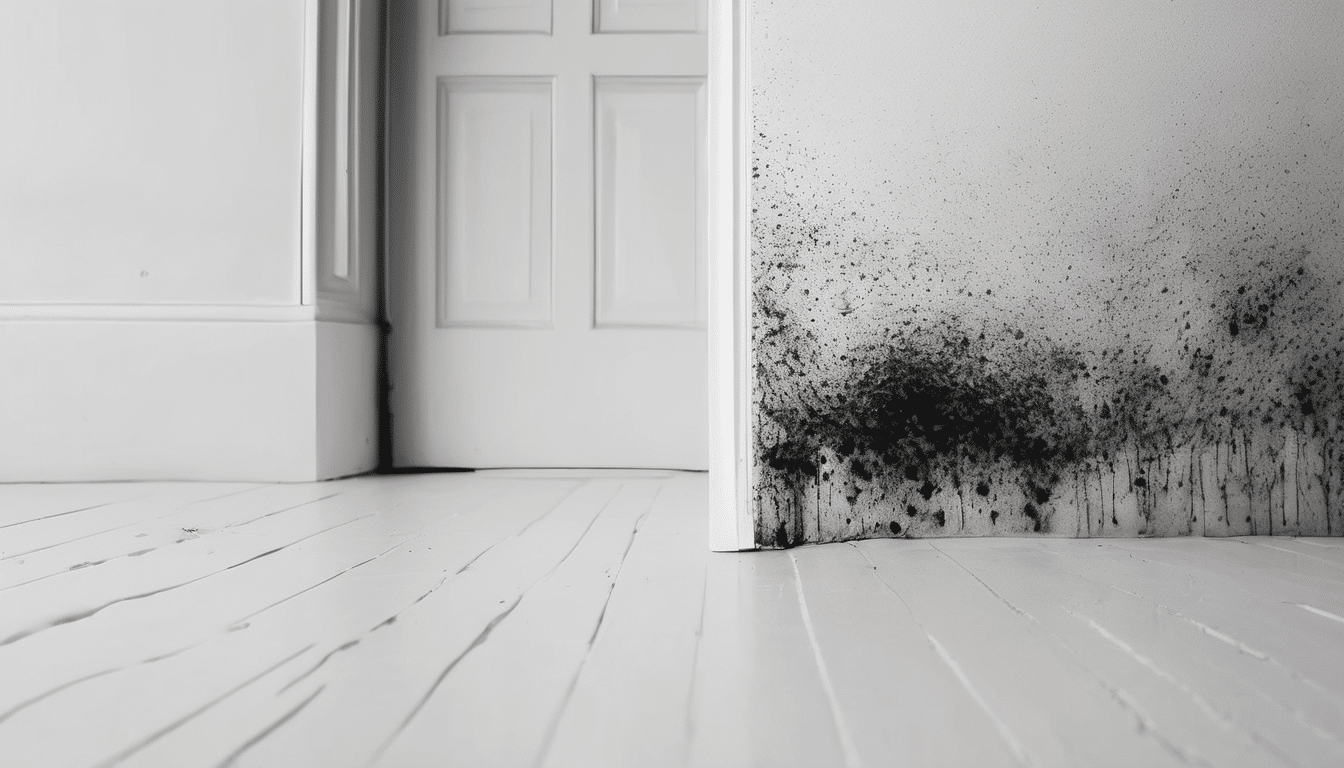
When residents in Dubai, Abu Dhabi, or Sharjah discover dark spots on their walls, ceilings, or behind furniture, the immediate assumption is often the same: “It must be black mould.” That assumption is understandable. The term has become embedded in public consciousness as shorthand for serious indoor contamination. However, understanding black mold vs other mould spots: how to tell the difference is more nuanced than colour alone suggests.
Mould comes in hundreds of genera and thousands of species. Some are dark. Some are green, white, orange, or pink. Some produce mycotoxins. Others are comparatively benign. Appearance tells you very little without context, and colour tells you almost nothing about toxicity. Yet the distinction matters enormously when deciding how to respond, who to call, and what level of intervention is genuinely warranted. This relates directly to Black mold Vs Other Mould Spots: How To Tell The Difference.
This article breaks down Black Mold vs other mould spots: how to tell the difference from a building science and microbiological perspective. It is written specifically for the UAE climate, where high ambient humidity, sealed air-conditioned buildings, and specific construction materials create conditions that favour particular mould species over others.
Black Mold Vs Other Mould Spots: How To Tell The Difference – Why Colour Alone Misleads in Mould Identification
The instinct to identify mould by colour is natural, but it creates significant diagnostic errors. Mould pigmentation is influenced by species genetics, substrate chemistry, moisture availability, age, and light exposure. The same species can appear green in one environment and near-black in another. Conversely, two entirely different species can present identically to the naked eye.
In over two decades of investigating indoor environments across the UAE, I have encountered Cladosporium presenting as dense black patches that alarmed homeowners far more than a small Stachybotrys growth tucked behind a water-damaged skirting board. The visible presentation was reversed relative to the actual risk profile.
Understanding black mold vs other mould spots: how to tell the difference requires moving beyond visual assessment. Location, substrate, moisture history, and laboratory identification are the tools that produce reliable answers.
Black Mold Vs Other Mould Spots: How To Tell The Difference – What Is Black Mould? Understanding Stachybotrys chartarum
Stachybotrys chartarum is the species most commonly referred to as “toxic black mould.” It is a dark-pigmented fungus that produces trichothecene mycotoxins under certain conditions. These mycotoxins are associated with respiratory irritation, neurological symptoms, and immune suppression in sensitive individuals. However, mycotoxin production is not guaranteed and depends on specific growth conditions. When considering Black Mold Vs Other Mould Spots: How To Tell The Difference, this becomes clear.
Key Characteristics of Stachybotrys chartarum
- Colour: Deep greenish-black to jet black, often with a slimy or wet appearance
- Texture: Typically gelatinous or wet-looking rather than powdery
- Substrate preference: Cellulose-rich materials — drywall paper, wood, cardboard, ceiling tiles
- Moisture requirement: Requires prolonged, sustained wetness (typically above 90% relative humidity or direct water contact for extended periods)
- Growth speed: Slow-growing relative to many other species
- Location in UAE properties: Most commonly found behind water-damaged walls, under flooring after leaks, in areas with chronic condensation
Importantly, Stachybotrys rarely appears on clean, dry surfaces. If you find a dark spot in a consistently dry area, it is statistically far more likely to be another species entirely. This is a critical distinction when comparing black mold vs other mould spots: how to tell the difference in practical field conditions.
Black Mold Vs Other Mould Spots: How To Tell The Difference – Other Mould Spots Commonly Found in UAE Homes
The UAE’s indoor environment — warm, humid, heavily air-conditioned — supports a specific ecosystem of mould species. Understanding these is essential for accurate differentiation.
Cladosporium
One of the most common moulds found in Dubai homes. It presents as dark green to olive-black clusters, often on window frames, grout lines, and behind furniture placed against external walls. It thrives in cooler, condensation-prone areas. Cladosporium is a known allergen but is not classified as a mycotoxin-producing species under typical indoor conditions.
Aspergillus niger
This species produces dense black spore heads on a white or yellow base. It is frequently found on bathroom tiles, AC drip trays, and damp corners. Despite its alarming black appearance, it is far more common and generally less hazardous than Stachybotrys, though certain Aspergillus strains can produce aflatoxins and ochratoxins in specific conditions.
Penicillium
Presents as blue-green, sometimes with a white border. Found on water-damaged materials, food, and occasionally on the backs of gypsum boards. It spreads rapidly and is a significant allergen. It rarely appears black, though aging colonies can darken considerably.
Alternaria
A dark olive to brownish-black mould commonly found in wet areas such as showers and under sinks. It is one of the leading outdoor moulds in the UAE and frequently colonises indoor surfaces when moisture is present. Alternaria is a potent allergen and is associated with asthma exacerbation. The importance of Black Mold Vs Other Mould Spots: How To Tell The Difference is evident here.
Black Mold vs Other Mould Spots: A Direct Comparison
The following structured comparison addresses the core question of black mold vs other mould spots: how to tell the difference across the dimensions that matter most in field investigation and health risk assessment.
Appearance
| Characteristic | Stachybotrys (Black Mould) | Other Common Mould Spots |
|---|---|---|
| Colour | Deep black, greenish-black | Green, blue, grey, orange, white, dark brown |
| Texture | Slimy, wet, gelatinous | Powdery, fuzzy, or chalky |
| Pattern | Irregular, spreading patches | Variable — circular, dotted, or diffuse |
| Surface feel | Wet to the touch | Often dry and powdery |
Substrate and Location
| Factor | Stachybotrys | Other Moulds |
|---|---|---|
| Preferred material | Cellulose — drywall, paper, wood | Diverse — tiles, grout, fabric, paint, dust |
| Moisture need | Sustained, prolonged wetness | Surface condensation often sufficient |
| Typical location | Inside walls, under flooring | Visible surfaces — bathrooms, AC vents |
| Visibility | Often hidden | Typically visible on surfaces |
Health Risk Profile
| Risk Factor | Stachybotrys | Common Moulds (Cladosporium, Alternaria, etc.) |
|---|---|---|
| Mycotoxin potential | Yes, under sustained wet conditions | Generally lower risk (species-dependent) |
| Allergenicity | Moderate to high | Moderate to high (especially Alternaria) |
| Airborne spore release | Low spore dispersal when wet | High spore dispersal when dry |
| Remediation complexity | High — structural material removal often required | Variable — surface treatment often possible |
How to Tell the Difference Without a Laboratory
Identifying black mold vs other mould spots: how to tell the difference without testing is imprecise by definition. However, several field observations can meaningfully narrow the probability.
Ask About the Moisture History
If the affected area has experienced a prolonged water leak — a burst pipe, a roof intrusion, or chronic condensation behind an external wall — the conditions for Stachybotrys are more plausible. A dark spot appearing after a short condensation episode is far more likely to be Cladosporium or Aspergillus.
Assess the Substrate
Dark spots on ceramic tiles, painted concrete, or grout are almost never Stachybotrys. That species requires cellulose to grow. If the affected surface is paper-faced gypsum board, timber, or ceiling tile, the probability of true black mould increases if sustained moisture is confirmed.
Observe the Texture
A powdery or fuzzy surface is more consistent with Cladosporium, Penicillium, or Aspergillus. A wet, slimy appearance — particularly on paper or wood — warrants greater suspicion of Stachybotrys. However, this observation alone is insufficient for any conclusion.
Note the Location in the Building
In UAE properties, mould appearing consistently on AC vents, bathroom grout, or window frames is almost invariably surface condensation mould — not Stachybotrys. Dark growth emerging from behind skirting boards, around pipe penetrations, or on recently demolished walls is a more concerning pattern. Understanding Black Mold Vs Other Mould Spots: How To Tell The Difference helps with this aspect.
When Laboratory Testing Confirms the Difference
The only reliable way to resolve black mold vs other mould spots: how to tell the difference with certainty is laboratory analysis. At Saniservice’s in-house microbiology laboratory — the only facility of its kind operated by an indoor environmental services company in the UAE — we use two primary methods.
Spore Trap Air Sampling
Airborne spore counts are measured using calibrated pumps and cassette samplers. The results are analysed under microscopy and compared to outdoor baseline samples. Elevated Stachybotrys counts in air samples are significant, as this species does not disperse readily unless disturbed. Its presence in air sampling often indicates active, disturbed growth rather than passive colonisation.
Surface Tape Lift or Bulk Sampling
Direct sampling from affected surfaces allows precise genus-level identification. When a mould colony is dark and location suggests possible Stachybotrys, surface sampling provides the confirmed answer that visual inspection cannot. Laboratory results typically return within 24 to 48 hours for standard analysis.
Forensic cases requiring mycotoxin confirmation can be escalated to ERMI (Environmental Relative Mouldiness Index) analysis or MSQPCR testing, though these are more commonly requested for complex health symptom investigations.
Health Risk Context for Dubai Families
Health discussions around black mold vs other mould spots: how to tell the difference are often distorted by misinformation. Two important clarifications are warranted.
First, other common moulds are not harmless by comparison. Alternaria and Cladosporium are leading triggers of allergic rhinitis and asthma in the UAE, affecting children disproportionately. High spore counts from these species in air-conditioned Dubai apartments can create clinically meaningful indoor exposures, particularly when HVAC systems are colonised and distribute spores throughout a property. Black Mold Vs Other Mould Spots: How To Tell The Difference factors into this consideration.
Second, Stachybotrys chartarum is not uniformly “toxic” in every situation. Mycotoxin production requires sustained wet conditions and specific growth phases. The risk is real and should not be minimised, but it must be proportionate to confirmed findings rather than assumptions based on colour.
Sensitive occupants — infants, elderly residents, immunocompromised individuals, and those with pre-existing respiratory conditions — warrant more conservative responses regardless of species. For these households, professional investigation and laboratory confirmation before remediation is always the appropriate pathway.
Verdict and Recommendations for UAE Homeowners
The core question of black mold vs other mould spots: how to tell the difference yields a clear verdict: colour is a weak diagnostic signal, and appearance alone should never drive remediation decisions.
The more reliable framework is this:
- Dark spots on tiles, grout, painted surfaces, or AC outlets — almost certainly common surface moulds. Investigate and correct the moisture source. Surface treatment may be appropriate after source correction.
- Dark, slimy growth on paper-faced drywall, wood, or ceiling tiles after a water event — warrants professional assessment and sampling before any disturbance. Stachybotrys probability is elevated.
- Any mould growth with accompanying occupant health symptoms — professional investigation and laboratory analysis are essential, regardless of species or colour.
- Recurring mould despite repeated surface cleaning — the root cause has not been identified. Building science investigation is required.
When comparing black mold vs other mould spots: how to tell the difference, the honest answer is that differentiation requires investigation, not assumption. In the UAE, where construction practices, climate conditions, and building systems create a specific and predictable set of mould risks, this distinction is not academic — it directly determines whether intervention is adequate, excessive, or dangerously insufficient.
A professional mould inspection conducted by a qualified indoor environmental scientist, supported by laboratory analysis, is the only approach that reliably answers the question and protects occupant health with evidence rather than guesswork. If you are uncertain what you are looking at, that uncertainty itself is the most important reason to investigate properly. Understanding Black Mold Vs Other Mould Spots: How To Tell The Difference is key to success in this area.