
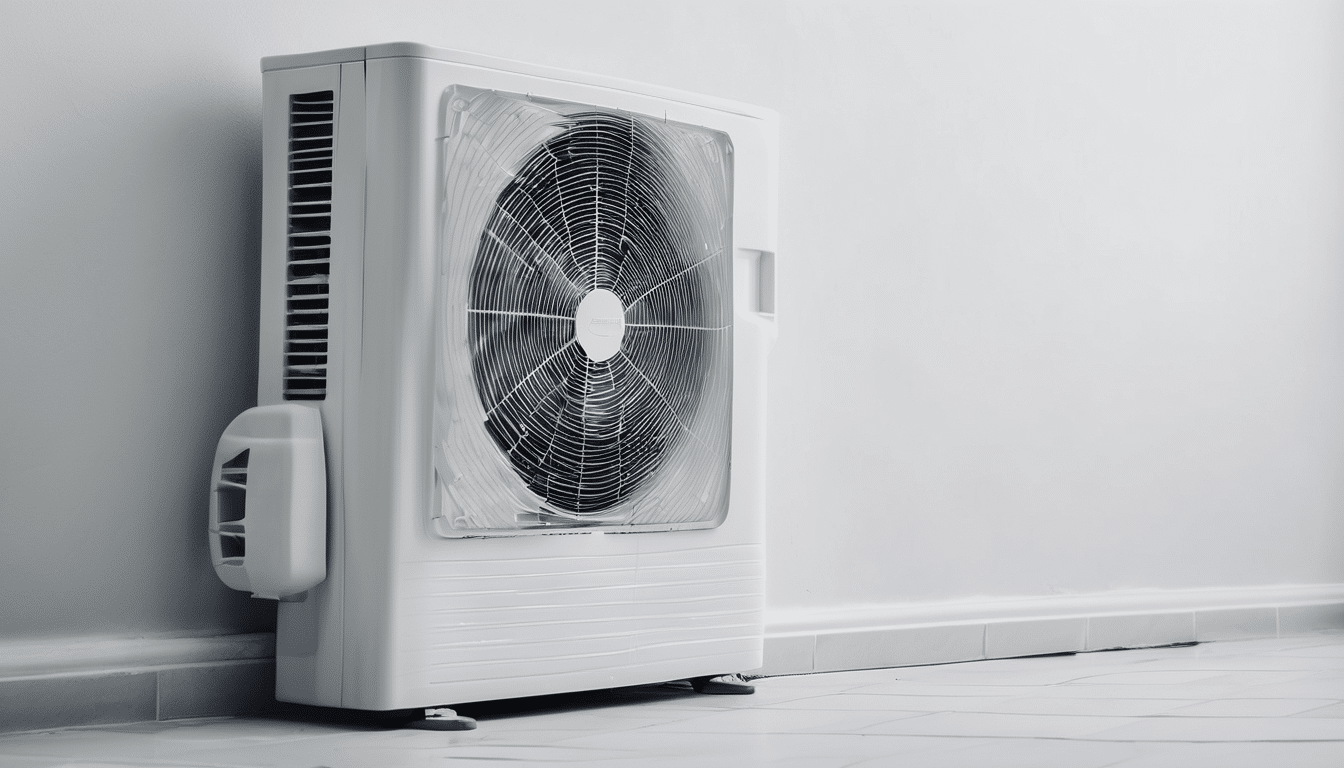
Understanding Mold In Ac Units Dubai: Causes And Prevention is essential. Mold in AC units Dubai is a predictable outcome of how air conditioning systems interact with the region’s extreme humidity and heat. When warm, moisture-laden air meets the cold surfaces inside a split unit or central HVAC system, condensation forms. That condensation, combined with dust and organic debris inside the unit, creates precisely the conditions mold requires to colonise. Understanding mold in AC units Dubai — causes and prevention — begins with recognising that this is a building physics problem, not simply a cleaning issue.
In over 20 years of indoor environmental investigations across Dubai, Abu Dhabi, Sharjah, and the wider UAE, I have encountered AC-related mold in luxury villas, high-rise apartments, commercial offices, and school buildings. In almost every case, the mold was present long before it became visible. By the time occupants noticed a musty smell or visible growth on a vent cover, the contamination had typically spread through multiple components of the system. Early understanding of mold in AC units Dubai causes and prevention is therefore not precautionary — it is essential. This relates directly to Mold In Ac Units Dubai: Causes And Prevention.
This article provides a thorough, science-grounded explanation of why AC mold forms in the UAE context, the specific conditions that accelerate it, and the prevention strategies that are supported by building science and laboratory evidence. When considering Mold In Ac Units Dubai: Causes And Prevention, this becomes clear.
Mold In Ac Units Dubai: Causes And Prevention – Why Dubai’s Climate Drives AC Mold Formation
Dubai’s climate is one of the most demanding in the world for building systems. Outdoor temperatures regularly exceed 45°C during summer months, and relative humidity frequently climbs above 80% during the coastal morning hours and during the transitional seasons of spring and autumn. This combination creates an almost permanent moisture burden on air conditioning systems operating around the clock. The importance of Mold In Ac Units Dubai: Causes And Prevention is evident here.
Air conditioners are designed to cool air by passing it across refrigerant coils that operate well below ambient temperature. At typical coil operating temperatures of between 5°C and 12°C, any air carrying significant moisture will release that moisture as condensation on the coil surface. This is normal and expected behaviour. What becomes problematic is when that condensate does not drain efficiently, when airflow is restricted, or when the system cycles off and the coil warms while remaining damp. Understanding Mold In Ac Units Dubai: Causes And Prevention helps with this aspect.
That warm-damp cycle is the primary biological trigger for mold in AC units. Mold spores — present in virtually every indoor environment — require only moisture, a nutrient source, and a surface temperature above approximately 4°C to begin germinating. Inside an AC unit, all three conditions are reliably met. Mold In Ac Units Dubai: Causes And Prevention factors into this consideration.
Mold In Ac Units Dubai: Causes And Prevention – Understanding Mold in AC Units Dubai Causes
Mold in AC units Dubai causes and prevention cannot be addressed without first identifying the specific failure points that allow contamination to take hold. In our laboratory investigations, the most consistently observed causes fall into several distinct categories. This relates directly to Mold In Ac Units Dubai: Causes And Prevention.
Blocked or Inadequate Condensate Drainage
The condensate drain pan and drain line are among the most overlooked components in residential and commercial AC systems across Dubai. When these become blocked — through algal growth, dust accumulation, or installation faults — water pools at the base of the air handler unit. Standing water in a dark, enclosed space is a near-certain precursor to mold colonisation. In many cases we have investigated, mold was actively growing in stagnant drain pans for months before any visible sign appeared at the vent. When considering Mold In Ac Units Dubai: Causes And Prevention, this becomes clear.
Oversized AC Systems and Short-Cycling
A common installation problem in the UAE is oversized air conditioning equipment. When a unit is too large for the space it serves, it cools the air rapidly and switches off before completing a full dehumidification cycle. This is known as short-cycling. The result is air that is cool but still humid. Over time, that residual humidity accumulates on internal surfaces. From a building science perspective, short-cycling is one of the most underappreciated mold in AC units Dubai causes and prevention of this problem requires correct system sizing at the design stage. The importance of Mold In Ac Units Dubai: Causes And Prevention is evident here.
Dirty Evaporator Coils and Filters
Dust and biological debris accumulate on evaporator coils and filters, providing a nutrient-rich substrate for mold growth. When filters are not changed or cleaned at appropriate intervals, restricted airflow forces the coil to operate at lower temperatures, increasing condensation. Soiled coil surfaces also retain moisture longer after the system shuts down. These factors compound one another rapidly in Dubai’s dusty environment. Understanding Mold In Ac Units Dubai: Causes And Prevention helps with this aspect.
Envelope Infiltration and Fresh Air Bypass
In many apartments and villas across Dubai, Sharjah, and Abu Dhabi, outdoor air infiltrates the building through gaps in the building envelope — around duct penetrations, window frames, or incorrectly sealed access panels. This warm, humid air contacts cold ductwork surfaces and condenses. The interior of ducts that carry this condensation load can develop extensive mold growth that is entirely invisible during routine visual inspection. Mold In Ac Units Dubai: Causes And Prevention factors into this consideration.
Mold In Ac Units Dubai: Causes And Prevention – Components Most Vulnerable to Mold Growth
Understanding mold in AC units Dubai causes and prevention requires a component-level view of where contamination most commonly establishes itself. This relates directly to Mold In Ac Units Dubai: Causes And Prevention.
- Evaporator coil surfaces: Perpetually damp, laden with dust, and enclosed. High-risk for mold colonisation.
- Condensate drain pan: Standing water makes this the most common initial mold site.
- Air filters: Organic debris trapped in fibrous media supports mold growth if filters remain damp.
- Supply and return ductwork: Especially vulnerable where condensation forms on uninsulated duct surfaces or where envelope leakage occurs.
- Vent covers and grilles: Often the first visible sign of mold, though contamination by this stage has usually spread further inside the system.
- Insulated flex ducts: Torn or degraded internal liners trap moisture and debris, creating ideal mold substrate.
Health Risks of AC Mold in UAE Homes
The health implications of mold in AC units are significant because the system is specifically designed to circulate air throughout the indoor environment. Unlike mold growing on a wall surface, which affects primarily the immediate area, mold within an AC system distributes spores and, in some cases, mycotoxins to every room served by that system with every operational cycle. When considering Mold In Ac Units Dubai: Causes And Prevention, this becomes clear.
Commonly reported health effects associated with mold-contaminated AC systems include persistent respiratory irritation, worsening of asthma or allergic rhinitis, unexplained fatigue, recurrent headaches, and irritation of the eyes, nose, and throat. In cases where mycotoxin-producing species such as Stachybotrys chartarum or certain Aspergillus species are present, more serious health concerns may arise — particularly for children, elderly occupants, and immunocompromised individuals. The importance of Mold In Ac Units Dubai: Causes And Prevention is evident here.
It is important to note that symptoms alone cannot confirm mold as the cause. Laboratory-confirmed air sampling and surface testing are required to establish a meaningful link between AC contamination and occupant health complaints. This distinction is fundamental to responsible investigation practice. Understanding Mold In Ac Units Dubai: Causes And Prevention helps with this aspect.
Mold in AC Units Dubai Causes and Prevention Strategies
Effective prevention of mold in AC units Dubai causes and prevention must address the root conditions that allow mold to establish — not merely treat its surface expressions. The following strategies are grounded in building science and verified through field investigation experience. Mold In Ac Units Dubai: Causes And Prevention factors into this consideration.
Control Indoor Relative Humidity
Maintaining indoor relative humidity below 60% — ideally between 45% and 55% — removes the primary driver of mold growth. In Dubai’s climate, this requires that air conditioning systems operate with adequate dehumidification capacity. Supplemental dehumidifiers may be warranted in spaces with high occupancy, heavy cooking, or poor envelope integrity. Monitoring humidity with calibrated digital hygrometers provides objective data rather than subjective comfort assessment. This relates directly to Mold In Ac Units Dubai: Causes And Prevention.
Correct System Sizing and Commissioning
Mold in AC units Dubai causes and prevention must include proper system design. Oversized equipment is a pervasive problem in the UAE market. Correct load calculations — accounting for building envelope, orientation, occupancy, and internal heat gains — are necessary to select appropriately sized equipment. Systems should be commissioned on installation to verify airflow rates, refrigerant charge, and drainage function.
Regular Condensate Drain Maintenance
Drain pans and drain lines should be inspected and flushed at minimum every three months in Dubai conditions. Biological inhibitors or appropriate biocide treatments applied to the drain pan can reduce algal and mold growth. This is a low-cost, high-impact preventive step that is frequently neglected in standard maintenance contracts.
Filter Maintenance on Appropriate Schedules
In Dubai’s environment, filters accumulate dust rapidly. Depending on the system type and location, filter inspection every two to four weeks and replacement or deep cleaning monthly is often warranted. Filter media should be fully dry before reinstallation. Damp filters reinstalled into operating units accelerate mold in AC units Dubai causes and prevention failures significantly.
Duct Insulation and Envelope Sealing
Ductwork passing through unconditioned spaces — ceiling voids, service shafts, or between floors — should be adequately insulated to prevent surface condensation. All penetrations through the building envelope where ducts pass should be properly sealed with vapour-resistant materials. This reduces the infiltration load that drives condensation on cold internal duct surfaces.
HVAC Maintenance Practices That Reduce Mold Risk
Mold in AC units Dubai causes and prevention is inseparable from the quality of ongoing maintenance. Standard annual service contracts in the UAE frequently cover only refrigerant top-up and basic filter cleaning. This is insufficient for meaningful mold risk reduction.
A mold-aware maintenance programme should include:
- Full evaporator coil cleaning with appropriate enzymatic or biocidal agents, at minimum annually
- Condensate drain pan inspection and flushing every quarter
- Duct inspection for visible mold, debris accumulation, and liner integrity every two years
- Airflow measurement to confirm design specifications are being met
- Humidity logging during maintenance visits to establish baseline indoor conditions
When engaging a maintenance contractor in Dubai, confirming that these elements are included — and documented — is essential. Verbal assurances without written records do not constitute verifiable maintenance.
When Prevention Is Not Enough: Testing and Remediation
Despite best preventive efforts, mold in AC systems is sometimes discovered during investigation. When occupants report persistent musty odours, unexplained health symptoms, or visible mold growth on vent covers, a systematic investigation is warranted before any remediation is attempted.
Air sampling using spore trap cassettes — collected both from supply vents and from ambient room air — provides a quantitative measure of airborne mold load. Surface sampling from coil surfaces, drain pans, and duct interiors using tape lifts or swabs, analysed by accredited laboratory, identifies the genera and species present. This data directly informs the remediation scope and protocol design.
Remediation of mold in AC systems requires containment of the affected unit during work, HEPA-filtered negative pressure where appropriate, and post-remediation verification testing before the system is returned to service. Costs for professional mold investigation and remediation for a single AC system in Dubai typically range from AED 1,500 to AED 6,000 depending on system size, contamination extent, and access complexity. Larger central systems serving multiple floors may involve significantly higher costs.
Post-remediation air sampling is the only objective method of confirming that remediation has been successful. Visual inspection alone is an insufficient standard of clearance.
Expert Takeaways on AC Mold Prevention in the UAE
Mold in AC units Dubai causes and prevention ultimately comes down to controlling moisture at every point in the system’s operation. The following principles summarise what field investigation and laboratory science consistently confirm:
- Humidity control is the primary intervention. No amount of chemical treatment compensates for chronically elevated indoor humidity.
- Mold in AC systems is a systems failure, not a surface problem. Cleaning visible growth without correcting the underlying moisture condition produces only temporary results.
- Correct system sizing prevents short-cycling and incomplete dehumidification. This is one of the most impactful — and most overlooked — preventive measures.
- Maintenance quality matters more than maintenance frequency. Monthly visits that do not address coil and drain pan condition provide limited mold protection.
- Testing confirms what inspection cannot. Air sampling and surface sampling provide objective evidence that visual checks cannot replicate.
- Dubai’s climate makes AC mold a year-round risk, not a seasonal one. Prevention measures must be sustained continuously, not applied reactively.
Understanding mold in AC units Dubai — causes and prevention — is foundational knowledge for anyone responsible for a building in the UAE. The consequences of neglecting this issue extend well beyond an unpleasant smell. Contaminated AC systems silently compromise indoor air quality, degrade occupant health, and accelerate building material deterioration over time. A science-based, maintenance-supported approach — one that treats mold as the outcome of moisture and system failures — offers the only reliable path to long-term control.
If you suspect mold contamination in your AC system, the appropriate first step is a professional investigation that includes laboratory testing, not simply a cleaning service. Understanding the root cause is what makes the difference between a permanent solution and a recurring problem. Understanding Mold In Ac Units Dubai: Causes And Prevention is key to success in this area.