
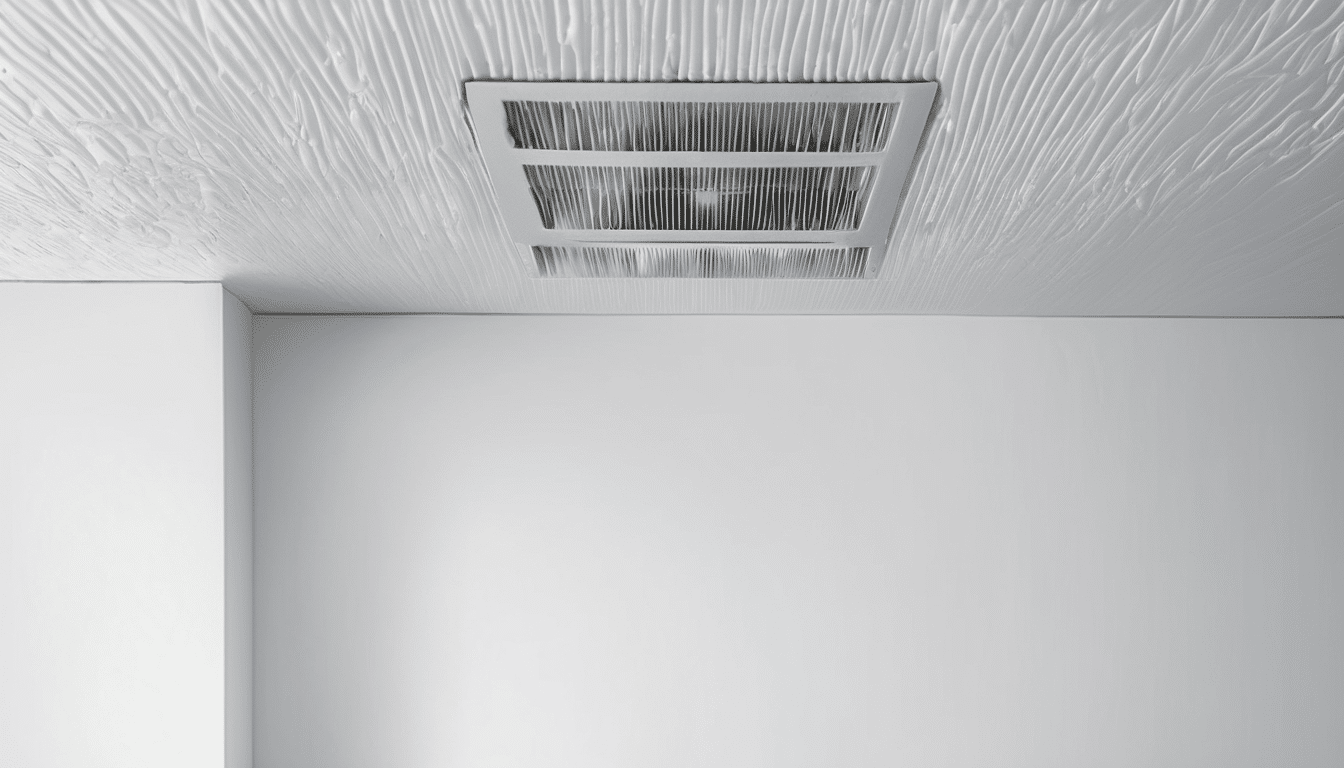
If you have noticed a musty smell when your air conditioning switches on, or if occupants in your home have been experiencing unexplained respiratory symptoms, mold inside your AC system may be the cause. Knowing how to clean mold from AC ducts and coils correctly is not simply a matter of wiping down surfaces — it requires understanding the biology of mold, the physics of your building, and the limitations of DIY approaches in a climate as demanding as the UAE’s.
In Dubai and across the Emirates, air conditioning runs for the majority of the year. Condensation forms on evaporator coils, moisture accumulates inside ductwork, and organic dust settles on surfaces — creating near-ideal conditions for mold colonisation. The problem is rarely visible until it becomes significant. By the time you smell mold, the contamination is often well established within the system. This relates directly to Clean Mold From Ac Ducts And Coils.
This guide walks through the process of how to clean mold from AC ducts and coils in a structured, science-based manner. It distinguishes between what can be addressed as a maintenance task and what requires professional remediation. Understanding that distinction may be the most important thing you read here.
Clean Mold From Ac Ducts And Coils: Why Mold Grows Inside AC Systems in the UAE
Mold requires three things to colonise any surface: moisture, organic material, and suitable temperatures. Air conditioning systems in the UAE provide all three in abundance. Evaporator coils operate at cold temperatures, causing condensation to form continuously during normal operation. This moisture, combined with dust and organic debris carried through the return air, creates a persistent growth environment.
In Dubai’s summer months, outdoor humidity regularly exceeds 80 to 90 percent. When that humid air enters the system, especially through poorly sealed return air grilles or leaking ductwork, the moisture load on the coils and internal components increases significantly. Dubai’s outdoor temperatures frequently reach 42–45°C, making indoor condensation even more pronounced. When considering Clean Mold From Ac Ducts And Coils, this becomes clear.
Ductwork presents a secondary problem. Insulated ducts — particularly flexible ducts — can develop moisture on their interior lining if the system operates inconsistently or if the duct insulation has degraded. Mold species commonly found in UAE AC systems include Cladosporium, Aspergillus, and Penicillium, all of which are capable of establishing colonies within days under favourable conditions.
Clean Mold From Ac Ducts And Coils – Before You Begin — Safety, Scope and Honest Assessment
Before attempting to clean mold from AC ducts and coils yourself, you must make an honest assessment of the contamination’s extent. Surface mold on an accessible drip tray or visible coil face is a different situation from mold growing deep within ductwork or on fibrous duct lining materials. The former may be safely addressed with careful maintenance; the latter requires professional intervention.
Personal Protective Equipment
Mold releases spores and, in some species, mycotoxins that become airborne during disturbance. At minimum, wear an N95 respirator rated for biological particulates — a standard dust mask is insufficient. Add nitrile gloves and safety goggles. If the contamination is extensive, a full-face respirator with P100 cartridges is more appropriate.
System Isolation
Switch off the AC system at both the thermostat and the circuit breaker before beginning any work. Allow the system to sit for at least 30 minutes so residual condensation on the coils begins to dry. Never work on a live system. Confirm the power is completely off before touching any internal components. The importance of Clean Mold From Ac Ducts And Coils is evident here.
Clean Mold From Ac Ducts And Coils: Tools and Materials Required
Gathering the correct tools before beginning will allow you to work efficiently without cross-contaminating other areas. The following list covers the essentials for how to clean mold from AC ducts and coils at a maintenance level.
- N95 or P100 respirator
- Nitrile gloves and safety goggles
- HEPA vacuum with brush attachment
- Coil cleaning solution (non-acid, foaming type suitable for evaporator coils)
- Soft-bristle brush
- Microfibre cloths
- Spray bottle
- HEPA-rated air purifier (to run in the room during work)
- Heavy-duty plastic sheeting for containment
- Duct access panels or screwdrivers for panel removal
- Torch or inspection light
- Disposable bags for contaminated materials
Avoid using bleach as your primary mold treatment agent on porous or semi-porous surfaces. Bleach is effective on non-porous surfaces such as metal, but it does not penetrate fibrous materials where mold roots (hyphae) are embedded. An EPA-registered antimicrobial solution formulated for HVAC use is more appropriate. Understanding Clean Mold From Ac Ducts And Coils helps with this aspect.
How to Clean Mold from AC Coils Step by Step
Evaporator coils are the most common site of mold colonisation in split and ducted AC systems. They remain wet for extended periods, and organic dust adheres to their fins readily. The following steps describe how to clean mold from AC coils in a standard split-unit or ducted system.
Step 1 — Access the Evaporator Unit
Remove the front panel of the indoor air handling unit. In most split units installed in UAE homes and apartments, this involves releasing two or three clips and lifting the cover away. In ducted systems, you may need to remove an access panel at the air handler. Photograph the interior before touching anything — this documents the baseline condition. Clean Mold From Ac Ducts And Coils factors into this consideration.
Step 2 — HEPA Vacuum Loose Debris
Use a HEPA vacuum with a soft brush attachment to remove loose dust and debris from the coil face and surrounding components. Work slowly and deliberately. Aggressive movement will disturb mold colonies and release spores into the room. Vacuum the drain tray as well, removing any accumulated sludge or standing water.
Step 3 — Apply Coil Cleaner
Spray the foaming coil cleaner evenly across the coil face according to the product’s instructions. Most formulations require a dwell time of 5 to 10 minutes. The foam penetrates between fins and lifts organic material, mold, and biofilm from the metal surface. Do not scrub aggressively — the foam does the chemical work. This relates directly to Clean Mold From Ac Ducts And Coils.
Step 4 — Rinse and Wipe Accessible Surfaces
Rinse the coil with clean water using a low-pressure spray. Allow the rinse water to drain into the drip tray. Wipe accessible metal surfaces — the tray, housing panels, and drain fittings — with a microfibre cloth dampened with the antimicrobial solution. Replace the drain tray liner if one is fitted.
Step 5 — Inspect the Drain Line
A blocked condensate drain line is one of the leading contributors to mold growth on coils and in surrounding ductwork. Flush the drain line with a diluted antimicrobial solution to clear any biofilm build-up. If water does not flow freely, the line may require professional clearing. When considering Clean Mold From Ac Ducts And Coils, this becomes clear.
How to Clean Mold from AC Ducts Step by Step
Cleaning mold from AC ducts is considerably more complex than coil cleaning. Ductwork in UAE properties ranges from rigid galvanised steel to flexible insulated ducting, and the approach differs significantly between them. The following steps address how to clean mold from AC ducts at a surface level — where access exists and contamination is limited to hard surfaces.
Step 1 — Identify Accessible Duct Sections
Locate all accessible duct sections — typically at supply diffusers, return air grilles, and any installed access panels. Remove grilles carefully and inspect the interior with a torch. Photograph what you find. If you observe visible mold growth beyond 30 centimetres into the duct, or if the duct lining is fibrous and visibly contaminated, stop and consult a professional. The importance of Clean Mold From Ac Ducts And Coils is evident here.
Step 2 — Seal Off Supply Registers
Cover all supply and return registers in the affected zone with plastic sheeting before beginning work. This prevents disturbed spores from distributing through the rest of the ductwork or living spaces. Tape the sheeting securely around the grille frames.
Step 3 — HEPA Vacuum Accessible Interior Surfaces
Use the HEPA vacuum to remove dust and debris from accessible duct interiors. Work from the unit outward where possible. On hard metal duct surfaces, follow vacuuming with a wipe-down using an antimicrobial-dampened cloth. Allow surfaces to dry fully before reassembling. Understanding Clean Mold From Ac Ducts And Coils helps with this aspect.
Step 4 — Do Not Attempt to Clean Lined Ducts
This is a critical point. If your ductwork has a fibrous internal lining — common in many UAE residential and commercial installations — do not attempt to clean it yourself. The lining is a porous substrate. Mold hyphae penetrate deeply into fibrous materials, and surface cleaning does not eliminate the colony. Lined ducts with confirmed mold growth require professional assessment and, in many cases, section replacement.
Step 5 — Replace Filters and Reassemble
Install new air filters after all cleaned surfaces have dried completely. Reattach grilles and panels. Run the system briefly and check for unusual odours. If the musty smell persists after thorough cleaning, mold is likely present in sections you cannot access or on materials that cannot be surface-cleaned. Clean Mold From Ac Ducts And Coils factors into this consideration.
When DIY Cleaning Is Not Enough
Understanding the limits of DIY mold cleaning is as important as knowing the cleaning steps themselves. Several situations require professional intervention rather than maintenance-level cleaning.
- Visible mold growth on fibrous duct lining or insulation
- Mold observed deep within ductwork beyond accessible reach
- Persistent musty odour after thorough surface cleaning
- Occupant health symptoms — respiratory irritation, coughing, headaches — that correlate with AC use
- Mold discovered following a water leak or flood affecting the HVAC system
- Mold covering an area larger than approximately 0.3 square metres
Professional remediation of AC systems in Dubai typically involves HEPA-filtered negative pressure containment, EPA-registered antimicrobial fogging, coil deep cleaning, and post-remediation air sampling to verify clearance. Costs vary depending on system size and contamination extent, but professional HVAC mold remediation in UAE properties generally ranges from AED 1,500 to AED 8,000 or more for comprehensive work. This relates directly to Clean Mold From Ac Ducts And Coils.
Preventing Mold Regrowth After Cleaning
Cleaning mold from AC ducts and coils without addressing the root cause is a temporary measure. In the UAE climate, mold will return if the underlying moisture and airflow conditions remain unchanged. Prevention is therefore integral to any cleaning effort.
- Maintain relative humidity below 60 percent indoors. Use a hygrometer to monitor this consistently. In Dubai’s coastal zones, indoor humidity can exceed safe levels even with AC running if the system is undersized or poorly maintained.
- Service your AC system every six months. Coil cleaning, drain line flushing, and filter replacement are minimum maintenance standards in the UAE climate.
- Seal duct joints and insulate properly. Leaking ductwork draws in humid outdoor air and creates condensation on duct surfaces. Have your ductwork inspected for leaks if mold recurs.
- Do not block return air grilles. Restricted airflow reduces coil temperature and increases condensation duration.
- Consider UV-C lamp installation on the coil. UV-C lamps positioned to irradiate the coil surface continuously inhibit mold and bacterial regrowth between maintenance visits.
Expert Tips for UAE Homes and Apartments
After more than a decade of investigating indoor mold problems in Dubai and across the Emirates, several patterns emerge consistently in AC-related mold cases. These observations may help you avoid the most common mistakes. When considering Clean Mold From Ac Ducts And Coils, this becomes clear.
- Smell is a diagnostic tool, not confirmation. Musty odours suggest microbial growth but do not identify its location or species. Air sampling and surface testing are required for accurate diagnosis.
- Mold on the coil face is a visible indicator, not the full picture. If mold is present on the coil, assume it is also present in the drain tray, drain line, and potentially in duct sections immediately downstream.
- AC mold in high-rise apartments often has a common source. In multi-unit buildings in Dubai and Abu Dhabi, shared fresh air intake shafts or corridor pressurisation systems can distribute mold spores across multiple units simultaneously.
- Post-cleaning air sampling matters. Cleaning without verification is not remediation — it is maintenance. If health symptoms are involved, laboratory-confirmed clearance is essential before concluding the work is complete.
- Setting the AC fan to run continuously at low speed when not cooling (fan-only mode) can help dry coils between cycles, reducing the continuous moisture availability that mold depends upon.
Conclusion
Knowing how to clean mold from AC ducts and coils is a valuable skill for any UAE homeowner or property manager. The steps outlined in this guide — from safe access and HEPA vacuuming to coil treatment and drain line maintenance — represent a sound, science-based approach to surface-level AC mold cleaning. However, the most important lesson is knowing where those limits are.
In a climate where air conditioning operates continuously and humidity creates persistent biological pressure on building systems, cleaning mold from AC ducts and coils must always be paired with root-cause correction. If moisture is not controlled, if drain lines remain obstructed, or if fibrous ductwork remains contaminated, mold will re-establish regardless of how thorough the initial cleaning was. The importance of Clean Mold From Ac Ducts And Coils is evident here.
If cleaning mold from AC ducts and coils does not resolve the symptoms — or if the contamination exceeds what maintenance-level work can address — the next step is a proper investigation. That means measurement, laboratory testing, and a structured remediation plan. Understanding why the mold formed is always more valuable than treating it in isolation. Understanding Clean Mold From Ac Ducts And Coils is key to success in this area.