
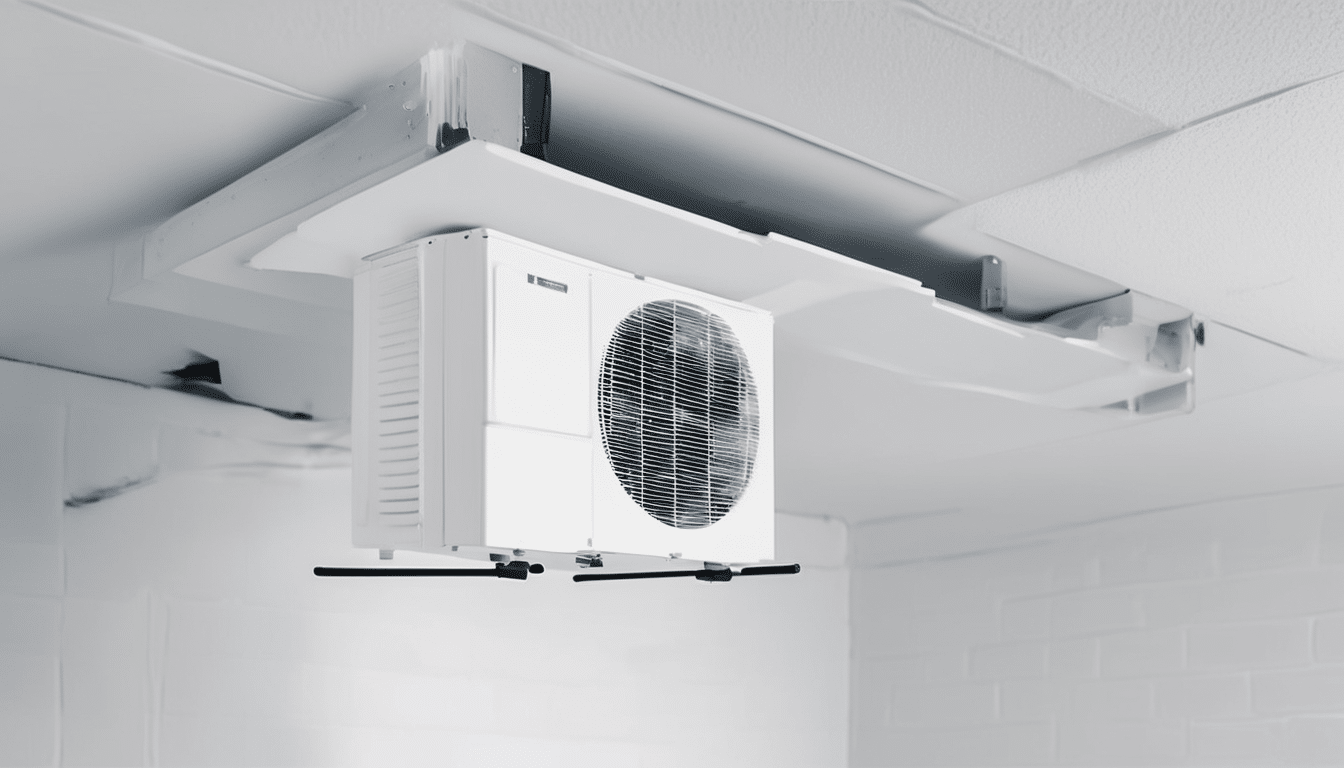
Understanding Hidden Mold In Hvac Systems: How To Detect It is essential. Hidden mold in HVAC systems is a problem I encounter regularly across Dubai, Abu Dhabi, and Sharjah — often in properties that appear visually clean. The air conditioning unit runs continuously for eight or nine months of the year in the UAE, creating sustained conditions that favour mould colonisation deep inside ductwork, coil assemblies, and drain pans. By the time visible signs appear, the contamination has typically been active for weeks or months.
Understanding hidden mold in HVAC systems — how to detect it systematically, rather than guessing — is what separates a meaningful investigation from a cosmetic clean. This guide walks through seven structured steps that I apply in professional investigations, adapted here for homeowners, property managers, and facility teams who need to assess their systems with confidence. This relates directly to Hidden Mold in Hvac Systems: How To Detect It.
The process is methodical. Each step builds on the last. You will need a combination of direct observation, environmental measurement, and — in many cases — laboratory confirmation to reach a defensible conclusion about what is actually present inside your system.
Hidden Mold In Hvac Systems: How To Detect It – Why HVAC Systems Harbour Hidden Mold in the UAE
Before attempting detection, it helps to understand why mold establishes itself inside air conditioning systems in the first place. In the UAE, outdoor humidity regularly exceeds 80% during summer months, particularly in coastal cities like Dubai and Fujairah. When warm, humid air contacts the cold evaporator coil, condensation forms continuously.
This moisture, combined with organic dust accumulation inside ducts and coil fins, creates an almost ideal growth substrate. Mold does not need much: a surface, ambient temperature between 15°C and 38°C, and persistent moisture. Every air-conditioned building in the UAE satisfies all three conditions simultaneously for much of the year. When considering Hidden Mold In Hvac Systems: How To Detect It, this becomes clear.
Hidden mold in HVAC systems develops inside components that are rarely inspected — drain pans, coil assemblies, insulated duct liners, and plenum chambers. It distributes its spores through the airstream with every cycle of the system. This is why detection cannot rely on visual observation of vents alone.
Hidden Mold In Hvac Systems: How To Detect It: What You Need Before Starting
Gathering the right equipment before beginning your inspection prevents incomplete assessments. Not all of these tools are necessary for a basic visual check, but a thorough investigation of hidden mold in HVAC systems will benefit from the full set. The importance of Hidden Mold In Hvac Systems: How To Detect It is evident here.
Basic Equipment
- Torch with a focused beam
- Disposable nitrile gloves
- N95 or FFP2 respiratory mask
- Protective eyewear
- Screwdriver set for vent and panel removal
- Digital hygrometer and thermometer
- Notepad and camera for documentation
Advanced Equipment
- Borescope or inspection camera (flexible, minimum 1 m reach)
- Thermal imaging camera (optional but valuable)
- Anemometer for airflow measurement
- Spore trap cassettes and air sampling pump for lab submission
- Surface swab or tape lift kits for laboratory analysis
If you do not have access to sampling equipment, note the steps that require it. A professional indoor environmental consultant can complete those stages as part of a formal investigation.
Hidden Mold In Hvac Systems: How To Detect It – Step 1 — Document Occupant Symptoms and Observations
Detection of hidden mold in HVAC systems often begins with the people living or working inside the building. Before touching any equipment, systematically collect observations from occupants. This clinical history guides where you focus your inspection. Understanding Hidden Mold In Hvac Systems: How To Detect It helps with this aspect.
Ask whether symptoms — such as persistent throat irritation, nasal congestion, eye irritation, or unexplained fatigue — improve when the individual leaves the building. This building-relatedness pattern is diagnostically significant. It suggests airborne contamination rather than an external allergen source.
Document when symptoms began, which rooms are affected, and whether the air conditioning was recently serviced, modified, or run continuously through a period of high outdoor humidity. In our investigations, a clear timeline frequently correlates with a specific moisture event inside the system — a blocked drain line, a failed condensate pump, or a period of extended system shutdown followed by restart. Hidden Mold In Hvac Systems: How To Detect It factors into this consideration.
Step 2 — Inspect Supply and Return Vents for Visible Growth
Turn off the air conditioning system before opening any panels or removing vent covers. Allow five minutes for airflow to cease completely. Then remove each supply and return vent cover and examine both the grille surface and the duct opening behind it using your torch.
Look for dark discolouration — grey, green, brown, or black — on metal or plastic grille surfaces, on the inner duct walls visible from the opening, and on any insulation material lining the duct. Note that dust accumulation can mimic mold visually. A key distinction: mold growth typically shows a textured or fibrous surface structure, whereas dust lies flat and disperses when disturbed. This relates directly to Hidden Mold In Hvac Systems: How To Detect It.
Photograph every vent opening, labelling the location in your documentation. Return vents are particularly important. They draw the largest volume of room air back through the system and accumulate biological material at a higher rate than supply vents.
Step 3 — Check the Drain Pan and Condensate Line
The condensate drain pan sits directly beneath the evaporator coil and collects the moisture that drips off the cold coil surface during operation. It is one of the most common sites of active mold colonisation in hidden mold in HVAC systems found across UAE properties. When considering Hidden Mold In Hvac Systems: How To Detect It, this becomes clear.
Access the air handler unit — typically located in a ceiling void, utility cupboard, or dedicated plant room. Remove the access panel carefully. Shine your torch into the drain pan and look for standing water, slime accumulation, or dark biological growth on the pan walls and base.
A healthy drain pan should be visually clean and free of standing water. If water has pooled, the condensate line is likely blocked. Partial blockages create persistent wet conditions that accelerate mold growth dramatically. Trace the condensate drain line from the pan to its discharge point and check for any signs of overflow, water staining, or biological buildup along its length. The importance of Hidden Mold In Hvac Systems: How To Detect It is evident here.
Step 4 — Inspect the Evaporator Coil and Air Handler Unit
The evaporator coil is the cold, finned heat exchanger inside the air handler through which the refrigerant circulates. Its surface stays below dew point during operation, meaning it is permanently wet while the system runs. This makes it a primary site for hidden mold in HVAC systems that standard servicing often misses.
Using your torch, examine the face of the coil — the visible fin surface — for biological discolouration, matted dust-and-mold composites, or visible growth between the fins. Heavily contaminated coils often appear black or dark grey on their surface, with restricted airflow as a secondary consequence. Understanding Hidden Mold In Hvac Systems: How To Detect It helps with this aspect.
Also examine the interior walls of the air handler cabinet itself. Insulation lining the interior — typically fibrous or foam material — is particularly susceptible to mold colonisation because it retains moisture and provides an organic substrate. Any dark staining, soft spots, or visible growth on these surfaces is significant.
Step 5 — Use a Borescope to Detect Hidden Mold in HVAC Systems
Visual inspection from vent openings only reveals the first 30 to 50 centimetres of ductwork. The remainder — often 10 to 40 metres of insulated ducting running through ceiling voids — is inaccessible without specialised tools. This is precisely where hidden mold in HVAC systems develops undetected for the longest periods. Hidden Mold In Hvac Systems: How To Detect It factors into this consideration.
Insert a flexible borescope camera through supply vent openings and advance it slowly through the duct. Record or photograph the interior surfaces systematically. Focus on duct joints, directional changes, and any areas where insulation liner is visible. These locations accumulate moisture and debris preferentially.
In our investigations across Dubai villas and high-rise apartments, borescope examination has revealed extensive mold growth on duct liner surfaces that showed no visible signs at the vent opening whatsoever. This is why surface-only inspection is insufficient for a conclusive assessment of hidden mold in HVAC systems. This relates directly to Hidden Mold In Hvac Systems: How To Detect It.
Step 6 — Measure Humidity, Temperature, and Airflow
Environmental measurements contextualise everything you have observed. They also reveal conditions that predict future mold growth, even in areas where colonisation has not yet occurred.
Indoor Relative Humidity
Measure relative humidity (RH) in each room served by the system. In the UAE, indoor RH should remain below 60% at all times. Readings consistently above 65% indicate that the HVAC system is not adequately dehumidifying the supply air — a systemic failure that creates ideal mold growth conditions throughout the building envelope. When considering Hidden Mold In Hvac Systems: How To Detect It, this becomes clear.
Supply Air Temperature and Airflow
Measure the temperature of air exiting each supply vent and the volume of airflow using an anemometer. Reduced airflow from specific vents — particularly when other vents on the same system deliver normal flow — can indicate blockage from mold and dust accumulation inside that branch of ductwork.
Thermal Imaging
A thermal imaging camera can reveal moisture accumulation behind duct surfaces and within ceiling voids without invasive access. Cold spots indicating condensation, or warm spots indicating blocked airflow, frequently correspond to areas of active mold growth identified in subsequent sampling. The importance of Hidden Mold In Hvac Systems: How To Detect It is evident here.
Step 7 — Confirm Hidden Mold in HVAC Systems With Lab Sampling
Visual inspection and environmental measurement form the foundation of any investigation. However, confirming hidden mold in HVAC systems — its presence, concentration, and species — requires laboratory analysis. This is the step that transforms observation into evidence.
Air Sampling Using Spore Traps
Spore trap cassettes capture a measured volume of air — typically 75 litres per minute — through an adhesive collection medium. Samples are taken inside the building with the HVAC system running, outside the building as a baseline, and directly from supply vent airflow where contamination is suspected. Understanding Hidden Mold In Hvac Systems: How To Detect It helps with this aspect.
Laboratory analysis identifies and quantifies the fungal spore types present. Elevated indoor counts relative to outdoor baseline — particularly of genera such as Aspergillus, Penicillium, Cladosporium, or Stachybotrys — confirm active dispersal from an internal source. In our microbiology laboratory, we consistently find that buildings with contaminated HVAC systems show two to ten times the outdoor spore concentration indoors when the system is running.
Surface Sampling From Duct and Coil Surfaces
Tape lift or swab samples taken directly from suspected growth areas inside ductwork, drain pans, or coil surfaces confirm whether visible discolouration is biological in origin. Species identification from surface samples also informs remediation methodology and health risk assessment, particularly where sensitive occupants such as children, the elderly, or immunocompromised individuals are present. Hidden Mold In Hvac Systems: How To Detect It factors into this consideration.
Interpreting Your Findings and Next Steps
Once you have completed the seven steps, you should have a documented picture of your system’s condition. Findings fall into three broad categories that guide next actions.
- No significant findings: Environmental measurements within acceptable ranges, no visual growth, normal laboratory results. Maintain routine servicing intervals and monitor annually.
- Conditions favouring growth but no confirmed mold: Elevated humidity, drain pan issues, or reduced airflow without confirmed biological growth. Address the moisture and airflow deficiencies before mold establishes. This is the lowest-cost intervention point.
- Confirmed mold presence: Visible growth confirmed by lab sampling, elevated indoor spore counts, or species of concern identified. Professional remediation is required. Scope should be defined by findings, not assumption.
In Dubai and across the UAE, professional HVAC mold remediation costs typically range from AED 1,500 to AED 8,000 or more depending on system size, contamination extent, and whether duct replacement is required. An accurate scope requires investigation findings — not estimates based on property size alone. This relates directly to Hidden Mold In Hvac Systems: How To Detect It.
Expert Tips From the Field
- Never rely on smell alone. Musty odours suggest mold, but their absence does not rule it out. Hidden mold in HVAC systems often produces no detectable odour until contamination is extensive.
- Inspect after periods of system shutdown. Mold growth accelerates rapidly when systems are switched off during holidays or cooler months. Post-restart is an ideal time to assess for hidden mold in HVAC systems.
- Duct insulation liner is the highest-risk material. Fibrous internal duct liner absorbs moisture and is nearly impossible to clean effectively. Replacement is frequently the only remediation option.
- A single air sample is not sufficient. Always collect outdoor baseline and indoor samples simultaneously under consistent system operating conditions.
- Document everything before disturbing the system. Once cleaning or servicing begins, physical evidence is destroyed. Photograph, sample, then remediate — in that order.
Conclusion
Detecting hidden mold in HVAC systems requires a structured, systematic approach that goes well beyond looking at vent covers. In the UAE’s climate — where air conditioning operates almost continuously and humidity is a persistent challenge — the conditions for mold growth inside these systems are present year-round. The seven steps outlined here provide a defensible, evidence-based framework for assessment.
The most important principle underlying detection of hidden mold in HVAC systems is this: measure and verify before drawing conclusions. Assumptions about what is or is not present lead to either unnecessary remediation or — more dangerously — contamination that continues to affect occupant health unaddressed. When considering Hidden Mold In Hvac Systems: How To Detect It, this becomes clear.
If your investigation reveals conditions that require professional assessment, ensure that any consultant you engage uses laboratory-confirmed findings to scope their recommendations. Evidence-based remediation, grounded in what is actually present, is always more effective than reactive treatment based on appearance alone. Understanding Hidden Mold In Hvac Systems: How To Detect It is key to success in this area.