
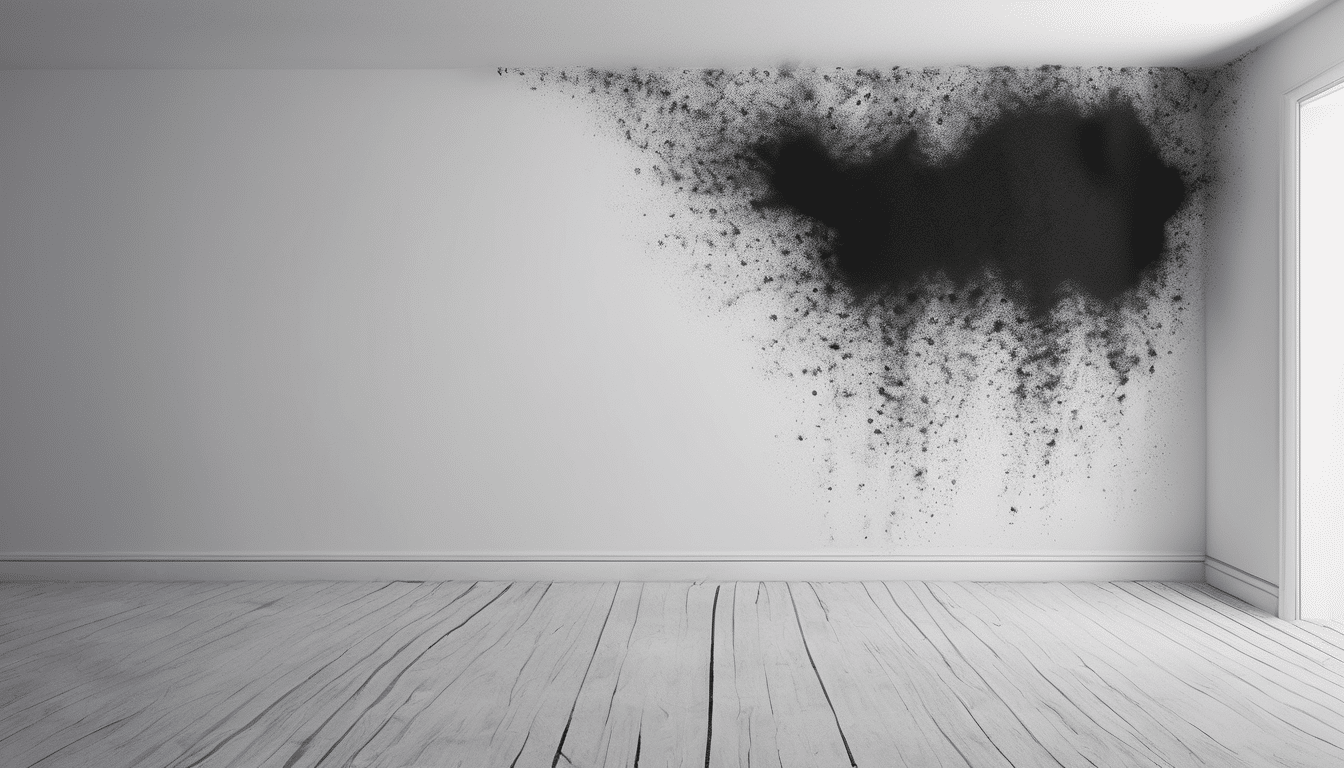
Understanding Black Mold Identification: Signs You Cannot Ignore is essential. Black mold identification — understanding the signs you cannot ignore — is one of the most important early steps any Dubai homeowner or property manager can take to protect both their building and their occupants’ health. In the UAE, where indoor temperatures hover around 20–24°C year-round and outdoor humidity regularly exceeds 80% between June and September, the conditions inside sealed, air-conditioned buildings create a predictable environment for mould colonisation. The question is rarely whether mould can grow — it is where it is growing and how far it has progressed before anyone notices.
As an IAC2 Certified Indoor Air Consultant with over 20 years of field investigations across Dubai, Abu Dhabi, and Sharjah, I have assessed hundreds of properties where occupants suspected black mould but were uncertain of what they were seeing. Proper black mold identification separates early intervention from costly remediation. This guide walks you through a structured, evidence-based process for identifying the signs you cannot ignore — so that you can take informed action rather than guessing. This relates directly to Black Mold Identification: Signs You Cannot Ignore.
This article is part of a broader series on black mould remediation. Related reading includes How to Contain Black Mold Before Remediation Begins, Black Mold Testing: Air vs Surface Sampling Explained, and Post-Remediation Verification: Proving Black Mold Is Gone — all of which follow the investigative approach outlined here. When considering Black Mold Identification: Signs You Cannot Ignore, this becomes clear.
Black Mold Identification: Signs You Cannot Ignore – What Is Black Mould — and What It Is Not
The term “black mould” is widely used but frequently misapplied. In a scientific context, black mold identification refers specifically to Stachybotrys chartarum — a slow-growing, dark-coloured mould species that requires persistently wet cellulose-based materials to establish. However, several other species, including Aspergillus niger, Cladosporium, and Nigrospora, also appear dark or black under certain conditions and are far more common in UAE properties. The importance of Black Mold Identification: Signs You Cannot Ignore is evident here.
Distinguishing between these species matters for remediation planning. Stachybotrys chartarum produces mycotoxins under specific conditions and typically signals chronic, prolonged water intrusion. Other dark moulds may indicate surface condensation or moderate humidity problems. Without laboratory analysis — either air sampling or surface swab testing — visual black mold identification alone cannot confirm the species present. Understanding Black Mold Identification: Signs You Cannot Ignore helps with this aspect.
From a building science perspective, the signs you cannot ignore are not limited to colour. Growth pattern, location, substrate, and environmental conditions together tell a more complete diagnostic story than appearance alone. Black Mold Identification: Signs You Cannot Ignore factors into this consideration.
Black Mold Identification: Signs You Cannot Ignore – Why Black Mold Identification Matters in Dubai
In Dubai villas and high-rise apartments, black mold identification is complicated by the fact that most growth occurs in concealed spaces. Based on field investigations conducted across properties in Jumeirah, Arabian Ranches, Dubai Hills, and Business Bay, the majority of confirmed mould colonies are found behind wall linings, inside HVAC ductwork, beneath flooring, and above suspended ceilings — not on visible surfaces. This relates directly to Black Mold Identification: Signs You Cannot Ignore.
A 2023 review of indoor environmental assessments conducted at Saniservice’s in-house microbiology laboratory found that in Dubai properties where occupants reported a musty odour, over 70% had elevated airborne mould spore counts in areas showing no visible growth. This is a critical point: the signs you cannot ignore are frequently invisible to the untrained eye. When considering Black Mold Identification: Signs You Cannot Ignore, this becomes clear.
The UAE’s climate also introduces a specific failure pattern. When chilled air from an over-cooled AC system meets warm, humid air infiltrating through building envelope gaps, condensation forms on cool surfaces — particularly gypsum board, insulation, and structural timber — creating sustained moisture conditions that sustain mould colonisation over months or years. The importance of Black Mold Identification: Signs You Cannot Ignore is evident here.
Black Mold Identification: Signs You Cannot Ignore – Step 1 — Recognise the Visual Signs You Cannot Ignore
Accurate black mold identification begins with a methodical visual inspection. Do not rely on a single glance. Work systematically through each room, examining surfaces at close range with adequate lighting — ideally a torch rather than relying solely on ambient illumination. Understanding Black Mold Identification: Signs You Cannot Ignore helps with this aspect.
Colour and Texture Indicators
Genuine black mould typically presents as dark green-black to jet black colonies with a slightly raised, slimy, or powdery texture depending on moisture levels and growth stage. Early-stage growth may appear as small dark specks, easily confused with dirt or paint discolouration. As colonies mature, they develop a more defined, irregular boundary pattern. Black Mold Identification: Signs You Cannot Ignore factors into this consideration.
Growth Patterns to Document
Record the shape, spread, and substrate of any suspected mould. Circular or radial growth patterns suggest active colonisation from a central moisture source. Linear growth along grout lines or wall junctions suggests capillary moisture movement. Diffuse growth across large surface areas often indicates condensation-driven contamination rather than a single leak point. This relates directly to Black Mold Identification: Signs You Cannot Ignore.
Surface Staining and Discolouration
Yellowish or brownish staining around a dark mould colony frequently indicates the presence of mycotoxin-laden spore deposits or water-soluble metabolites. These staining patterns are among the visual signs you cannot ignore during any black mold identification inspection. When considering Black Mold Identification: Signs You Cannot Ignore, this becomes clear.
Step 2 — Detect Sensory Signs Beyond What You Can See
Black mold identification extends well beyond the visual. In many UAE properties, particularly those with sealed facades and limited natural ventilation, the olfactory and tactile signs you cannot ignore are often the first indicators of hidden colonisation. The importance of Black Mold Identification: Signs You Cannot Ignore is evident here.
The Musty Odour Test
A persistent earthy, musty, or damp smell — particularly in areas that appear dry and clean — is a reliable early indicator of active mould growth within concealed building cavities. This odour is produced by microbial volatile organic compounds (MVOCs), which are metabolic by-products of active mould colonies. If the smell intensifies when the AC runs, suspect HVAC contamination. Understanding Black Mold Identification: Signs You Cannot Ignore helps with this aspect.
Tactile Indicators
Press gently on suspect wall areas. Soft, spongy, or delaminating gypsum board surfaces suggest moisture-damaged substrate — a condition that both supports and conceals active mould growth. Bubbling paint, peeling wallpaper, and efflorescence on concrete surfaces are tactile signs you cannot ignore during any thorough black mold identification walkthrough. Black Mold Identification: Signs You Cannot Ignore factors into this consideration.
Step 3 — Assess Environmental Conditions That Confirm Risk
Black mold identification should always include an environmental assessment. Mould does not appear randomly — it is a predictable biological response to specific physical conditions. Measuring those conditions confirms whether active growth is probable and likely to continue. This relates directly to Black Mold Identification: Signs You Cannot Ignore.
Relative Humidity Measurement
Use a calibrated digital hygrometer to measure relative humidity (RH) at multiple points across the property. Indoor RH above 60% for extended periods is sufficient to sustain mould growth on most common building materials. In Dubai apartments and villas where AC systems are undersized or poorly maintained, localised RH readings of 70–85% behind furniture or inside wardrobes are not uncommon. When considering Black Mold Identification: Signs You Cannot Ignore, this becomes clear.
Surface Temperature and Dew Point Analysis
Using a thermal imaging camera, identify cold surface areas where the surface temperature drops below the dew point of the surrounding air. These thermal anomalies — commonly found at poorly insulated external walls, around chilled water pipe runs, and at AC supply diffusers — are predictable mould formation sites. This diagnostic step transforms black mold identification from observation into forensic building analysis. The importance of Black Mold Identification: Signs You Cannot Ignore is evident here.
Step 4 — Inspect High-Risk Locations in UAE Properties
Experience across Dubai and Abu Dhabi properties has identified specific locations where black mold identification efforts should be concentrated. These locations represent the highest-probability sites for concealed or early-stage mould colonisation in UAE construction types. Understanding Black Mold Identification: Signs You Cannot Ignore helps with this aspect.
- Behind bathroom and kitchen wall tiles — grout failure allows persistent moisture penetration into gypsum substrates
- Inside HVAC supply and return ducts — condensation, dust accumulation, and poor drain pan maintenance create ideal colonisation conditions
- Under raised flooring and floating timber floors — slab condensation and inadequate vapour barriers trap moisture below surface level
- Inside built-in wardrobes on external walls — reduced airflow and thermal bridging create localised high-humidity microclimates
- Behind skirting boards and around window reveals — infiltration gaps allow warm humid air to contact cool internal surfaces
- Above suspended ceilings near HVAC equipment — drain pan overflow and duct condensation are frequent contamination sources
During a black mold identification inspection, these locations should be examined using borescope cameras where direct visual access is not possible. Do not limit the inspection to surfaces that are immediately visible. Black Mold Identification: Signs You Cannot Ignore factors into this consideration.
Step 5 — Correlate Occupant Health Symptoms with Black Mold Identification
Occupant health data is an underutilised component of black mold identification. The signs you cannot ignore are not always architectural — they are sometimes physiological. When building investigation findings are correlated with occupant symptom patterns, the diagnostic picture becomes significantly clearer.
Common health indicators that support a mould investigation include persistent rhinitis, unexplained coughing, eye irritation, skin rashes, and fatigue that improves when occupants leave the property and returns upon re-entry. In families living in Dubai villas with chronic damp issues, these symptom patterns are frequently dismissed as seasonal allergies — particularly during the spring shamal season — when the actual driver is continuous mould spore exposure indoors.
It is important to note that symptom observation is not medical diagnosis. The role of black mold identification is to identify environmental conditions that may warrant medical consultation and environmental testing — not to draw clinical conclusions from symptoms alone.
Step 6 — Recognise the Limits of DIY Black Mold Identification
A structured DIY walkthrough is a reasonable starting point for black mold identification — but it has defined limits. The signs you cannot ignore inside wall cavities, within HVAC systems, and beneath flooring require professional diagnostic tools and laboratory confirmation that are not accessible through visual inspection alone.
Professional black mold identification in Dubai typically involves air sampling using spore trap cassettes, surface swab or tape lift sampling, and in some cases, borescope investigation of building cavities. These samples are analysed at an accredited microbiology laboratory to confirm species identification, quantify spore concentrations, and inform remediation scope.
When visible mould coverage exceeds approximately 0.1 square metres, when mould is suspected inside HVAC systems, or when occupants are reporting health symptoms consistent with mould exposure, professional assessment is warranted before any cleaning or remediation work begins. In Dubai, professional black mold identification assessments typically range from AED 800 to AED 2,500 depending on property size and investigation complexity.
Expert Tips for Accurate Black Mold Identification
After two decades of mould investigations across UAE properties, these are the field principles that consistently improve the accuracy of black mold identification:
- Never clean before you confirm. Cleaning suspected mould without confirmation destroys sampling evidence and may disperse spores into previously clean areas.
- Document everything photographically before touching any surface. GPS-tagged images with timestamps create an investigation record that supports remediation planning and, if necessary, insurance claims.
- Use a torch at an oblique angle to surfaces. This raking light technique reveals surface texture variations that flat overhead lighting conceals — making early-stage colonies visible that would otherwise be missed.
- Inspect after rain events or during high humidity periods. In Dubai, the late summer months (July to September) accelerate visible mould development. Inspections conducted during or immediately after these periods yield more diagnostic information.
- Check HVAC filters and drain pans. A visually contaminated AC filter or standing water in a drain pan is among the most reliable indicators that HVAC-distributed mould colonisation is underway elsewhere in the building.
- Correlate findings across multiple rooms. Isolated single-room mould growth typically indicates a localised moisture source. Multi-room growth patterns suggest a systemic building problem — vapour barrier failure, HVAC contamination, or envelope infiltration — requiring a different remediation approach.
Frequently Asked Questions
How do I know if what I see is really black mould and not just dirt or staining?
Black mold identification based on colour alone is unreliable. Genuine mould colonies have a biological texture — slightly raised, powdery, or slimy depending on moisture level — and will not wipe cleanly with a dry cloth the way dirt does. If you are uncertain, a surface tape-lift sample sent to an accredited laboratory will provide confirmed species identification within 3–5 working days.
Is black mould common in Dubai apartments and villas?
Dark mould growth is encountered regularly in Dubai properties, particularly in sealed, heavily air-conditioned buildings with insufficient vapour barrier protection. Based on Saniservice laboratory case data, Aspergillus and Cladosporium species are the most frequently identified in UAE residential properties, with Stachybotrys chartarum (true black mould) confirmed in cases involving chronic water intrusion lasting more than several weeks.
What are the signs you cannot ignore when black mould is hidden inside walls?
Key indicators of hidden mould include a persistent musty odour that cannot be explained by visible sources, unexplained occupant allergy-like symptoms that improve when leaving the building, surface staining or paint bubbling on walls without a clear external cause, and elevated humidity readings in specific rooms. Borescope inspection and air sampling are the definitive diagnostic steps when concealed growth is suspected.
How much does a professional black mold identification assessment cost in Dubai?
Professional black mold identification assessments in Dubai — including visual inspection, environmental measurements, and laboratory air or surface sampling — typically range from AED 800 to AED 2,500 for residential properties. Larger properties or those requiring multiple sampling points and HVAC investigation may incur additional costs. Always confirm whether laboratory analysis fees are included in quoted assessment prices.
Can I do black mold identification myself before calling a professional?
A structured DIY inspection — checking for visible growth, musty odours, high humidity, and moisture damage — is a reasonable first step. However, DIY black mold identification cannot confirm species, quantify airborne spore concentrations, or locate growth inside building cavities. If findings are inconclusive or if occupants are experiencing symptoms, professional assessment with laboratory testing is recommended before any remediation work begins.
How long does it take for black mould to grow after a water leak in UAE properties?
Under UAE indoor conditions — with temperatures between 20–28°C and relative humidity above 60% — mould colonisation on cellulose-based materials such as gypsum board can begin within 24 to 72 hours of sustained wetting. Visible surface growth typically becomes apparent within 5 to 10 days. After a water leak, prompt moisture drying and early black mold identification assessment are essential to preventing established colonisation.
Does black mould always have a smell?
Not always — and this is among the signs you cannot ignore in its absence. Early-stage colonies or those in low-airflow cavities may produce insufficient microbial volatile organic compounds (MVOCs) to create a detectable odour. Conversely, a strong musty smell without visible mould strongly suggests active hidden growth. Odour alone is not a reliable proxy for mould presence or absence; laboratory-confirmed air sampling provides the most accurate assessment.
Accurate black mold identification — recognising the signs you cannot ignore across visual, sensory, environmental, and biological dimensions — is the foundation upon which all effective remediation is built. In Dubai and across the UAE, where building physics and climate interact to create predictable mould conditions inside sealed properties, investigation must be methodical and evidence-based. Rushing past this identification phase into premature cleaning or remediation typically produces incomplete results and accelerates recurrence. The most effective approach is always to understand what is present, where it is growing, why it is there — and only then to design a remediation response proportionate to the confirmed findings. Understanding Black Mold Identification: Signs You Cannot Ignore is key to success in this area.