
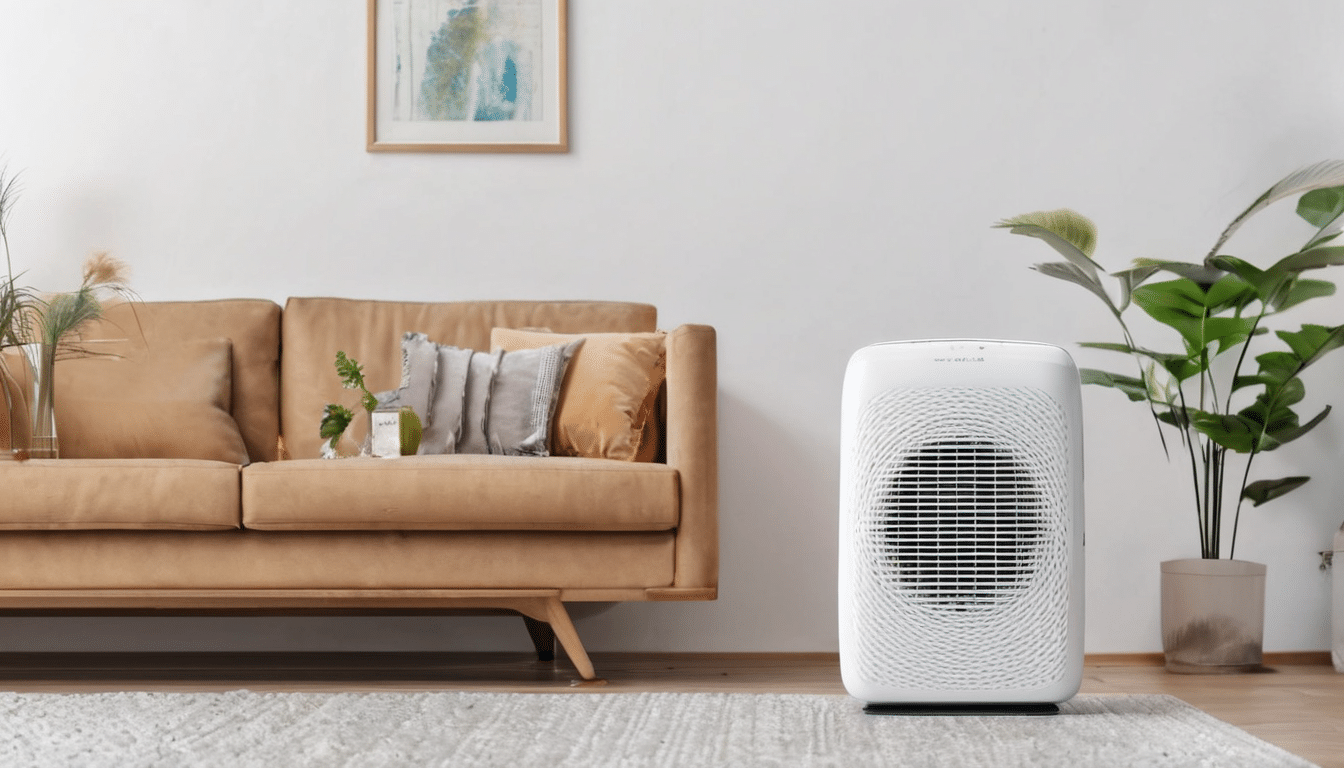
In Dubai’s climate, the question of air purifiers vs dehumidifiers for mould control is one of the most common — and most misunderstood — decisions homeowners face. Relative humidity regularly exceeds 80% during summer and coastal wind events, creating conditions where mould spores can colonise porous building materials within 24 to 48 hours. Both devices are sold as mould solutions, yet they address fundamentally different stages of the same biological process. Choosing the wrong device does not just waste money — it leaves the root cause of mould growth untouched.
As an IAC2 Certified Indoor Air Consultant with over 20 years of field investigation experience across Dubai villas, Abu Dhabi apartments, and Sharjah commercial properties, I have seen both devices used well and used incorrectly. The outcome in every case depended not on which device was purchased, but on whether the occupant understood what problem they were actually trying to solve. Air Purifiers vs dehumidifiers for mould control is not a competition — it is a sequencing question rooted in building science.
This comparison breaks down each device by mechanism, effectiveness, limitations, and ideal use case — so you can make a decision grounded in data, not marketing copy.
Air Purifiers Vs Dehumidifiers For Mould Control – How Mould Actually Grows Indoors in UAE Conditions
Before evaluating air purifiers vs dehumidifiers for mould control, it helps to understand what mould needs to grow. Mould is not a stain or a surface contaminant — it is a living organism that requires four inputs: a food source (building materials, dust, organic matter), an appropriate temperature range (15–35°C, which describes most Dubai interiors), oxygen, and moisture. Remove one input and mould cannot establish itself.
Of those four factors, moisture is the only one practically controllable in a Dubai indoor environment. The critical threshold is a relative humidity above 60–65% sustained for more than 24 hours on a porous surface. In Dubai, this occurs frequently in under-ventilated rooms, around cold HVAC supply vents, behind furniture placed against external walls, and in bathrooms lacking adequate exhaust airflow.
This is the foundational principle that separates dehumidifiers from air purifiers: one addresses the cause (moisture), and the other addresses a symptom (airborne spores). Both matter — but not equally, and not simultaneously in every situation.
What Dehumidifiers Do — and What They Cannot Fix
A dehumidifier extracts water vapour from ambient air by drawing it across a cooled coil, condensing moisture, and returning drier air to the room. The measured output is a reduction in relative humidity (RH). When RH drops below 55%, the conditions that allow mould to sustain active growth are effectively eliminated on most building surfaces. This relates directly to Air Purifiers Vs Dehumidifiers For Mould Control.
Strengths of Dehumidifiers
- Directly addresses the primary driver of mould growth — moisture
- Measurable output: you can verify RH reduction with a calibrated hygrometer
- Prevents new mould colonisation when RH is maintained below 55%
- Effective in enclosed rooms, storage areas, and spaces with limited ventilation
- Reduces moisture in building materials over time, slowing dormant mould reactivation
Limitations of Dehumidifiers
- Does not remove mould spores already suspended in indoor air
- Does not address mould colonies already established inside walls, under flooring, or within HVAC components
- Requires continuous operation and regular tank emptying (or drain connection) to be effective
- Energy consumption can be significant in large Dubai villas running 24 hours per day
- Ineffective if the moisture source is structural — such as a concealed pipe leak or condensation from a faulty HVAC unit
Based on field investigations at Saniservice, dehumidifiers perform best as a preventive tool after the root cause of moisture has been identified and corrected. Running a dehumidifier over an active water intrusion is analogous to mopping a floor while the tap is still running.
What Air Purifiers Do — and What They Cannot Fix
An air purifier passes room air through a filtration or treatment system, capturing or neutralising particles — including mould spores — that are suspended in the air column. HEPA-rated filters (capturing particles ≥0.3 microns at 99.97% efficiency) are the most evidence-supported option for mould spore capture. Mould spores typically range from 2 to 100 microns in diameter, placing them well within HEPA capture range.
Strengths of Air Purifiers
- Reduces airborne mould spore concentration — measurable through pre- and post-air sampling
- Beneficial for occupants with mould spore sensitivities or respiratory conditions
- Effective during active remediation projects to reduce cross-contamination risk
- Continuous operation improves overall indoor air quality beyond mould spores alone
- UV-C variants may offer additional inactivation of biological particles (effectiveness varies by contact time)
Limitations of Air Purifiers
- Does not reduce relative humidity — mould growth conditions on surfaces remain unchanged
- Cannot reach mould spores that have settled on surfaces, within wall cavities, or inside HVAC ductwork
- Does not address mycotoxins bound to settled dust — only airborne fractions
- Requires regular filter replacement; a saturated HEPA filter can release previously captured particles
- Does not substitute for mould remediation when established colonies are present
Laboratory air sampling at Saniservice’s in-house microbiology lab consistently shows that airborne spore counts can be temporarily elevated after mould disturbance — cleaning, renovation, or even HVAC operation. An air purifier in these moments reduces inhalation exposure. It does not, however, eliminate the colony producing those spores. When considering Air Purifiers Vs Dehumidifiers For Mould Control, this becomes clear.
Air Purifiers vs Dehumidifiers for Mould Control — Head-to-Head Comparison
The table below summarises the core functional differences when evaluating air purifiers vs dehumidifiers for mould control in Dubai residential and commercial settings.
| Criterion | Dehumidifier | Air Purifier (HEPA) |
|---|---|---|
| Primary function | Moisture extraction | Airborne particle capture |
| Addresses mould cause | Yes — removes moisture | No — does not affect humidity |
| Removes airborne spores | No | Yes — at HEPA efficiency |
| Prevents surface mould growth | Yes, when RH is maintained below 55% | No |
| Reduces inhalation exposure | Indirectly, over time | Yes, directly and immediately |
| Addresses established colonies | Partially — slows active growth | No |
| Measurable output | RH percentage readings | Airborne spore count reduction |
| Best use case | Prevention and root-cause moisture control | Occupant protection during and after remediation |
When to Choose a Dehumidifier First
In the air purifiers vs dehumidifiers for mould control decision, a dehumidifier is the appropriate first choice when your primary problem is elevated ambient humidity — not an established mould colony. This includes seasonal humidity spikes in Dubai (July through September), rooms that feel persistently damp despite air conditioning, storage areas or wardrobes with condensation, and any space where surface moisture is visible on walls or windows without a clear leak source.
A dehumidifier is also the correct tool immediately following mould remediation — once the colony has been physically removed and the moisture source corrected. Maintaining RH below 55% in the post-remediation period is one of the most effective ways to prevent recurrence, particularly in Dubai villas where building envelope performance varies significantly between developments. The importance of Air Purifiers Vs Dehumidifiers For Mould Control is evident here.
When to Choose an Air Purifier First
In the air purifiers vs dehumidifiers for mould control comparison, an air purifier becomes the priority when occupants are already experiencing symptoms potentially linked to airborne mould spore exposure — including nasal congestion, eye irritation, or respiratory discomfort that worsens indoors. In these scenarios, reducing the airborne spore load offers measurable relief while the underlying investigation proceeds.
Air purifiers are also appropriate during active mould remediation, particularly in occupied Dubai apartments where full evacuation is not possible. A correctly sized HEPA air purifier placed within the work zone helps manage spore migration into clean areas. In remediation projects managed by Saniservice specialists, portable HEPA air scrubbers with negative pressure capability are standard for this purpose.
Using Both Together — When the Evidence Supports It
In the air purifiers vs dehumidifiers for mould control discussion, the most effective approach in Dubai’s climate is sequential and simultaneous deployment — with dehumidification as the structural solution and air purification as the occupant-protection layer. Field investigations across Saniservice case files show that properties using both devices in coordination after confirmed remediation maintain lower post-remediation spore counts and experience fewer recurrence calls within a 12-month follow-up period.
However, running both devices without addressing the root cause — whether that is an HVAC condensate drain fault, a failing building envelope, or an undetected pipe leak — produces marginal results. Both devices manage what is in the air and in the room. Neither device investigates behind the wall.
Dubai-Specific Considerations for Air Purifiers vs Dehumidifiers for Mould Control
In the context of air purifiers vs dehumidifiers for mould control, Dubai’s built environment introduces specific variables that matter when selecting a device.
HVAC System Dependency
Most Dubai residential properties rely on central split or ducted HVAC systems running 10–18 hours daily. These systems already perform a degree of dehumidification as a byproduct of cooling. When the HVAC system is functioning correctly with clean coils and unobstructed condensate drainage, ambient RH in most rooms remains below 60%. Mould growth in these properties almost always traces to a localised failure — a blocked drain, a faulty duct, or a poorly insulated surface — rather than global humidity. A dehumidifier addresses global RH; it does not correct a localised HVAC fault. Understanding Air Purifiers Vs Dehumidifiers For Mould Control helps with this aspect.
Spore Diversity in UAE Indoor Environments
Laboratory analysis from Saniservice’s microbiology lab identifies Cladosporium, Aspergillus, Penicillium, and Alternaria as the most frequently detected mould genera in Dubai indoor environments. These species produce spores in the 2–10 micron range, all well within HEPA capture capability. An air purifier rated for a room’s actual volume (measured in cubic metres) and running continuously will reduce settled spore input on surfaces — a meaningful secondary prevention effect.
Sandstorm and Outdoor Spore Events
During shamal wind events, outdoor mould spore concentrations — particularly Alternaria and Cladosporium — can spike significantly as desert soil is disturbed. In Dubai, this introduces an additional airborne load whenever windows or doors are opened. Air purifiers with activated carbon pre-filters and HEPA stages manage this seasonal input effectively. Dehumidifiers do not address this pathway at all.
Expert Takeaways for UAE Homeowners
- Test before you buy: A calibrated hygrometer costs less than AED 100 and tells you whether your indoor RH is actually problematic before committing to a dehumidifier.
- HEPA is non-negotiable: Air purifiers labelled “ionic” or “UV-only” without a true HEPA stage do not reliably capture mould spores. Verify the HEPA rating before purchase.
- Neither device replaces investigation: If mould is visible, or if occupants are symptomatic, device purchase is not the first step. Identifying what mould is present, at what concentration, and where it is growing requires professional assessment and laboratory confirmation.
- Size matters: Both devices are rated for specific room volumes. A dehumidifier rated for 30 square metres will not perform in a 100 square metre open-plan Dubai villa living area.
- Post-remediation monitoring: After any mould remediation project, Saniservice specialists typically recommend maintaining RH below 55% using either the HVAC system or supplemental dehumidification, verified by continuous data-logging hygrometers for at least 90 days.
Frequently Asked Questions
Which is better for mould control in Dubai — an air purifier or a dehumidifier?
In Dubai’s climate, a dehumidifier addresses the primary driver of mould growth — moisture — making it the more structurally important device for prevention. An air purifier reduces airborne spore concentrations, protecting occupants from inhalation exposure. For most Dubai homeowners dealing with active mould concerns, dehumidification should come first, followed by air purification as a complementary layer. Air Purifiers Vs Dehumidifiers For Mould Control factors into this consideration.
What humidity level prevents mould growth indoors in UAE homes?
Industry standards and field data from Dubai investigations consistently support maintaining indoor relative humidity below 55% to prevent mould colonisation on building materials. Between 55% and 65%, mould risk increases significantly on porous surfaces. Above 65% sustained for more than 24 hours, active mould growth can initiate on materials including gypsum board, timber, and fabric furnishings.
Do air purifiers remove mycotoxins from indoor air?
HEPA air purifiers capture mould spores that may carry mycotoxins on their surface — this is a meaningful benefit. However, mycotoxins that have settled into dust, penetrated porous materials, or become bound to surfaces are not addressed by air purification alone. Mycotoxin risk assessment in Dubai properties requires surface sampling and laboratory analysis, not solely air sampling or device deployment.
Can mould grow in Dubai apartments even with air conditioning running?
Yes. Dubai apartments with continuously running HVAC systems can still develop mould when condensate drainage is blocked, supply vents are under-insulated and produce surface condensation, or bathroom and kitchen exhaust systems are inadequate. The HVAC system reduces ambient RH but does not eliminate localised moisture failure points — which are the most common mould initiation sites identified in Saniservice field investigations across Dubai residential properties. This relates directly to Air Purifiers Vs Dehumidifiers For Mould Control.
How do I know if I need professional mould testing rather than just buying a device?
Professional mould testing is warranted when: occupants report persistent symptoms without an identified cause, visible mould recurs after surface cleaning, a musty odour persists despite HVAC maintenance, or a confirmed water leak has occurred within the previous 12 months. Device purchase without prior testing may reduce symptoms temporarily without resolving the biological or moisture problem driving them.
Are UV air purifiers effective against mould spores in Dubai homes?
UV-C technology can inactivate mould spores under controlled laboratory conditions, but effectiveness in residential air purifiers depends on contact time — the duration a spore is exposed to UV energy. Most residential UV purifiers do not provide sufficient dwell time for reliable inactivation. A HEPA-based system with a UV stage offers broader assurance than UV alone, but HEPA filtration remains the evidence-supported primary mechanism for mould spore capture.
Does Saniservice offer mould testing in Abu Dhabi and Sharjah, or only in Dubai?
Saniservice provides indoor mould investigation, air sampling, and post-remediation verification services across Dubai, Abu Dhabi, Sharjah, and Ajman. All samples are processed through Saniservice’s in-house microbiology laboratory, which is the only facility of its type operated by an indoor environmental services company in the UAE. Results are typically available within 3–5 working days with a full interpretive report. When considering Air Purifiers Vs Dehumidifiers For Mould Control, this becomes clear.
Conclusion
The air purifiers vs dehumidifiers for mould control question does not have a single correct answer — it has a correct sequence. In Dubai, Abu Dhabi, and Sharjah homes where humidity is both a seasonal reality and a structural challenge, dehumidification addresses the cause of mould growth and air purification addresses the occupant experience during and after that growth. Used intelligently, in the right order and at the right scale, both devices contribute to a measurable improvement in indoor environmental quality.
What neither device does is investigate. If mould has already established itself behind walls, under flooring, or within HVAC components — as laboratory-confirmed cases from Saniservice field work regularly demonstrate — the air purifiers vs dehumidifiers for mould control decision is secondary to identifying what is present, where it is growing, and why. That answer comes from testing, not from a device purchase. The shift you notice when indoor conditions genuinely improve is measurable — and it begins with understanding the problem precisely before choosing the tool.