
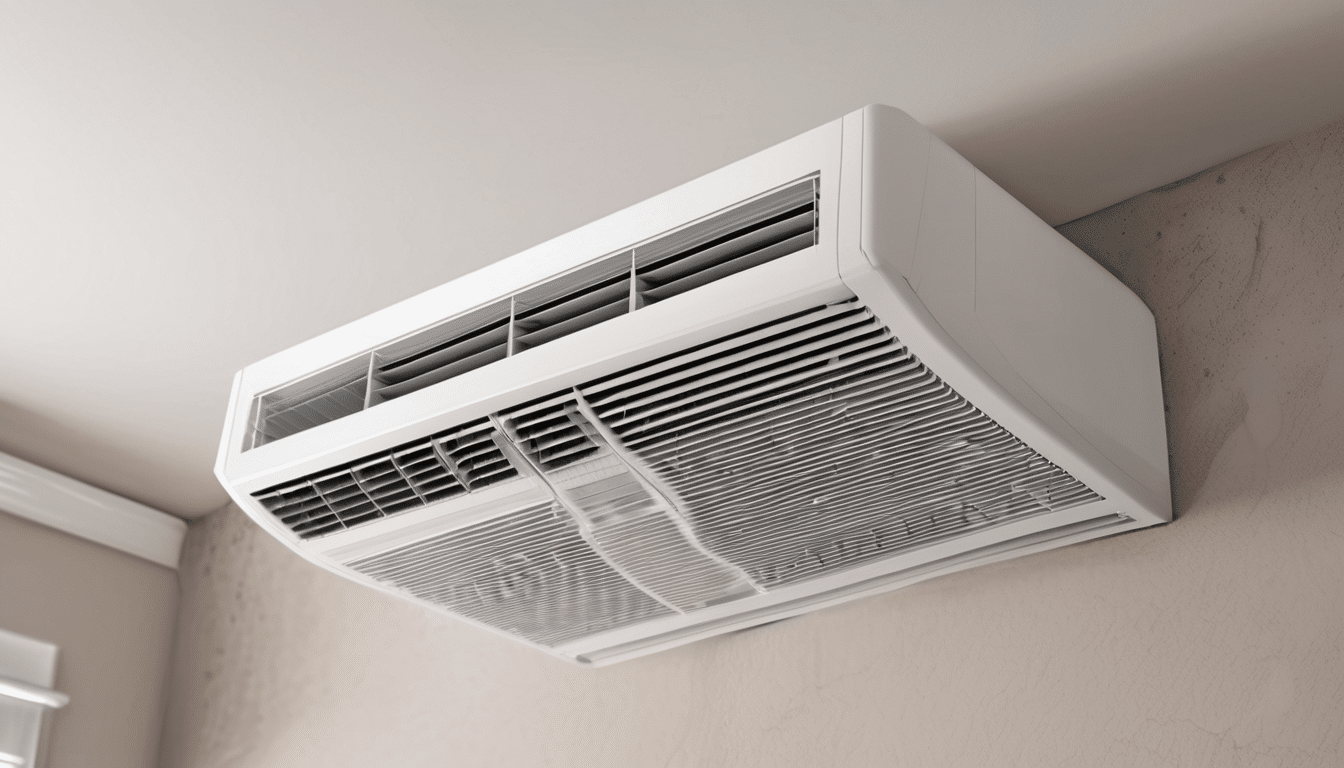
Understanding Mold in AC Ducts Dubai: Causes and Remediation is essential. Every summer in Dubai, air conditioning systems run almost continuously. From May through September, outdoor temperatures routinely exceed 42°C, and indoor cooling systems cycle non-stop for months. What most residents do not realise is that this pattern — extreme heat outside, cold conditioned air inside — creates precise conditions for mould to establish within AC ductwork. Mold in AC ducts Dubai is not a rare anomaly. Based on field investigations conducted across Dubai villas, apartments, and commercial properties, it is one of the most consistently identified indoor environmental findings throughout the UAE.
The challenge is that mould inside ductwork is invisible. Unlike mould on a bathroom wall or behind a kitchen cabinet, duct contamination is distributed throughout the air delivery system. Every time the AC cycles, any mould present in the ductwork releases spores into the conditioned airspace. Understanding the causes and remediation of mold in AC ducts in Dubai is therefore not simply a maintenance concern — it is a question of what you are breathing every day. This relates directly to Mold in AC Ducts Dubai: Causes and Remediation.
This article addresses mold in AC ducts Dubai causes and remediation from a building science perspective: what creates the conditions, how contamination is confirmed, and what a properly sequenced remediation looks like when conducted to IAC2 and NADCA-aligned standards. When considering Mold in AC Ducts Dubai: Causes and Remediation, this becomes clear.
Mold in AC Ducts Dubai: Causes and Remediation – Why Dubai’s Climate Makes AC Ducts Vulnerable to Mould
The fundamental driver of mould in ductwork is moisture. In Dubai, that moisture enters ductwork systems through several well-understood pathways, all of which are amplified by the regional climate. The importance of Mold in AC Ducts Dubai: Causes and Remediation is evident here.
The Summer Condensation Problem
During Dubai’s summer months, outdoor air carries extremely high humidity — particularly during the overnight and early morning hours when dew points remain elevated. When this humid air contacts a duct surface that is cooled by the air conditioning system, condensation forms on the interior duct wall. This condensation provides the moisture film that mould needs to colonise duct surfaces. A single night of condensation cycling can deposit enough moisture for early mould establishment within a week. Understanding Mold in AC Ducts Dubai: Causes and Remediation helps with this aspect.
The Shoulder Season Transition
October and November represent a particularly high-risk period for mold in AC ducts in Dubai. As outdoor temperatures drop, many residents reduce their AC usage or switch systems off for the first time in months. Ducts that have been continuously cooled now begin to warm. If residual moisture is present — from condensation, a prior leak, or high indoor humidity — this warming creates an ideal incubation environment. Mould spore counts in ductwork commonly increase during this post-summer transition period, a pattern observed repeatedly in Saniservice laboratory analysis of duct swab samples collected between October and December. Mold in AC Ducts Dubai: Causes and Remediation factors into this consideration.
Mold in AC Ducts Dubai: Causes and Remediation – Common Causes of Mold in AC Ducts Dubai Properties Face
Mold in AC ducts Dubai properties experience typically originates from one or more identifiable building system failures. Identifying the root cause is not optional — it is the prerequisite for any remediation that does not simply repeat itself within six to twelve months. This relates directly to Mold in AC Ducts Dubai: Causes and Remediation.
Undersized or Poorly Balanced Systems
An air conditioning system that is undersized for its space will struggle to dehumidify effectively. The system runs long cooling cycles, drops temperature quickly, but never runs long enough to remove adequate moisture from the air. The result is conditioned air that remains humid — and duct surfaces that experience repeated condensation cycles. This is a frequently identified root cause in older Dubai apartments and in villas where original AC specifications were not revised following extensions or refurbishments. When considering Mold in AC Ducts Dubai: Causes and Remediation, this becomes clear.
Damaged Duct Insulation
Flexible ductwork used in many Dubai residential properties relies on insulation to maintain duct surface temperatures above the dew point of the surrounding air. When this insulation is damaged, compressed, or missing at joints and bends, cold spots form on the duct exterior. Condensation collects on these spots, and if moisture migrates inward through a duct liner breach, mould can establish on interior surfaces within weeks. The importance of Mold in AC Ducts Dubai: Causes and Remediation is evident here.
Poor Return Air Design
Return air grilles that are undersized, blocked by furniture, or improperly positioned create negative pressure zones within occupied spaces. These pressure differentials pull humid outdoor air through building envelope gaps — around window frames, door seals, and service penetrations — introducing uncontrolled moisture directly into the indoor environment and into the air handling pathway. Understanding Mold in AC Ducts Dubai: Causes and Remediation helps with this aspect.
Prior Water Intrusion Events
A water leak from a chilled water pipe, a condensate drain overflow, or a roof intrusion that contacts ductwork is one of the most direct causes of mold in AC ducts in Dubai villas and high-rise apartments. Even when the visible water is dried, if duct liner materials remain wet for more than 24 to 48 hours, mould colonisation is highly probable. This is why post-leak inspection of ductwork is a standard recommendation following any water damage event. Mold in AC Ducts Dubai: Causes and Remediation factors into this consideration.
Mold in AC Ducts Dubai: Causes and Remediation – How Mold in AC Ducts Dubai Is Properly Diagnosed
Visual inspection alone is insufficient to confirm or rule out mould contamination in ductwork. Mould in duct systems is frequently non-visible — residing within the fibrous liner, on internal duct board surfaces, or in the air handling unit itself — while the outer duct surface appears clean. This relates directly to Mold in AC Ducts Dubai: Causes and Remediation.
Borescope Inspection
A flexible borescope camera allows direct visual access to interior duct surfaces without destructive opening of the ductwork. Saniservice specialists use borescope inspection as a standard diagnostic tool to identify visible mould growth, debris accumulation, and insulation deterioration at locations that are otherwise inaccessible. When considering Mold in AC Ducts Dubai: Causes and Remediation, this becomes clear.
Surface Sampling and Laboratory Analysis
Where visual findings are ambiguous or where mould is suspected based on symptom history and building conditions, surface swab samples are collected from interior duct surfaces and analysed in Saniservice’s in-house microbiology laboratory. Laboratory analysis identifies mould species present, provides a quantitative measure of contamination, and informs the remediation method required. As an IAC2 Certified Indoor Air Consultant, I approach every duct case with the understanding that species identification matters — different mould genera respond differently to remediation protocols. The importance of Mold in AC Ducts Dubai: Causes and Remediation is evident here.
Air Sampling
Spore trap air samples collected at supply registers provide a measure of what the AC system is actively distributing into the occupied space. Elevated spore counts at registers — particularly of species not typically found in outdoor air — indicate active duct contamination. These results are interpreted in the context of simultaneous outdoor reference samples, as required by IAC2 investigation standards. Understanding Mold in AC Ducts Dubai: Causes and Remediation helps with this aspect.
Mold in AC Ducts Dubai Remediation — The Correct Sequence
Mold in AC ducts Dubai remediation that produces lasting results follows a specific sequence. Skipping steps — particularly root cause correction and post-remediation verification — is the single most common reason duct mould recurs within one to two years of treatment. Mold in AC Ducts Dubai: Causes and Remediation factors into this consideration.
Step 1 — Root Cause Correction
Before any mould removal begins, the moisture source driving contamination must be identified and corrected. This may involve repairing damaged duct insulation, rebalancing airflow, fixing condensate drainage, or addressing building envelope deficiencies. Remediating mould without correcting its cause is equivalent to repainting over a wet wall — the result is temporary at best. This relates directly to Mold in AC Ducts Dubai: Causes and Remediation.
Step 2 — Containment and Negative Pressure
During duct remediation, the work area must be isolated from occupied spaces. HEPA-filtered negative air machines maintain negative pressure within the work zone, preventing disturbed mould spores from migrating into adjacent rooms. This containment design is required by IICRC S520 remediation standards and is a non-negotiable component of responsible mould removal in occupied Dubai properties. When considering Mold in AC Ducts Dubai: Causes and Remediation, this becomes clear.
Step 3 — Mechanical Removal and HEPA Vacuuming
Mould in ductwork cannot be addressed by chemical application alone. Mechanical removal — using NADCA-compliant brushing, agitation, and HEPA vacuuming of duct interior surfaces — physically removes mould colonies and their substrate. In cases where duct liner materials are heavily contaminated, replacement of the liner is required rather than surface treatment alone. The importance of Mold in AC Ducts Dubai: Causes and Remediation is evident here.
Step 4 — Antimicrobial Treatment
Following mechanical removal, an EPA-registered antimicrobial treatment is applied to duct interior surfaces to address residual spore contamination. The selection of treatment agent is informed by laboratory species identification — not by a generic default product. This step is a secondary measure, not a substitute for mechanical removal. Understanding Mold in AC Ducts Dubai: Causes and Remediation helps with this aspect.
Step 5 — Post-Remediation Verification
Post-remediation verification is the step that separates professional duct remediation from surface-level cleaning. Saniservice conducts clearance testing through laboratory analysis of post-remediation air samples and surface swabs. Results are documented in a formal remediation report, which can support insurance claims, property management records, or DHA clearance documentation where required.
Signs That Mold in AC Ducts May Be Present in Your Dubai Property
Several observable indicators suggest that mold in AC ducts in a Dubai property warrants professional investigation. None of these signs are individually diagnostic — laboratory testing is required for confirmation — but they represent reasonable grounds for a professional assessment.
- A musty or earthy odour that is strongest when the AC first starts up and diminishes after the system has been running for several minutes
- Visible dark staining around supply air registers or grilles, particularly on the grille face or surrounding ceiling surface
- Recurring respiratory symptoms — congestion, throat irritation, or headaches — that improve when building occupants are away from the property for extended periods
- A history of water intrusion, condensate overflow, or flooding that involved the duct system or air handling unit
- Properties that have been unoccupied during summer months with AC systems switched off for extended periods
Seasonal Maintenance Recommendations for Dubai AC Duct Systems
Based on field investigations conducted across Dubai, Abu Dhabi, and Sharjah properties, the following maintenance timing significantly reduces the risk of mold in AC ducts returning after remediation.
In March and April — before the summer cooling season begins — duct systems should be inspected and cleaned if routine maintenance has lapsed. This timing ensures that any mould establishing during the winter shutdown period is addressed before sustained summer operation distributes it throughout the property.
In October and November — as the summer cooling season ends — a post-season inspection identifies any contamination that developed during the high-demand period. This is the most commonly overlooked maintenance interval in Dubai residential properties, yet it corresponds to the period of highest mould establishment risk identified in Saniservice field data.
Key Takeaways for Dubai Property Owners
- Mold in AC ducts Dubai is a building science problem, not simply a cleaning problem — root cause correction is required for lasting results
- Dubai’s summer-to-shoulder-season transition (September to November) represents the highest risk period for duct mould establishment
- Laboratory analysis — not visual inspection alone — is the standard for confirming contamination and clearing remediation
- NADCA-aligned mechanical removal combined with HEPA containment is the correct remediation methodology, not chemical spray alone
- Post-remediation verification testing is the only evidence-based way to confirm that mould in AC ducts has been successfully addressed
- Scope and cost for professional duct remediation are property-specific — variables include duct system size, contamination extent, and root cause complexity. A professional assessment determines the appropriate scope
Frequently Asked Questions
How do I know if there is mould in my AC ducts in Dubai?
The most reliable indicator is a musty odour when the AC starts, combined with visible staining around supply registers. However, definitive confirmation requires laboratory analysis of surface swab samples or air samples collected at supply registers. Visual inspection alone is insufficient, as mould in ductwork frequently resides on internal liner surfaces that are not visible without borescope inspection.
Why does mould in AC ducts keep coming back in Dubai properties?
Recurrence is almost always the result of inadequate root cause correction. If the moisture source — damaged insulation, poor dehumidification, condensate drainage issues, or building envelope gaps — is not resolved before remediation, mould will re-establish within months. Laboratory-confirmed, root-cause-driven remediation following IAC2 and IICRC S520 standards is the approach that produces lasting outcomes.
Is mould in AC ducts more common in certain areas of Dubai?
Mold in AC ducts in Dubai is identified across all districts, but properties near coastal areas such as Dubai Marina, JBR, and Palm Jumeirah experience elevated ambient humidity, increasing condensation risk in ductwork. Older villa communities with ageing duct insulation — including areas of Jumeirah and Mirdif — are also frequently assessed by Saniservice specialists for duct contamination.
What is the difference between AC duct cleaning and mould remediation?
AC duct cleaning removes accumulated dust, debris, and particulates from duct surfaces. Mould remediation is a structured protocol that includes root cause investigation, containment, mechanical mould removal, antimicrobial treatment, and laboratory-verified clearance testing. For confirmed mould contamination, duct cleaning alone does not meet IICRC S520 or NADCA remediation standards and will not produce verifiable, lasting results.
Can I clean mould from AC ducts myself in my Dubai apartment?
DIY treatment of mould in ductwork is not recommended. Without containment and negative pressure, disturbing mould colonies within ducts can actively distribute spores throughout the property. Additionally, without laboratory identification of the mould species present, appropriate treatment selection is not possible. Professional assessment by an IAC2 or NADCA-accredited specialist is the appropriate first step.
How long does professional mould remediation in AC ducts take in Dubai?
Duration depends on duct system size, contamination extent, and whether liner replacement is required. A professional assessment by Saniservice specialists will determine the scope before any work begins. Post-remediation verification testing requires an additional site visit after remediation is complete, and laboratory turnaround time should be factored into project timelines.
Does Saniservice provide a clearance certificate after AC duct mould remediation in Dubai?
Yes. Saniservice provides a formal post-remediation verification report supported by in-house laboratory analysis. This documentation confirms that remediation objectives were met based on measurable, lab-verified results. For properties requiring DHA mould clearance documentation or property management compliance records, this report serves as the primary evidence of successful remediation.
Mold in AC ducts Dubai causes and remediation is a topic that warrants a precise, evidence-first response — not alarm, and not assumption. If your property has experienced water intrusion, if your AC system produces an odour on start-up, or if your building has been unoccupied over summer, the appropriate next step is a professional diagnostic assessment. The question is not whether contamination is possible — in Dubai’s climate, the conditions are regularly present. The question is what your laboratory results show, and what a correctly sequenced remediation will do about it. That is the standard Saniservice holds itself to on every investigation. Understanding Mold in AC Ducts Dubai: Causes and Remediation is key to success in this area.