
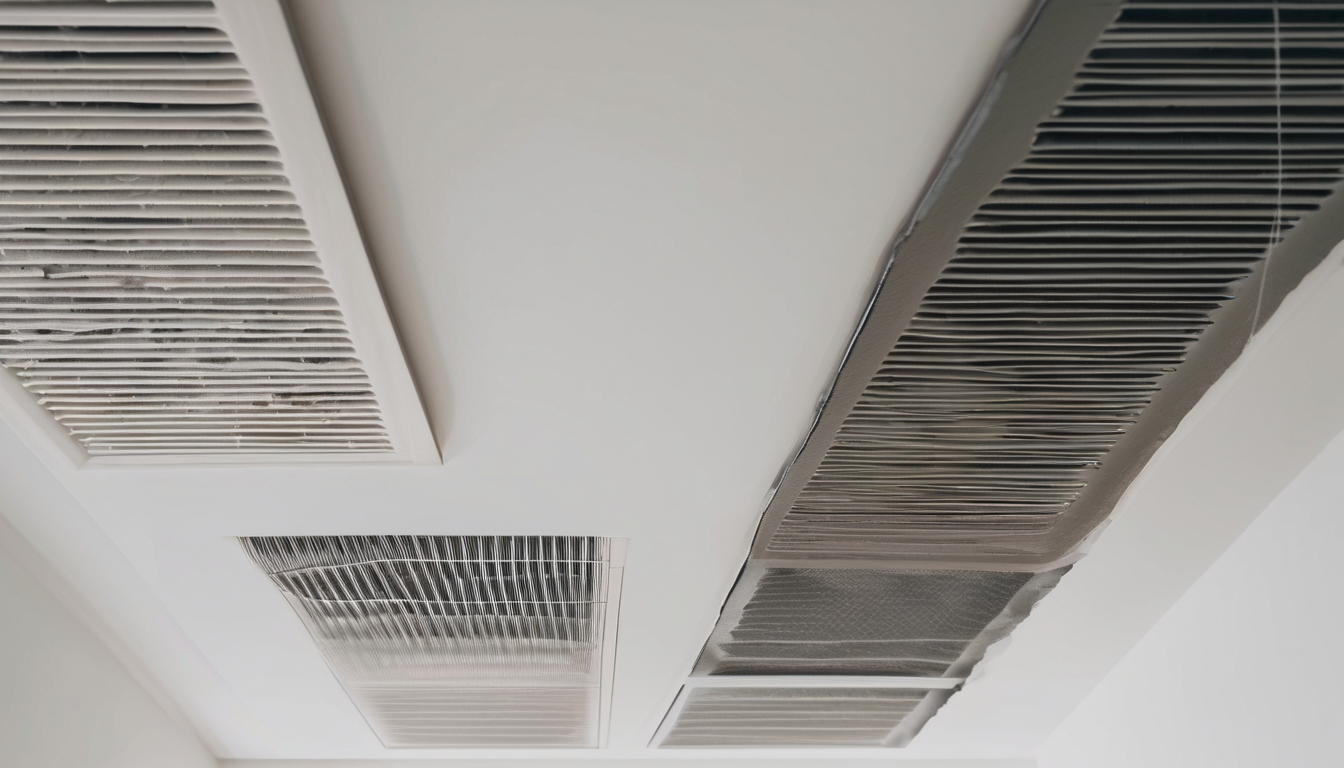
Understanding Mold in AC Ducts Dubai: Causes and Removal Process is essential. There is a particular kind of discomfort that Dubai residents sometimes describe — a stale, slightly musty quality to the air that no amount of air freshener seems to resolve. In many of these cases, a professional investigation reveals that the source is not the room itself. It is the duct system distributing conditioned air throughout the property. Understanding mold in AC ducts Dubai, and the full causes and removal process behind it, is the first step toward restoring genuinely clean air to your home or facility.
Dubai’s climate creates conditions that are uniquely challenging for HVAC systems. Ambient humidity outside regularly exceeds 80% during summer months, and indoor temperatures can drop well below the dew point at duct surfaces — particularly where insulation has degraded or airflow is uneven. This combination of warmth, moisture, and organic material inside ductwork creates the precise conditions that mould requires to establish and spread. This relates directly to Mold in AC Ducts Dubai: Causes and Removal Process.
As an IAC2 Certified Indoor Air Consultant with more than 20 years of field experience, I have investigated hundreds of HVAC-related contamination cases across Dubai, Sharjah, Abu Dhabi, and the wider UAE. What consistently surprises property owners is that the problem is rarely random. It is predictable — a measurable outcome of building physics, not bad luck. When considering Mold in AC Ducts Dubai: Causes and Removal Process, this becomes clear.
Mold in AC Ducts Dubai: Causes and Removal Process – Why Mold in AC Ducts Dubai Is a Building Science Problem
Mould growth inside duct systems is not primarily a hygiene issue. It is a hygrothermal failure. When conditioned air passes through ducting that has developed internal moisture — whether from condensation, insulation breakdown, or air bypass — the interior surfaces become viable growth environments for mould species such as Cladosporium, Aspergillus, and Penicillium. The importance of Mold in AC Ducts Dubai: Causes and Removal Process is evident here.
In Dubai villas and high-rise apartments, ductwork frequently runs through unconditioned ceiling voids and wall cavities where temperatures fluctuate significantly. When cold duct surfaces contact warm, humid air from gaps in the duct system, condensation forms on the interior liner. That moisture, combined with accumulated dust particles and organic debris, provides everything mould needs. Understanding Mold in AC Ducts Dubai: Causes and Removal Process helps with this aspect.
The question a certified investigation asks is not simply whether mould is present — it is what species, at what concentration, and what the underlying building failure is. Answering those questions requires sampling, laboratory analysis, and a systematic review of the HVAC system as a whole. Mold in AC Ducts Dubai: Causes and Removal Process factors into this consideration.
Mold in AC Ducts Dubai: Causes and Removal Process – Primary Causes of Mold in AC Ducts in Dubai Buildings
Duct Insulation Degradation
Flexible ductwork used in many Dubai residential and commercial properties contains internal fibreglass liner that absorbs moisture over time. Once saturated, this liner supports mould growth that is extremely difficult to observe without borescope inspection. Laboratory analysis of swab samples from degraded liner commonly identifies multiple mould genera simultaneously — a sign of a mature, established colony. This relates directly to Mold in AC Ducts Dubai: Causes and Removal Process.
Oversized Cooling Units and Short-Cycling
HVAC systems that are oversized for their space cool the air rapidly but run for short periods. This short-cycling means the system never runs long enough to adequately dehumidify the air passing through it. The result is elevated relative humidity at duct surfaces — consistently measured above 70% RH in field investigations — which accelerates mould establishment. When considering Mold in AC Ducts Dubai: Causes and Removal Process, this becomes clear.
Blocked or Inadequate Return Air
When return air pathways are obstructed — a common finding in post-renovation Dubai apartments where walls have been repositioned — negative pressure zones develop. These zones draw unconditioned, humid air in through duct gaps and ceiling penetrations. That infiltrating air introduces both moisture and mould spores from the building structure itself. The importance of Mold in AC Ducts Dubai: Causes and Removal Process is evident here.
Evaporator Coil and Drain Pan Contamination
The evaporator coil sits at the heart of any split or ducted system. Because it operates at temperatures below the dew point of indoor air, moisture condenses on its surface continuously during operation. If the drain pan is partially blocked or the coil has accumulated biological growth, mould-laden air passes directly into the duct system with every cooling cycle. Understanding Mold in AC Ducts Dubai: Causes and Removal Process helps with this aspect.
Mold in AC Ducts Dubai: Causes and Removal Process – How the Mold in AC Ducts Removal Process Works
Understanding the mold in AC ducts Dubai causes and removal process requires separating what is commonly marketed — duct cleaning — from what certified remediation actually involves. These are not the same thing. Duct cleaning removes accumulated dust. Mould remediation addresses contamination at a microbiological level, with containment, source treatment, and verification. Mold in AC Ducts Dubai: Causes and Removal Process factors into this consideration.
Step 1 — Diagnostic Investigation and Sampling
A certified investigation begins before any removal work. Saniservice specialists conduct air sampling using calibrated spore trap cassettes to establish baseline mould concentrations inside the duct system relative to outdoor reference levels. Surface samples are collected from interior duct surfaces, the evaporator coil, and the drain pan using contact plates or swabs. These samples are processed in Saniservice’s in-house microbiology laboratory — the only such laboratory operated by an indoor environmental services company in the UAE. This relates directly to Mold in AC Ducts Dubai: Causes and Removal Process.
Laboratory results determine which species are present, their relative concentrations, and whether the contamination pattern is localised or distributed throughout the system. This data drives the remediation scope. Without it, any removal work is based on assumption rather than evidence. When considering Mold in AC Ducts Dubai: Causes and Removal Process, this becomes clear.
Step 2 — Containment and Access
Before any duct surfaces are disturbed, the affected system is isolated. This is critical in occupied properties. Opening contaminated ductwork without containment releases mould spores into living spaces — often at concentrations significantly higher than the baseline. HEPA-filtered negative pressure units are positioned to capture aerosolised spores during the remediation process. The importance of Mold in AC Ducts Dubai: Causes and Removal Process is evident here.
Step 3 — Mechanical Cleaning and Antimicrobial Treatment
Contaminated duct surfaces are mechanically cleaned using NADCA-aligned methodology — a standard that specifies contact-based cleaning rather than chemical fogging alone. Fogging without mechanical removal of the biofilm matrix is a common shortcut that does not eliminate the mould colony. After mechanical cleaning, an appropriate antimicrobial agent is applied to treated surfaces, selected based on the species identified in laboratory analysis. Understanding Mold in AC Ducts Dubai: Causes and Removal Process helps with this aspect.
Step 4 — Addressing the Root Cause
Mold in AC ducts in Dubai buildings will recur unless the underlying moisture source is corrected. Root-cause resolution may involve replacing degraded duct liner, repairing coil drain lines, correcting return air pathways, or addressing insulation failures. Without this step, remediation is temporary — the mould re-establishes within weeks or months. Mold in AC Ducts Dubai: Causes and Removal Process factors into this consideration.
Step 5 — Post-Remediation Verification
Verification is not optional in a properly conducted mold in AC ducts Dubai removal process. Post-remediation air sampling and surface sampling confirm that mould concentrations have returned to acceptable levels before the system is returned to normal operation. This step produces the documented evidence that the remediation was successful — the same evidence required for a mold clearance certificate issued by a certified professional. This relates directly to Mold in AC Ducts Dubai: Causes and Removal Process.
What Mold in AC Ducts Looks and Feels Like
Property owners in Dubai often ask how to recognise duct-related mould contamination without visual access to the system. Based on field investigations, several indicators consistently appear before visible mould is ever confirmed. When considering Mold in AC Ducts Dubai: Causes and Removal Process, this becomes clear.
Occupants commonly report a musty or earthy quality to conditioned air that appears shortly after the system starts. Some describe it as a brief, unpleasant odour that fades as the room reaches temperature. Others notice that allergic symptoms — sneezing, nasal irritation, or eye discomfort — are more pronounced immediately after the system activates. These are not diagnostic conclusions, but they are patterns that warrant a professional investigation.
Visual indicators inside visible duct runs or at supply registers may include dark discolouration around grille edges, visible powdery deposits on internal surfaces, or rust-coloured staining near drain connections. None of these alone confirm mould — laboratory analysis does. But they are reliable prompts to request professional assessment.
Mold in AC Ducts Dubai and Building Age
Older Dubai properties — particularly villas built before 2005 in areas such as Jumeirah, Mirdif, and Deira — frequently present duct systems that have never been properly assessed. Original duct insulation in these buildings has often exceeded its serviceable lifespan. Field investigations in these properties consistently reveal multi-species mould growth distributed across the entire duct network, not isolated to a single section.
Newer high-rise developments in areas such as Dubai Marina, Business Bay, and Jumeirah Village Circle present a different pattern. Here, contamination is frequently linked to construction-phase moisture exposure — ductwork installed before building envelope closure that absorbed ambient humidity during fit-out periods. Saniservice investigations in newly handed-over Dubai apartments have identified active mould growth in systems that have operated for fewer than 12 months.
The Role of Laboratory Testing in the Removal Process
The mold in AC ducts Dubai causes and removal process cannot be properly executed without microbiological data. Species identification matters because different mould genera respond differently to treatment, carry different health implications for occupants, and indicate different moisture sources.
Aspergillus niger growth in a drain pan points to chronic standing water. Stachybotrys chartarum — commonly associated with water-damaged cellulose materials — found inside fibreglass duct liner indicates prolonged saturation, not simple condensation. Cladosporium across multiple supply registers suggests a distributed contamination event, often linked to a prior operational period with degraded filtration.
Saniservice’s laboratory processes mould samples using direct microscopy and culture-based methods, producing species-level identification that informs both the remediation approach and the post-remediation clearance assessment. This is not a service offered by general cleaning contractors — it requires microbiological expertise and proper laboratory infrastructure.
Expert Takeaways for Dubai Property Owners
- Mold in AC ducts is a building science problem, not a cleaning problem. Treat it accordingly.
- Routine duct cleaning and certified mould remediation are different services with different outcomes. Confirm which one you are receiving.
- Laboratory sampling before and after any remediation work is the only verifiable measure of success.
- Root-cause correction — moisture source identification and resolution — determines whether remediation outcomes last.
- Post-remediation verification produces the documentation required for a mold clearance certificate in Dubai.
- If musty odours return within weeks of a duct cleaning service, the root cause was not addressed. Request a diagnostic investigation.
Frequently Asked Questions
How do I know if there is mold in my AC ducts in Dubai?
Common indicators include a musty or earthy odour from supply registers, dark discolouration around duct grilles, and occupant symptoms such as nasal irritation or sneezing that correlate with system operation. These patterns warrant professional investigation using air sampling and laboratory analysis — visual inspection alone is rarely sufficient to confirm or rule out mould contamination in ductwork.
What causes mold to grow inside AC ducts in Dubai specifically?
Dubai’s high ambient humidity — regularly exceeding 80% during summer — combined with cold duct surfaces creates condensation conditions that support mould growth. Degraded duct insulation, oversized cooling units that short-cycle, blocked return air pathways, and contaminated evaporator coils are the most frequently identified contributing factors in field investigations across Dubai properties.
Is duct cleaning the same as mold removal in AC ducts?
No. Duct cleaning removes accumulated dust and debris. Certified mould remediation involves containment, mechanical cleaning of the biofilm matrix, laboratory-confirmed species identification, antimicrobial treatment, root-cause correction, and post-remediation verification sampling. These are distinct processes with significantly different outcomes, and one does not substitute for the other.
How long does the mold removal process take for AC ducts in a Dubai villa?
Scope and duration depend on the extent of contamination, the number of systems, and whether duct liner replacement is required. A professional assessment determines the specific scope for each property. Attempting to assign a generic timeframe without a site investigation and laboratory results would not reflect an accurate or responsible estimate.
Can mold in AC ducts return after removal?
Yes, if the root cause is not addressed. Mould re-establishes when moisture conditions remain favourable. Remediation that does not include root-cause correction — repairing degraded insulation, fixing drain lines, correcting airflow imbalances — typically sees mould return within weeks or months. Post-remediation monitoring and HVAC maintenance are the most effective long-term preventive measures.
Do I need a mold clearance certificate after AC duct remediation in Dubai?
A mold clearance certificate documents that post-remediation verification sampling has confirmed mould concentrations are within acceptable levels. It is required for certain DHA-regulated properties and is increasingly requested by Dubai landlords and property managers as evidence that remediation work was completed to a verifiable standard — not simply performed.
Which Dubai neighbourhoods see the most AC duct mold problems?
Field investigations by Saniservice specialists have identified recurring patterns in older villa communities including Jumeirah, Mirdif, and Deira, where ageing duct systems are common. Newer developments in Dubai Marina, Business Bay, and Jumeirah Village Circle also present cases, typically linked to construction-phase moisture exposure or HVAC systems installed before building envelope completion.
Every instance of mold in AC ducts Dubai represents a causes and removal process that begins not with a chemical treatment but with a question: why is moisture present here, and what does the laboratory data say? When those two questions are answered properly, the path to clean, verified, measurable indoor air becomes clear. That clarity — evidence-based, calmly documented, and confirmed by independent testing — is what distinguishes a genuine solution from a temporary one. If your conditioned air does not feel the way it should, the next step is a professional assessment that begins with data, not assumptions. Understanding Mold in AC Ducts Dubai: Causes and Removal Process is key to success in this area.