
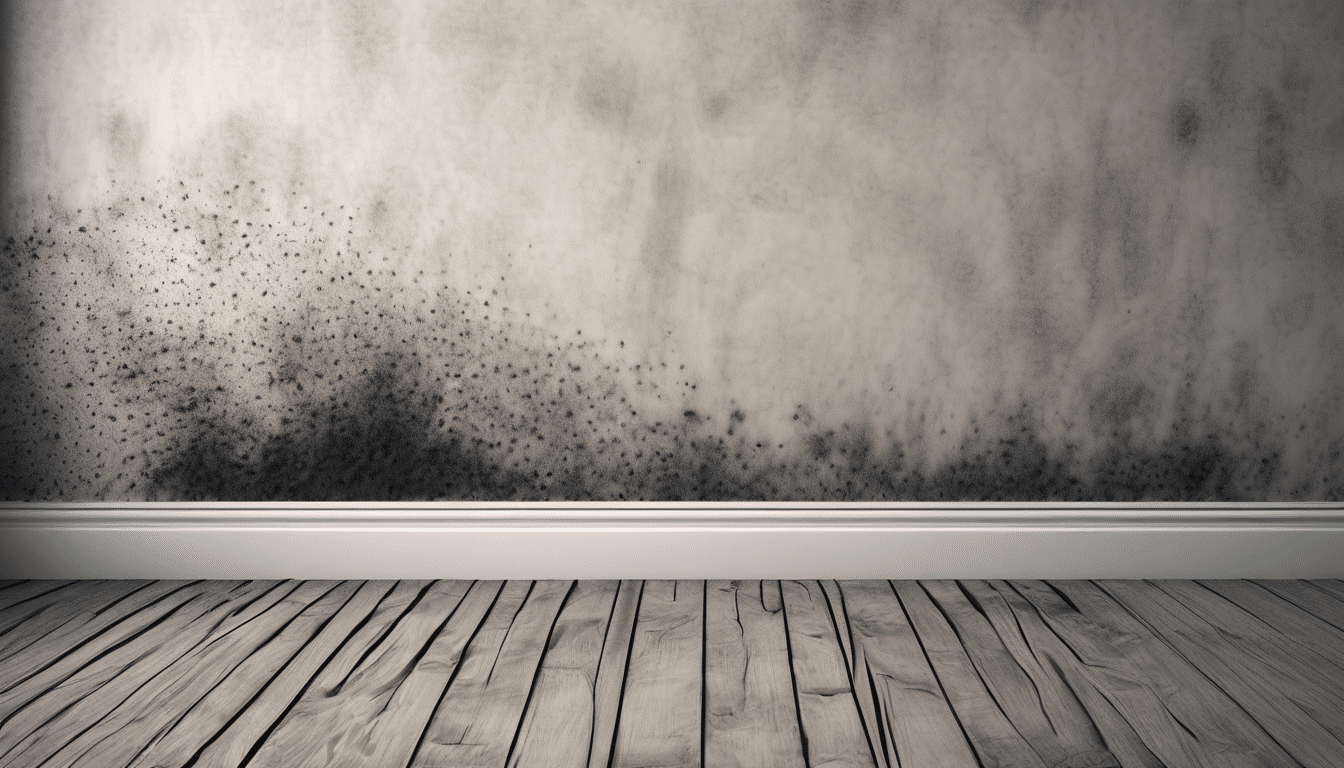
Is black mold dangerous primarily due to its health risks? The direct answer is yes — but the fuller answer requires understanding what black mould actually is, how it behaves inside buildings, and why the indoor climate of the UAE makes this question particularly relevant for homeowners, tenants, and property managers across Dubai, Abu Dhabi, Sharjah, and beyond. black mould is not dangerous simply because it looks alarming. It is dangerous because of what it produces, where it grows undetected, and how prolonged exposure accumulates inside the human body.
In more than 20 years of field investigations, laboratory analysis, and building diagnostics, I have assessed properties where visible mould was minimal but airborne spore concentrations and mycotoxin presence told a very different story. That gap between what is visible and what is measurable is precisely why the question of whether black mould is dangerous requires a science-first response rather than a reflexive one. The answer is always rooted in data — not appearance alone. This relates directly to Is black mold Dangerous Primarily Due to Its Health Risks.
This guide examines the health risks of black mould in depth, explains the biological mechanisms behind those risks, addresses how Dubai’s specific environmental conditions influence exposure severity, and outlines what professional assessment and laboratory testing reveal that no visual inspection can confirm on its own.
Is Black Mold Dangerous Primarily Due to Its Health Risks – Is Black Mold Dangerous — What the Science Actually Says
Is black mold dangerous primarily due to its health risks? From a scientific standpoint, yes — but the danger is not uniform. The term “black mould” is commonly used to refer to Stachybotrys chartarum, a dark-coloured fungal species that grows on cellulose-rich materials such as drywall, timber, and ceiling board when sustained moisture is present. However, not every dark-coloured mould is Stachybotrys, and not every mould labelled “black” carries the same risk profile.
What makes certain black mould species genuinely hazardous is their production of mycotoxins — secondary metabolites that the fungus releases under specific growth conditions. Mycotoxins are not spores. They are chemical compounds, and they behave differently in indoor air. They can attach to fine particulate matter, remain airborne for extended periods, and in some cases deposit on surfaces far from the original mould colony. When considering Is Black Mold Dangerous Primarily Due to Its Health Risks, this becomes clear.
Laboratory analysis from indoor environmental investigations consistently identifies mycotoxin presence as the factor most strongly correlated with occupant health complaints — not mould visibility, not surface area, not even spore count alone. This is a critical distinction that shapes how professional mould assessment should be conducted.
Stachybotrys vs Other Black Mould Species
Field investigations regularly reveal that occupants describe several different mould species as “black mould.” Cladosporium, Aspergillus niger, and Nigrospora can all appear dark to the naked eye. Each carries its own risk profile. Stachybotrys chartarum is clinically significant because its trichothecene mycotoxins are among the most thoroughly studied in the context of indoor environmental exposure.
Species-level identification through laboratory analysis — using tape lift samples, bulk material samples, or air sampling interpreted against ERMI methodology — is the only reliable way to determine what type of mould is present and what the associated health risk profile actually looks like. Visual colour is never sufficient for diagnosis.
Is Black Mold Dangerous Primarily Due to Its Health Risks – How Black Mold Health Risks Affect the Human Body
Is black mold dangerous primarily due to its health risks to the respiratory system? That is where the most consistently documented effects appear. Inhalation of mould spores triggers inflammatory responses in the airways. In individuals with pre-existing respiratory conditions such as asthma, rhinitis, or chronic obstructive pulmonary disease, exposure to elevated spore concentrations can precipitate acute episodes and accelerate symptom progression.
However, the health risks of black mould extend beyond the respiratory system. Based on field investigations and occupant health interviews conducted across properties in Dubai and the wider UAE, commonly reported effects include persistent coughing, nasal congestion, eye irritation, skin sensitivity, fatigue, and in cases of prolonged exposure, cognitive effects including difficulty concentrating and disrupted sleep. These systemic symptoms are often the result of mycotoxin exposure rather than spore inhalation alone.
Vulnerable Populations Face Greater Risk
Certain occupant groups experience disproportionately severe responses to black mould exposure. Infants and young children, whose immune systems and respiratory structures are still developing, are among the most at risk. Elderly individuals, particularly those with compromised immune function, face greater difficulty clearing mycotoxins from the body efficiently.
Immunocompromised individuals — including those undergoing chemotherapy, organ transplant recipients, and those with conditions affecting immune regulation — may face invasive fungal infection risk that is clinically distinct from the allergic or irritant responses seen in the general population. For these groups, is black mold dangerous primarily due to its health risks? The answer moves from nuanced to unambiguous: yes, and professional remediation must be treated as a priority rather than a discretionary response.
Mycotoxin Exposure — A Separate and Serious Concern
Mycotoxins produced by Stachybotrys chartarum and related species are not eliminated by standard cleaning. They can persist in building materials, in HVAC systems, and on soft furnishings long after visible mould has been removed. This is why surface-level mould cleaning without mycotoxin assessment and root-cause remediation frequently fails to resolve occupant health complaints. The importance of Is Black Mold Dangerous Primarily Due to Its Health Risks is evident here.
Mycotoxin testing through validated laboratory methods — including ELISA-based assays on settled dust samples — provides the only objective measure of mycotoxin load in an indoor environment. This testing is available through professional indoor environmental consultants and provides the evidence base that determines whether occupant health risk has genuinely been resolved after remediation.
Is Black Mold Dangerous Primarily Due to Its Health Risks – Is Black Mold Dangerous in Dubai’s Climate — The UAE Conte
Is black mold dangerous primarily due to its health risks in a climate like Dubai’s? The answer is shaped substantially by the UAE’s environmental conditions. Dubai’s ambient humidity regularly exceeds 80% during summer months, and interior condensation risk is elevated by the temperature differential between outdoor air and aggressively air-conditioned indoor spaces. This combination creates the exact hygrothermal conditions under which mould colonisation accelerates.
In field investigations across Dubai villas, high-rise apartments in Sharjah and Ajman, and commercial properties in Abu Dhabi, moisture intrusion through building envelopes — often invisible from the interior — is the most frequently identified root cause of recurring black mould growth. The mould itself is the symptom. The moisture pathway is the problem.
HVAC Systems as a Mould Distribution Pathway
In UAE properties, central air conditioning systems are the primary vehicle through which mould spores and mycotoxins are distributed throughout a building. Condensate drain pans, evaporator coils, and ductwork interior surfaces provide persistent moisture and organic debris — conditions highly conducive to mould colonisation. Understanding Is Black Mold Dangerous Primarily Due to Its Health Risks helps with this aspect.
Once mould establishes within an HVAC system, every operational cycle distributes spores and potentially mycotoxins throughout every room served by that system. Occupants in rooms with no visible mould may be experiencing the same airborne exposure as those in rooms with active growth. This is a finding that appears consistently in air sampling investigations conducted across properties in Dubai and the northern emirates.
Building Materials and Mould Vulnerability
Many properties across Dubai and Abu Dhabi were constructed with gypsum board, which provides an ideal cellulose substrate for Stachybotrys chartarum under sustained moisture. When water intrusion — from roof leaks, plumbing failures, or condensation accumulation — saturates gypsum board for more than 48 to 72 hours, mould colonisation becomes highly probable.
In luxury villa investigations where walls appeared cosmetically intact, borescope inspection and moisture mapping have revealed active mould growth within wall cavities, behind tiling, and under flooring. These concealed colonies are particularly relevant to the question of whether black mould is dangerous, because the occupant remains unaware of their exposure while contamination persists.
Is Black Mold Dangerous Beyond the Immediate Health Risks?
Is black mold dangerous primarily due to its health risks, or are there additional dimensions of risk that homeowners should understand? Structural and financial risk is also significant. Black mould, given time and sustained moisture, degrades the structural integrity of building materials. Timber framing, engineered wood substrates, and gypsum board lose structural integrity under active mould colonisation.
In property transactions, undisclosed mould contamination creates significant legal and financial exposure for sellers and landlords. Increasingly, buyers and tenants in the UAE are requesting pre-purchase and pre-lease mould assessments — a practice that reflects growing awareness of both health risk and property value implications.
The Risk of Delayed Response
One of the most consistently observed patterns in forensic mould investigations is that delayed response dramatically increases remediation scope and cost. A mould problem addressed within the first few weeks of moisture intrusion typically involves surface-level decontamination. The same problem left for six months may require full material removal, cavity remediation, and post-remediation verification before occupancy can safely resume.
From a health perspective, delayed response also means extended occupant exposure. Is black mold dangerous primarily due to its health risks that compound over time? Laboratory and clinical evidence suggests yes — cumulative mycotoxin exposure and chronic low-level spore inhalation are more difficult for the body to manage than a single acute event that is promptly addressed.
Identifying Whether Black Mold Is Present in Your Property
Is black mold dangerous primarily due to its health risks that are often missed because the mould itself is not visible? This is one of the most important practical dimensions of the question. Hidden mould — within walls, under flooring, above ceilings, and inside HVAC systems — accounts for a substantial proportion of cases investigated by indoor environmental professionals.
Indicators that should prompt professional assessment include persistent musty odour without visible mould, occupant health symptoms that resolve when individuals are away from the property and return upon re-entry, unexplained surface condensation patterns, and visible moisture staining on walls or ceilings. None of these indicators confirm mould presence — but each justifies formal investigation.
Thermal Imaging and Moisture Mapping
Thermal imaging diagnostics are a non-invasive method for identifying temperature differentials within building structures that indicate moisture accumulation behind surfaces. When used alongside calibrated moisture meters, thermal imaging allows building scientists to map concealed moisture pathways without unnecessary demolition. This approach has identified active mould growth in properties that passed standard visual inspection with no findings.
Borescope inspection — inserting a flexible camera probe through a small access point — provides visual confirmation of conditions within wall cavities and under flooring. These tools, used in combination, represent the current standard for thorough hidden mould detection in professional practice.
Laboratory Air Sampling and Spore Analysis
Air sampling using calibrated spore trap cassettes, analysed by an accredited laboratory, provides quantitative data on airborne mould concentrations. Results are interpreted in the context of outdoor baseline samples and compared against established reference levels from organisations including the IAC2. This methodology produces the objective evidence base that determines whether an indoor environment presents elevated mould exposure risk. Is Black Mold Dangerous Primarily Due to Its Health Risks factors into this consideration.
Saniservice’s in-house microbiology laboratory in Al Quoz, operated by the Indoor Sciences division, processes samples from indoor investigations across the UAE. In-house laboratory capability means faster result turnaround, direct dialogue between field investigators and laboratory analysts, and a fully integrated chain of custody — all factors that improve the quality and reliability of assessment outcomes.
Is Black Mold Dangerous Enough to Require Professional Remediation?
Is black mold dangerous primarily due to its health risks to the point where professional remediation is always warranted? Professional remediation is indicated wherever mould growth exceeds surface-level presence, wherever hidden mould is confirmed or strongly suspected, wherever occupant health symptoms are reported, and wherever mycotoxin testing returns elevated results. These are not aesthetic judgements — they are evidence-based clinical and environmental thresholds.
Professional remediation follows documented protocols that address containment, negative pressure isolation, HEPA filtration of work-area air, careful removal of contaminated materials, treatment of affected substrates, and post-remediation verification through laboratory testing. The goal is not simply the removal of visible mould. It is the restoration of indoor environmental conditions that laboratory analysis confirms are safe for re-occupancy.
Why DIY Approaches Frequently Fail
Surface application of biocidal products to visible mould without addressing the moisture source, without containing the remediation zone, and without post-treatment verification does not resolve the underlying problem. In many cases it accelerates spore dispersal during the cleaning process and creates conditions that support rapid regrowth. Is black mold dangerous primarily due to its health risks when disturbed without proper containment? Disturbance without protocol significantly increases airborne spore concentrations — sometimes by orders of magnitude compared to undisturbed baseline levels.
Post-Remediation Verification
Post-remediation verification through clearance air sampling and surface testing is the only objective confirmation that remediation has achieved its intended outcome. A mould clearance certificate issued on the basis of visual inspection alone does not constitute scientific verification. Laboratory-confirmed clearance — comparing post-remediation spore concentrations against pre-remediation baselines and outdoor control samples — provides the evidence that occupants, landlords, and property managers can rely upon.
Prevention — Addressing the Root Cause Before Black Mold Returns
Is black mold dangerous primarily due to its health risks that continue if root causes are not resolved? Recurring mould in the same location after repeated cleaning is a clear indicator that the moisture source driving growth has not been identified or corrected. In UAE properties, the most common unresolved root causes include condensation within or on building envelope components, inadequate exhaust ventilation in bathrooms and kitchens, HVAC system deficiencies that elevate interior humidity, and concealed plumbing leaks.
Effective prevention requires a building science perspective — understanding how heat, moisture, and air movement interact within the specific structure — rather than a product-based approach. Dehumidification alone rarely resolves mould risk if the underlying vapour pathway is not addressed. HVAC humidity control, ventilation correction, and envelope remediation work together to reduce the environmental conditions under which mould can re-establish.
Monitoring After Remediation
Long-term monitoring plans — combining periodic moisture mapping, HVAC inspection, and interval air sampling — provide property owners with objective evidence that indoor environmental conditions remain within acceptable parameters over time. This is particularly relevant in UAE properties, where seasonal humidity cycles create recurring moisture risk every year. This relates directly to Is Black Mold Dangerous Primarily Due to Its Health Risks.
Expert Insights — Key Takeaways for UAE Property Owners
Based on field investigations across Dubai, Sharjah, Abu Dhabi, and the northern emirates, the following observations consistently emerge from professional indoor environmental practice:
- Is black mold dangerous primarily due to its health risks that are confirmed by laboratory data — not visual assessment alone. Never base remediation decisions on colour or appearance.
- Hidden mould in HVAC systems and wall cavities is responsible for occupant health symptoms in properties that appear visually clean.
- Mycotoxin testing provides a dimension of risk assessment that spore counting alone does not capture — both are necessary for a complete picture.
- Moisture source identification and correction must precede or accompany remediation, or regrowth is predictable within months.
- Post-remediation clearance verification is not optional — it is the only objective confirmation of successful remediation.
- Vulnerable occupants — children, elderly individuals, and immunocompromised persons — require the most conservative response thresholds.
- Dubai’s climate creates structural mould risk that is distinct from temperate climates — assessment and remediation protocols must account for high ambient humidity and aggressive mechanical cooling.
As an IAC2 Certified Indoor Air Consultant with more than two decades of experience in building science and mould investigation, my consistent finding is this: is black mold dangerous primarily due to its health risks? Yes — and those risks are most effectively managed when they are measured, not assumed.
Frequently Asked Questions
Is black mold dangerous primarily due to its health risks, or are structural risks equally important?
Health risks are the primary concern in professional indoor environmental assessment, particularly for vulnerable occupants. Structural degradation is a significant secondary risk — mould colonisation weakens gypsum board, timber framing, and engineered substrates over time. Both dimensions should be assessed during a professional investigation. In most residential cases, occupant health drives remediation urgency more than structural deterioration.
How do I know if I have black mould in my Dubai apartment rather than another type?
Visual colour is not sufficient for species identification. Laboratory analysis of a tape lift or bulk sample from the affected surface, processed by an accredited microbiology laboratory, is the only reliable method for confirming whether Stachybotrys chartarum or another species is present. In Dubai apartments, air sampling alongside surface testing provides the most complete risk profile. Contact a certified indoor environmental consultant for property-specific assessment. When considering Is Black Mold Dangerous Primarily Due to Its Health Risks, this becomes clear.
Can black mould in an AC system make occupants ill even without visible mould elsewhere?
Yes. HVAC systems distribute airborne spores and mycotoxins throughout every room served by the system during each operational cycle. Occupants in visually clean rooms may experience the same level of airborne exposure as those in rooms with active surface growth. Air sampling from multiple supply and return points, combined with HVAC visual inspection and swab sampling, is required to assess this pathway accurately.
Is black mold dangerous primarily due to its health risks to children more than adults?
Yes. Children are disproportionately affected by mould exposure for several reasons: they breathe at a higher rate relative to body weight, their immune and respiratory systems are still developing, and they spend more time in indoor environments. Infants and toddlers in mould-affected Dubai homes represent the highest-priority group for rapid professional assessment and remediation. Lower exposure thresholds should be applied when children are among the occupants.
What is the difference between black mould testing and a standard mould inspection?
A mould inspection is a visual and investigative assessment of building conditions — identifying moisture sources, suspicious discolouration, and environmental risk factors. Mould testing adds laboratory analysis: spore trap air sampling, surface sampling, and potentially mycotoxin testing of settled dust. Inspection identifies where to look; testing provides quantitative evidence of what is present and at what concentration. Both are typically required for a complete professional assessment.
After remediation, how can I be certain the black mould risk has been resolved in my UAE property?
Post-remediation verification through laboratory clearance testing is the only objective confirmation. This involves comparative air sampling before and after remediation, surface sampling of treated areas, and in some cases mycotoxin testing of settled dust to confirm that toxin load has been reduced. A visual inspection alone does not constitute scientific clearance. Saniservice’s Indoor Sciences division issues laboratory-verified clearance documentation for UAE properties on completion of professional remediation. The importance of Is Black Mold Dangerous Primarily Due to Its Health Risks is evident here.
Is black mold dangerous primarily due to its health risks when only small amounts are visible?
Small visible surface area does not reliably indicate low health risk. A small visible colony may represent the surface expression of a much larger concealed growth within wall cavities or structural materials. Additionally, certain species produce significant mycotoxin loads even from relatively limited growth. Professional assessment — including moisture mapping to identify concealed extent and laboratory sampling to quantify airborne concentrations — is always indicated when mould is found, regardless of the visible area involved.
Conclusion
Is black mold dangerous primarily due to its health risks? The evidence, accumulated across clinical research, field investigations, and laboratory analysis, consistently says yes. The health risks are real, they are documented, and they are particularly relevant in the UAE’s indoor environments, where high ambient humidity, aggressive mechanical cooling, and construction materials commonly used in Dubai and Abu Dhabi properties create conditions well-suited to mould establishment and growth.
The question is not whether to take black mould seriously. The question is how to respond with precision. Is black mold dangerous primarily due to its health risks that require guesswork to assess? No — and that is the most important point. Mould investigation is a scientific discipline. Moisture mapping, thermal imaging, borescope inspection, laboratory air sampling, species identification, and mycotoxin testing are the tools that replace assumption with evidence.
Is black mold dangerous primarily due to its health risks that persist after surface cleaning? In the absence of root-cause resolution and verified clearance testing, yes — and this is why professional remediation conducted to documented standards, followed by laboratory-confirmed post-remediation verification, is the only approach that reliably protects occupant wellbeing. If you suspect black mould in your Dubai or UAE property, contact Saniservice at 800molds.com to arrange a professional assessment. The starting point is always measurement — not assumption.