
Table of Contents
Introduction: The Role of Environmental Sampling in Confirming Mold
The role of environmental sampling in confirming mold cannot be overstated. Mold growth can have significant implications for indoor air quality and human health, particularly in Dubai’s humid climate. By understanding the importance of post-remediation verification through accurate sampling methods and lab analysis, property owners and managers can ensure long-term success in managing indoor environments.
The Role Of Environmental Sampling In Confirming Mold –
The Importance of Post-Remediation Verification
Post-remediation verification is crucial because it confirms whether mold remediation efforts have been successful. Environmental sampling, combined with laboratory analysis, provides a scientific basis for assessing the effectiveness of remediation measures and identifying any areas that may still require attention.
Common Environmental Sampling Methods for Mold Detection
There are several methods used to sample the environment for mold detection. These include:
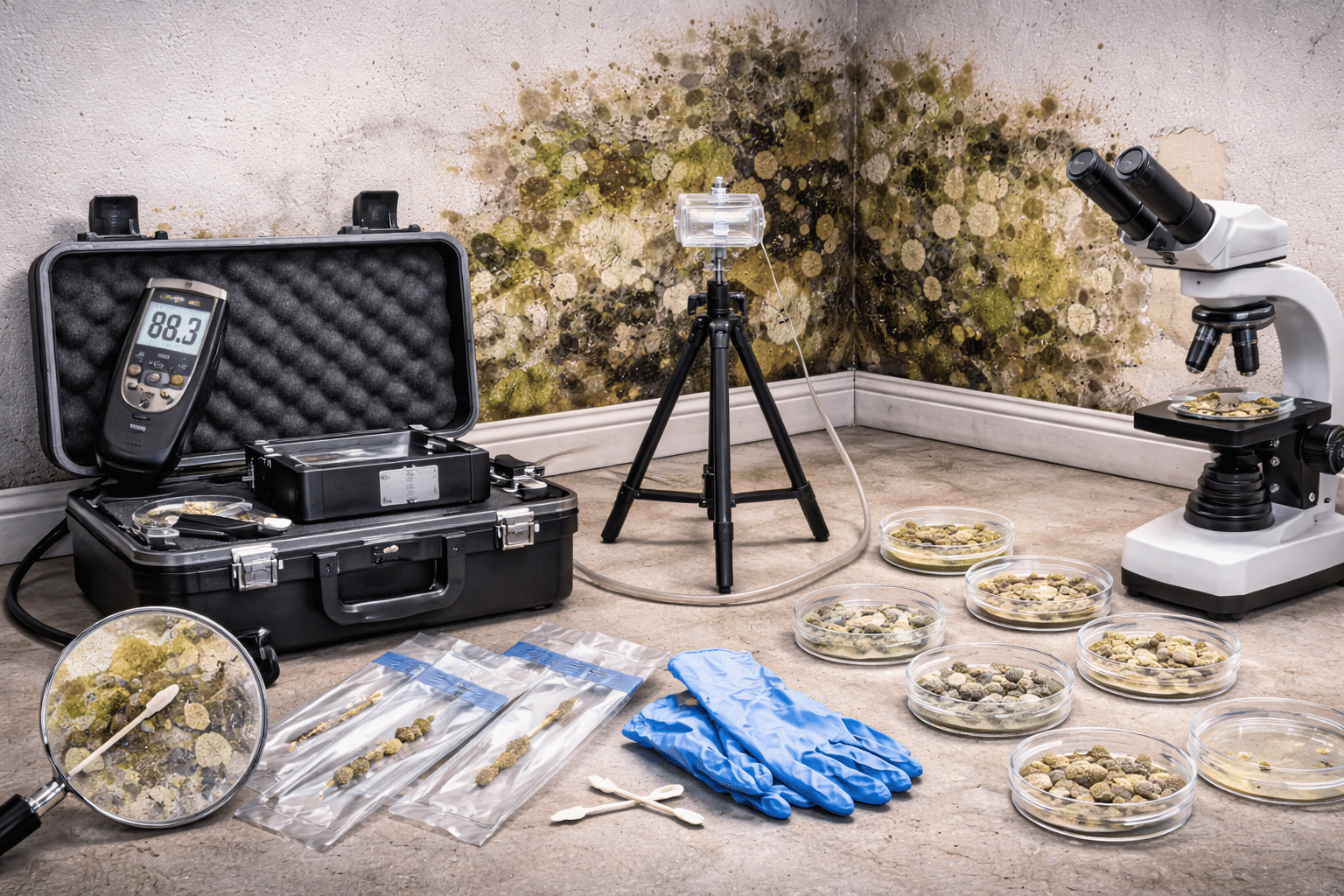
- Air sampling: Collecting air samples using spore traps or impactors to quantify mold spores in the air.
- Surface sampling: Taking swab, tape lift, or bulk samples from surfaces suspected of being contaminated.
- Thermal imaging: Using thermal cameras to detect moisture and potential mold growth behind walls and under floors.
- Borescope inspection: Inserting a borescope into hidden areas to visually inspect for mold growth.
The choice of method depends on the suspected contamination source, the nature of the environment, and the specific objectives of the investigation.
Interpreting Mold Lab Reports: What Does the Data Tell Us?
Mold lab reports provide detailed information about the type, concentration, and significance of mold found in a given environment. Key data points include:
- Species identification: Determining which species are present.
- Concentration levels: Measuring the number of spores or colonies per unit volume.
- Health risk assessment: Evaluating potential health impacts based on species and concentration data.
- Comparative analysis: Comparing current results with baseline data to assess changes over time.
Laboratory findings are essential for making informed decisions about remediation strategies, verifying the success of remediation efforts, and ensuring long-term indoor environmental quality.
Common Mistakes in Post-Remediation Verification
Several common mistakes can lead to inadequate verification or incorrect conclusions:
- Inadequate sampling strategy: Using insufficient or improperly placed samples can result in false negatives.
- Lack of expertise: Relying on non-specialized personnel for sample collection and analysis may compromise accuracy.
- Insufficient data interpretation: Overlooking subtle variations in lab results can lead to overlooking residual contamination.
- Frequent changes in sampling methods: Inconsistent use of sampling techniques over time can complicate comparative analyses.
Avoiding these mistakes requires a well-planned and executed verification process, as well as the involvement of qualified professionals with experience in mold remediation and environmental diagnostics.
Why Sampling Is Critical for Long-Term Success
Sampling is critical because it provides objective data that supports decision-making. By confirming the absence or presence of mold, sampling helps:
- Validate remediation efforts: Ensuring that all targeted areas have been properly treated.
- Evaluate ongoing health risks: Monitoring changes in indoor air quality to identify any recurring issues.
- Inform preventive strategies: Identifying potential sources of moisture and mold growth for proactive remediation.
- Ensure compliance with regulations: Meeting legal and regulatory requirements for indoor environmental standards.
A thorough sampling program is essential for maintaining a healthy indoor environment and protecting the well-being of occupants in Dubai’s climate conditions.
Expert Tips for Post-Remediation Mold Assessment
To ensure accurate post-remediation verification, follow these expert tips:
- Engage qualified professionals: Work with experienced indoor environmental consultants and microbiologists.
- Develop a comprehensive sampling plan: Define clear objectives and select appropriate methods based on the suspected contamination source.
- Implement standardized protocols: Use consistent sample collection, handling, and analysis procedures to ensure reliable results.
- Analyze data comprehensively: Interpret lab reports in context of environmental conditions and remediation history.
- Document findings meticulously: Maintain detailed records for future reference and regulatory compliance.
Frequently Asked Questions About Environmental Sampling and Mold Confirmation
Q1: Can visible mold be accurately detected through environmental sampling?
Absolutely, but environmental sampling can confirm hidden or microscopic growth that may not be immediately apparent. This is particularly important in complex building environments where moisture issues are hard to pinpoint visually.
Q2: How often should post-remediation verification be conducted?
The frequency depends on the nature of the remediation and the specific environment. Regular monitoring every 6-12 months is advisable, especially in high-risk areas or buildings with a history of recurring issues.
Q3: What should I do if mold is detected post-remediation?
If mold is found, it’s crucial to reassess the remediation plan. This may involve revisiting problematic areas, improving moisture control measures, or implementing additional preventative strategies.
Conclusion: The Role of Environmental Sampling in Confirming Mold
The role of environmental sampling is pivotal in confirming mold growth and ensuring long-term success in remediation efforts. By understanding the importance of post-remediation verification, employing accurate sampling methods, and interpreting lab reports correctly, property managers can protect occupant health and maintain a healthy indoor environment.