
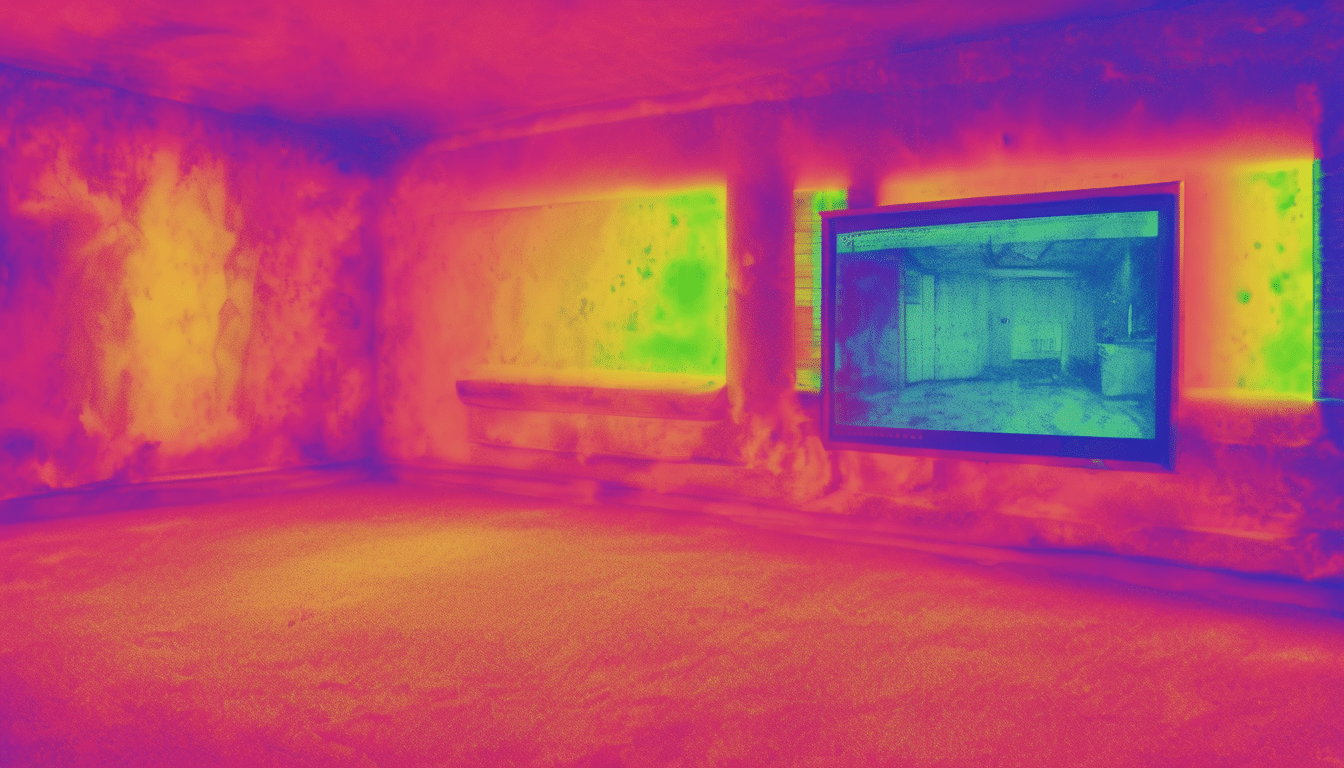
Understanding thermal imaging’s role in detecting mold behind walls and ceilings can help homeowners and professionals alike make informed decisions during inspections and remediation processes. This guide will explore key aspects of thermal imaging, from its fundamental principles to practical applications in identifying hidden moisture and mold.
Table of Contents
Understanding Thermal Imaging for Detecting Mold Behind Walls and Ceilings
Thermal imaging, also known as thermography or infrared (IR) scanning, is a non-invasive technique that captures thermal radiation emitted by objects. By analyzing temperature variations within materials, it can reveal hidden moisture and potential mold growth areas behind walls and ceilings. This method is particularly useful in environments like Dubai, where high humidity and air conditioning create ideal conditions for mold proliferation.
Key Principles of Thermal Imaging
Thermal imaging works on the principle that moisture-damaged building materials typically absorb more heat than dry ones, leading to temperature differences. These variations can be visualized as thermal signatures, allowing inspectors to pinpoint areas at risk or already affected by mold growth.
Thermal Imaging For Detecting Mold Behind Walls And Ceilings – Choosing the Right Thermal Imager for Your Needs
Selecting an appropriate thermal imager is crucial for accurate mold detection. Key factors include resolution, sensitivity, and ease of use.
Resolution and Sensitivity
Higher resolutions (e.g., 640×480 or higher) provide more detailed images, while greater sensitivity (measured in millidegrees Celsius [mK]) allows for finer temperature differentiation. For mold detection, a minimum resolution of 1280×1024 and high sensitivity (less than 50 mK) are recommended.
Ease of Use
Consider the user interface, battery life, and included software. Opt for models with intuitive controls, long-lasting batteries, and analysis tools that can help interpret results accurately.
Thermal Imaging For Detecting Mold Behind Walls And Ceilings – Operating Thermal Imaging Properly: Techniques and Best Prac
Proper operation is essential to ensure reliable thermal imaging data.
Environmental Conditions
Conduct scans during cooler times of the day when temperature fluctuations are minimal. Avoid direct sunlight or reflections from surfaces that could skew results.
Calibration
Regularly calibrate your imager using a blackbody reference source to maintain accuracy over time.
Common Mistakes to Avoid with Thermal Imaging
Several pitfalls can undermine the effectiveness of thermal imaging in mold detection. Identifying and avoiding these is crucial for accurate assessments.
Ignoring Moisture Content
Moisture content alone does not necessarily indicate active mold growth. It’s essential to correlate moisture readings with other diagnostic methods like microbial testing or visual inspections.
Focusing Solely on Temperature Differences
Temperature variations can be misleading if not interpreted correctly. Always cross-reference thermal data with other evidence, such as color changes in materials or visible signs of dampness.
Professional vs DIY Thermal Imaging for Mold Inspection
While DIY thermal imaging can be useful for initial assessments, professional-grade equipment and expertise are often necessary for comprehensive mold detection.
Advantages of Professional Equipment
High-end models offer higher resolution, better sensitivity, and advanced analysis features. Professionals also have the training to interpret results accurately and integrate them with other diagnostic methods.
DIY Limitations
DIY tools may lack the necessary accuracy and depth of analysis needed for thorough mold inspections. They can also be less reliable in environments like Dubai’s high-humidity conditions.
Case Studies of Successful Thermographic Mold Detection
Real-world examples highlight thermal imaging’s effectiveness in identifying hidden mold growth.
Example 1: Hidden Mold Behind Drywall in a Dubai High-Rise
In an investigation, a thermal imager revealed moisture hotspots behind the drywall that were not visible to the naked eye. Further microbial testing confirmed active mold growth, allowing for targeted remediation efforts.
Example 2: Moisture Mapping in a Condominium Building
A comprehensive scan of a condominium building identified several areas with elevated temperatures indicating moisture issues. These locations were then inspected visually and tested microbiologically, leading to successful mold removal.
Expert Tips for Effective Thermal Imaging
To maximize the effectiveness of thermal imaging in detecting hidden mold:
Integrate with Other Diagnostic Methods
Combine thermal imaging with other tools like moisture meters, air sampling, and microbial testing to build a comprehensive picture.
Document Findings Thoroughly
Maintain detailed records of your scans, including timestamps, environmental conditions, and any remediation actions taken. This documentation is crucial for compliance and future reference.
Regularly Update Your Equipment
Keep your thermal imager calibrated and up-to-date with the latest firmware to ensure optimal performance.
CONCLUSION
In conclusion, thermal imaging plays a vital role in detecting hidden mold behind walls and ceilings, particularly in environments like Dubai. By understanding its principles, choosing appropriate equipment, operating it correctly, avoiding common mistakes, and integrating it with other diagnostic methods, professionals can achieve accurate and reliable results. Regular updates and documentation ensure that the technology remains effective over time.