
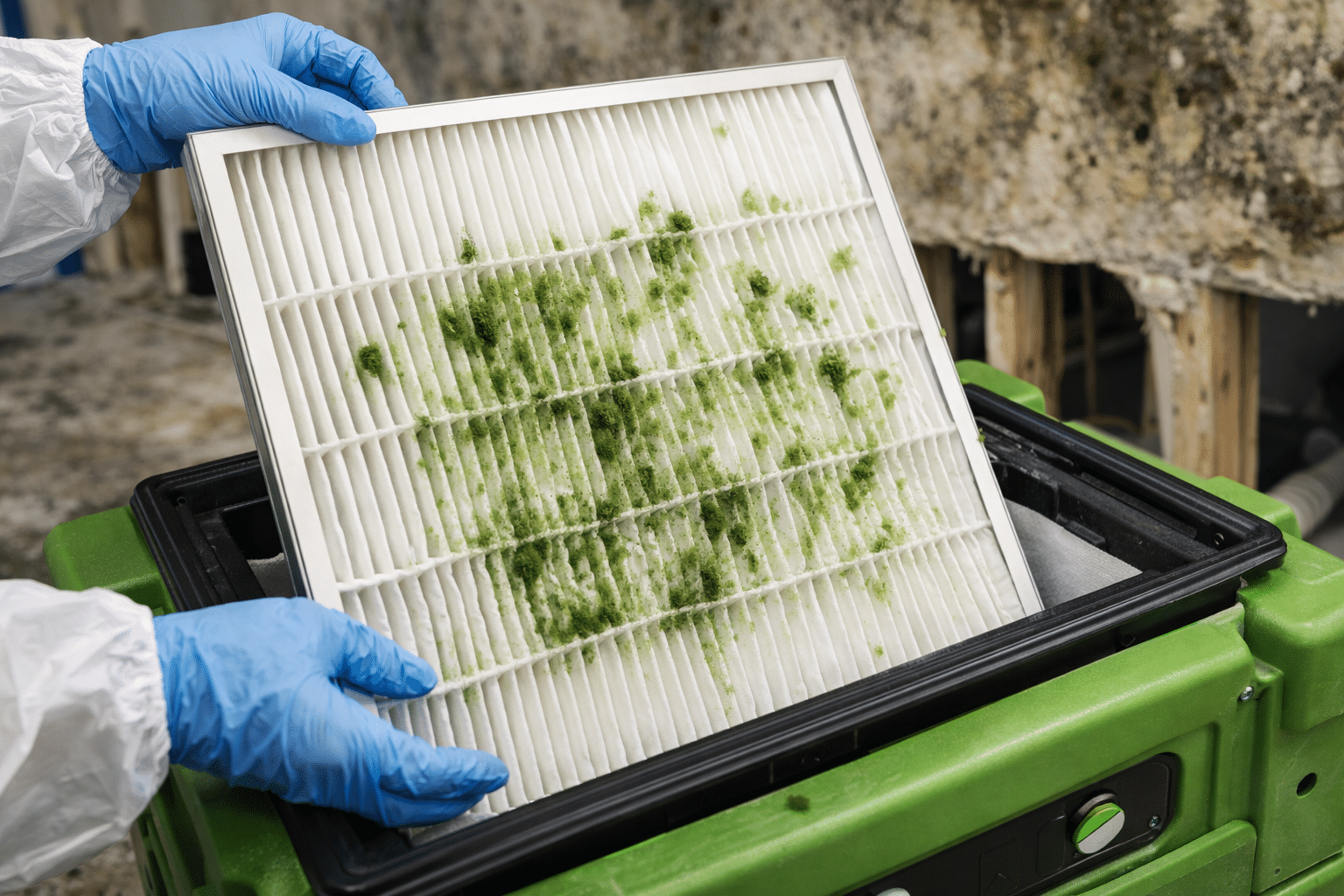
HEPA filter efficiency in mold remediation jobs is critical for Dubai properties facing humidity challenges. Understanding filter performance, proper placement, and maintenance ensures safe and effective mold removal. This complete guide reveals 7 essential tips for maximizing HEPA filter efficiency in mold remediation jobs across Dubai.
Table of Contents
- Introduction to HEPA Filter Efficiency in Mold Remediation Jobs
- What Are HEPA Filters for Dubai Properties
- Understanding Filter Efficiency in Mold Remediation Jobs
- Best HEPA Air Scrubbers in Mold Remediation Jobs
- Proper Placement for Maximum Efficiency
- Operational Costs in Mold Remediation Jobs
- How Long to Run Air Scrubbers After Remediation
- Expert Tips for Filter Efficiency in Mold Remediation Jobs
- Frequently Asked Questions
- Conclusion on HEPA Filter Efficiency
Introduction to HEPA Filter Efficiency in Mold Remediation Jobs
High-efficiency particulate air (HEPA) filters are a cornerstone in mold remediation jobs in Dubai. These specialized filters can capture particles as small as 0.3 microns, making them highly effective at removing airborne mold spores and other contaminants. Understanding HEPA filter efficiency in mold remediation jobs is crucial for ensuring that work is conducted effectively and safely in Dubai properties.
What Are HEPA Filters for Dubai Properties
HEPA filters are designed to capture 99.97% of airborne particles measuring 0.3 microns or larger. These filters consist of a layer of fine fiberglass filaments that trap contaminants through mechanical and electrostatic forces. In mold remediation jobs in Dubai, HEPA filters are used in air scrubbers and containment systems to prevent the spread of mold spores.
Understanding Filter Efficiency in Mold Remediation Jobs
During mold remediation jobs in Dubai, HEPA filters play a dual role: capturing airborne contaminants and preventing their reinfiltration. Their efficiency is critical for ensuring that air quality inside containment areas remains clean and safe.
Filter Efficiency Measurement
HEPA filter efficiency in mold remediation jobs is measured according to specific standards, with the most common being the ANSI/ASHRAE 52.1-2017 standard. This defines how filters are tested and classified based on their ability to remove particles of various sizes.
Best HEPA Air Scrubbers in Mold Remediation Jobs
Choosing the right air scrubber is crucial for mold remediation jobs in Dubai. Several factors influence effectiveness, including filter type, airflow rate, and placement within the containment area.
Filter Type
Beyond HEPA filters, some air scrubbers also incorporate activated carbon filters to remove volatile organic compounds (VOCs) and odors. These dual-filter systems can provide comprehensive air purification in mold remediation jobs in Dubai.
Proper Placement for Maximum Efficiency
The placement of HEPA air scrubbers is critical to their effectiveness in mold remediation jobs in Dubai. Proper positioning ensures they capture as many airborne particles as possible, reducing cross-contamination and reinfiltration risks.
Placement Strategies
- Near sources: Place air scrubbers near moldy areas to capture contaminants before they disperse into the broader environment.
- Downwind placement: Position air scrubbers downwind of containment areas to maintain pressure differential and ensure proper airflow.
- Around perimeters: Place air scrubbers around the perimeter of affected areas to create a barrier against airborne particles.
Operational Costs in Mold Remediation Jobs
The operational costs of using HEPA air scrubbers in mold remediation jobs in Dubai can vary based on several factors, including filter replacement frequency and energy consumption. Understanding these costs is essential for budgeting and planning projects.
Filter Replacement Frequency
HEPA filters must be replaced regularly to maintain efficiency in mold remediation jobs. The exact frequency depends on contamination amount, airflow rate, and duration of use. On average, HEPA filters should be replaced every 6-12 months or when showing signs of clogging.
Energy Consumption
HEPA air scrubbers consume energy due to their powerful fans and filtration systems. While initial costs may be higher, long-term savings can be achieved through energy-efficient models and proper maintenance in Dubai properties.
How Long to Run Air Scrubbers After Remediation
Running HEPA air scrubbers after mold remediation jobs in Dubai is crucial for ensuring all airborne contaminants are removed. The duration depends on contamination level and remediation process effectiveness.
Post-Remediation Cleaning
After mold remediation jobs in Dubai, continue running HEPA air scrubbers for at least 72 hours to ensure all residual spores are captured. This period can be extended if there is high contamination or complex ventilation systems.
Expert Tips for Filter Efficiency in Mold Remediation Jobs
To enhance HEPA filter efficiency in mold remediation jobs in Dubai, follow these expert tips:
- Select the right size air scrubber: Ensure the air scrubber can handle the air volume in the containment area.
- Clean and maintain filters regularly: Regularly check and clean HEPA filters to ensure they remain effective.
- Use multiple air scrubbers: In large Dubai properties, using multiple air scrubbers can improve overall capture rates.
- Monitor airflow: Use airflow meters to verify adequate coverage throughout the containment area.
- Follow manufacturer guidelines: Adhere to manufacturer’s recommendations for filter replacement and maintenance.
Frequently Asked Questions
Q: Do I need to use HEPA air scrubbers for all mold remediation jobs in Dubai?
A: In most cases, yes. HEPA air scrubbers are essential for capturing airborne contaminants and maintaining clean indoor air quality in Dubai properties.
Q: How often should I replace HEPA filters during mold remediation jobs?
A: Filters should be replaced every 6-12 months or when showing signs of clogging. Regular replacement is crucial for maintaining efficiency in Dubai’s environment.
Q: Can HEPA air scrubbers reduce the risk of mold recurrence in Dubai?
A: Yes, by capturing airborne spores and preventing their reinfiltration, HEPA air scrubbers can help reduce mold recurrence risk. However, long-term solutions like addressing moisture issues are also necessary in Dubai’s humid climate.
Conclusion on HEPA Filter Efficiency
HEPA filters play a vital role in effective mold remediation jobs in Dubai by capturing airborne contaminants and preventing their reinfiltration. By understanding their efficiency, proper placement, and operational costs, you can ensure that mold remediation jobs in Dubai are conducted safely and effectively.