
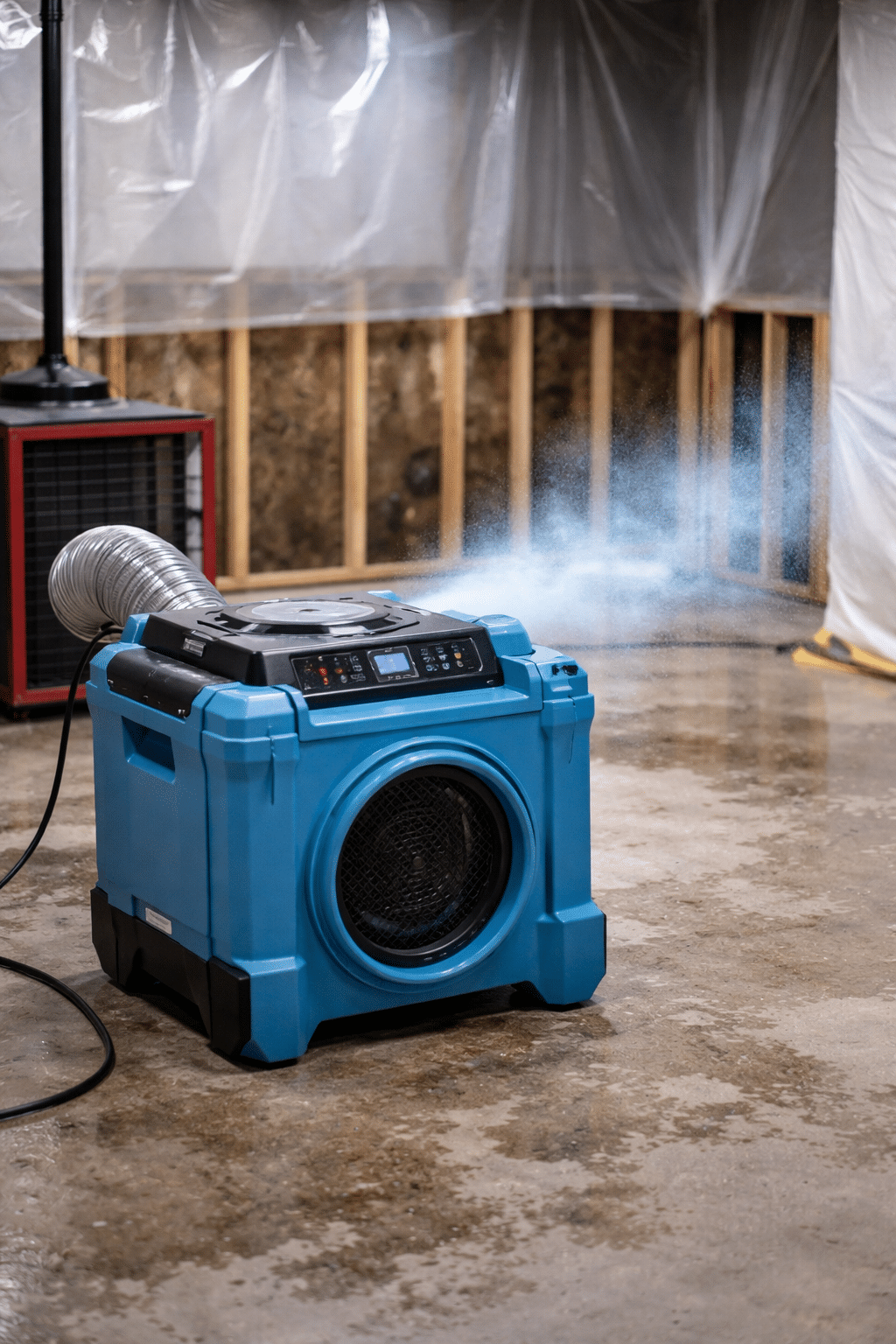
Running an air scrubber after mold remediation is critical for Dubai properties. Understanding operation duration, placement, and costs ensures complete spore removal and safe indoor environments. This complete guide reveals 11 essential tips for air scrubber after mold remediation in Dubai homes and commercial buildings.
Table of Contents
- Understanding Air Scrubber After Mold Remediation
- Factors Affecting Operating Duration in Dubai
- Cost Breakdown of Air Scrubber Operation
- Best HEPA Filter Efficiency
- Proper Placement for Maximum Effectiveness
- Operational Costs in Dubai
- Expert Tips for Running Air Scrubber Effectively
- Frequently Asked Questions
- Conclusion on Air Scrubber Usage
Understanding Air Scrubber After Mold Remediation
After a thorough mold remediation process in Dubai, the next critical step is ensuring that airborne spores are minimized. An air scrubber after mold remediation can be an effective tool for this purpose, but how long should it run? This guide provides clarity on this question and helps you make informed decisions for Dubai properties.
Factors Affecting Operating Duration in Dubai
The duration for running an air scrubber after mold remediation depends on several factors. These include the size of the affected area, the type and extent of mold contamination, and the desired level of air quality in Dubai properties.
Area Size
Larger areas in Dubai villas and commercial buildings generally require longer operation times to ensure all airborne spores are captured effectively by the air scrubber after mold remediation.
Mold Contamination Type
Different types of molds have varying release rates. For instance, fast-growing species may produce more spores in a shorter period than slower-growing ones in Dubai’s humid climate.
Air Quality Standards
Higher standards demand extended operation times for air scrubber after mold remediation to ensure that air quality meets regulatory and health guidelines in UAE properties.
Cost Breakdown of Air Scrubber Operation
The cost of operating an air scrubber after mold remediation can vary significantly based on several factors. These include the type of air scrubber, energy consumption, maintenance requirements, and any additional services needed in Dubai.
Type of Air Scrubber
HEPA (High-Efficiency Particulate Air) filters are commonly used in air scrubber after mold remediation. The efficiency level of these filters can influence the cost per unit of air processed, with higher-efficiency models costing more.
Energy Consumption
The energy consumption of an air scrubber after mold remediation is directly proportional to its operating time and power output. More powerful units consume more electricity, increasing overall costs in Dubai.
Best HEPA Filter Efficiency
HEPA filters are the gold standard for air scrubber after mold remediation. They capture particles as small as 0.3 microns, effectively removing mold spores and other allergens from the air in Dubai properties.
Filter Rating
Look for HEPA filters with a MERV (Minimum Efficiency Reporting Value) rating of at least 16. This ensures high efficiency in capturing airborne contaminants during air scrubber after mold remediation.
Airflow Rate
The airflow rate should match the size of the Dubai space being treated. For example, a 50 m³/h filter is suitable for a small room, while larger spaces require higher flow rates.
Proper Placement for Maximum Effectiveness
The placement of air scrubber after mold remediation significantly impacts their effectiveness in Dubai properties. Here are some key considerations:
Proximity to Source
Place the air scrubber after mold remediation as close as possible to the source of mold contamination. This minimizes the distance airborne spores travel before they are captured, improving efficiency.
Airflow Patterns
Ensure that airflow patterns in Dubai rooms promote circulation. For example, placing the unit near an open window or door can help draw contaminated air towards it more effectively.
Operational Costs in Dubai
The operational costs of using an air scrubber after mold remediation can be substantial, but they are essential for ensuring complete removal of mold spores in Dubai properties. Here’s what you need to consider:
Power Consumption
High-efficiency HEPA filters require more power than standard models, leading to higher electricity bills in Dubai.
Pricing Example: A 50 m³/h HEPA air scrubber might consume around 1.2 kW per hour, costing AED 0.60 per hour at a typical UAE rate of AED 0.48 per kilowatt-hour (kWh).
Maintenance Costs
Regular maintenance is necessary to keep the air scrubber after mold remediation functioning optimally. This includes filter replacement, cleaning, and periodic checks.
Pricing Example: A single HEPA filter might cost AED 200-400 depending on quality and type. Replacement every six months could add AED 1,200-2,400 annually.
Additional Services
Some units come with additional services such as remote monitoring or advanced filtration technologies that can increase costs in Dubai.
Expert Tips for Running Air Scrubber Effectively
- Run continuously: For best results, operate the air scrubber after mold remediation throughout the day and night until air quality meets Dubai standards.
- Monitor indoor air quality: Use air quality monitors to track progress and ensure that spore levels are decreasing over time in Dubai properties.
- Replace filters regularly: Follow manufacturer guidelines for filter replacement, as old or clogged filters can reduce efficiency.
- Ensure proper placement: Place units in strategic locations to optimize airflow and capture airborne spores effectively in Dubai buildings.
Frequently Asked Questions
Q: How long should I run an air scrubber after mold remediation in Dubai?
A: The duration varies, but typically runs from a few days to several weeks. Monitor indoor air quality and adjust as needed for Dubai properties.
Q: Is it necessary to use an air scrubber after mold remediation in every case?
A: While not always required, air scrubber after mold remediation is highly recommended for larger or more severe contamination cases in Dubai.
Q: Can I reuse the HEPA filters after cleaning them?
A: It is generally not advisable due to potential recontamination. However, some high-quality filters can be cleaned and reused under strict conditions.
Conclusion on Air Scrubber Usage
Running an air scrubber after mold remediation is a critical step in ensuring long-term health and safety in Dubai properties. By understanding the factors affecting operating duration and operational costs, you can make informed decisions that protect your indoor environment effectively. Always prioritize the well-being of occupants by maintaining high standards of air quality.