
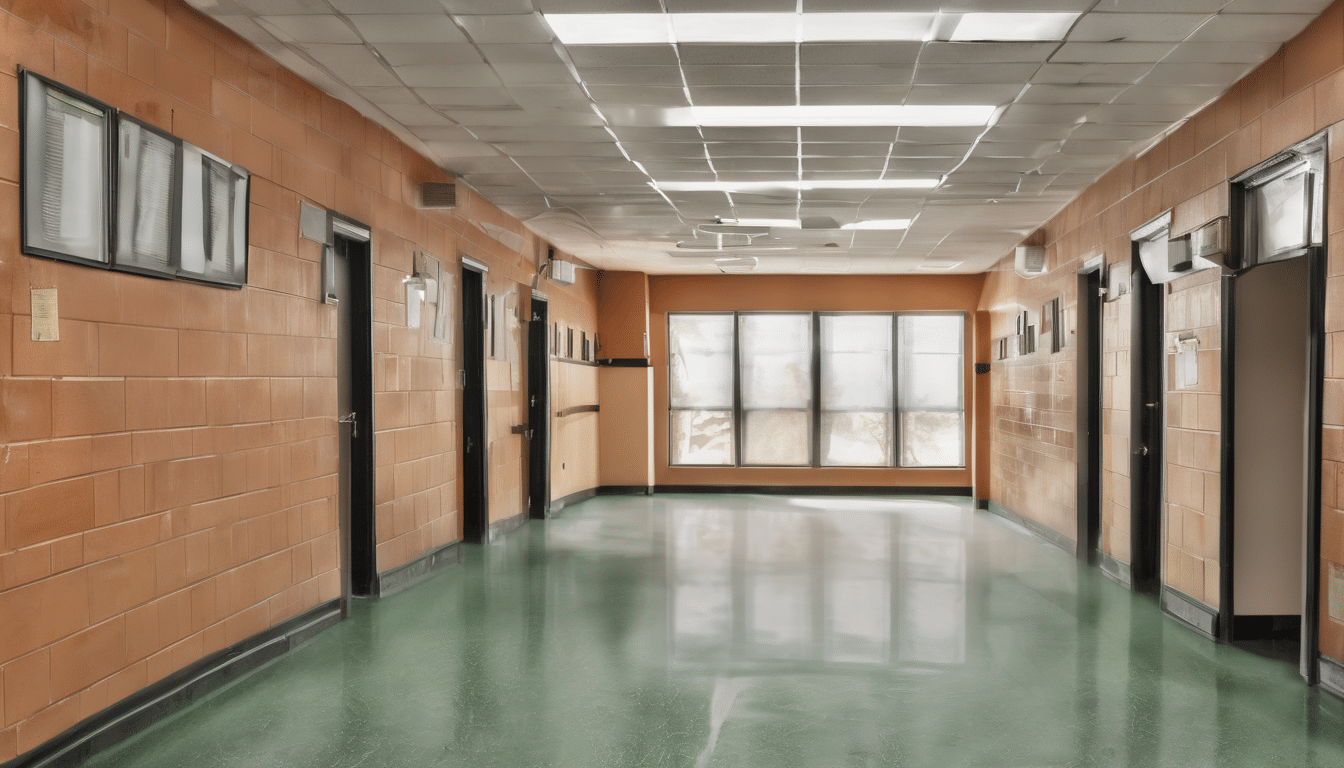
Understanding Mold Remediation in Schools And Commercial Buildings Guide is essential. Mold remediation in schools and commercial buildings represents one of the most critical indoor environmental challenges facing facility managers in the UAE. The combination of high occupancy, complex building systems, and the region’s humid climate creates ideal conditions for mold growth when moisture control fails. Proper mold remediation in schools and commercial buildings requires specialised protocols that address both immediate contamination and underlying moisture issues.
This comprehensive guide to mold remediation in schools and commercial buildings covers the scientific principles, practical protocols, and regulatory considerations that define professional remediation. Whether you’re managing a Dubai school, an Abu Dhabi office complex, or a Sharjah retail centre, understanding proper mold remediation in schools and commercial buildings is essential for maintaining healthy indoor environments and protecting occupant health. This relates directly to Mold Remediation In Schools And Commercial Buildings Guide.
Mold Remediation In Schools And Commercial Buildings Guide – Understanding Mold Remediation in Schools and Commercial Bui
Mold remediation in schools and commercial buildings differs significantly from residential projects due to scale, occupancy patterns, and regulatory requirements. Educational facilities present unique challenges with high occupant density, varied room usage, and sensitive populations. Commercial buildings often feature complex hvac systems, multiple tenant spaces, and business continuity concerns that must be addressed during remediation. When considering Mold Remediation In Schools And Commercial Buildings Guide, this becomes clear.
The fundamental principle of mold remediation in schools and commercial buildings is that mold growth indicates moisture intrusion or accumulation. Successful remediation requires identifying and correcting the moisture source before addressing visible growth. In UAE facilities, common moisture sources include condensation on cold surfaces, plumbing leaks, roof leaks, and humidity from improperly maintained air conditioning systems.
Professional mold remediation in schools and commercial buildings follows a systematic approach: assessment, containment, removal, cleaning, and verification. Each phase must be documented thoroughly, particularly in educational settings where parent and regulatory scrutiny is high. The goal is not merely to remove visible mold but to restore the building to a condition where mold growth will not recur under normal operating conditions. The importance of Mold Remediation In Schools And Commercial Buildings Guide is evident here.
Mold Remediation In Schools And Commercial Buildings Guide – Health Impacts on Students and Occupants
The health implications of mold exposure make proper mold remediation in schools and commercial buildings particularly critical. Children, elderly individuals, and those with respiratory conditions or compromised immune systems are most vulnerable to mold-related health effects. In school environments, mold exposure has been linked to increased asthma symptoms, allergic reactions, and respiratory infections among students and staff.
Commercial building occupants may experience headaches, fatigue, respiratory irritation, and worsening of allergy symptoms when exposed to mold spores. These health effects can lead to decreased productivity, increased absenteeism, and potential liability issues for building owners and facility managers. The psychological impact of visible mold in educational or workplace environments should not be underestimated, as it can create anxiety and reduce confidence in the facility’s management. Understanding Mold Remediation In Schools And Commercial Buildings Guide helps with this aspect.
Professional mold remediation in schools and commercial buildings addresses both the visible contamination and airborne spore levels to protect occupant health. Proper containment during remediation prevents cross-contamination to unaffected areas, while HEPA filtration reduces airborne spore concentrations during removal activities. Post-remediation verification ensures that spore levels have returned to normal background levels before reoccupancy.
Mold Remediation In Schools And Commercial Buildings Guide – Professional Mold Investigation Protocols
Thorough investigation precedes all professional mold remediation in schools and commercial buildings. The investigation phase identifies the extent of contamination, determines moisture sources, and develops appropriate remediation strategies. In large facilities, this often requires accessing ceiling voids, crawl spaces, mechanical rooms, and other areas not routinely inspected. Mold Remediation In Schools And Commercial Buildings Guide factors into this consideration.
Visual inspection remains the cornerstone of mold investigation, but technological tools enhance detection capabilities. Moisture meters identify elevated moisture levels in building materials before visible mold appears. Thermal imaging cameras detect temperature variations that indicate hidden moisture problems, condensation issues, or thermal bridging that promotes mold growth. Borescopes allow inspection inside walls and other concealed spaces without destructive testing.
Air and surface sampling provide scientific data to support visual findings during mold remediation in schools and commercial buildings. Air sampling measures spore concentrations in affected and control areas, while surface sampling identifies specific mold species present. Laboratory analysis helps determine appropriate remediation methods and personal protective equipment requirements based on the types and concentrations of mold present. This relates directly to Mold Remediation In Schools And Commercial Buildings Guide.
Containment and Engineering Controls
Effective containment is essential for successful mold remediation in schools and commercial buildings. Containment prevents the spread of mold spores to unaffected areas during remediation activities, protecting both occupants and workers. The complexity of containment increases with the scale of remediation and the building’s occupancy patterns.
Negative air pressure containment systems create air pressure differentials that prevent spore migration from the work area. HEPA-filtered air scrubbers capture airborne spores and maintain negative pressure within containment barriers. Physical barriers constructed from plastic sheeting separate remediation areas from occupied spaces, with airtight seals around penetrations and entry points. When considering Mold Remediation In Schools And Commercial Buildings Guide, this becomes clear.
For extensive mold remediation in schools and commercial buildings, multi-chamber containment systems may be necessary. These include clean rooms for equipment and material storage, airlocks for personnel entry and exit, and decontamination chambers. The specific containment strategy depends on the project size, location within the building, and proximity to sensitive areas like classrooms or medical facilities.
Material Removal and Cleaning Procedures
Material selection and condition determine appropriate remediation methods during mold remediation in schools and commercial buildings. Porous materials like drywall, insulation, and ceiling tiles that show extensive mold growth typically require removal and disposal. These materials cannot be effectively cleaned because mold penetrates deep into their structure. The importance of Mold Remediation In Schools And Commercial Buildings Guide is evident here.
Non-porous materials like metal, glass, and plastic can often be cleaned and reused if structurally sound. Semi-porous materials like wood require careful evaluation – surface mold can be removed, but deeply embedded growth may necessitate replacement. The decision to clean or remove materials balances effectiveness, cost, and potential for future mold growth.
Cleaning procedures for mold remediation in schools and commercial buildings include HEPA vacuuming to remove loose spores, damp wiping with appropriate cleaning solutions, and antimicrobial applications where justified. All cleaning methods must be followed by HEPA vacuuming to capture dislodged spores. The choice of cleaning agents considers material compatibility, effectiveness against specific mold types, and potential health impacts on future occupants. Understanding Mold Remediation In Schools And Commercial Buildings Guide helps with this aspect.
HVAC System Mold Remediation
HVAC systems present particular challenges during mold remediation in schools and commercial buildings. These systems can distribute mold spores throughout a facility and often contain ideal environments for mold growth – moisture, organic material (dust), and darkness. HVAC remediation requires specialised techniques to prevent system recontamination after building remediation.
Duct cleaning for mold remediation in schools and commercial buildings involves mechanical agitation to dislodge contamination, followed by HEPA vacuum collection. Access doors may need installation to reach all duct sections, particularly in large commercial systems. Coils, drain pans, and plenums require thorough cleaning and treatment to prevent future mold growth. Mold Remediation In Schools And Commercial Buildings Guide factors into this consideration.
After HVAC remediation, preventive measures include maintaining proper humidity control, ensuring adequate drainage from cooling coils, implementing regular filter maintenance, and considering ultraviolet light systems for continuous air treatment. These measures are particularly important in UAE climates where air conditioning operates continuously for much of the year.
Post-Remediation Verification Testing
Verification testing provides objective evidence that mold remediation in schools and commercial buildings has been successful. This phase should be conducted by qualified professionals independent of the remediation contractor to avoid conflicts of interest. Verification typically includes visual inspection, moisture measurement, and air quality testing. This relates directly to Mold Remediation In Schools And Commercial Buildings Guide.
Visual verification confirms that all visible mold has been removed, all surfaces are free of dust and debris, and no moisture problems remain. Moisture meters verify that building materials have returned to normal moisture levels, typically below 16% for wood and drywall. These measurements help ensure that conditions no longer support mold growth.
Air testing compares spore concentrations in remediated areas with outdoor levels and unaffected indoor areas. Successful mold remediation in schools and commercial buildings should result in indoor spore levels that are similar to or lower than outdoor levels, with similar species composition. Verification documentation provides assurance to occupants, parents, and regulators that the facility is safe for reoccupancy. When considering Mold Remediation In Schools And Commercial Buildings Guide, this becomes clear.
Prevention and Maintenance Strategies
Preventing recurrence is the ultimate goal of mold remediation in schools and commercial buildings. Prevention strategies address the moisture sources that enabled initial mold growth through building improvements, maintenance protocols, and monitoring systems. These measures protect the investment in remediation and maintain healthy indoor environments.
Building envelope improvements may include repairing roof leaks, improving drainage systems, sealing penetrations, and addressing condensation issues through insulation or vapour barriers. Interior measures focus on humidity control, prompt repair of plumbing leaks, and proper maintenance of HVAC systems. Regular inspections identify potential problems before they develop into major issues. The importance of Mold Remediation In Schools And Commercial Buildings Guide is evident here.
Maintenance protocols for mold prevention include regular HVAC servicing, immediate response to water incidents, routine moisture monitoring in problem areas, and staff training to recognise early signs of moisture problems. In educational facilities, maintenance staff should be trained to identify and report potential moisture issues promptly rather than attempting temporary fixes that may allow hidden mold growth.
Regulatory Compliance in UAE
Mold remediation in schools and commercial buildings must comply with UAE regulations and guidelines, though specific mold regulations are still developing. Relevant frameworks include occupational health and safety requirements, building codes, and environmental regulations. Dubai Municipality and other local authorities provide guidelines for indoor air quality and building maintenance. Understanding Mold Remediation In Schools And Commercial Buildings Guide helps with this aspect.
Educational facilities face additional scrutiny from regulatory bodies like the Knowledge and Human Development Authority (KHDA) in Dubai, which oversees school facilities and environmental conditions. Commercial buildings must comply with occupational health standards set by the Ministry of Human Resources and Emiratisation. Both sectors should follow international best practices from organisations like the EPA, WHO, and IICRC.
Documentation is critical for regulatory compliance in mold remediation in schools and commercial buildings. Records should include investigation reports, remediation protocols, safety plans, waste disposal documentation, and verification testing results. This documentation demonstrates due diligence and provides evidence of proper procedures if regulatory questions arise. Mold Remediation In Schools And Commercial Buildings Guide factors into this consideration.
Selecting a Qualified Remediation Contractor
Choosing the right contractor is crucial for successful mold remediation in schools and commercial buildings. Qualifications to evaluate include relevant certifications, experience with similar projects, proper insurance coverage, and knowledge of UAE building practices and climate considerations. The selected contractor should provide a detailed remediation plan before work begins.
Certifications to look for include IICRC mould remediation certification, which demonstrates training in industry standards. Experience with educational or commercial facilities is particularly valuable, as these projects involve complex logistics, communication requirements, and regulatory considerations. Contractors should carry adequate liability insurance and workers’ compensation coverage. This relates directly to Mold Remediation In Schools And Commercial Buildings Guide.
The remediation plan should detail containment strategies, removal methods, cleaning procedures, waste disposal plans, safety protocols, and verification methods. For mold remediation in schools and commercial buildings, the plan should also address business continuity, communication with occupants, and minimising disruption to normal operations. The contractor should provide references from similar projects and be willing to answer technical questions about their proposed methods.
Expert Mold Remediation Tips
Based on two decades of field experience with mold remediation in schools and commercial buildings, these expert tips can improve outcomes and prevent common mistakes: When considering Mold Remediation In Schools And Commercial Buildings Guide, this becomes clear.
- Always investigate moisture sources before beginning remediation – treating visible mold without addressing underlying moisture guarantees recurrence
- Implement containment before disturbing mold colonies – prevention of cross-contamination is more effective than cleaning contaminated areas later
- Use professional-grade HEPA filtration – consumer-grade vacuums and air purifiers lack the containment and filtration capacity for commercial remediation
- Document every phase thoroughly – photographs, moisture readings, and air sample results provide objective evidence of proper procedures
- Communicate proactively with occupants – transparency about remediation plans and progress reduces anxiety and builds trust
- Plan for verification testing before beginning remediation – knowing how success will be measured guides appropriate remediation methods
- Consider hidden spaces – mold often grows in ceiling voids, wall cavities, and mechanical spaces that aren’t routinely inspected
- Budget for prevention measures – the true cost of remediation includes fixes that prevent recurrence, not just removal of existing growth
Frequently Asked Questions
How long does mold remediation typically take in commercial buildings?
The duration of mold remediation in schools and commercial buildings varies significantly based on the extent of contamination, building size, and accessibility issues. Small, contained projects may take 3-5 days, while extensive remediation in large facilities can require 2-3 weeks. The investigation and verification phases add additional time before and after active remediation.
Can classrooms or offices remain occupied during remediation?
Occupancy during mold remediation in schools and commercial buildings depends on the project scope and containment effectiveness. Small, well-contained projects may allow continued occupancy with proper barriers and air filtration. Extensive remediation typically requires temporary relocation to protect occupant health and allow thorough work. The decision should be based on professional assessment of exposure risks. The importance of Mold Remediation In Schools And Commercial Buildings Guide is evident here.
What costs should we expect for commercial mold remediation?
Costs for mold remediation in schools and commercial buildings range from AED 15,000 for small contained areas to AED 150,000+ for extensive contamination in large facilities. Factors affecting cost include contamination extent, accessibility, required containment, material replacement needs, and HVAC system involvement. Prevention measures and building repairs add to the total project cost but represent essential investments against recurrence.
How often should schools conduct mold inspections?
Educational facilities should incorporate mold inspection into regular maintenance schedules, with formal inspections at least annually. Additional inspections should follow water incidents, roof leaks, or HVAC problems. Areas with historical moisture issues may require more frequent monitoring. Proactive inspection identifies problems early, reducing remediation costs and minimising health impacts. Understanding Mold Remediation In Schools And Commercial Buildings Guide helps with this aspect.
Are there specific regulations for mold in UAE schools?
While UAE lacks specific mold regulations, educational facilities must maintain healthy environments under various regulatory frameworks. Dubai’s KHDA includes environmental health in school inspection protocols. International schools often follow home country guidelines, while all facilities should implement best practices from organisations like WHO and EPA. Documentation of proper maintenance and remediation practices demonstrates regulatory compliance.
Proper mold remediation in schools and commercial buildings requires a systematic, science-based approach that addresses both visible contamination and underlying moisture issues. By following professional protocols, implementing appropriate containment, conducting thorough verification, and establishing preventive maintenance, facility managers can protect occupant health and preserve building integrity. The investment in proper remediation pays dividends through reduced health complaints, lower absenteeism, and avoided future remediation costs. Understanding Mold Remediation In Schools And Commercial Buildings Guide is key to success in this area.