
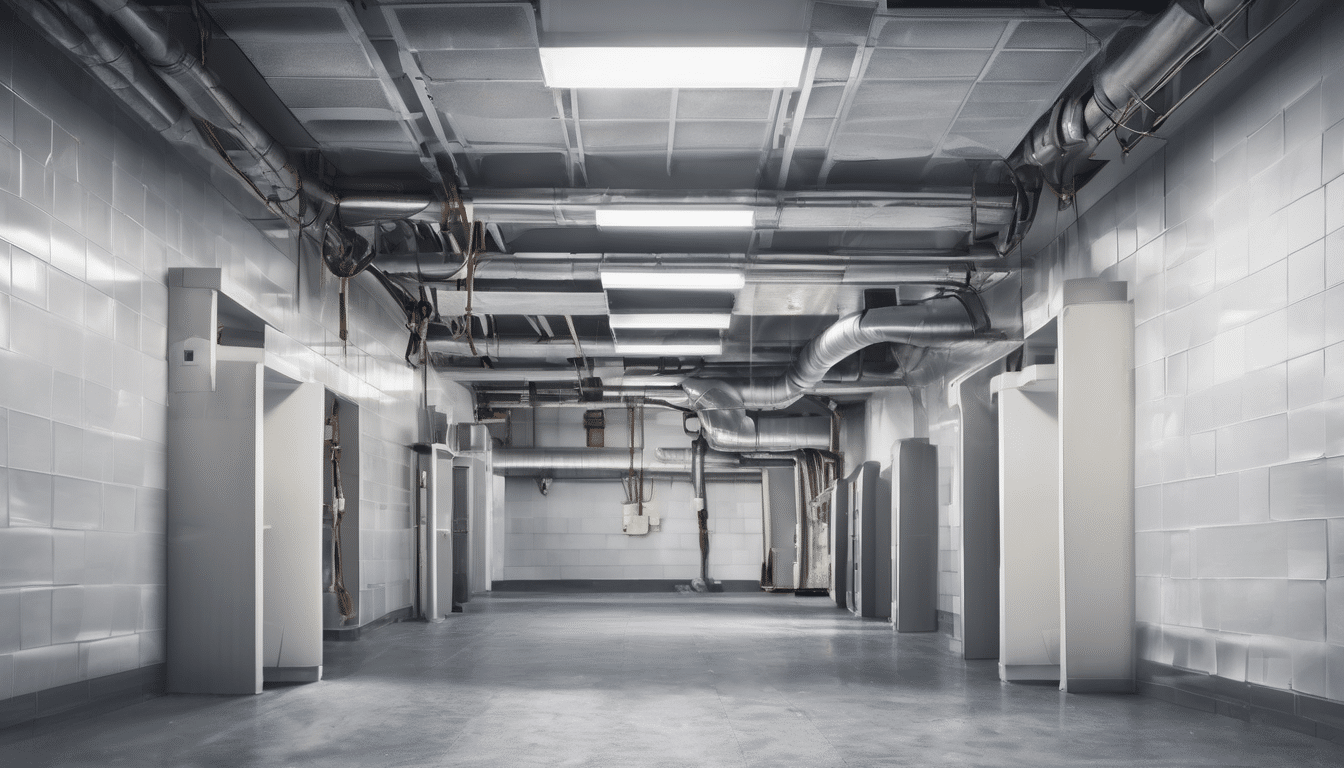
HVAC Mold Remediation in commercial buildings presents unique challenges that demand specialised protocols and expertise. Unlike residential systems, commercial HVAC systems in Dubai and across the UAE serve larger spaces, have complex ductwork configurations, and often operate continuously in our challenging climate. When mold contaminates these systems, it can rapidly spread throughout entire buildings, affecting air quality, occupant health, and business operations.
The process of HVAC mold remediation in commercial buildings requires a systematic approach that addresses both visible contamination and hidden growth within ductwork, coils, and plenums. In Dubai’s humid environment, where air conditioning runs year-round, moisture accumulation in HVAC systems creates ideal conditions for mold proliferation if not properly managed. This makes professional HVAC mold remediation in commercial buildings particularly critical for maintaining healthy indoor environments.
This comprehensive guide outlines 9 essential steps for effective HVAC mold remediation in commercial buildings, drawing from two decades of field experience in the UAE market. Each step addresses the specific challenges of large-scale systems, Dubai’s climate considerations, and the regulatory environment governing commercial properties in the region.
Understanding HVAC Mold Remediation in Commercial Buildings
HVAC mold remediation in commercial buildings involves the systematic removal, cleaning, and restoration of heating, ventilation, and air conditioning systems contaminated with microbial growth. Unlike surface mold remediation, this process requires specialised equipment and techniques to address contamination within complex ductwork, air handling units, and ventilation components. In commercial settings, the scale and complexity of HVAC systems demand careful planning and execution to prevent cross-contamination throughout the building.
The unique challenges of HVAC mold remediation in commercial buildings include accessing hard-to-reach ductwork, managing large air volumes, and minimising business disruption. Proper HVAC mold remediation in commercial buildings must address both visible growth and hidden contamination that can linger in insulation, coils, and drain pans. The process typically involves containment procedures, HEPA filtration, antimicrobial treatments, and thorough verification testing to ensure complete removal.
In Dubai’s commercial properties, HVAC mold remediation requires particular attention to the local climate conditions. The combination of high outdoor humidity and continuous air conditioning operation creates condensation issues that can lead to recurrent mold problems if not properly addressed. Effective HVAC mold remediation in commercial buildings must therefore include moisture control measures and preventive strategies tailored to the UAE environment.
Hvac Mold Remediation In Commercial Buildings – 7 Signs of HVAC Mold Contamination in Commercial Properties
Recognising the early signs of HVAC mold contamination can prevent widespread distribution throughout commercial buildings. The first indicator is often musty odours that seem to originate from ventilation systems rather than specific locations. These odours typically intensify when the HVAC system operates, indicating microbial growth within ductwork or air handling units.
Visible mold growth around vents, diffusers, or air handling units provides clear evidence of contamination. In commercial settings, discolouration around supply vents or moisture accumulation near return air grilles often signals underlying HVAC mold issues. Employees may also report increased allergy symptoms, respiratory irritation, or headaches that improve when leaving the building—a pattern suggesting airborne mold distribution through the ventilation system.
Reduced HVAC efficiency and increased energy consumption can indicate mold-related problems. Microbial growth on coils and within ductwork restricts airflow, forcing systems to work harder to maintain temperature settings. Unusual dust accumulation around vents or visible microbial growth on insulation materials within mechanical rooms also suggests the need for professional HVAC mold remediation in commercial buildings.
Hvac Mold Remediation In Commercial Buildings – Commercial HVAC Mold Remediation Protocols and Standards
Professional HVAC mold remediation in commercial buildings follows established industry protocols to ensure thorough contamination removal. The process begins with comprehensive assessment and testing to determine contamination extent and identify mold species present. This investigation guides the development of a detailed remediation plan specifying containment measures, cleaning methods, and verification procedures.
Containment represents a critical component of HVAC mold remediation in commercial buildings. Negative air pressure containment with HEPA filtration prevents cross-contamination during remediation activities. For large commercial systems, this may involve sectioning off ductwork and creating multiple containment zones to protect unaffected areas of the building. All remediation work should follow established guidelines from organisations such as the National Air Duct Cleaners Association (NADCA) and the Institute of Inspection, Cleaning and Restoration Certification (IICRC).
Documentation throughout the HVAC mold remediation process provides accountability and verifies protocol adherence. Detailed records of containment setup, cleaning methods, waste disposal, and verification testing demonstrate due diligence and help prevent future liability issues. In Dubai’s commercial market, proper documentation also facilitates compliance with local health and safety regulations governing indoor air quality in workplace environments.
Containment Strategies for Large Building HVAC Systems
Effective containment represents the foundation of successful HVAC mold remediation in commercial buildings. For large-scale systems, containment strategies must address the interconnected nature of ventilation networks while minimising business disruption. The first step involves isolating contaminated sections using physical barriers and negative air pressure with HEPA filtration to prevent spore migration.
In multi-story commercial buildings, HVAC mold remediation containment may require floor-by-floor isolation to protect occupied areas. Temporary ventilation solutions might be necessary to maintain air quality in sections not undergoing remediation. For extensive contamination, phased containment approaches allow remediation to proceed while maintaining partial building occupancy, though this requires careful planning and coordination with building management.
Advanced containment techniques for HVAC mold remediation in commercial buildings include creating negative pressure chambers around air handling units and sealing ductwork access points with temporary barriers. All containment systems should be monitored throughout the remediation process to ensure proper negative pressure maintenance. In Dubai’s high-rise commercial properties, these containment strategies must account for stack effect and pressure relationships between floors to prevent cross-contamination.
HVAC Cleaning Methods and Techniques for Mold Removal
HVAC mold remediation in commercial buildings employs various cleaning methods tailored to system components and contamination levels. Mechanical cleaning using brush systems, air whips, and compressed air effectively removes debris and microbial growth from duct interiors. For heavily contaminated systems, vacuum collection with HEPA-filtered units captures dislodged material during cleaning operations.
Air handling units require careful attention during HVAC mold remediation in commercial buildings. Coils, drain pans, and blower assemblies often harbour significant microbial growth that requires specialised cleaning techniques. Antimicrobial treatments may be applied after mechanical cleaning to inhibit future growth, though product selection must consider material compatibility and potential off-gassing concerns in occupied spaces.
Access creation represents a critical aspect of HVAC mold remediation in commercial buildings. Existing access panels often prove insufficient for thorough cleaning, necessitating additional openings at strategic locations. All access points must be properly resealed after remediation to maintain system integrity. The complexity of commercial HVAC systems often requires customised cleaning approaches developed through thorough preliminary investigation and testing.
Preventing Future HVAC Mold Contamination in UAE Climate
Prevention strategies form an essential component of sustainable HVAC mold remediation in commercial buildings, particularly in Dubai’s challenging climate. Moisture control represents the most critical preventive measure, requiring regular inspection of drain pans, condensation removal systems, and humidity control settings. Commercial HVAC systems should maintain relative humidity below 60% to discourage mold growth within ductwork and components.
Routine maintenance schedules help prevent conditions conducive to HVAC mold contamination in commercial buildings. Quarterly inspections of air handling units, monthly filter changes, and annual duct cleaning reduce nutrient sources for microbial growth. In UAE commercial properties, additional attention should focus on outdoor air intakes and economiser systems that can introduce humid air during certain seasons.
Building envelope improvements complement HVAC mold remediation in commercial buildings by reducing moisture intrusion and humidity loads. Proper insulation, vapour barriers, and air sealing minimise condensation issues that stress HVAC systems. For Dubai properties, solar-reflective roofing and window treatments can reduce cooling loads and associated condensation problems within ventilation systems.
Professional HVAC Mold Remediation Costs in Dubai
The cost of professional HVAC mold remediation in commercial buildings varies significantly based on system size, contamination extent, and accessibility factors. For small commercial properties in Dubai, basic HVAC cleaning and mold remediation might range from AED 15,000 to AED 35,000. Medium-sized office buildings typically invest AED 45,000 to AED 85,000 for comprehensive HVAC mold remediation addressing ductwork, air handlers, and ventilation components.
Large commercial facilities and high-rise buildings face substantially higher costs for HVAC mold remediation, often ranging from AED 120,000 to AED 300,000 or more. These figures include containment setup, specialised cleaning equipment, labour costs, and verification testing. Additional expenses may arise from business interruption, temporary ventilation solutions, and any necessary HVAC component replacements identified during remediation.
Several factors influence HVAC mold remediation costs in Dubai commercial buildings. System complexity, contamination severity, and accessibility challenges significantly impact pricing. The choice of remediation contractor also affects costs, with certified specialists typically charging premium rates reflecting their expertise and insurance coverage. While cost represents an important consideration, proper HVAC mold remediation in commercial buildings represents a necessary investment in occupant health and system longevity.
Post-Remediation Verification and Testing Process
Verification testing provides essential confirmation of successful HVAC mold remediation in commercial buildings. This process involves visual inspection, surface sampling, and air quality testing to verify that contamination has been effectively removed and normal fungal ecology restored. Verification should be conducted by independent assessors not involved in the remediation work to ensure objective results.
Visual inspection constitutes the first verification step for HVAC mold remediation in commercial buildings. Using borescopes and access openings, inspectors examine duct interiors, coils, and other components for remaining contamination. All surfaces should appear clean and free of visible microbial growth, with no dust or debris accumulation indicating incomplete cleaning.
Air quality testing compares spore counts inside ducts and within occupied spaces to outdoor baseline levels. Successful HVAC mold remediation in commercial buildings should demonstrate indoor spore concentrations at or below outdoor levels, with similar species distribution. Surface sampling from previously contaminated areas provides additional verification, with acceptable results showing normal fungal ecology without elevated levels of problem species.
Selecting an HVAC Mold Remediation Contractor in UAE
Choosing the right contractor significantly impacts the success of HVAC mold remediation in commercial buildings. Look for companies with specific experience in commercial-scale projects and proper certifications from recognised organisations. NADCA certification, IICRC credentials, and local Dubai municipality approvals indicate technical competence and adherence to industry standards.
Review the contractor’s proposed methodology for HVAC mold remediation in commercial buildings. Comprehensive proposals should include detailed assessment protocols, containment strategies, cleaning methods, and verification procedures. Avoid companies offering simplistic solutions or guaranteed fixed pricing without thorough preliminary investigation, as these often indicate inadequate understanding of commercial system complexities.
Insurance coverage represents another critical consideration when selecting contractors for HVAC mold remediation in commercial buildings. Verify that the company carries adequate liability insurance and workers’ compensation coverage to protect your property and occupants during remediation. References from previous commercial clients, particularly those with similar building types and HVAC configurations, provide valuable insight into contractor performance and reliability.
Expert Tips for Successful HVAC Mold Remediation
- Conduct thorough pre-remediation testing to identify all contamination sources and species present
- Implement phased containment strategies to minimise business disruption during remediation
- Use HEPA-filtered negative air machines sized appropriately for the commercial space
- Document every step of the process with photographs and detailed records
- Verify cleaning effectiveness with post-remediation testing by independent assessors
- Address underlying moisture issues to prevent recurrence of HVAC mold problems
- Establish regular maintenance schedules to maintain system cleanliness long-term
Frequently Asked Questions
How long does HVAC mold remediation take in commercial buildings?
The duration varies by system size and contamination extent, but most commercial projects require 3-10 days for complete remediation, with larger facilities potentially needing several weeks.
Can businesses remain occupied during HVAC mold remediation?
Partial occupancy is often possible with proper containment, though the affected areas typically require temporary closure during active remediation work to protect occupants.
What certifications should I look for in a remediation contractor?
Seek contractors with NADCA certification, IICRC credentials, and relevant Dubai municipality approvals for commercial mold remediation work.
How often should commercial HVAC systems be inspected for mold?
Commercial systems in Dubai’s climate should undergo professional inspection annually, with more frequent checks if moisture issues or occupant health complaints arise.
Does insurance typically cover HVAC mold remediation costs?
Coverage varies by policy, but most commercial insurance provides limited coverage only when mold results from covered water damage events, not gradual moisture issues.
Effective HVAC mold remediation in commercial buildings requires systematic approaches addressing both visible contamination and hidden growth within complex ventilation systems. By following proper protocols, implementing appropriate containment strategies, and conducting thorough verification testing, commercial property managers in Dubai can restore healthy indoor environments and prevent recurrence of mold issues. The investment in professional HVAC mold remediation in commercial buildings pays dividends through improved occupant health, reduced liability exposure, and extended HVAC system longevity.