
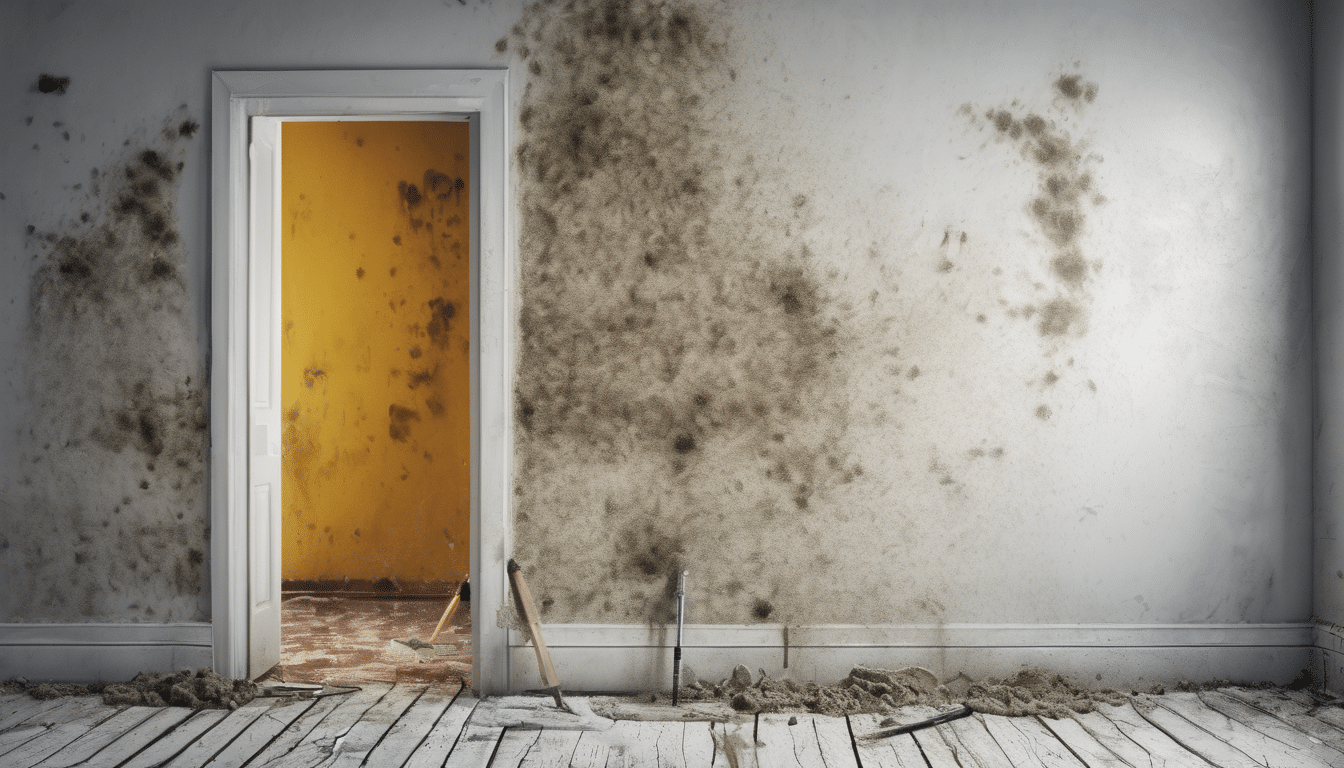
Mold remediation in UAE homes often presents unique challenges due to our climate’s high humidity levels and extensive air conditioning use. Many homeowners wonder whether their mold remediation requires complete repainting or if surface cleaning will suffice. The decision isn’t merely cosmetic—it’s a critical factor in preventing mold recurrence and ensuring long-term indoor health. Understanding the Signs Your Mold remediation requires complete repainting can save you from repeated treatments and protect your investment in your property.
In Dubai’s environment, where temperatures regularly exceed 40°C and humidity levels can spike, painted surfaces become particularly vulnerable to mold penetration. The porous nature of paint and underlying materials means that even after visible mold removal, microscopic spores and structural damage may remain. This comprehensive guide will help you identify the unmistakable signs your mold remediation requires complete repainting rather than superficial treatment.
Understanding Signs Your Mold Remediation Requires Complete Repainting
Recognizing the signs your mold remediation requires complete repainting begins with understanding how mold interacts with painted surfaces. Mold doesn’t just grow on paint—it penetrates the surface layer, embedding itself into the porous material beneath. In our investigations throughout Dubai properties, we’ve identified specific patterns that indicate when surface cleaning alone cannot address the underlying contamination.
When mold remediation requires complete repainting, the evidence typically appears in multiple forms simultaneously. Surface discoloration often masks deeper penetration into the substrate material. The high humidity conditions common in UAE bathrooms, kitchens, and air-conditioned spaces accelerate this penetration process. Professional mold assessors look for these cumulative signs your mold remediation requires complete repainting rather than attempting cosmetic solutions that ultimately fail.
The cost implications of ignoring these signs can be significant. While complete repainting may involve an investment of AED 2,000-8,000 depending on room size, repeated partial treatments often exceed this amount over time. More importantly, inadequate remediation can compromise indoor air quality and occupant health, making proper identification of when mold remediation requires complete repainting essential for responsible property management.
Signs Your Mold Remediation Requires Complete Repainting – Visible Staining and Discoloration Patterns
Certain staining patterns serve as clear signs your mold remediation requires complete repainting. Superficial mold growth typically appears as isolated spots that clean easily with appropriate solutions. However, when staining exhibits specific characteristics, it indicates deeper penetration that necessitates complete repainting.
Deep Penetration Indicators
Water-mark patterns that remain visible after cleaning indicate that moisture has carried mold pigments deep into the substrate. These stains often appear as shadowy outlines or yellowish-brown rings that persist despite surface treatment. In our Dubai case studies, such patterns consistently correlated with mold penetration beyond the surface layer.
Textural Changes
When painted surfaces develop bubbling, cracking, or peeling textures alongside mold growth, these represent critical signs your mold remediation requires complete repainting. The textural changes indicate that moisture has compromised the paint-substrate bond, creating voids where mold can thrive unseen. Simply cleaning the surface leaves these compromised areas untreated.
Signs Your Mold Remediation Requires Complete Repainting – Structural and Material Damage Indicators
Beyond surface appearance, structural evidence provides undeniable signs your mold remediation requires complete repainting. When mold affects the integrity of underlying materials, surface treatment becomes fundamentally inadequate.
Gypsum board (drywall) presents particular challenges in UAE homes. When moisture penetrates painted drywall, the paper facing and gypsum core become nutrient sources for mold. If gentle pressure reveals softness or crumbling behind painted surfaces, this indicates structural compromise that requires cutting out affected sections and complete repainting of adjacent areas to ensure proper sealing.
Wood substrates exhibit different but equally telling signs your mold remediation requires complete repainting. Warping, cupping, or raised grain patterns beneath paint indicate moisture penetration that has likely carried mold deep into the wood fibres. In these cases, surface cleaning cannot reach the embedded contamination, making complete repainting with specialized primers essential.
Odour Persistence After Remediation
One of the most reliable signs your mold remediation requires complete repainting is persistent musty odours after surface cleaning. Mold produces microbial volatile organic compounds (MVOCs) that penetrate porous materials and linger long after visible growth removal.
In our Dubai investigations, we frequently encounter situations where homeowners have cleaned visible mold only to have the characteristic musty smell return within days or weeks. This recurrence represents one of the clearest signs your mold remediation requires complete repainting with appropriate sealing products. The odour indicates that mold compounds remain embedded in materials beneath the surface.
Proper odour assessment involves closing the room for several hours then entering to detect any persistent mustiness. If odours remain after thorough cleaning and drying, this strongly suggests that mold remediation requires complete repainting with mould-resistant primers designed to encapsulate remaining compounds and prevent odour recurrence.
Moisture History and Water Damage Extent
The history of moisture exposure provides critical context for determining signs your mold remediation requires complete repainting. Short-term, minor moisture events may allow surface cleaning, while certain histories necessitate complete repainting.
Chronic moisture problems, such as persistent condensation on cold walls in air-conditioned Dubai homes, often create conditions where mold remediation requires complete repainting. The prolonged exposure allows moisture to gradually penetrate deeper into materials, carrying mold spores beyond surface reach. Similarly, major water intrusion events—flooding, burst pipes, or significant roof leaks—typically create conditions where mold remediation requires complete repainting of affected areas.
Assessment should include moisture mapping using professional equipment to identify areas with elevated moisture content behind surfaces. When moisture readings exceed 15-18% in wall materials, this represents one of the technical signs your mold remediation requires complete repainting rather than superficial treatment, as the moisture has likely facilitated deep mold penetration.
Previous Remediation Attempt Failures
Perhaps the most frustrating but definitive signs your mold remediation requires complete repainting emerge when previous attempts have failed. Repeated mold recurrence in the same locations indicates that surface-level approaches cannot address the underlying problem.
In our casework across UAE properties, we document patterns where homeowners attempt DIY cleaning or inadequate professional treatments, only to see mold reappear within weeks or months. This recurrence pattern represents compelling evidence that mold remediation requires complete repainting with proper preparation and specialized products.
The failure of antimicrobial sprays alone to prevent regrowth particularly signals that mold remediation requires complete repainting. These products may surface-sanitize but cannot address embedded contamination or restore the protective barrier that proper painting provides. Each failed attempt typically allows deeper penetration, making subsequent remediation more complex and costly.
Professional Assessment Findings
Ultimately, the most reliable signs your mold remediation requires complete repainting come from professional assessment using specialized equipment and techniques. Several diagnostic approaches provide conclusive evidence.
Borescope Inspection
Miniature camera inspection behind surfaces often reveals hidden mold growth that surface cleaning cannot address. When borescope examination shows mold penetration into wall cavities or behind baseboards, this confirms that mold remediation requires complete repainting of affected areas.
Laboratory Analysis
Surface and air sampling with laboratory analysis can quantify mold penetration. When testing reveals elevated spore counts from wall surfaces even after cleaning, or identifies species known for deep penetration like Aspergillus or Chaetomium, these laboratory findings represent scientific signs your mold remediation requires complete repainting.
Moisture Mapping
Thermal imaging and moisture meter surveys identify areas of persistent dampness that facilitate deep mold penetration. When these assessments show moisture patterns extending beyond immediately visible areas, they provide technical confirmation that mold remediation requires complete repainting of affected zones.
Expert Tips for Successful Repainting After Mold
When the signs indicate that mold remediation requires complete repainting, proper execution becomes critical. These expert recommendations ensure lasting results:
- Always address moisture sources completely before repainting—fix leaks, improve ventilation, and resolve condensation issues
- Use mould-resistant primers specifically designed for post-remediation applications, not standard paints
- Ensure proper surface preparation including cleaning, drying, and possibly light sanding of affected areas
- Consider adding mould-inhibiting additives to paint for extra protection in high-humidity areas
- Allow adequate drying time between primer and topcoat applications—rushing this process compromises effectiveness
- Maintain proper ventilation during and after painting to prevent moisture accumulation
- Choose semi-gloss or gloss finishes for bathrooms and kitchens as they resist moisture better than flat paints
- Monitor repainted areas regularly for any signs of moisture recurrence or new growth
Frequently Asked Questions
Can I paint over mold without remediation?
Never paint over active mold growth. Painting encapsulates but doesn’t eliminate mold, which will continue growing beneath the new paint and eventually reappear. Always complete proper remediation before repainting.
How long should I wait after remediation before repainting?
Wait until all surfaces are completely dry and moisture readings are below 15%. This typically takes 24-72 hours with proper dehumidification, but may take longer in humid conditions or with extensive water damage.
What type of paint should I use after mold remediation?
Use mould-resistant primers specifically formulated for post-remediation applications, followed by quality mould-inhibiting topcoats. Standard household paints lack the necessary sealing properties and antimicrobial additives.
Will repainting prevent mold from returning?
Proper repainting with appropriate products helps prevent recurrence but cannot compensate for unresolved moisture problems. Addressing the underlying moisture source remains essential for long-term prevention.
How much does complete repainting after mold remediation cost in Dubai?
Costs typically range from AED 2,000-8,000 depending on room size, accessibility, and extent of preparation required. This investment prevents costly repeated remediation attempts.
Recognizing the signs your mold remediation requires complete repainting empowers you to make informed decisions about protecting your property. In Dubai’s challenging climate, proper repainting following remediation isn’t merely cosmetic—it’s an essential step in creating durable, healthy indoor environments. By responding appropriately to these indicators, you invest in long-term solutions rather than temporary fixes.