
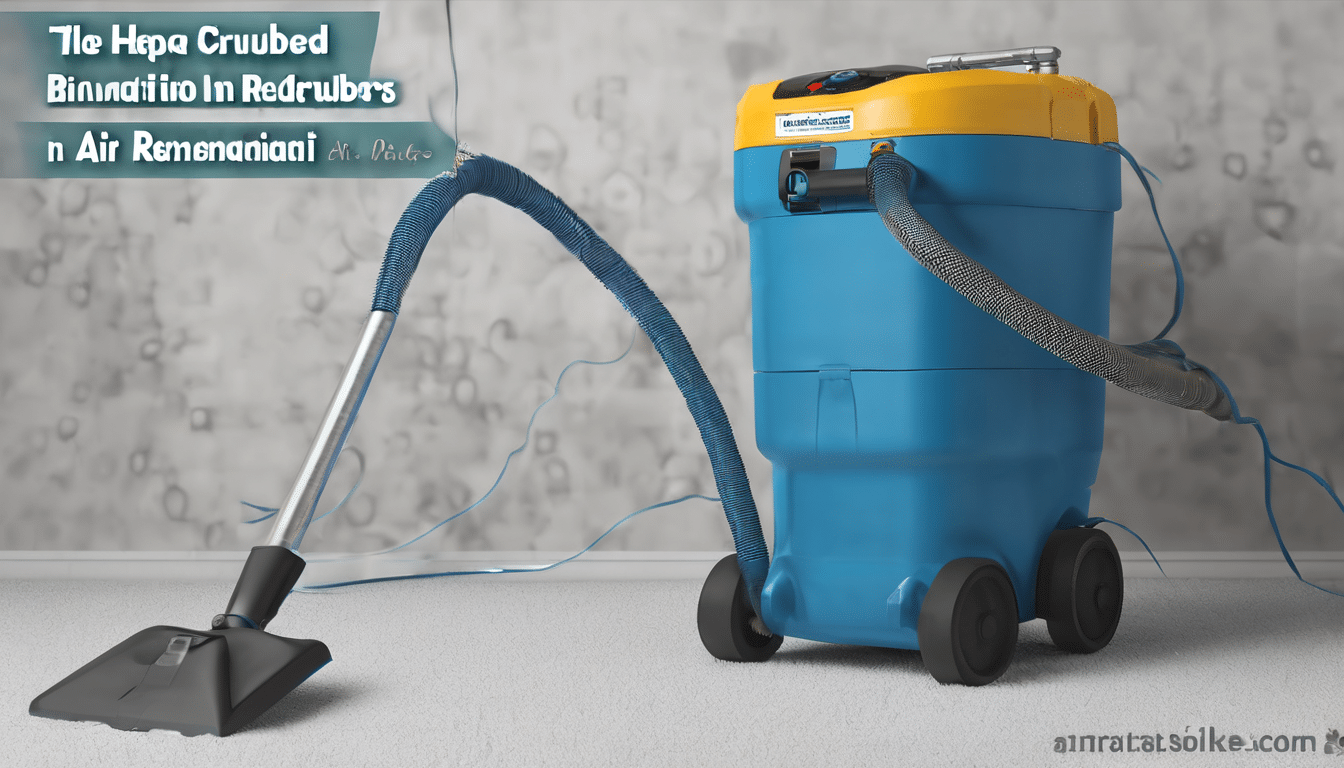
During mold remediation projects across Dubai and the UAE, HEPA air scrubbers serve as the frontline defence against airborne contamination. These sophisticated air filtration systems work continuously to capture microscopic mold spores that become airborne during removal procedures, preventing their spread to unaffected areas of the property. Understanding How HEPA Air scrubbers work in mold remediation is essential for homeowners, facility managers, and construction professionals dealing with mold issues in the region’s challenging climate conditions.
The unique environmental factors in the UAE, particularly the high humidity levels and reliance on air conditioning systems, create ideal conditions for mold growth. When remediation becomes necessary, proper air filtration becomes critical to prevent spore dispersion throughout the building. How HEPA air scrubbers work in mold remediation involves creating negative pressure environments, capturing contaminants, and maintaining clean air standards throughout the process.
This comprehensive guide explores the mechanics, applications, and seasonal considerations of HEPA air scrubber usage in mold remediation projects. From technical specifications to practical implementation strategies, we’ll examine why these systems are indispensable for successful mold removal in residential and commercial properties throughout Dubai, Abu Dhabi, and the surrounding Emirates.
How Hepa Air Scrubbers Work In Mold Remediation – HEPA Filtration Technology Explained
High-Efficiency Particulate Air (HEPA) filtration represents the gold standard in airborne particle capture for mold remediation projects. True HEPA filters must meet rigorous international standards, capturing 99.97% of particles as small as 0.3 microns. This efficiency level is crucial because mold spores typically range from 1 to 40 microns in size, with many problematic species falling in the 3-10 micron range.
The science behind how HEPA air scrubbers work in mold remediation involves three primary capture mechanisms: interception, impaction, and diffusion. As contaminated air passes through the dense filter media, larger particles collide with and stick to filter fibres (impaction). Medium-sized particles are caught when they come within one particle radius of a fibre (interception). The smallest particles exhibit Brownian motion, bouncing around randomly until they contact and adhere to filter material (diffusion).
In Dubai’s construction environment, where buildings often feature complex HVAC systems and multiple zones, understanding these filtration mechanics helps professionals select appropriate equipment. Commercial-grade HEPA scrubbers used in professional remediation can process between 500 and 2000 cubic metres of air per hour, with higher-capacity units necessary for larger properties or more extensive contamination.
How Hepa Air Scrubbers Work In Mold Remediation – Air Scrubber Mechanics in Mold Remediation
The operational mechanics of how HEPA air scrubbers work in mold remediation involve a multi-stage filtration process. Air enters the unit through a pre-filter that captures larger particles like dust and debris, protecting the more expensive HEPA filter from premature clogging. The air then passes through the main HEPA filter where microscopic mold spores, hyphal fragments, and other biological contaminants are captured.
Many advanced units include additional filtration stages, such as activated carbon filters that adsorb volatile organic compounds (VOCs) and odours released during mold growth and remediation. This comprehensive approach is particularly valuable in UAE properties where high temperatures can accelerate VOC off-gassing from building materials and mold colonies.
The fan system within the scrubber creates the necessary airflow to maintain negative pressure in containment areas. Professionals must calculate the appropriate air changes per hour (ACH) based on room volume and contamination level. For mold remediation in Dubai’s climate, where humidity control is critical, some units incorporate desiccant wheels or additional drying capabilities to manage moisture levels during the process.
How Hepa Air Scrubbers Work In Mold Remediation – Seasonal Considerations in UAE Climate
Understanding how HEPA air scrubbers work in mold remediation requires consideration of seasonal variations in the UAE climate. During the summer months (May to September), when outdoor humidity levels frequently exceed 80% and temperatures soar above 40°C, mold remediation faces additional challenges. Air scrubbers must work in conjunction with dehumidification equipment to prevent moisture accumulation within containment areas.
The winter months (November to February) bring different considerations, with cooler temperatures and occasional rainfall creating condensation issues in poorly insulated buildings. During this period, how HEPA air scrubbers work in mold remediation focuses more on spore capture during physical removal activities, as lower humidity levels naturally reduce mold activity.
Transitional seasons (March-April and October) present unique challenges as temperature fluctuations can create condensation within wall cavities and ceiling spaces. Professional remediation teams adjust scrubber operation parameters based on real-time humidity monitoring, ensuring optimal performance regardless of external conditions. This seasonal adaptation is crucial for successful mold remediation outcomes in the variable UAE climate.
Proper Placement and Setup Strategies
Effective implementation of how HEPA air scrubbers work in mold remediation depends significantly on proper equipment placement. Professionals follow specific protocols based on room size, contamination level, and building layout. The scrubber should be positioned to create optimal airflow patterns that direct contaminated air toward the intake while preventing dead spots where spores might accumulate.
In typical Dubai villa layouts with multiple connected spaces, technicians may deploy several scrubbers strategically to maintain consistent negative pressure throughout the affected area. For high-rise apartments common in Dubai Marina or Downtown areas, placement considerations include balcony access for exhaust routing and noise management to minimise disturbance to neighbouring units.
Ducting configuration plays a critical role in how HEPA air scrubbers work in mold remediation. Flexible ductwork is used to exhaust filtered air outside the containment area or to neighbouring rooms, depending on the project specifics. Professionals calculate duct length limitations to maintain adequate airflow, as excessive length reduces efficiency and compromises negative pressure maintenance.
Containment and Negative Pressure Systems
The creation and maintenance of negative pressure environments represent a fundamental aspect of how HEPA air scrubbers work in mold remediation. Negative pressure ensures that airborne spores cannot escape the work area, protecting occupants and unaffected building areas from contamination. Professionals achieve this by configuring the scrubber to exhaust more air than enters the containment zone.
In UAE properties, where open-plan designs and high ceilings are common, establishing effective containment requires careful planning. Plastic sheeting barriers are installed to create sealed chambers, with the air scrubber positioned to maintain a pressure differential of approximately 5 to 7 Pascals relative to adjacent areas. This pressure difference is continuously monitored using manometers to ensure integrity throughout the remediation process.
The effectiveness of how HEPA air scrubbers work in mold remediation depends on proper containment sealing. Even small gaps or leaks can compromise negative pressure, allowing spore migration. Professionals use tape, foam sealant, and other materials to ensure airtight seals around containment barriers, doorways, and penetration points for electrical cords and ducting.
Verification and Monitoring Process
Continuous monitoring validates how HEPA air scrubbers work in mold remediation throughout the project duration. Professionals use particle counters and air quality monitors to measure airborne spore concentrations both inside and outside the containment area. This real-time data ensures the scrubber maintains effective filtration and negative pressure.
In Dubai’s regulatory environment, where building standards are strictly enforced, documentation of air quality parameters becomes particularly important. Professionals maintain logs tracking scrubber operation hours, filter changes, pressure differentials, and airborne particle counts. This documentation supports post-remediation verification and provides clients with assurance of proper protocol adherence.
Final clearance testing conducted after remediation completion provides the ultimate validation of how HEPA air scrubbers work in mold remediation. Air samples collected inside the contained area and in adjacent spaces are analysed by accredited laboratories to confirm spore counts have returned to acceptable levels. This verification process is essential for project sign-off and occupancy clearance.
Maintenance and Best Practices
Proper maintenance protocols ensure optimal performance of how HEPA air scrubbers work in mold remediation. Pre-filter replacement schedules vary based on contamination levels, with visual inspection and pressure drop measurements guiding change frequency. HEPA filters themselves typically last through multiple projects but require replacement when damage occurs or when pressure drop exceeds manufacturer specifications.
Cleaning and disinfection procedures between projects prevent cross-contamination. Exterior surfaces, wheels, and handles are wiped down with appropriate disinfectants, while internal components receive careful vacuuming with HEPA-filtered equipment. These protocols are particularly important in the UAE market, where remediation companies often service multiple properties within the same building or community.
Storage and transportation practices affect how HEPA air scrubbers work in mold remediation over time. Units should be stored in clean, dry environments protected from dust and moisture. During transport between job sites in Dubai’s demanding climate, equipment must be secured against damage and temperature extremes that could affect electronic components or filter integrity.
Expert Tips for HEPA Usage
Based on extensive field experience with how HEPA air scrubbers work in mold remediation across the UAE, several expert recommendations emerge for optimal results. First, always oversize equipment capacity rather than undersize – select scrubbers rated for larger spaces than actually require treatment to ensure adequate air changes per hour.
Second, implement redundant monitoring systems. Use both mechanical manometers and digital pressure gauges to cross-verify negative pressure maintenance. Similarly, combine visual inspection with electronic particle counting for comprehensive air quality assessment throughout the remediation process.
Third, establish clear communication protocols with building occupants regarding equipment operation sounds and expected timelines. In residential settings common throughout Dubai, explaining the purpose and duration of scrubber operation helps manage expectations and reduces concern about noise during the remediation period.
Fourth, develop pre-project testing protocols to establish baseline air quality conditions before containment setup. This documentation provides valuable comparison data for post-remediation verification and helps demonstrate the effectiveness of the remediation process to property owners and stakeholders.
Finally, invest in regular professional training for equipment operators. Understanding the scientific principles behind how HEPA air scrubbers work in mold remediation enables technicians to troubleshoot issues, optimise settings for specific conditions, and maximise equipment performance throughout each project.
Frequently Asked Questions
How long should HEPA scrubbers run after visible mold removal?
HEPA air scrubbers should continue operating for at least 24-48 hours after physical mold removal concludes. This extended operation captures any remaining airborne spores and allows time for settled particles to be filtered from the air. In Dubai’s humid climate, extended operation also helps maintain dry conditions that prevent regrowth.
Can HEPA scrubbers remove mold odours?
While HEPA filters capture particulate matter, they do not directly address mold odours. Many professional units include activated carbon stages that adsorb volatile organic compounds causing musty smells. For severe odour issues, additional specialised filtration or ozone treatment may be necessary alongside standard HEPA filtration.
What size HEPA scrubber is needed for a typical Dubai villa?
For a standard Dubai villa of approximately 300-400 square metres, professionals typically use units rated for 1000-1500 cubic metres per hour capacity. Larger properties or those with high ceilings may require multiple units or higher-capacity systems to maintain adequate air changes per hour throughout the containment area.
How often should HEPA filters be replaced during remediation?
Pre-filters may require replacement every 24-48 hours during active remediation, depending on contamination levels. Main HEPA filters typically last through multiple projects but should be replaced when pressure drop exceeds manufacturer specifications or when visual inspection indicates damage or saturation.
Are HEPA scrubbers noisy during operation?
Modern HEPA scrubbers operate at 60-70 decibels at full capacity, comparable to conversational speech or background office noise. Professionals can adjust fan speeds to balance noise concerns with filtration efficiency, particularly important in residential settings and overnight operation scenarios.
The proper implementation of how HEPA air scrubbers work in mold remediation represents a critical component of successful mold removal projects throughout the UAE. From technical filtration mechanics to practical placement strategies, these systems provide essential protection against cross-contamination during remediation activities. By understanding the principles, seasonal considerations, and best practices outlined in this guide, property owners and professionals can ensure safer, more effective mold remediation outcomes in Dubai’s challenging climate environment.