
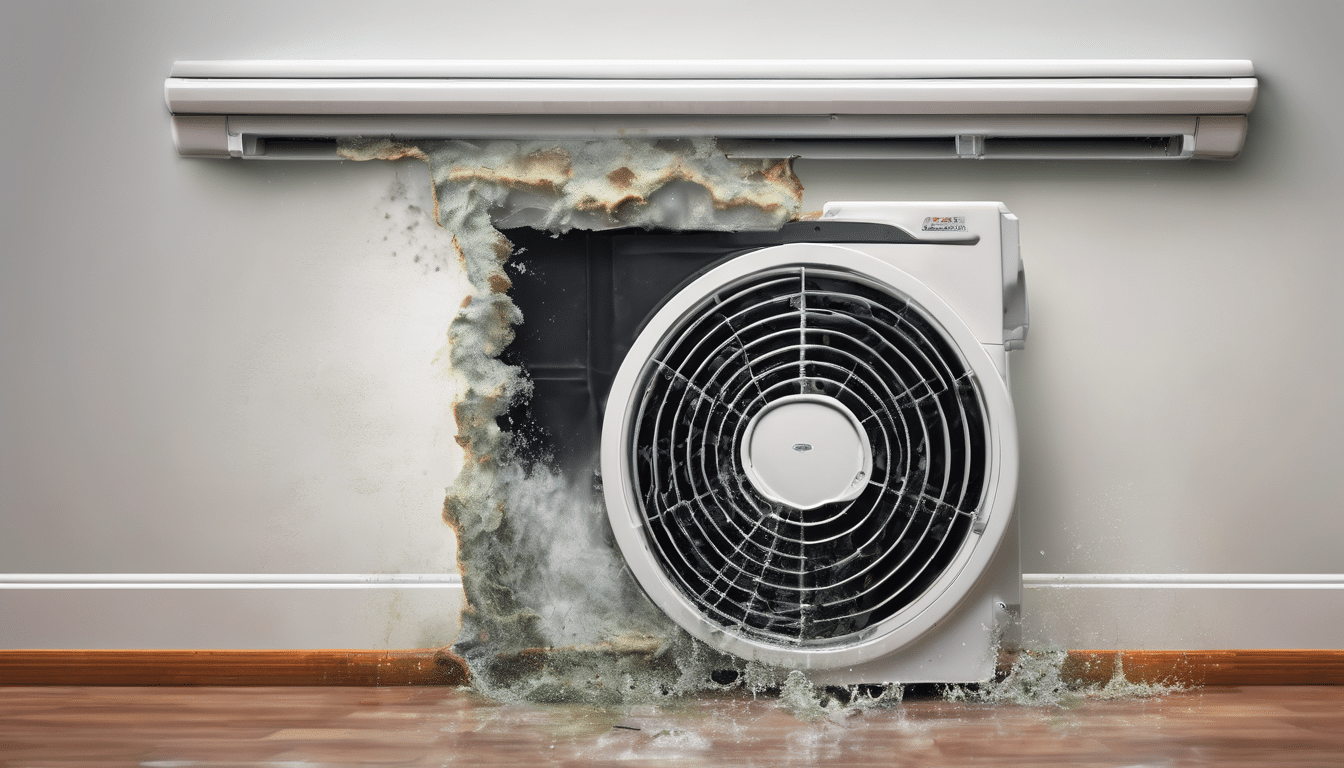
Air conditioning systems are essential for comfortable living in the UAE’s extreme climate, but when they malfunction and create water leaks, they can quickly become the source of serious mold problems. Understanding AC leak causing mold; how to clean and who to fix requires knowledge of both building science and microbiology, as these issues represent complex interactions between moisture, temperature, and building materials.
In Dubai’s humid climate, where relative humidity often exceeds 70% and air conditioning systems operate continuously, even minor AC leaks can trigger rapid mold colonisation within 24-48 hours. The combination of constant moisture, organic materials in building components, and the UAE’s warm temperatures creates ideal conditions for mold growth that can compromise both property value and occupant health. This relates directly to Ac Leak Causing Mold; How To Clean And Who To Fix.
This comprehensive investigation will examine the scientific mechanisms behind AC-related mold formation, provide evidence-based cleaning protocols, and establish clear criteria for determining when professional intervention becomes necessary. Rather than offering quick fixes, this guide focuses on understanding root causes to prevent recurring contamination.
Ac Leak Causing Mold; How To Clean And Who To Fix – Understanding AC Leak Mold Formation Mechanisms
AC leak causing mold; how to clean and who to fix begins with understanding the scientific relationship between air conditioning systems and mold growth. In our investigations across Dubai and the UAE, we consistently observe that mold formation following AC leaks follows predictable patterns based on moisture dynamics, temperature gradients, and material susceptibility.
Air conditioning systems generate condensation as a normal part of their operation, with properly functioning units collecting and draining this moisture through designated drainage systems. However, when these systems fail, water accumulates in building cavities, on surfaces, and within materials where mold spores—always present in indoor environments—can rapidly colonise.
Primary AC Leak Sources and Mold Risk Factors
The most common AC leak sources that lead to mold problems include blocked condensate drains, damaged drain pans, frozen evaporator coils that subsequently thaw, and compromised ductwork connections. In Dubai’s construction practices, we frequently encounter installations where condensate drainage systems lack proper slopes or have inadequate capacity for peak humidity conditions.
Condensate drain blockages represent the most frequent cause of AC-related mold problems in UAE buildings. When drains become clogged with algae, dust, or debris, water backs up into the air handler unit and overflows onto surrounding surfaces. This water typically contains organic matter that provides nutrients for mold growth, accelerating colonisation rates compared to clean water leaks. When considering Ac Leak Causing Mold; How To Clean And Who To Fix, this becomes clear.
Frozen evaporator coils create particularly problematic leak scenarios because the subsequent thaw releases large volumes of water suddenly, often overwhelming drainage systems and creating extensive moisture intrusion. This typically occurs when air filters become severely clogged, reducing airflow across the coil and causing ice formation during peak cooling periods.
Mold Species Associated with AC Systems
Laboratory analysis from AC-related mold cases in our Dubai facility reveals specific patterns in mold species that colonise following air conditioning leaks. Aspergillus niger and Aspergillus fumigatus frequently appear in condensate drain areas due to their tolerance for high moisture and ability to metabolise organic debris typically found in these locations.
Penicillium species commonly colonise insulation materials and ductwork that become saturated from AC leaks, while Stachybotrys chartarum can develop on paper-faced drywall and ceiling tiles when persistent moisture conditions exist. Understanding these species patterns helps inform both cleaning approaches and health risk assessments for AC leak causing mold situations. The importance of Ac Leak Causing Mold; How To Clean And Who To Fix is evident here.
The rapid colonisation observed in UAE climates occurs because ambient temperatures between 25-30°C provide optimal growth conditions for most indoor mold species. When combined with moisture from AC leaks and organic substrates in building materials, visible mold growth can appear within 48-72 hours of initial water intrusion.
Ac Leak Causing Mold; How To Clean And Who To Fix – Identifying AC Leak Causing Mold Signs and Symptoms
Proper identification of AC leak causing mold; how to clean and who to fix requires systematic assessment of both visible indicators and environmental conditions. In our field investigations, we employ multiple detection methods because mold growth from AC leaks often occurs in hidden locations where visual inspection alone proves insufficient.
Visual Indicators and Inspection Techniques
Primary visual indicators include discolouration patterns around AC units, water stains on ceilings or walls adjacent to ductwork, and visible mold growth on insulation or building materials. However, in Dubai’s typical construction, much of the AC infrastructure remains concealed behind ceiling tiles, within wall cavities, or above dropped ceilings where problems develop undetected. Understanding Ac Leak Causing Mold; How To Clean And Who To Fix helps with this aspect.
Thermal imaging proves particularly valuable for AC leak detection because temperature differentials reveal moisture patterns invisible to conventional inspection. We consistently observe distinct thermal signatures around leak points, even when surface materials appear dry. These temperature variations indicate subsurface moisture that supports ongoing mold development.
Moisture meter readings provide quantitative data about material moisture content, with readings above 16% in organic materials indicating elevated risk for mold growth. In AC leak situations, we typically find moisture gradients extending several metres from the primary leak source as water migrates through building materials and structural cavities.
Odour Patterns and Air Quality Indicators
Distinctive musty odours often provide the first indication of AC-related mold problems, particularly when these odours intensify during AC operation or appear strongest near return air vents. These odours result from microbial volatile organic compounds (MVOCs) produced during mold metabolism, with different species creating characteristic scent profiles. Ac Leak Causing Mold; How To Clean And Who To Fix factors into this consideration.
Air quality changes may include increased humidity levels in affected areas, despite AC operation, indicating that moisture sources exceed the system’s dehumidification capacity. Occupants frequently report respiratory irritation, headaches, or fatigue that correlates with AC system operation, suggesting airborne contaminant distribution through the HVAC system.
Professional air sampling can detect elevated mold spore concentrations even when visual growth remains hidden, providing definitive evidence of contamination that requires investigation. However, proper sampling requires understanding of local outdoor spore baselines and seasonal variations specific to UAE environmental conditions.
Ac Leak Causing Mold; How To Clean And Who To Fix – Immediate Response to AC Leak Mold Situations
When discovering AC leak causing mold; how to clean and who to fix situations, immediate response actions significantly influence both the extent of contamination and the success of subsequent remediation efforts. Based on our emergency response protocols in Dubai, the first 24-48 hours prove critical for preventing extensive mold colonisation and cross-contamination.
Emergency Water Source Control
The primary objective involves stopping the water source immediately, which typically requires shutting down the affected AC unit to prevent continued moisture generation. However, in UAE climates, extended AC shutdown creates additional complications including rapid humidity increases and potential secondary condensation problems.
Locate and address the specific leak source, whether through unclogging condensate drains, replacing damaged drain pans, or isolating compromised ductwork sections. Document the leak location and estimated duration of water intrusion, as this information influences both cleaning approaches and professional assessment needs.
Establish temporary dehumidification if possible, using portable dehumidifiers to reduce ambient moisture levels and slow mold development. However, avoid directing airflow across contaminated surfaces, which can disperse mold spores to unaffected areas and create cross-contamination. This relates directly to Ac Leak Causing Mold; How To Clean And Who To Fix.
Initial Containment and Safety Measures
Implement basic containment by closing doors to affected areas and shutting down any HVAC systems that could distribute contaminated air to other building zones. In multi-unit buildings common in Dubai, notify adjacent units about potential AC system interconnections that might spread contamination.
Establish personal protection protocols, including N95 respirators minimum for anyone entering contaminated areas, eye protection, and disposable clothing. Avoid using regular household fans or cleaning equipment that might generate airborne particles without proper filtration.
Document conditions through photography and written observations, noting the extent of visible contamination, affected materials, and environmental conditions. This documentation proves valuable for insurance claims and professional assessment planning. When considering Ac Leak Causing Mold; How To Clean And Who To Fix, this becomes clear.
Safe Cleaning Methods for AC-Related Mold
Addressing AC leak causing mold; how to clean and who to fix requires understanding the limitations of DIY approaches versus situations requiring professional intervention. Our laboratory testing reveals that cleaning success depends heavily on contamination extent, material types, and the underlying moisture problem resolution.
Small-Scale Surface Mold Cleaning
For surface mold on non-porous materials covering less than 3 square metres, careful DIY cleaning may be appropriate using proper safety protocols. Effective cleaning solutions include 10% bleach solutions for non-porous surfaces, though bleach effectiveness diminishes rapidly when organic matter is present.
Alternative cleaning agents include hydrogen peroxide solutions (3-10% concentration) or commercial antimicrobial products specifically formulated for mold remediation. However, avoid mixing different cleaning products, which can create dangerous chemical reactions, particularly in enclosed spaces typical of AC equipment areas. The importance of Ac Leak Causing Mold; How To Clean And Who To Fix is evident here.
Cleaning technique involves gentle scrubbing with disposable materials, working from least contaminated to most contaminated areas to prevent cross-contamination. All cleaning materials, including protective equipment, require careful disposal in sealed plastic bags to prevent spore release during removal.
HEPA Vacuum Protocols for AC Systems
HEPA filtration proves essential for cleaning AC system components without dispersing spores throughout the building. Standard household vacuums lack adequate filtration and can actually increase airborne spore concentrations during cleaning activities.
Clean accessible ductwork surfaces using HEPA vacuum equipment, followed by antimicrobial treatment of affected areas. However, extensive ductwork contamination typically exceeds DIY capabilities due to access limitations and cross-contamination risks during cleaning. Understanding Ac Leak Causing Mold; How To Clean And Who To Fix helps with this aspect.
Evaporator coil cleaning requires particular caution because these components contain delicate fins and refrigerant lines that can be damaged by aggressive cleaning. Professional coil cleaning typically involves specialised equipment and antimicrobial treatments designed for HVAC applications.
Material Replacement Considerations
Porous materials including insulation, ceiling tiles, and paper-faced drywall generally require replacement rather than cleaning when mold contamination occurs. Attempting to clean these materials often proves ineffective and may increase exposure risks during the cleaning process.
Replacement decisions should consider both the extent of contamination and the material’s structural importance. In Dubai’s construction practices, we frequently encounter situations where contaminated materials serve critical functions in building envelope performance or fire rating systems. Ac Leak Causing Mold; How To Clean And Who To Fix factors into this consideration.
Cost considerations for material replacement typically range from AED 100-300 per square metre for basic drywall and insulation replacement, not including finishing work. However, these costs often prove lower than repeated cleaning attempts that fail to address embedded contamination.
When to Call Professionals for AC Mold Issues
Determining when AC leak causing mold; how to clean and who to fix requires professional intervention depends on contamination scope, health considerations, and technical complexity. Our field experience in Dubai indicates that several clear indicators mandate professional assessment and remediation.
Contamination Extent Thresholds
Professional intervention becomes necessary when visible mold covers more than 3 square metres of surface area, when contamination affects multiple rooms or building systems, or when mold growth appears in HVAC ductwork or air handling equipment. These thresholds reflect both health protection principles and practical limitations of DIY approaches. This relates directly to Ac Leak Causing Mold; How To Clean And Who To Fix.
Hidden mold behind walls, above ceilings, or within building cavities requires professional investigation using specialised diagnostic equipment including borescopes, thermal imaging, and moisture mapping tools. In UAE construction, concealed spaces often contain extensive contamination that remains undetected during visual inspection.
Recurring mold problems following previous cleaning attempts indicate underlying moisture or building system failures that require professional diagnosis and correction. Simply cleaning visible mold without addressing root causes typically results in regrowth within weeks or months.
Health and Safety Considerations
Occupants with respiratory conditions, compromised immune systems, or mold sensitivities should avoid DIY cleaning activities and seek professional remediation for any significant mold contamination. Professional protocols include medical-grade respiratory protection and containment systems that prevent exposure during work activities. When considering Ac Leak Causing Mold; How To Clean And Who To Fix, this becomes clear.
Properties housing vulnerable populations including children, elderly residents, or individuals with chronic health conditions warrant professional assessment even for seemingly minor contamination. The consequences of inadequate remediation prove far more serious for sensitive individuals than healthy adults.
Insurance requirements often mandate professional documentation and remediation for coverage of mold-related claims. Many UAE insurance policies specify requirements for certified remediation professionals and post-remediation verification testing to validate claim settlements.
Technical Complexity Factors
AC system contamination affecting central air handling units, complex ductwork networks, or building automation systems requires specialised expertise in both microbiology and HVAC engineering. Professional remediation teams coordinate mechanical repairs with antimicrobial treatments to address both moisture sources and existing contamination. The importance of Ac Leak Causing Mold; How To Clean And Who To Fix is evident here.
Commercial or multi-unit residential properties typically exceed DIY capabilities due to system complexity, legal liability considerations, and the potential for cross-contamination between units. Professional protocols include negative pressure containment and sequential remediation approaches that protect unaffected areas.
Laboratory testing and verification protocols provide objective evidence of remediation success, particularly important for insurance documentation, health protection, and long-term monitoring programs. Professional services typically include both pre-remediation assessment and post-remediation verification testing.
AC System Repair and Moisture Control Solutions
Effective resolution of AC leak causing mold; how to clean and who to fix situations requires addressing the underlying mechanical failures that created moisture problems. Our investigations consistently demonstrate that mold remediation without corresponding AC system repairs results in recurring contamination within months of initial cleaning.
Common AC Repair Requirements
Condensate drain cleaning and modification represent the most frequent AC repairs needed to prevent mold recurrence. In Dubai installations, we regularly encounter drainage systems that lack adequate capacity for peak humidity conditions or have insufficient slope for proper water evacuation. Professional drain cleaning typically costs AED 300-600, while system modifications range from AED 800-2,000 depending on complexity.
Drain pan replacement becomes necessary when existing pans show corrosion, cracks, or inadequate capacity for system condensate production. Modern installations benefit from antimicrobial drain pan treatments and overflow sensors that provide early warning of drainage problems. Replacement costs typically range from AED 400-1,200 plus installation labour.
Evaporator coil repairs or replacement may be required when coils show extensive contamination, corrosion, or damage from previous leak incidents. Professional coil cleaning with antimicrobial treatment costs AED 500-1,000, while coil replacement ranges from AED 1,500-4,000 depending on system size and refrigerant type. Understanding Ac Leak Causing Mold; How To Clean And Who To Fix helps with this aspect.
Ductwork Assessment and Modification
Ductwork inspection often reveals insulation damage, connection failures, or design deficiencies that contribute to moisture problems and mold growth. Professional ductwork assessment using video inspection and pressure testing identifies problems invisible during routine maintenance activities.
Insulation replacement in contaminated ductwork typically costs AED 50-100 per linear metre, while complete duct replacement ranges from AED 150-300 per metre depending on size and accessibility. However, these investments prove essential for preventing recurring contamination and maintaining indoor air quality.
Vapour barrier installation and sealing improvements help prevent condensation within ductwork and building cavities. In UAE’s humid climate, proper vapour control proves critical for preventing ongoing moisture problems that support mold growth even after initial remediation. Ac Leak Causing Mold; How To Clean And Who To Fix factors into this consideration.
Humidity Control System Upgrades
Dedicated dehumidification systems may be necessary in properties where standard AC systems cannot adequately control humidity levels. Whole-house dehumidifiers typically cost AED 3,000-8,000 plus installation, but provide precise humidity control that prevents mold growth conditions.
Enhanced filtration systems including HEPA filtration and ultraviolet germicidal irradiation can reduce airborne mold spores and prevent recontamination of cleaned systems. UV light systems cost AED 1,500-3,500 and require annual lamp replacement, but provide ongoing antimicrobial protection.
Building automation system integration allows continuous monitoring of humidity levels, condensate production, and filter condition to prevent conditions that support mold growth. Smart monitoring systems typically cost AED 2,000-5,000 but provide early warning of developing problems. This relates directly to Ac Leak Causing Mold; How To Clean And Who To Fix.
Prevention Strategies for AC Leak Mold Problems
Preventing AC leak causing mold; how to clean and who to fix situations requires proactive maintenance protocols and environmental monitoring specific to UAE climate conditions. Our long-term case studies demonstrate that prevention costs significantly less than remediation while providing better health protection and property preservation.
Routine Maintenance Protocols
Monthly condensate drain inspection and cleaning prevents the majority of AC-related mold problems. This involves checking drain flow, clearing visible blockages, and treating drains with antimicrobial solutions designed for ongoing prevention. Professional maintenance contracts typically cost AED 200-400 per visit but prevent expensive remediation needs.
Quarterly air filter replacement using high-efficiency filters reduces organic debris that supports mold growth in AC systems. In Dubai’s dusty environment, filters often require more frequent replacement than manufacturer recommendations, particularly during sandstorm seasons when system loading increases dramatically. When considering Ac Leak Causing Mold; How To Clean And Who To Fix, this becomes clear.
Annual professional AC system inspection should include coil cleaning, ductwork assessment, and humidity control evaluation. Comprehensive inspections typically cost AED 500-1,000 but identify developing problems before they create extensive contamination requiring remediation.
Environmental Monitoring Systems
Humidity monitoring with automatic alerts helps identify conditions that support mold growth before visible contamination appears. Digital monitoring systems cost AED 300-800 and provide continuous data logging that reveals patterns in humidity control performance.
Condensate overflow sensors provide immediate notification of drainage problems, allowing rapid response before extensive water intrusion occurs. These sensors typically cost AED 150-400 per location and integrate with building automation systems for automated alerts. The importance of Ac Leak Causing Mold; How To Clean And Who To Fix is evident here.
Indoor air quality monitoring including mold spore detection can identify contamination development in early stages when intervention remains simple and cost-effective. Professional-grade monitoring systems cost AED 2,000-5,000 but provide quantitative data for preventive maintenance decisions.
Building Design Considerations
Proper AC system sizing prevents excessive cycling and inadequate dehumidification that creates conditions supporting mold growth. Oversized systems often fail to operate long enough to remove humidity effectively, while undersized systems cannot maintain comfortable conditions during peak load periods.
Drainage system design should include redundant drainage paths, overflow protection, and adequate access for maintenance activities. In Dubai construction, we recommend drain pan sizes 50% larger than minimum requirements to accommodate peak condensate production during extreme humidity conditions. Understanding Ac Leak Causing Mold; How To Clean And Who To Fix helps with this aspect.
Vapour barrier installation and building envelope sealing reduce moisture infiltration that can overwhelm AC dehumidification capacity. Proper building envelope performance proves particularly important in UAE climates where temperature and humidity differentials create significant driving forces for moisture movement.
Health Considerations and AC Mold Exposure
Understanding health implications of AC leak causing mold; how to clean and who to fix situations requires knowledge of both acute exposure risks and long-term health consequences. Our consultation with occupational health specialists reveals that AC-related mold exposure often creates particularly concerning scenarios because contaminated air distributes throughout occupied spaces via HVAC systems.
Respiratory Health Impacts
Mold spores distributed through AC systems can trigger asthma attacks, allergic reactions, and respiratory irritation in sensitive individuals. Unlike localised mold growth, AC-distributed contamination exposes occupants throughout the building, often at concentrations higher than would occur with natural air circulation. Ac Leak Causing Mold; How To Clean And Who To Fix factors into this consideration.
Children and elderly individuals show increased susceptibility to mold-related respiratory problems, with symptoms often appearing before healthy adults experience noticeable effects. In Dubai’s international community, genetic variations in mold sensitivity mean that some populations may experience more severe reactions than others.
Chronic exposure to AC-distributed mold can contribute to the development of new sensitivities and may worsen existing respiratory conditions. Long-term health protection requires complete remediation of contaminated AC systems rather than temporary symptom management through medication or air filtration.
Neurological and Systemic Effects
Certain mold species produce mycotoxins that can cause neurological symptoms including headaches, difficulty concentrating, and memory problems. These effects may be particularly pronounced when contaminated air circulates continuously through living and working spaces via AC systems. This relates directly to Ac Leak Causing Mold; How To Clean And Who To Fix.
Fatigue and general malaise often accompany mold exposure, though these symptoms frequently go unrecognised as mold-related because they develop gradually and may be attributed to other factors common in UAE environments including heat stress or seasonal allergies.
Skin and eye irritation can result from both direct contact with contaminated AC components and exposure to airborne particles distributed through the ventilation system. These symptoms often improve quickly when exposure stops but may persist if underlying contamination remains unaddressed.
Medical Documentation and Treatment
Medical evaluation becomes important when occupants experience persistent symptoms that correlate with AC system operation or improve when away from the affected building. Healthcare providers in Dubai increasingly recognise indoor air quality as a factor in unexplained respiratory and neurological symptoms. When considering Ac Leak Causing Mold; How To Clean And Who To Fix, this becomes clear.
Symptom documentation should include timing relative to AC operation, improvement patterns when away from the building, and correlation with other household members’ symptoms. This information helps healthcare providers assess mold exposure likelihood and guides appropriate medical testing.
Treatment typically focuses on reducing exposure through environmental remediation rather than long-term medication management. However, acute symptoms may require medical intervention, particularly for individuals with asthma or other respiratory conditions.
Legal and Regulatory Aspects in the UAE
Navigating AC leak causing mold; how to clean and who to fix situations involves understanding legal responsibilities and regulatory requirements specific to UAE property law and health regulations. These considerations affect both property owners and tenants dealing with AC-related mold problems.
Property Owner Responsibilities
UAE rental law typically places responsibility for AC system maintenance and mold remediation on property owners, particularly when problems result from building defects or inadequate maintenance. However, tenant-caused damage or negligence may shift liability, making proper documentation important for all parties.
Commercial property owners face additional responsibilities under workplace health and safety regulations that require maintaining indoor air quality standards for employees and visitors. These regulations may mandate professional assessment and remediation for significant mold contamination in commercial buildings.
Strata properties and apartment buildings must consider shared AC systems and common area responsibilities. Management companies typically bear responsibility for central systems, while individual unit owners handle localised problems that don’t affect common areas or other units. The importance of Ac Leak Causing Mold; How To Clean And Who To Fix is evident here.
Insurance Coverage Considerations
Most UAE property insurance policies exclude mold damage resulting from maintenance neglect but may cover sudden AC system failures that cause immediate water damage. Understanding policy language proves critical because coverage decisions often depend on the specific cause and timeline of the problem.
Professional documentation and remediation typically enhance insurance claim success, as insurers require evidence of proper response and qualified repair work. DIY remediation attempts may void coverage or reduce claim settlements if problems recur or worsen.
Business interruption coverage may apply to commercial properties where mold contamination prevents normal operations, though coverage typically requires professional certification of the health hazard and remediation timeline. Understanding Ac Leak Causing Mold; How To Clean And Who To Fix helps with this aspect.
Health Authority Requirements
Dubai Municipality and other UAE health authorities may require professional assessment and remediation for significant mold problems, particularly in commercial buildings, schools, or healthcare facilities. These requirements ensure that remediation meets public health standards and prevents recurring problems.
Building permits may be required for extensive remediation work that involves structural modifications or major AC system changes. Permit requirements vary by emirate and project scope, making professional consultation valuable for complex cases.
Occupancy restrictions may apply during remediation work, particularly when containment barriers and air filtration systems are necessary to prevent exposure. These restrictions protect occupant health but require careful planning for residential and commercial properties. Ac Leak Causing Mold; How To Clean And Who To Fix factors into this consideration.
Long-term Monitoring and Maintenance Protocols
Successful resolution of AC leak causing mold; how to clean and who to fix situations requires ongoing monitoring and maintenance protocols that prevent recurrence and protect long-term indoor air quality. Our follow-up studies demonstrate that properties implementing comprehensive monitoring programs maintain significantly better indoor environmental quality than those relying solely on reactive maintenance.
Post-Remediation Verification Testing
Professional clearance testing should occur 24-48 hours after remediation completion, using air sampling methods that compare spore concentrations in remediated areas to outdoor baselines. Successful remediation typically achieves spore levels equal to or lower than outdoor concentrations, with no detection of species associated with water damage.
Surface sampling of cleaned areas helps verify that remediation removed contaminated materials completely and that cleaning methods eliminated surface contamination. However, surface sampling requires proper interpretation because some mold species may be present naturally without indicating ongoing problems. This relates directly to Ac Leak Causing Mold; How To Clean And Who To Fix.
Moisture content verification ensures that underlying water problems have been corrected and that building materials have returned to normal moisture levels. Ongoing elevated moisture content often predicts mold recurrence within months of initial remediation.
Ongoing Environmental Monitoring
Monthly humidity monitoring throughout the building helps identify developing moisture control problems before they create mold growth conditions. Target humidity levels should remain below 60% relative humidity to prevent most mold species from establishing colonies.
Quarterly professional air sampling provides early warning of recurring contamination, particularly important for properties with previous mold problems or vulnerable occupants. Trending analysis of spore concentrations reveals developing problems before visual growth appears. When considering Ac Leak Causing Mold; How To Clean And Who To Fix, this becomes clear.
Annual comprehensive inspections should include AC system performance evaluation, building envelope assessment, and review of maintenance records to identify patterns that might predict future problems. These inspections typically cost AED 800-1,500 but prevent expensive remediation needs.
Maintenance Schedule Optimization
Filter replacement frequency should be increased based on local environmental conditions and system loading, with high-efficiency filters providing better protection against airborne contaminants. In Dubai’s environment, monthly filter inspection often reveals need for replacement ahead of manufacturer schedules.
Drain cleaning frequency may require adjustment based on system usage patterns and seasonal variations in humidity and dust loading. Properties with previous drainage problems often benefit from monthly drain treatment rather than quarterly maintenance.
Professional maintenance contracts should include mold prevention protocols, humidity monitoring, and early warning systems that alert property managers to developing problems. Comprehensive contracts typically cost AED 2,000-4,000 annually but provide significant protection against major remediation expenses.
AC leak causing mold; how to clean and who to fix represents a complex intersection of building science, microbiology, and health protection that requires systematic understanding rather than quick fixes. Successful outcomes depend on addressing root causes through proper AC system repair, implementing evidence-based cleaning protocols, and establishing prevention programs that maintain long-term indoor air quality.
The investment in proper diagnosis, professional remediation when indicated, and ongoing maintenance typically proves far less costly than repeated attempts to address symptoms without correcting underlying problems. Property owners and occupants who understand these principles can make informed decisions that protect both health and property value while preventing recurring contamination cycles.
Most importantly, mold problems following AC leaks are preventable through proper system design, regular maintenance, and environmental monitoring. The extreme climate conditions in the UAE make these prevention measures even more critical, as the combination of high humidity, continuous AC operation, and sealed building envelopes creates ideal conditions for rapid mold development when moisture control fails. Understanding Ac Leak Causing Mold; How To Clean And Who To Fix is key to success in this area.