
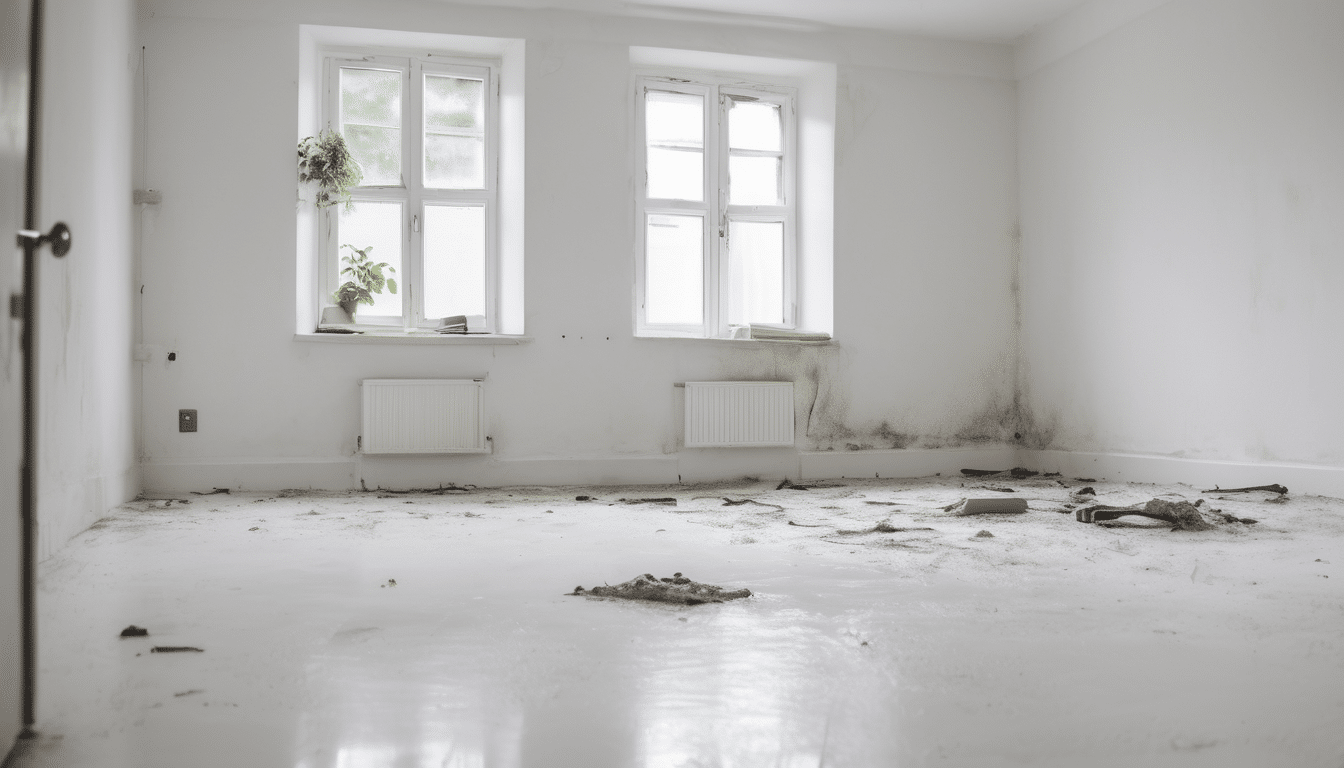
Discovering mold in your rented flat is unsettling — but acting without documentation first is one of the most costly mistakes a tenant can make. Knowing How to Document mold damage in a rented flat is the difference between a resolved dispute and an unresolved one. In the UAE, where rental relationships are governed by tenancy law and disputes are handled through the Rental Dispute Settlement Centre (RDSC), evidence is everything.
Mold in rented properties across Dubai, Sharjah, Abu Dhabi, and the wider UAE is far more common than most people realise. The climate — with ambient temperatures exceeding 40°C in summer and indoor relative humidity frequently rising above 70% — creates persistent conditions for mold growth, particularly in sealed, air-conditioned buildings. When mold appears, the central question is almost always the same: who is responsible? This relates directly to Document Mold Damage In A Rented Flat.
Before that question can be answered fairly, the condition must be properly recorded. This guide explains, step by step, how to document mold damage in a rented flat in a way that is legally useful, scientifically credible, and practically actionable.
Document Mold Damage In A Rented Flat – Why Documentation Matters Before Anything Else
In a rental dispute involving mold, the burden of proof rests heavily on whoever makes the claim. Whether you are asserting that the landlord failed to maintain the property, or the landlord is claiming you caused the damage through negligence, the outcome depends largely on documented evidence gathered at the right time.
Once mold is cleaned — even partially — critical evidence disappears. The affected surface area, the pattern of growth, the location relative to building systems, and the visible extent of damage cannot be reconstructed from memory. Documentation must happen before any remediation or cleaning takes place. When considering Document Mold Damage In A Rented Flat, this becomes clear.
UAE tenancy law, specifically Law No. 26 of 2007 and its amendments in Dubai, places responsibility on landlords to maintain the property in a condition fit for the agreed use. However, proving that obligation was breached requires more than a verbal complaint. You need dated, structured, verifiable records.
What You Need Before You Begin
Before you start to document mold damage in a rented flat, gather the following basic tools. None of these are specialised or expensive, but each plays a specific role in building a credible record.
- A smartphone with a functioning camera capable of high-resolution photos and video
- A measuring tape (metric, in centimetres or metres)
- A notepad or digital notes application for observations
- Sticky labels or adhesive markers for numbering affected zones
- Access to your tenancy contract and move-in inspection report (if available)
- A hygrometer or humidity indicator (widely available in UAE hardware stores for AED 30–80)
- Your original move-in photographs, if taken
If you have a tenancy contract that references the condition of the property at handover, locate it now. Any move-in inspection report signed at the beginning of the lease is particularly valuable, as it establishes the baseline condition of the flat before your occupancy.
Step-by-Step Guide to Document Mold Damage in a Rented Flat
Step 1 — Date and Time Stamp Everything
Ensure your phone’s date and time settings are correct before taking a single photograph. Every image you capture will carry embedded metadata, including the date, time, and GPS location, which adds credibility to your record. This metadata is admissible as supporting evidence in RDSC proceedings. The importance of Document Mold Damage In A Rented Flat is evident here.
Do not edit, crop, or apply filters to any images intended for documentation. Use originals only.
Step 2 — Photograph Each Affected Area Systematically
Learning how to document mold damage in a rented flat visually is a skill worth approaching methodically. For each affected area, capture three types of images:
- Wide-angle shot: Shows the affected area in relation to the room — a full wall, ceiling, or floor section with surrounding context
- Mid-range shot: Captures the mold growth at a distance of approximately 0.5–1 metre, showing the spread and shape of the colony
- Close-up shot: Taken within 15–20 cm, showing texture, colour, and the surface it has colonised
Place a ruler or measuring tape next to visible mold colonies before photographing them. This provides a physical reference for scale, which is useful when estimating total affected area in square metres.
Step 3 — Record a Video Walk-Through
Video documentation is often more persuasive than photographs alone. Record a continuous, narrated walk-through of every affected room. Speak clearly, stating the date, the flat address, and what you are observing. Point the camera steadily at each mold location, including any discolouration, water staining, or associated damage to ceilings, walls, or window frames. Understanding Document Mold Damage In A Rented Flat helps with this aspect.
Video captures context that photographs miss — such as a musty odour you describe verbally, the proximity of a leaking pipe to the mold site, or the pattern of staining that suggests a building envelope failure above.
Step 4 — Map the Affected Zones
Produce a simple floor plan of the flat — a hand-drawn sketch is sufficient — and mark each affected location with a number or letter. Cross-reference each marked location with your photographs. This mapping exercise is one of the most underused steps when tenants try to document mold damage in a rented flat, yet it is one of the most persuasive tools in a formal dispute.
Step 5 — Record Environmental Conditions
Using your hygrometer, measure the relative humidity in each affected room and record the readings alongside the date and time. In Dubai and across the UAE, indoor humidity regularly exceeds 65–70% in summer months, particularly in flats with undersized or poorly maintained HVAC systems. These readings can help establish whether conditions were conducive to mold growth independent of your behaviour as a tenant.
Note any visible signs of condensation on windows, pipes, or wall surfaces. Photograph these separately. Condensation is a building physics indicator, not simply a housekeeping issue, and it often points to thermal bridging or inadequate insulation — both of which are landlord responsibilities. Document Mold Damage In A Rented Flat factors into this consideration.
Step 6 — Note Associated Water Sources or Damage
Identify and photograph any potential sources of moisture near the mold — leaking pipes, water stains on ceilings, poorly sealed bathroom fixtures, cracked grout, or signs of roof or wall infiltration. If the mold location correlates with a water source above or adjacent to it, document that relationship clearly. This becomes central evidence when establishing whether the mold was caused by a structural defect rather than tenant behaviour.
How to Document Mold Damage Through Formal Written Notification
Visual documentation alone is incomplete. You must also create a paper trail of formal communication with your landlord or property management company. This is a critical step in how to document mold damage in a rented flat for legal purposes.
Send a written notification — via email or registered letter — to your landlord immediately after completing your visual documentation. The notification should include:
- The date of discovery
- A clear description of each affected location
- Reference to any associated water damage or building defects observed
- A request for inspection and remediation within a reasonable timeframe
- Attached photographs as supporting evidence
Keep all responses from the landlord on record. Lack of response within a reasonable period is itself a form of evidence that the matter was neglected. Under UAE tenancy law, a landlord who fails to carry out necessary maintenance after notification may be held liable for resulting damages. This relates directly to Document Mold Damage In A Rented Flat.
Using a Professional Mold Inspection to Strengthen Documentation
When the mold problem is extensive, recurring, or disputed, a professional mold inspection report is one of the most powerful tools available. A qualified inspector — particularly one with IAC2 certification or equivalent credentials — can produce a scientifically defensible report that includes surface sampling results, air quality data, moisture readings, and a root-cause analysis.
In Dubai and across the UAE, professional mold inspection fees typically range from AED 500 to AED 2,500 depending on the size of the property and the scope of testing required. This cost is modest relative to what a disputed remediation project may involve, which can range from AED 3,000 to AED 30,000 or more for a medium to large flat.
A laboratory-confirmed report identifying specific mold species, affected surface areas, and probable moisture sources carries significantly more weight in an RDSC case than photographs alone. It shifts the documentation from subjective observation to verified scientific finding.
What Not to Do When You Document Mold Damage in a Rented Flat
Certain actions — often well-intentioned — can undermine your documentation and weaken your position in any dispute. Avoid the following:
- Do not clean or bleach the mold before documenting it. Cleaning removes evidence and may be interpreted as an admission that the issue was minor or self-inflicted.
- Do not make verbal-only complaints. Phone calls are difficult to verify. Always follow up in writing.
- Do not allow contractors to begin work before the condition is fully documented. Once remediation starts, the original condition cannot be independently verified.
- Do not discard affected materials such as curtains, mattresses, or furniture without photographing and recording them first.
- Do not delay. Mold spreads. Documenting a small affected area today may mean documenting a significantly larger problem in three weeks if conditions persist.
Preparing Your Evidence for a Rental Dispute in the UAE
If the landlord refuses to acknowledge responsibility or act on your notification, you may need to file a complaint with the RDSC in Dubai, or the equivalent authority in Abu Dhabi, Sharjah, or other emirates. At this stage, your documentation package becomes your case.
Organise your evidence into a clear file that includes:
- Chronological photographs with dates visible
- Video walk-through recordings
- Annotated floor plan showing affected zones
- Environmental readings log
- All written communications with the landlord
- Professional inspection report (if obtained)
- Copy of tenancy contract and any handover documents
- Receipts for any costs incurred due to the mold condition (temporary accommodation, medical consultations, damaged belongings)
The RDSC will evaluate the credibility, completeness, and timing of your evidence. A well-organised file that demonstrates you followed a responsible process — documenting first, notifying promptly, and seeking professional assessment — consistently produces better outcomes than fragmented records gathered after the dispute has already escalated.
Expert Tips for Thorough Mold Damage Documentation
After more than two decades investigating indoor environmental problems across the UAE, the following practical principles consistently determine whether documentation is useful or not when a dispute arises: When considering Document Mold Damage In A Rented Flat, this becomes clear.
- Document on the day of discovery. The condition is most clearly visible and unchanged on the first day. Every subsequent day introduces the risk of further spread, cleaning, or denial.
- Use natural light where possible. Flash photography can obscure mold texture and colour. Where natural light is limited, use a secondary light source held at an angle to cast shadows that reveal surface growth.
- Record the smell. Mold produces volatile organic compounds that create a musty, earthy odour. Describe this in your written notification. While odour cannot be photographed, it supports a finding of active mold presence.
- Cross-reference with weather events. If mold appeared shortly after heavy rainfall or a water leak, note the dates and correlate them with your documentation. This timeline is useful when establishing a cause-and-effect relationship tied to building performance.
- Consider a second round of documentation 30 days later. If the landlord has not acted and the condition has worsened, a comparative record showing growth progression is compelling evidence of ongoing neglect.
Conclusion
Knowing how to document mold damage in a rented flat is not optional in the UAE’s rental environment — it is a practical necessity. Mold disputes are common, the financial stakes are real, and outcomes depend on the quality of evidence presented, not on who speaks loudest.
The process of how to document mold damage in a rented flat begins the moment you notice a problem: photograph systematically, map the affected zones, record environmental data, notify in writing, and seek professional assessment where the problem is significant or disputed. Do this before any cleaning, before any contractor visits, and before any verbal agreements are made.
Indoor mold in UAE apartments and villas is rarely random. It is a predictable outcome of moisture, building physics, and maintenance failures. When you understand what you are looking at and document it properly, you are not just protecting your tenancy — you are contributing to a factual record that can support fair resolution for both parties.
If you are uncertain about the extent of the problem or need a professionally prepared report for an RDSC dispute, a qualified indoor environmental consultant can conduct a formal mold inspection and provide laboratory-supported findings. That report, combined with your own structured documentation, gives you the strongest possible foundation for whatever comes next. Understanding Document Mold Damage In A Rented Flat is key to success in this area.