
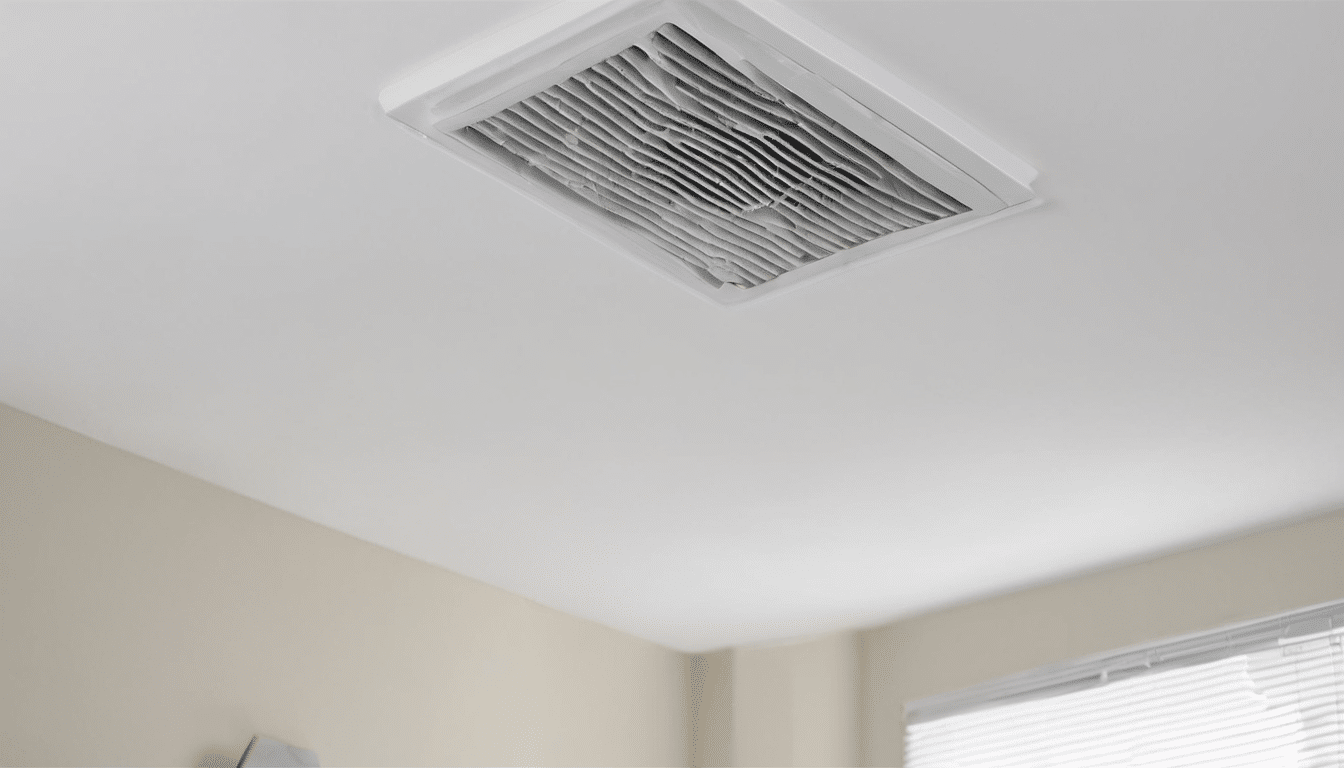
Mould in AC vents is one of the most commonly suspected yet frequently misdiagnosed indoor environmental problems in Dubai. When someone reports a musty odour coming from their split unit or notices dark discolouration around a supply grille, the question is rarely whether something is present — the question is what exactly it is, at what concentration, and what the laboratory results say. Understanding mold in AC vents: how to confirm it properly is the foundation of any remediation decision that will actually hold.
In Dubai’s climate, where outdoor temperatures exceed 45°C for months at a time and indoor humidity is continuously managed by mechanical cooling, AC systems work under sustained biological pressure. Condensation forms on coil surfaces, drain pans collect standing water, and supply ducts deliver conditioned air at temperatures that create ideal condensation points at vent faces. These are not random conditions — they are predictable outcomes of building physics in a hot, humid environment. Confirming mold in AC vents means understanding that context before reaching for a swab or a camera. This relates directly to mold In Ac Vents: How To Confirm It.
This guide covers every confirmation method available to Dubai homeowners and facility managers — from the first visual assessment to laboratory-verified air and surface sampling. Each method has a specific role. Used together, they produce the evidence base needed to confirm, quantify, and respond to Mold in AC vents: how to confirm it with certainty.
Mold In Ac Vents: How To Confirm It: Why Confirmation Matters Before Any Action
The instinct to clean immediately after spotting dark residue around an AC grille is understandable. However, acting without confirmation can mean treating the wrong problem, using inappropriate methods, or missing a far larger contamination source hidden deeper in the ductwork. Mold in AC vents: how to confirm it is not a procedural formality — it directly shapes the scope and method of any response.
Not every discolouration around a vent is mould. Dust accumulation, oxidised metal, paint transfer, and construction residue can all produce dark staining that resembles fungal growth to the untrained eye. Conversely, mould colonies inside ducts can be entirely invisible from the grille face while actively releasing spores into occupied spaces. Confirmation bridges the gap between suspicion and evidence.
As an IAC2 Certified Indoor Air Consultant with more than 20 years of field investigation experience, I have encountered cases where visible “mould” at the vent grille was harmless sooty debris, and cases where visually clean vents were the primary source of elevated Aspergillus and Penicillium counts in the occupied zone. The surface appearance is never sufficient on its own.
Mold In Ac Vents: How To Confirm It: Visual Inspection Methods for AC Vent Mould
Visual inspection is the starting point — not the conclusion. A systematic visual assessment of AC vents provides preliminary evidence that guides the selection of subsequent confirmation tools. When considering Mold In Ac Vents: How To Confirm It, this becomes clear.
What to Look For at the Grille Surface
Examine each supply and return grille under strong directional lighting. Mould growth typically presents as grey, black, or greenish discolouration with a slightly raised or powdery texture. Pay particular attention to the slats and the inner frame of the grille, where moisture from condensation tends to collect. Staining that extends inward from the grille face — rather than sitting only on the outer surface — is more diagnostically significant.
Document every grille location with photographs taken from a consistent angle and distance. In Dubai villas and apartments with multiple fan coil units or ducted systems, this visual mapping creates a spatial picture of where contamination appears most concentrated, which informs air sampling placement later in the process.
Assessing the Drain Pan and Coil Access
Where accessible, the evaporator coil and drain pan are critical visual inspection points. Standing water in the drain pan, visible slime on the pan surface, or dark growth on coil fins are strong indicators of biological activity. In many Dubai split units, the drain pan is accessible by removing the front cover. In ducted fan coil units, access panels in the ceiling void provide entry. These observations are part of confirming mold in AC vents: how to confirm it across the full system.
Mold In Ac Vents: How To Confirm It – Borescope Inspection — Seeing Beyond the Grille
A borescope — a flexible camera on an illuminated probe — is one of the most valuable tools for confirming mold in AC vents in concealed ductwork. It allows direct visual access to duct interiors without demolition, ceiling removal, or system shutdown beyond the immediate inspection period.
During a borescope investigation, the probe is inserted through the grille opening or a small access point drilled into the duct wall. The camera captures real-time footage of the duct liner, internal surfaces, insulation backing, and any debris accumulation. Mould colonies inside ductwork often appear as fuzzy or matted patches on the duct lining, particularly in low-velocity zones where particulate settles and moisture from condensation persists.
Based on field investigations across Dubai properties, internal duct mould is most commonly found within the first two metres of supply ductwork downstream from the fan coil unit — precisely where temperature differentials are greatest and condensation most likely. Borescope footage from these zones, combined with surface samples taken under direct visualisation, produces highly reliable confirmation data. The importance of Mold In Ac Vents: How To Confirm It is evident here.
Air Sampling to Confirm Mold in AC Vents
Air sampling is the method that transforms visual suspicion into measurable data. For mold in AC vents: how to confirm it through air quality evidence, two principal sampling approaches are used in professional investigations.
Spore Trap Sampling (Viable and Non-Viable)
Spore trap cassettes — such as Air-O-Cell or Zefon Bio-Tape — collect airborne particulate on a sticky substrate as a calibrated volume of air passes through the device. The cassette is then analysed under microscopy at a certified laboratory. Results are expressed as spore counts per cubic metre, broken down by genus.
When sampling for mold in AC vents, samples are collected at the supply vent face with the system running, in the room general air, and outdoors as a baseline. Elevated counts at the vent face compared to general room air — particularly for genera such as Aspergillus, Penicillium, Cladosporium, or Stachybotrys — provide direct confirmation that the HVAC system is a contamination source. Understanding Mold In Ac Vents: How To Confirm It helps with this aspect.
Duct Air Sampling
In more complex investigations, sampling probes can be inserted directly into ductwork to collect air from inside the system. This method isolates the duct environment from room air, producing the most precise data on what the system itself is carrying. Laboratory analysis typically shows significantly higher spore concentrations inside contaminated ductwork than in the occupied room, confirming active release from the vent source.
Surface Sampling Methods for AC Vent Mould
Surface sampling confirms the biological identity of visible growth and quantifies contamination on accessible surfaces. For mold in AC vents: how to confirm it through surface evidence, three methods are used depending on the nature of the suspected growth.
Bulk Sampling
A small physical sample of the suspected material — dust from inside the duct, a piece of contaminated liner, or a section of the drain pan biofilm — is collected in a sterile container and submitted for laboratory culture and microscopy. Bulk sampling provides genus and species identification, which is essential for risk assessment and remediation protocol design. Mold In Ac Vents: How To Confirm It factors into this consideration.
Swab Sampling
A sterile swab is used to collect surface growth from a defined area, typically 10 cm × 10 cm. Swab samples are particularly useful on hard, non-porous surfaces such as metal grilles, coil fins, or plastic drain pans. The results confirm the presence and identity of fungal species on those specific surfaces.
Tape-Lift Sampling
Clear adhesive tape is pressed onto the surface and lifted, capturing spores and hyphal fragments. The tape is then mounted on a microscope slide for direct microscopy analysis. Tape-lift sampling is fast, minimally invasive, and well-suited for duct liner surfaces accessed via borescope or inspection opening.
How Moisture Mapping Supports Confirmation
Mould cannot establish without moisture. Moisture mapping — the systematic measurement of surface and ambient moisture content across the building envelope and HVAC components — is therefore not a separate investigation but an integral part of confirming mold in AC vents: how to confirm it with full diagnostic context.
Thermal imaging cameras identify temperature differentials at duct surfaces, ceiling panels adjacent to fan coil units, and wall surfaces near concealed pipework. Cold spots below the dew point are locations where condensation occurs — and where mould becomes biologically possible. A pin-type moisture metre confirms elevated moisture content in duct liner materials, ceiling tiles, and surrounding gypsum board.
In Dubai apartments with concealed ceiling cassette units or exposed surface-mounted splits, moisture mapping frequently reveals that mould at the vent grille is only the visible portion of a much larger hygrothermal problem extending into the ceiling void or behind the wall where refrigerant pipes run without adequate vapour barrier continuity.
Laboratory Analysis and Result Interpretation
Every surface and air sample collected during a mold in AC vents: how to confirm it investigation must be processed by an accredited microbiology laboratory. Laboratory analysis converts field samples into interpretable data: genus and species identification, spore concentration per cubic metre, and colony-forming units per square centimetre.
At Saniservice’s in-house microbiology laboratory — the UAE’s only such facility operated by an indoor environmental services company — samples from AC vent investigations are processed using direct microscopy and culture methodology, with results cross-referenced against outdoor baseline counts. This comparison is critical: an elevated indoor count only has diagnostic meaning when interpreted against the outdoor spore burden for that date and season.
Species identification refines risk assessment significantly. Cladosporium is ubiquitous and common outdoors; its indoor elevation is concerning but contextually different from elevated Stachybotrys chartarum, which indicates chronic moisture exposure on cellulose substrates and carries a different risk profile. The laboratory result is not the end of the investigation — it is the beginning of informed decision-making.
Confirming Mold in AC Vents in Dubai’s Specific Conditions
Dubai’s climate introduces variables that make mold in AC vents: how to confirm it more nuanced than in temperate regions. With outdoor relative humidity frequently exceeding 80% during summer months and indoor AC systems operating continuously for eight to ten months of the year, the biological load on HVAC systems here is sustained rather than seasonal.
In Dubai villas built before 2010, field data consistently shows that flexible duct insulation with compromised vapour barriers is the primary moisture pathway leading to internal duct mould. In post-2010 high-rise apartments across areas such as Business Bay, JVC, and Dubai Marina, the condensation risk shifts to the duct collar connections at fan coil unit outlets, where thermal bridging is most pronounced.
Confirmation investigations in Dubai should always include an assessment of the building’s mechanical system design — not just the accessible vent surfaces. A mold in AC vents finding that is confirmed in isolation, without understanding the hygrothermal context of the building envelope, will likely recur within twelve to eighteen months of remediation.
What Confirmed Mold in AC Vents Tells You Next
When the confirmation process is complete — visual assessment, borescope inspection, air and surface sampling, moisture mapping, and laboratory analysis — the findings collectively answer three questions: Is mould present? What type and at what concentration? What building condition is sustaining it? This relates directly to Mold In Ac Vents: How To Confirm It.
These answers determine the remediation scope. Confirmed surface growth limited to the grille and accessible coil surfaces may be addressable through targeted cleaning with appropriate biocidal treatment and coil sanitisation. Confirmed internal duct contamination with elevated spore counts in the occupied zone requires a more structured approach: isolation of the affected system, HEPA-filtered extraction, liner replacement or encapsulation where appropriate, and post-remediation verification sampling before the system returns to service.
For mold in AC vents: how to confirm it properly, the confirmation process is inseparable from the remediation plan. Without confirmed data, remediation is guesswork. With confirmed data, every decision has a basis — and every outcome can be verified. That verification, delivered through post-remediation air sampling and laboratory analysis, is what separates a genuine resolution from a cosmetic treatment.
If you have observed discolouration, detected a persistent musty odour from your AC system, or experienced indoor air quality symptoms that correlate with system operation, the appropriate next step is a structured diagnostic investigation — not cleaning first and testing later. The sequence matters as much as the methods. When considering Mold In Ac Vents: How To Confirm It, this becomes clear.
Frequently Asked Questions
How do I know if the dark marks around my AC vent are mould or just dust?
Visual appearance alone cannot reliably distinguish mould from dust, oxidation, or other residues. A tape-lift or swab sample submitted to an accredited laboratory will confirm the presence of fungal hyphae and spores within 3–5 working days. In Dubai, this laboratory confirmation step is essential before deciding on any remediation approach, as dusty desert particulate is common and easily mistaken for biological growth.
Can I test for mold in AC vents myself at home in Dubai?
Basic consumer mould test kits are available but provide limited diagnostic value. They confirm presence or absence of mould broadly without quantifying concentration, identifying species, or locating the source within the duct system. For a result that informs a remediation decision, professional air sampling with laboratory analysis by a certified indoor environmental consultant is the reliable standard in the UAE.
What does mould smell like coming from an AC vent?
Mould growth in AC systems typically produces a musty, earthy odour — sometimes described as damp fabric or stale water. This odour is most noticeable when the system first starts and diminishes as air circulates. In Dubai properties, this smell often intensifies at the beginning of summer when systems restart after reduced use during winter months, when condensation and biological activity accelerate rapidly. The importance of Mold In Ac Vents: How To Confirm It is evident here.
How long does a professional mold in AC vents confirmation take?
A complete diagnostic investigation — including visual inspection, borescope assessment, moisture mapping, air sampling, and surface sampling — typically takes two to four hours for a single residential unit. Laboratory results from an accredited UAE facility are generally available within three to five working days. A full written report with species identification and remediation recommendations follows upon result receipt.
Is mould in AC vents a serious problem in Dubai apartments?
In Dubai’s climate, HVAC systems operate under sustained biological pressure due to high ambient humidity, continuous condensation at cooling surfaces, and year-round operation. When mould establishes in ducted systems, it releases spores continuously into occupied spaces. The significance depends on species identified, spore concentrations measured, and the health profile of occupants — all of which require laboratory confirmation to assess properly.
What species of mould are most commonly found in Dubai AC vents?
Based on laboratory results from AC vent investigations across Dubai properties, Aspergillus and Penicillium species are the most frequently identified genera in ductwork. Cladosporium is commonly found at grille surfaces. In cases involving chronic drain pan flooding or saturated duct liner, Chaetomium and Stachybotrys have been confirmed in older villa properties with fibre-reinforced flexible ductwork that has experienced prolonged moisture exposure. Understanding Mold In Ac Vents: How To Confirm It helps with this aspect.
Does cleaning an AC unit remove confirmed mould from the vents?
Standard AC cleaning — which typically covers coil rinsing, filter replacement, and drain pan flushing — addresses accessible surfaces but does not remediate mould inside duct liners or within concealed system components. Confirmed mould in AC vents requires a targeted remediation protocol based on laboratory findings, including appropriate containment, HEPA extraction, surface treatment, and post-remediation verification sampling to confirm clearance. Understanding Mold In Ac Vents: How To Confirm It is key to success in this area.