
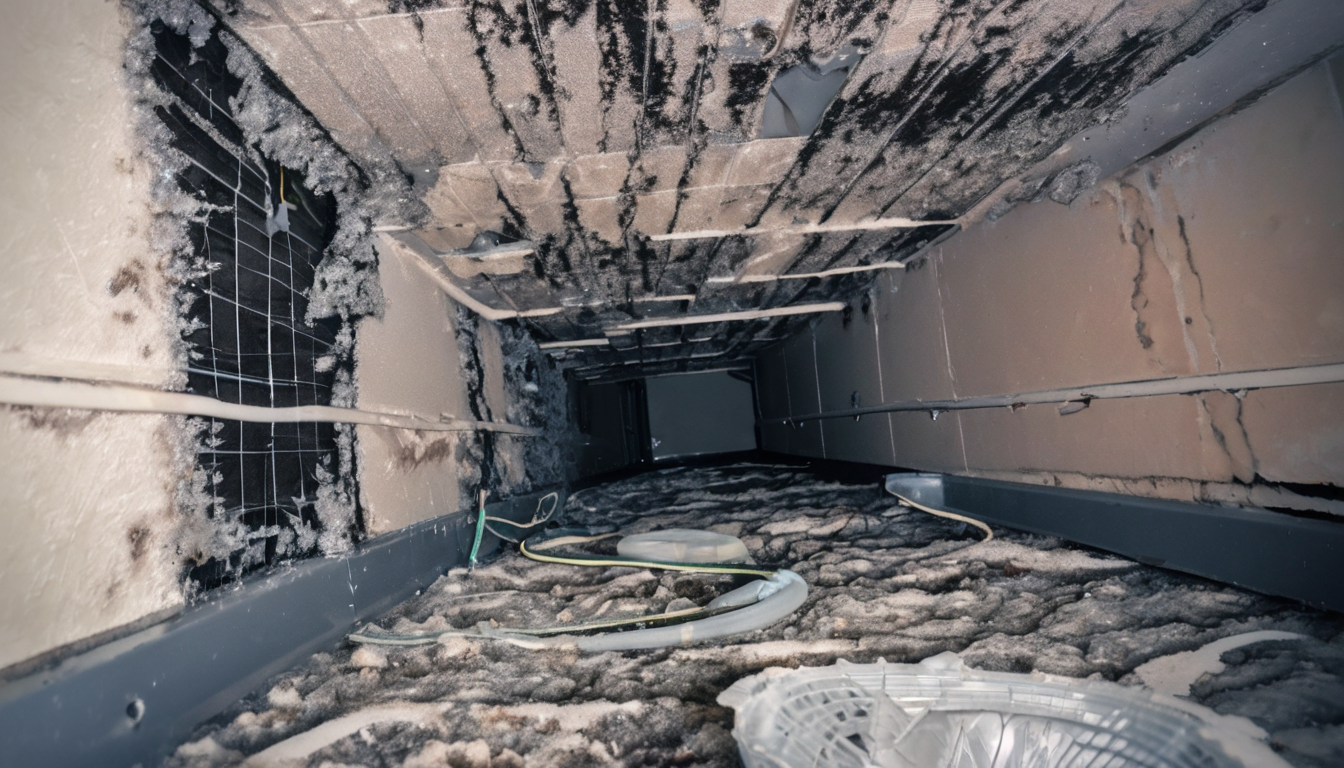
Understanding Mold in AC Ducts Dubai: Causes and Remediation Steps is essential. In Dubai’s built environment, Mold in AC ducts is not an accident. It is a predictable outcome — one shaped by high ambient humidity, temperature differentials inside ductwork, and the way buildings are designed, maintained, and operated. When a homeowner notices a musty smell from supply vents or experiences persistent respiratory discomfort that improves when they leave the property, these are not coincidences. They are signals worth investigating with precision. Understanding mold in AC ducts Dubai, including its causes and remediation steps, is the first move toward resolving the problem correctly.
As an IAC2 Certified Indoor Air Consultant with more than 20 years of field experience in the UAE, I have investigated hundreds of cases where visible surface mold was treated while the duct system — the actual distribution network — was left untouched. The contamination then continued circulating through every room. This buyer’s guide is written to help Dubai homeowners, property managers, and facility teams evaluate professional services intelligently, ask the right questions, and avoid the costly mistake of incomplete remediation. This relates directly to Mold in AC Ducts Dubai: Causes and Remediation Steps.
Mold in AC Ducts Dubai: Causes and Remediation Steps – Why Mold in AC Ducts Forms in Dubai’s Climate
Dubai’s climate creates conditions that are almost ideal for mold growth inside ductwork. Outdoor relative humidity regularly exceeds 80% during summer months, and outdoor temperatures can exceed 45°C. When this warm, moisture-laden air contacts the cool internal surfaces of supply ducts — chilled to between 10°C and 14°C by the air handling unit — condensation forms. That condensation, combined with accumulated dust on duct liner surfaces, provides everything mold requires: moisture, nutrients, and a stable substrate. When considering Mold in AC Ducts Dubai: Causes and Remediation Steps, this becomes clear.
Mold in AC ducts is further accelerated by inconsistent operation. Properties left unoccupied with the AC running continuously at very low set points, or switched off entirely for extended periods, experience dramatic swings in duct surface temperature. These swings encourage condensation cycles that wet and dry duct surfaces repeatedly — a pattern commonly observed during professional assessment of villa and apartment properties in Dubai, Abu Dhabi, and Sharjah. The importance of Mold in AC Ducts Dubai: Causes and Remediation Steps is evident here.
Design and Installation Factors
Beyond climate, building design choices significantly influence whether mold in AC ducts becomes a recurring problem. Undersized return air pathways, poorly sealed duct joints, and the use of fibre board duct liner in high-humidity zones are all contributing factors commonly identified in field investigations across UAE properties. Flex duct sagging and condensation pooling at low points is another recurring finding in laboratory-confirmed mold cases I have investigated at Saniservice. Understanding Mold in AC Ducts Dubai: Causes and Remediation Steps helps with this aspect.
Mold in AC Ducts Dubai: Causes and Remediation Steps – The Causes Behind Mold in AC Ducts Dubai Properties Must Und
Identifying the cause is not secondary to remediation — it is the foundation of it. Without root-cause analysis, any remediation performed is, at best, temporary. The causes of mold in AC ducts in Dubai properties fall into several consistent categories that a qualified indoor environmental professional should assess before any remediation work begins. Mold in AC Ducts Dubai: Causes and Remediation Steps factors into this consideration.
Elevated Duct Humidity and Condensation
When supply air is overcooled and delivered to a warm, humid duct system, surface condensation is virtually guaranteed. Ducts running through unconditioned ceiling plenums — common in Dubai villas — are particularly susceptible. The external duct surface sweats, moisture migrates through insulation, and the internal liner stays wet long enough for mold colonies to establish. This relates directly to Mold in AC Ducts Dubai: Causes and Remediation Steps.
Dirty Filters and Reduced Airflow
A clogged filter reduces airflow across the evaporator coil, causing coil temperatures to drop further and increasing the likelihood of condensation downstream in ductwork. Laboratory analysis of swab samples from properties with consistently blocked filters frequently reveals elevated mold spore concentrations on duct liner surfaces — a pattern I have documented repeatedly in Saniservice’s in-house microbiology lab. When considering Mold in AC Ducts Dubai: Causes and Remediation Steps, this becomes clear.
Organic Dust Accumulation
Dust is not inert inside a duct system. In Dubai’s environment, dust accumulation inside ducts contains skin cells, textile fibres, and organic particulates — all of which serve as nutrients for mold. When that dust becomes wet from condensation, mold colonisation can begin within 48 to 72 hours. This is why dust removal and mold remediation in AC ducts are never separate processes — they must be addressed together. The importance of Mold in AC Ducts Dubai: Causes and Remediation Steps is evident here.
Mold in AC Ducts Dubai: Causes and Remediation Steps – How Professionals Assess Mold in AC Ducts — What to Look F
This is where many Dubai homeowners make their first purchasing mistake: they select a duct cleaning service without understanding the difference between a cleaning company and an indoor environmental diagnostic provider. When evaluating services for mold in AC ducts Dubai remediation, the following professional assessment components should be standard, not optional. Understanding Mold in AC Ducts Dubai: Causes and Remediation Steps helps with this aspect.
Visual Inspection and Borescope Investigation
A professional assessment of mold in AC ducts begins with visual inspection — both at the register level and inside duct sections using a borescope camera. This allows the investigator to observe mold growth, assess liner condition, identify moisture staining, and document the extent of contamination before any work begins. Properties that receive a quote without this step are not being assessed — they are being priced for a generic service. Mold in AC Ducts Dubai: Causes and Remediation Steps factors into this consideration.
Air Sampling and Surface Sampling
Laboratory-confirmed mold identification requires sampling. Air samples collected from supply registers and compared against outdoor baseline samples reveal whether duct-distributed spore counts are elevated above ambient levels. Surface swab or tape-lift samples from inside duct sections identify specific mold genera — information that directly informs remediation method selection. At Saniservice, this sampling is processed through the UAE’s only in-house microbiology laboratory operated by an indoor environmental services company, allowing faster and more precise results than outsourced alternatives. This relates directly to Mold in AC Ducts Dubai: Causes and Remediation Steps.
Moisture Mapping
No assessment of mold in AC ducts is complete without mapping moisture conditions in the surrounding building envelope. If duct sweating is severe, moisture may have migrated into adjacent ceiling materials, insulation, or wall cavities. Thermal imaging and moisture meters identify these secondary affected zones — which must be included in remediation scope to prevent regrowth. When considering Mold in AC Ducts Dubai: Causes and Remediation Steps, this becomes clear.
Mold in AC Ducts Dubai — Remediation Steps That Produce Verified Results
Effective remediation of mold in AC ducts in Dubai properties follows a structured sequence. Understanding this sequence helps buyers distinguish between genuine remediation services and cosmetic cleaning presented as remediation. The importance of Mold in AC Ducts Dubai: Causes and Remediation Steps is evident here.
Step 1 — Containment and System Isolation
Before any physical remediation work begins, the HVAC system is isolated and the work area contained. For properties where occupants are present or returning shortly, negative pressure containment barriers at register openings prevent disturbed mold spores from migrating into occupied spaces. This step is non-negotiable in responsible mold in AC ducts remediation and is aligned with NADCA and IICRC S520 remediation standards. Understanding Mold in AC Ducts Dubai: Causes and Remediation Steps helps with this aspect.
Step 2 — Mechanical Removal of Contaminated Material
Where duct liner is confirmed as mold-colonised through laboratory sampling, mechanical removal — not chemical treatment — is the correct approach. Mold that has penetrated porous liner materials cannot be disinfected to a satisfactory standard. The liner must be removed, disposed of in sealed containment bags, and replaced with appropriate materials. Attempting to treat mold on porous duct liner with antimicrobial sprays without physical removal is one of the most common remediation failures I encounter in follow-up investigations across Dubai and Abu Dhabi properties. Mold in AC Ducts Dubai: Causes and Remediation Steps factors into this consideration.
Step 3 — HEPA Vacuuming and Mechanical Cleaning
All duct surfaces — including sheet metal sections — are mechanically cleaned using HEPA-filtered equipment. This removes residual spore populations and the organic dust that sustained mold growth. NADCA-aligned methodology requires that negative pressure be maintained in the duct system during mechanical cleaning to prevent cross-contamination of adjacent areas. This relates directly to Mold in AC Ducts Dubai: Causes and Remediation Steps.
Step 4 — Antimicrobial Treatment of Non-Porous Surfaces
After mechanical cleaning of non-porous duct surfaces, an appropriate antimicrobial agent may be applied to reduce residual surface contamination. The selection of antimicrobial product matters — not all products registered for HVAC use are equally effective against the mold genera most commonly identified in Dubai duct investigations. A laboratory-confirmed species report guides this selection rather than a generic product default. When considering Mold in AC Ducts Dubai: Causes and Remediation Steps, this becomes clear.
Step 5 — Root Cause Correction
Remediation without root cause correction is remediation that will need to be repeated. If duct sweating was caused by inadequate insulation, that insulation must be upgraded. If humidity control was insufficient, supplementary dehumidification or HVAC balancing recommendations must follow. Mold in AC ducts Dubai remediation that does not address the hygrothermal root cause has not been completed — it has only been temporarily interrupted. The importance of Mold in AC Ducts Dubai: Causes and Remediation Steps is evident here.
Step 6 — Post-Remediation Verification
Clearance sampling — air and surface samples collected after remediation and before system restart — is the evidence that remediation was successful. Without post-remediation verification, there is no data to confirm that mold levels have returned to acceptable baseline levels. A professional service will issue a written post-remediation report, and for properties where DHA mold clearance certificate requirements apply, verification sampling is a mandatory component of the documentation package. Understanding Mold in AC Ducts Dubai: Causes and Remediation Steps helps with this aspect.
What to Avoid When Selecting a Mold in AC Ducts Dubai Service
The Dubai market includes a wide range of HVAC cleaning services, not all of which are equipped to handle confirmed mold contamination. Buyers evaluating mold in AC ducts remediation should avoid services that quote without inspecting, treat duct liner with chemicals rather than removing it, and provide no post-remediation verification documentation. Equally, services that frame remediation as a routine cleaning — without laboratory sampling to confirm contamination levels before and after — are not delivering remediation. They are delivering maintenance.
Variables that affect the scope of professional mold in AC ducts remediation include duct system size, liner material type and condition, extent of mold colonisation confirmed by sampling, number of air handling units, and whether secondary moisture damage has affected adjacent building materials. For property-specific scope and professional assessment, contact a certified indoor environmental consultant directly rather than accepting a remote estimate.
Expert Takeaways — Mold in AC Ducts Dubai Remediation Done Right
- Root cause analysis must precede remediation scope — without it, recurrence is likely.
- Laboratory sampling before and after remediation is the difference between verified results and assumptions.
- Porous duct liner colonised by mold requires physical removal, not chemical treatment.
- Containment and negative pressure during remediation protect other areas of the property.
- Post-remediation verification is not optional — it is the proof that work was effective.
- Humidity control corrections must accompany remediation to prevent regrowth.
- An IAC2-certified or NADCA-accredited provider brings documented methodology, not guesswork.
Frequently Asked Questions
How do I know if my AC ducts have mold rather than just dust?
The most reliable indicator is laboratory-confirmed sampling — air samples from supply registers compared against outdoor baseline levels, and surface swabs from inside duct sections. A musty odour from vents is a common field indicator, but species identification through microbiology lab analysis is the only way to confirm mold and distinguish it from general particulate contamination.
Is mold in AC ducts common in Dubai apartments and villas?
Based on field investigations across Dubai, Abu Dhabi, and Sharjah properties, mold in AC ducts is a frequently identified finding — particularly in properties with fibre board duct liner, older HVAC systems, or a history of filter neglect. Dubai’s humidity levels and temperature differentials inside ductwork create conditions where mold establishment is a predictable rather than exceptional outcome.
What types of mold are most commonly found in Dubai AC ducts?
Laboratory analysis at Saniservice’s in-house microbiology laboratory commonly identifies Cladosporium, Aspergillus, and Penicillium species in Dubai duct investigations. The specific genera identified influence remediation method selection, particularly antimicrobial product choice and the urgency of occupant precautions during the remediation process.
How long does mold remediation in AC ducts take for a typical Dubai villa?
Remediation scope and duration vary by property. A single-zone apartment system with moderate contamination differs significantly from a multi-split villa with multiple air handling units and extensive duct networks. Professional assessment determines scope before work begins. Variables include duct system size, liner condition, extent of mold colonisation, and whether adjacent materials require remediation alongside the duct system.
Can I clean mold from AC ducts myself in a Dubai property?
DIY approaches to mold in AC ducts are not recommended for confirmed contamination. Physical removal of mold-colonised liner material, HEPA-filtered mechanical cleaning, and containment during work require professional equipment and training. Disturbing mold growth without proper containment can redistribute spores throughout the property, worsening indoor air quality rather than improving it.
Does mold in AC ducts require a DHA clearance certificate in Dubai?
DHA mold clearance certificates are required for specific property categories and situations in Dubai. For properties where mold remediation documentation is needed — whether for re-occupancy, tenancy disputes, or regulatory compliance — post-remediation verification sampling and a written clearance report from a certified indoor environmental professional form the basis of the documentation package. Confirm specific requirements with a certified consultant for your property type.
How soon can mold return to AC ducts after remediation in the UAE?
Mold can re-establish in AC ducts within weeks if root cause conditions — such as duct sweating, inadequate insulation, or poor humidity control — are not corrected alongside remediation. Remediation without root cause correction is commonly observed to result in recurrence. Long-term prevention requires addressing the building physics that created the moisture conditions in the first place.
Conclusion
Mold in AC ducts is not a cosmetic problem, and it is not one that resolves through routine cleaning alone. Understanding mold in AC ducts Dubai, including its causes and remediation steps, is what separates an informed purchasing decision from a repeated expense. The cause is almost always traceable to building physics — humidity, temperature differentials, airflow, and materials interacting in ways that produce a predictable biological outcome. The remediation, when done correctly, addresses all of these factors in sequence, confirms results through laboratory-verified post-remediation sampling, and leaves behind documentation rather than assumptions.
If your Dubai property has supply vents that carry an odour, if occupants notice improvement when away from the building, or if a previous duct cleaning has not resolved the problem, these are all indicators that a diagnostic assessment — not another cleaning service — is the appropriate next step. Saniservice’s Indoor Sciences Division offers IAC2-certified, laboratory-supported investigation for mold in AC ducts across Dubai, Abu Dhabi, Sharjah, and Ajman properties. See what your duct system’s air quality data actually shows before deciding what to do next. Understanding Mold in AC Ducts Dubai: Causes and Remediation Steps is key to success in this area.