
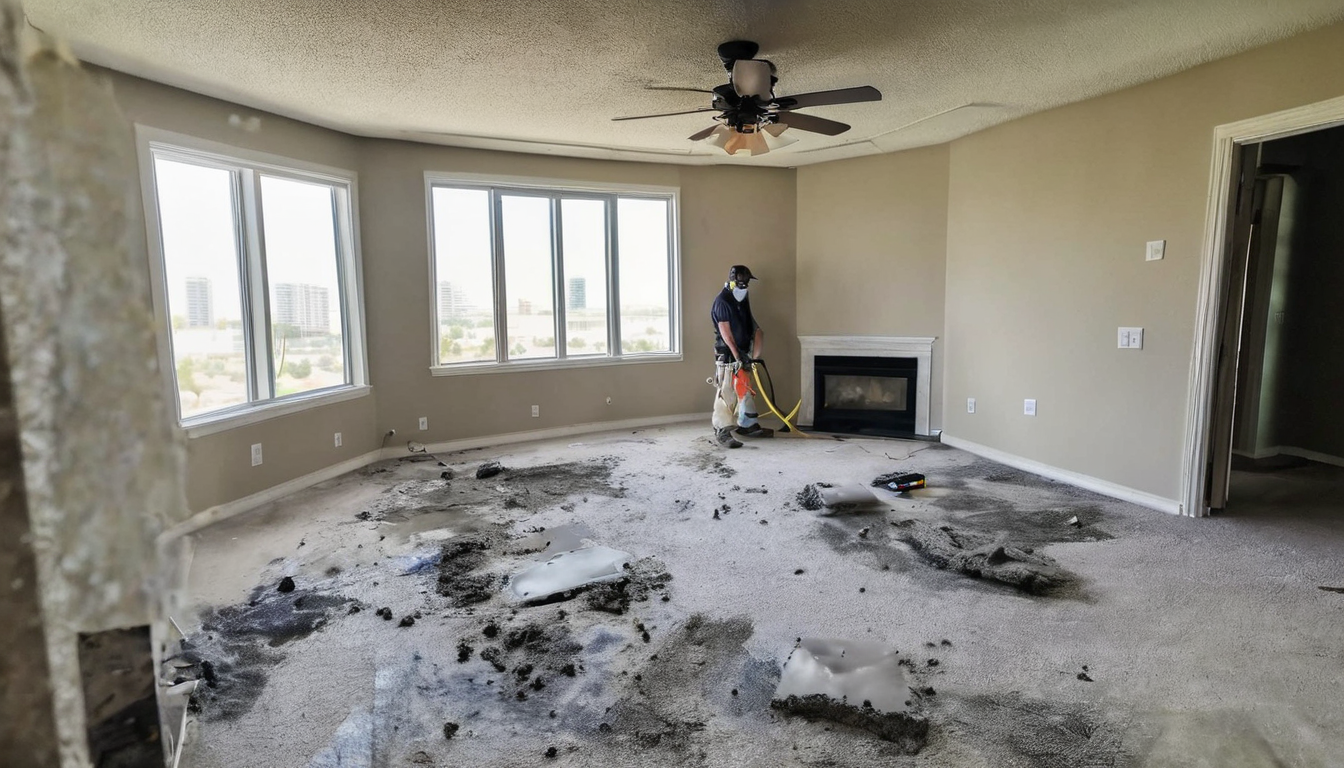
Professional mold removal in Dubai addresses one of the most persistent and frequently misunderstood challenges facing property owners in the UAE. In a region where outdoor humidity regularly exceeds 85% and indoor cooling systems run continuously for ten or more months of the year, mould does not grow by accident. It grows because specific conditions — moisture, organic material, and inadequate airflow — have aligned inside your building envelope. Understanding that sequence is the foundation of every effective remediation decision.
As an IAC2 Certified Indoor Air Consultant with over 20 years of field experience across Dubai, Abu Dhabi, Sharjah, and Ajman, I have investigated hundreds of mould cases that began as a visible patch on a wall and ended as a building science failure concealed behind cladding, within HVAC ducts, or beneath floor screeds. The visible mould is rarely the full story. Professional mold removal in Dubai must therefore begin with a diagnostic investigation — not a spray bottle and a scrubbing brush.
This guide provides a complete reference for homeowners, property managers, and building professionals who want to understand what genuine mould remediation involves, why the UAE climate demands a higher standard of practice, and what distinguishes a science-backed process from a cosmetic fix.
Why Dubai’s Climate Makes Professional mold Removal in Dubai Essential
Dubai’s thermal and humidity profile creates conditions that are uniquely challenging for building materials. Outdoor temperatures regularly reach 45°C in summer, while indoor air-conditioned spaces are maintained between 20°C and 24°C. That temperature differential of 20°C or more drives condensation onto any surface where the building envelope fails to provide adequate thermal separation.
Cold water pipes, poorly insulated walls, chilled beams, and supply air ducts that sweat inside ceiling voids — these are the moisture sources that laboratory analysis traces back to active mould colonies. In Dubai villas and apartments, the most commonly observed failure points are bathroom exhaust systems that discharge into ceiling voids rather than outdoors, AC systems that operate below dew point without adequate drain maintenance, and building envelopes constructed without vapour barriers appropriate for a hot-humid climate.
The Role of Condensation in Dubai Properties
Condensation-driven mould is particularly prevalent in Dubai high-rise apartments where chilled water systems cool structural elements below the dew point of indoor air. When warm, humid air from an adjacent space contacts these surfaces, moisture deposits and mould colonisation follows within 24 to 48 hours under favourable conditions. Professional Mold Removal in Dubai must account for these building-specific moisture pathways — addressing them structurally, not merely treating the resulting mould growth.
Seasonal transitions in the UAE — specifically the high-humidity period from June through September — consistently produce the highest volume of mould investigation requests. Field investigations during these months commonly identify mould growth that has been developing since the previous humid season but has only recently become visible or symptomatic for occupants.
Sand and Dust as Nutrient Sources
Dubai’s dust-laden environment contributes an often-overlooked factor: particulate matter deposited on moist surfaces provides organic nutrient substrate for mould colonisation. HVAC filter surfaces, condensate drain trays, and supply air grilles collect a layer of settled dust that, combined with any available moisture, creates conditions well-suited to fungal growth. This is a recurring finding in laboratory analysis of HVAC swab samples taken from properties throughout the UAE.
What Professional Mold Removal in Dubai Actually Involves
The term “mould removal” is widely used but frequently misapplied. Genuine professional mold removal in Dubai is a multi-stage technical process governed by internationally recognised standards, including IICRC S520 (Standard for Professional Mold Remediation) and IAC2 protocols. Each stage serves a specific scientific function and cannot be skipped without compromising the integrity of the outcome.
Stage 1 — Investigation and Moisture Mapping
Before any physical work begins, a certified mould professional should conduct a systematic investigation of the property. This includes thermal imaging to identify temperature anomalies and hidden moisture pockets, pin and pinless moisture meter readings across suspect surfaces, and visual assessment of the building envelope, HVAC system, and plumbing infrastructure.
Moisture mapping produces a documented picture of where water activity exists throughout the property. Without this step, remediation work targets only visible mould — leaving active moisture sources intact and guaranteeing regrowth. In my field investigations across Dubai villas and apartments, moisture mapping has identified concealed wet zones behind wall tiles, within floor screeds, and above suspended ceilings that were entirely invisible during routine visual inspection.
Stage 2 — Air and Surface Sampling
Laboratory sampling is not optional in professional mold removal in Dubai — it is the evidentiary foundation of the entire process. Spore trap air samples, surface tape lifts, and bulk material samples are collected before remediation begins to establish a baseline mould profile. Species identification matters: Stachybotrys chartarum, Chaetomium, Aspergillus, and Penicillium each present different risk profiles and respond differently to remediation protocols.
At Saniservice’s in-house microbiology laboratory — the only facility of its kind operated by an indoor environmental services company in the UAE — samples are analysed to genus and species level. This precision allows the remediation team to design a protocol matched to the specific contamination signature of each property, rather than applying a generic treatment to every case.
Stage 3 — Containment and Negative Pressure Setup
Once the investigation is complete and laboratory results are interpreted, physical remediation begins with containment construction. Containment isolates the affected area from the rest of the occupied building using polyethylene sheeting, sealed with mastic tape at all penetrations. A negative pressure differential is then established using HEPA-filtered air scrubbers, which draw air through the contamination zone and exhaust it safely — preventing mould spores from migrating to clean areas during the disturbance of removal work.
This step is particularly important in occupied Dubai properties where families or staff remain in residence during remediation. Cross-contamination from an improperly contained mould removal project can spread viable spores throughout an entire building, creating a problem significantly larger than the one being addressed.
Stage 4 — Physical Removal and Treatment
Infected porous materials — drywall, plasterboard, insulation, timber framing — that cannot be adequately cleaned are removed and double-bagged for disposal in accordance with local waste handling requirements. Non-porous surfaces are mechanically cleaned and treated with EPA-registered antimicrobial agents appropriate to the identified species and surface type.
Professional mold removal in Dubai should never rely on biocidal fogging or spray treatments alone. These approaches may suppress surface mould temporarily but do not address contamination within porous materials or resolve the underlying moisture condition. Field evidence consistently shows that fogging-only approaches result in regrowth within weeks to months.
Stage 5 — HEPA Vacuuming and Final Cleaning
Following removal and treatment, all surfaces within the containment zone are HEPA-vacuumed to capture residual spores and particulate debris. This step is followed by a final damp-wipe with an appropriate cleaning solution. The goal is to reduce the spore burden within the remediated zone to a level consistent with or below the outdoor baseline — the standard used in post-remediation verification sampling.
Post-Remediation Verification in Professional Mold Removal in Dubai
Post-remediation verification (PRV) is the scientific confirmation that professional mold removal in Dubai has achieved its intended outcome. Without PRV, the success of any remediation project is unknown — it is an assumption, not a result.
PRV involves collecting air and surface samples from the remediated zone after containment has been removed and the area has been allowed to equilibrate. These samples are analysed in the laboratory against the pre-remediation baseline and against control samples taken from unaffected areas of the same building. A successful outcome is defined by laboratory results, not by visual inspection alone.
In my professional experience, PRV sampling occasionally identifies residual contamination that was not apparent visually — behind newly installed materials, within HVAC return air pathways, or in adjacent spaces that received spore transfer during the project. Identifying these issues at the PRV stage, rather than after re-occupation, is precisely why the verification step exists.
Hidden Mould — The Case for Forensic Investigation
A significant proportion of professional mold removal in Dubai cases involves mould that is not visible to the naked eye. Hidden mould grows behind wall tiles, within ceiling voids, inside ductwork, under raised flooring, and within the core of composite building panels. Occupants in these properties typically experience indoor air quality symptoms — persistent cough, unexplained fatigue, eye irritation, or recurring respiratory episodes — without ever seeing mould growth directly.
Borescope Investigation Techniques
Forensic mould investigation uses borescope cameras inserted through small access holes to visually inspect wall cavities, ceiling voids, and duct interiors without destructive demolition. Combined with thermal imaging and moisture mapping, borescope investigation allows a certified professional to confirm or rule out concealed mould growth with minimal disruption to the building fabric.
Dubai villas with complex architectural envelopes — particularly those with double-skin facades, decorative cornices, or flat roof terraces with poor drainage — are frequently found to harbour concealed mould growth when forensic investigation techniques are applied. Standard visual inspection would not detect these colonies, and remediation scoped only on the basis of visual observation would leave the core problem untreated.
HVAC Systems as Hidden Mould Reservoirs
In Dubai apartments and commercial properties, HVAC systems are one of the most consistently overlooked sources of mould contamination. Supply air ducts, fan coil unit drain trays, evaporator coils, and flexible duct connections accumulate moisture and organic debris over time. Laboratory swab analysis of these components frequently identifies elevated Aspergillus, Cladosporium, and Penicillium concentrations in properties where room surfaces appear visually clean.
Professional mold removal in Dubai must therefore include an HVAC assessment as a standard component of the investigation protocol. Remediating room surfaces while leaving a contaminated HVAC system in place guarantees recontamination of the treated area within weeks of project completion.
Root Cause Analysis — The Difference Between Remediation and Repetition
The single most common reason professional mold removal in Dubai fails to produce a lasting outcome is the absence of root cause correction. Mould is a biological response to a physical condition. Removing the mould without correcting the condition that produced it is the equivalent of addressing a symptom without diagnosing the underlying cause.
Root cause analysis in a mould investigation examines four primary failure categories:
- Moisture intrusion — roof leaks, window frame failures, plumbing leaks, rising damp
- Condensation — thermal bridging, undersized insulation, cold surface temperatures relative to indoor dew point
- Ventilation deficiency — inadequate exhaust in bathrooms and kitchens, HVAC imbalances, occupied spaces lacking adequate fresh air exchange
- HVAC failure — undersized cooling capacity, drain blockages, dirty evaporator coils, duct leakage
In the Saniservice Architectural–Microbiological Investigation Protocol, root cause identification is a mandatory deliverable. Every professional mold removal in Dubai project should produce a written root cause finding and a remediation plan that addresses the building condition, not merely the biological growth.
Selecting a Professional Mold Removal in Dubai Service Provider
The UAE mould remediation market includes providers ranging from certified specialists to general cleaning companies offering mould treatment as an add-on service. The distinction matters significantly when the health and structural integrity of your property are the stakes.
Credentials and Certifications to Verify
When evaluating professional mold removal in Dubai providers, request evidence of the following:
- IAC2 Certification — International Association of Certified Indoor Air Consultants, the internationally recognised credential for mould and indoor air quality professionals
- IICRC S520 Compliance — adherence to the Standard for Professional Mold Remediation, the principal technical standard governing remediation practice
- ISO Certification — documented quality management systems under ISO 9001 or equivalent
- In-house or accredited laboratory access — the ability to process and interpret mould samples with scientific rigour
- NADCA accreditation — for providers offering HVAC mould assessment and duct remediation
A provider who cannot produce evidence of these credentials is not, by definition, offering professional mold removal in Dubai. Credentials exist to define the standard of practice — not as marketing decoration.
What a Professional Assessment Should Include
A thorough professional mold removal in Dubai assessment should include a written investigation report, moisture mapping data, laboratory results with species identification, a root cause finding, a remediation scope of work referenced to identified conditions, and a post-remediation verification plan. If a provider offers a verbal quote based solely on a brief visual walk-through, the scope of their service does not meet this standard.
Mycotoxin Awareness in Professional Mold Removal in Dubai
Certain mould species produce mycotoxins — secondary metabolites that present health concerns for occupants, particularly in properties with prolonged or extensive contamination. Stachybotrys chartarum, sometimes referred to in general conversation as “black mould,” and several Aspergillus species are among the most frequently referenced in this context.
It is important to approach mycotoxin risk with scientific precision rather than generalisation. The presence of a mycotoxin-producing species does not automatically indicate harmful airborne mycotoxin exposure — concentration, species viability, surface moisture activity, and HVAC conditions all influence actual exposure risk. Laboratory analysis, not assumption, should govern remediation decisions in these cases.
Professional mold removal in Dubai for properties with confirmed or suspected mycotoxin-producing species requires enhanced containment protocols, extended remediation scope to address reservoir materials, and post-remediation verification that includes species-level confirmation of clearance. Saniservice’s in-house microbiology laboratory is equipped to support this level of analysis for complex contamination cases.
Mould Clearance Certificates and Documentation
In Dubai, DHA (Dubai Health Authority) mould clearance certificates and formal indoor environmental clearance documentation are increasingly requested by property developers, facility managers, and real estate professionals. These certificates are issued on the basis of post-remediation verification results — laboratory data confirming that the remediated property meets acceptable indoor environmental standards.
Professional mold removal in Dubai projects that are properly documented from investigation through verification produce a complete evidence chain: pre-remediation laboratory baseline, remediation scope and methodology, post-remediation laboratory results, and a formal clearance report. This documentation has value beyond regulatory compliance — it provides property owners with a verifiable record of the environmental condition of their building.
Undocumented mould treatment, however thorough it may appear visually, produces no such record. In the context of property sales, lease renewals, or occupant health enquiries, the absence of documentation leaves every outcome as an unverifiable claim.
Expert Takeaways for Dubai Property Owners
- Visible mould is rarely the complete extent of contamination — always investigate beyond the visible boundary before scoping remediation work.
- Moisture mapping and laboratory analysis are not optional steps — they are the diagnostic foundation of every credible professional mold removal in Dubai project.
- HVAC systems must be assessed as part of any mould investigation — a remediated room fed by a contaminated duct system will recontaminate within weeks.
- Root cause correction is not a separate project — it is an integral component of professional mold removal in Dubai. Without it, remediation is temporary.
- Post-remediation verification is the only objective measure of success — visual confirmation alone is insufficient by scientific and professional standards.
- Request credentials, laboratory reports, and written documentation from any provider offering mould remediation services. These are not unreasonable expectations — they are the minimum standard of professional practice.
- Dubai’s humid season (June through September) is the highest-risk period for new mould development and accelerated growth of existing colonies — preventive HVAC and building envelope inspections are well-placed before this window opens.
Frequently Asked Questions
How long does professional mold removal in Dubai typically take?
The duration of professional mold removal in Dubai varies based on contamination extent, affected materials, and whether hidden mould is identified during investigation. A single-room remediation may be completed in two to three days. Complex multi-room or whole-building projects involving concealed mould, HVAC remediation, and structural material replacement can extend over one to two weeks. Laboratory analysis timelines for pre- and post-remediation sampling add additional days to the overall project schedule.
What causes mould to return after treatment in Dubai apartments?
Mould recurrence after treatment in Dubai apartments is almost always attributable to an unresolved moisture source — a persistent condensation condition, an HVAC drain blockage that was not cleared, or a building envelope deficiency that was not identified and corrected. Professional mold removal in Dubai that includes root cause analysis and moisture mapping significantly reduces the probability of regrowth compared to surface-only treatment approaches.
Is black mould in Dubai homes more dangerous than other types?
The term “black mould” is not a precise scientific classification. Several mould species present as dark or black in colour, including Stachybotrys chartarum, Cladosporium, and certain Aspergillus species. Risk assessment requires laboratory species identification, not colour assessment. Professional mold removal in Dubai involving confirmed Stachybotrys colonisation warrants enhanced protocols, but the presence of any mould growth at elevated concentrations indoors should be addressed through a verified remediation process.
Can I stay in my Dubai villa during mould remediation?
Occupancy during professional mold removal in Dubai depends on the location of contamination, the extent of the work area, and the health status of occupants. Properly constructed containment with negative pressure and HEPA filtration allows remediation in one part of a building while other areas remain occupied. However, for extensive projects involving multiple rooms, HVAC remediation, or mycotoxin-producing species, temporary relocation during the active remediation phase is the recommended approach, particularly for children, elderly occupants, or individuals with respiratory sensitivities.
How do I know if mould remediation in Dubai was successful?
Success in professional mold removal in Dubai is confirmed by post-remediation verification (PRV) — laboratory air and surface sampling conducted after containment removal and area equilibration. PRV results are compared against the pre-remediation baseline and outdoor control samples. A cleared result shows indoor spore concentrations at or below outdoor levels, with no dominant indoor species absent from the outdoor profile. Visual inspection alone does not constitute verification by professional or laboratory standards.
What should I look for when hiring a mould removal company in Dubai?
When selecting a professional mold removal in Dubai provider, verify IAC2 certification, IICRC S520 compliance, access to an accredited or in-house microbiology laboratory, documented ISO quality management certification, and a clear process that includes pre-remediation sampling, containment setup, root cause analysis, and post-remediation verification. Any provider unable to present credentials and a documented methodology should not be considered for a professional remediation project.
Does mould in Dubai HVAC ducts affect the whole apartment?
Mould colonisation within HVAC duct systems distributes airborne spores to every room served by that system during each cooling cycle. Laboratory air sampling in properties with HVAC mould contamination commonly identifies elevated spore counts in rooms that appear visually clean. Professional mold removal in Dubai must include HVAC assessment and, where contamination is confirmed, duct remediation as an integrated component of the project — not as an optional addition.
Closing Perspective
There is a specific kind of clarity that follows a well-executed professional mold removal in Dubai project — when the investigation is complete, the laboratory results are documented, the root cause has been corrected, and post-remediation verification has confirmed a clean outcome. That clarity is not just aesthetic. It is measurable, recorded, and reproducible under independent scrutiny.
Dubai property owners deserve that standard. Not a surface-treated wall that looks clean until the next humid season. Not a fogged room and a verbal assurance. Not a report that substitutes confidence for data. Professional mold removal in Dubai, done correctly, produces a documented indoor environment that you can verify, reference, and trust — and that is precisely the standard that every remediation project should be held to.
If you are managing a property in Dubai, Abu Dhabi, Sharjah, or elsewhere in the UAE and you have visible mould, occupant symptoms, or simply a building that has never been formally assessed, a professional investigation is the appropriate starting point. Contact Saniservice to arrange a property-specific assessment and understand what your indoor environment is actually telling you. Understanding Professional Mold Removal in Dubai is key to success in this area.