
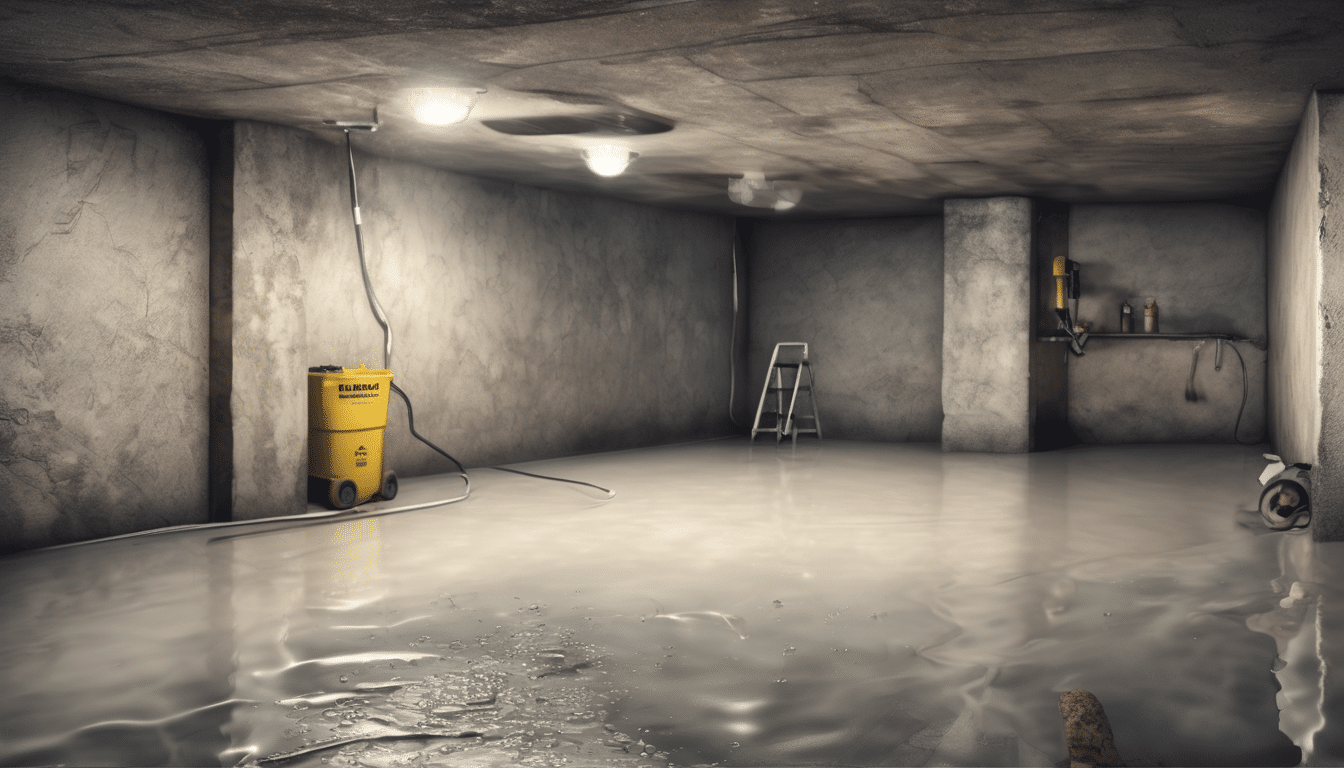
Understanding Basement Waterproofing to Prevent Mold Dubai is essential. Basement waterproofing to prevent mold in Dubai presents unique challenges due to the region’s extreme climate conditions, high humidity levels, and specific construction practices. In Dubai’s environment, where temperatures can reach 50°C and humidity levels frequently exceed 70%, basement moisture problems often develop rapidly and can lead to significant mold contamination if not addressed systematically.
The key to successful basement waterproofing to prevent mold Dubai lies in understanding that mold growth is not a surface problem but a systems failure involving moisture, airflow, temperature differentials, and building materials. From our investigations across Dubai properties, we consistently observe that most basement mold issues stem from inadequate moisture management during construction, insufficient vapour barriers, and cooling system condensation—not just water leaks.
This comprehensive approach to basement waterproofing addresses the root causes of moisture intrusion while considering Dubai’s specific environmental conditions, building codes, and construction practices.
Basement Waterproofing To Prevent Mold Dubai – Understanding Dubai’s Unique Basement Challenges
Dubai’s extreme climate creates distinctive challenges for basement waterproofing to prevent mold growth. The combination of intense solar heating, high atmospheric humidity, and aggressive air conditioning creates complex moisture dynamics that differ significantly from temperate climates.
During summer months, exterior temperatures frequently exceed 45°C while basement spaces are maintained at 20-24°C through mechanical cooling. This temperature differential of 20-25°C creates significant thermal stress on building envelopes and drives moisture migration through construction materials. The resulting condensation potential is substantially higher than in moderate climates.
Thermal Bridging and Moisture Migration
In Dubai construction, concrete basements often lack adequate thermal breaks, creating continuous thermal bridging paths. When cooled interior surfaces encounter warm, humid air infiltrating from outside, condensation occurs rapidly. This process is particularly problematic around basement perimeters, utility penetrations, and areas where mechanical systems create air movement.
Our investigations consistently reveal that basement waterproofing to prevent mold Dubai must address thermal bridging as aggressively as water intrusion. Traditional waterproofing approaches that focus solely on liquid water often fail because they ignore condensation moisture sources.
Construction Practices and Material Considerations
Dubai’s rapid construction timeline and specific material availability influence basement waterproofing effectiveness. Many developments utilise precast concrete elements, cast-in-place concrete with local aggregates, and membrane systems designed for hot climates. However, integration between these systems often creates moisture ingress points.
The region’s sandy soil conditions and periodic groundwater fluctuations add complexity to basement waterproofing designs. During rare but significant rainfall events, soil saturation can create hydrostatic pressure against basement walls, overwhelming inadequate waterproofing systems.
Basement Waterproofing To Prevent Mold Dubai – Moisture Sources Requiring Basement Waterproofing
Effective basement waterproofing to prevent mold Dubai requires identifying and addressing multiple moisture sources simultaneously. Our field investigations reveal that successful mold prevention depends on controlling all moisture pathways, not just the most obvious ones.
External Moisture Sources
Groundwater infiltration remains the primary concern for basement waterproofing in Dubai. Despite the arid climate, subsurface water tables exist across much of Dubai, particularly in areas near the coast or where irrigation has modified natural drainage patterns. Construction excavation often encounters water tables at 2-4 metres below grade, requiring active dewatering during construction.
Rainwater, though infrequent, can create significant moisture loads when it occurs. Dubai’s intense precipitation events can deliver 50-100mm of rainfall in several hours, overwhelming inadequate drainage systems. Surface water infiltration through foundation joints, utility penetrations, and construction defects becomes problematic during these events.
Soil moisture migration represents a continuous, low-level moisture source. Even in Dubai’s arid conditions, soil adjacent to air-conditioned basements maintains higher moisture content than surrounding areas due to condensation and irrigation effects.
Internal Moisture Sources
HVAC condensation constitutes the most underestimated moisture source in Dubai basements. Air handling units, ductwork, and chilled water lines operating in basement environments generate significant condensate volumes. A typical residential basement HVAC system can produce 40-80 litres of condensate daily during peak cooling seasons. This relates directly to Basement Waterproofing To Prevent Mold Dubai.
Plumbing systems contribute moisture through leaks, condensation on cold water lines, and inadequate vapour barriers around pipe penetrations. In Dubai’s climate, cold water supply lines operating at 15-20°C surrounded by 35-40°C ambient air create continuous condensation unless properly insulated.
Occupant activities including laundry, storage of damp materials, and inadequate ventilation of moisture-generating equipment compound internal moisture loads.
Waterproofing Systems for Mold Prevention
Comprehensive basement waterproofing to prevent mold Dubai requires integrated systems addressing both liquid water and vapour transmission. Single-component solutions consistently fail in Dubai’s challenging moisture environment.
Membrane Waterproofing Systems
External membrane systems provide the primary barrier against groundwater infiltration. In Dubai applications, modified bitumen membranes, liquid-applied membranes, and HDPE sheet systems demonstrate good performance when properly installed and protected.
Modified bitumen membranes offer excellent adhesion to concrete substrates and accommodate thermal movement common in Dubai construction. Application during cooler months (November through February) ensures proper membrane curing and adhesion. Membrane thickness of 4-6mm provides adequate puncture resistance for Dubai soil conditions.
Liquid-applied membranes, particularly polyurethane and acrylic systems, conform well to complex basement geometries. These systems require careful surface preparation and multiple coat applications to achieve uniform thickness. Quality control during application is critical, as Dubai’s temperature extremes can affect curing characteristics.
Crystalline Waterproofing Technology
Crystalline admixtures integrated into concrete during placement offer permanent waterproofing that becomes part of the structural element. These systems work particularly well in Dubai because they activate in response to moisture presence, providing ongoing protection as building conditions change.
Crystalline technology creates insoluble crystals within concrete pores and micro-cracks, blocking water movement while allowing vapour transmission. This characteristic is valuable for basement waterproofing to prevent mold Dubai because it controls liquid water without creating vapour barriers that might trap moisture within wall assemblies.
Surface-applied crystalline treatments can retrofit existing basements, though effectiveness depends on proper surface preparation and adequate concrete porosity for penetration.
Basement Waterproofing to Prevent Mold Dubai Techniques
Successful mold prevention through waterproofing requires systematic implementation of proven techniques adapted to Dubai’s specific environmental conditions. Our approach prioritises moisture source control, redundant protection layers, and long-term system durability.
Exterior Waterproofing Approach
External waterproofing provides the most effective protection against groundwater infiltration and should be the primary strategy for basement waterproofing to prevent mold Dubai. This approach addresses moisture at its source, preventing water from contacting basement walls.
Excavation and surface preparation begin with complete exposure of basement walls to below-footing level. Surface cleaning removes form release agents, curing compounds, and concrete laitance that interfere with membrane adhesion. Surface profile requirements vary by membrane type but typically require CSP-2 to CSP-3 profiles for optimal bonding.
Primer application prepares surfaces for membrane installation while sealing minor surface defects. In Dubai’s hot climate, primer application during early morning hours prevents solvent evaporation before proper penetration occurs. Primer compatibility with both substrate and membrane materials is essential for system performance. When considering Basement Waterproofing To Prevent Mold Dubai, this becomes clear.
Membrane installation follows manufacturer specifications with particular attention to overlap seams, penetration seals, and transition details. Dubai’s temperature extremes require membrane materials and installation techniques that accommodate thermal movement without compromising waterproofing integrity.
Interior Waterproofing Strategies
When exterior waterproofing is not feasible, interior systems can provide effective moisture control for basement waterproofing to prevent mold Dubai applications. However, interior approaches require careful design to manage hydrostatic pressure and prevent moisture accumulation within wall assemblies.
Crystalline waterproofing treatments applied to interior surfaces penetrate into concrete substrates, creating barriers against water intrusion. These systems work effectively against moderate hydrostatic pressure while maintaining vapour permeability that prevents moisture trapping.
Interior drainage systems collect and redirect water that penetrates exterior barriers. Perimeter drain installation requires careful attention to fall requirements, cleanout access, and pump system redundancy. In Dubai applications, drainage systems must accommodate thermal expansion effects and potential sand infiltration.
Vapour barrier installation on interior surfaces prevents moisture transmission into occupied spaces. However, vapour barriers must be carefully designed to prevent moisture accumulation within wall assemblies, which can create more severe mold problems than original conditions.
Condensation Control Strategies
Condensation control represents a critical component of basement waterproofing to prevent mold Dubai because it addresses moisture sources that traditional waterproofing systems do not control. In Dubai’s climate, condensation can contribute as much moisture as water infiltration.
Thermal Bridge Elimination
Thermal bridging through basement walls creates cold surfaces where condensation readily occurs. Continuous insulation installation breaks thermal bridges while maintaining structural integrity. Extruded polystyrene (XPS) or polyisocyanurate foam boards provide adequate thermal resistance for Dubai applications.
Insulation placement influences moisture control effectiveness. External insulation keeps structural elements warm, preventing condensation within wall assemblies. Internal insulation requires vapour barrier coordination to prevent moisture accumulation between insulation and structure.
Insulation thickness calculations must consider Dubai’s extreme temperature differentials. Minimum R-10 to R-15 continuous insulation typically prevents condensation under design conditions, though specific calculations should verify adequacy for each application.
Surface Temperature Management
Maintaining interior surface temperatures above dew point prevents condensation formation. In Dubai basements, this requires balancing cooling loads with condensation risk. Surface temperature monitoring helps verify that thermal design prevents condensation under operating conditions.
Air conditioning system design influences surface temperatures throughout basement spaces. Proper supply air distribution prevents overcooling of surfaces while maintaining occupant comfort. Variable air volume systems can modulate cooling delivery to prevent excessive surface cooling.
Radiant heating elements installed in critical areas can maintain surface temperatures above dew point during peak humidity conditions. Electric radiant films or hydronic systems provide localised warming without affecting overall cooling loads significantly.
Ventilation and Humidity Management
Effective ventilation design complements waterproofing systems to create comprehensive moisture control for basement waterproofing to prevent mold Dubai applications. Proper air movement prevents moisture accumulation while maintaining indoor air quality.
Mechanical Ventilation Design
Dedicated ventilation systems provide consistent air exchange regardless of outdoor conditions. In Dubai’s climate, heat recovery ventilation (HRV) or energy recovery ventilation (ERV) systems maintain ventilation efficiency while managing cooling loads.
Ventilation rates for basement spaces must balance moisture removal with energy efficiency. Minimum ventilation rates of 0.35-0.50 air changes per hour typically provide adequate moisture control, though higher rates may be necessary during high humidity periods.
Supply and exhaust air distribution requires careful design to prevent short-circuiting and ensure complete air mixing. Displacement ventilation strategies work effectively in basement applications where ceiling heights permit proper air distribution patterns.
Humidity Control Systems
Dedicated dehumidification equipment provides precise humidity control independent of cooling requirements. In basement waterproofing to prevent mold Dubai applications, maintaining relative humidity below 60% prevents mold growth even when minor moisture intrusion occurs.
Desiccant dehumidification systems work efficiently in Dubai’s hot climate, using waste heat for regeneration. These systems can maintain very low humidity levels while providing some sensible cooling benefit.
Refrigerant dehumidifiers offer simpler installation and maintenance but require proper sizing for peak humidity loads. Integration with cooling systems prevents conflicts between dehumidification and temperature control.
Material Selection Considerations
Material selection significantly influences long-term success of basement waterproofing to prevent mold Dubai installations. Dubai’s extreme climate requires materials that maintain performance under temperature cycling, UV exposure, and chemical exposure from soil conditions.
Waterproofing Membrane Materials
Modified bitumen membranes perform well in Dubai applications when properly installed and protected. SBS-modified bitumen maintains flexibility under temperature cycling while providing excellent waterproofing performance. Mineral surface granules provide UV protection during installation.
Liquid-applied membranes offer seamless installation around complex geometries common in basement construction. Polyurethane systems demonstrate good performance in Dubai conditions, though proper surface preparation and application timing are critical for success.
EPDM and TPO single-ply membranes provide excellent durability but require careful seaming and termination details. These materials accommodate building movement well while maintaining waterproofing integrity over extended service lives.
Insulation Material Selection
Closed-cell foam insulation materials resist moisture absorption while providing thermal resistance. Extruded polystyrene (XPS) maintains thermal performance in moist conditions and resists degradation from soil contact. Polyisocyanurate foam offers higher thermal resistance per thickness but requires protection from moisture exposure.
Spray-applied polyurethane foam creates seamless insulation barriers that conform to irregular surfaces. These materials provide both thermal resistance and air sealing, though proper installation requires experienced applicators and appropriate surface preparation.
Mineral fibre insulation materials generally perform poorly in basement applications due to moisture sensitivity and potential mold growth on organic facings. The importance of Basement Waterproofing To Prevent Mold Dubai is evident here.
Monitoring and Maintenance Protocols
Long-term effectiveness of basement waterproofing to prevent mold Dubai requires systematic monitoring and preventive maintenance. Dubai’s harsh climate accelerates degradation of waterproofing systems, making regular inspection essential.
Moisture Monitoring Systems
Electronic moisture monitoring provides early warning of waterproofing system problems before visible damage occurs. Sensor placement at critical locations allows continuous monitoring of conditions that could lead to mold growth.
Relative humidity sensors monitor air conditions throughout basement spaces. Data logging capabilities track humidity patterns and identify periods when conditions favour mold growth. Alert systems notify occupants when humidity levels exceed safe thresholds.
Surface moisture sensors detect water intrusion at vulnerable locations such as foundation joints, utility penetrations, and areas with previous problems. These sensors provide immediate notification of waterproofing failures before extensive damage occurs.
Preventive Maintenance Requirements
Annual inspection of waterproofing systems identifies minor problems before they compromise moisture control. Inspection checklists should include membrane condition, joint sealants, drainage system function, and ventilation equipment performance.
Drainage system maintenance includes cleaning, flow testing, and pump system verification. In Dubai’s dusty environment, drainage systems require more frequent maintenance than in other climates due to sediment accumulation.
HVAC system maintenance affects moisture control through proper condensate drainage, air filter replacement, and system operation verification. Poorly maintained cooling systems can become significant moisture sources in basement environments.
Cost Considerations in Dubai
Understanding costs associated with basement waterproofing to prevent mold Dubai helps property owners make informed decisions about system selection and implementation timing. Costs vary significantly based on system complexity, accessibility, and performance requirements.
Initial Installation Costs
External waterproofing systems represent the highest initial investment but provide the most comprehensive moisture protection. Typical costs range from AED 200-400 per square metre for complete exterior membrane systems including excavation, surface preparation, membrane installation, and backfill operations.
Interior waterproofing approaches cost AED 100-250 per square metre depending on system complexity and preparation requirements. While lower initial costs make interior systems attractive, long-term performance may require more frequent maintenance and potential system upgrades.
Mechanical systems including ventilation and dehumidification equipment add AED 15,000-35,000 to project costs depending on basement size and performance requirements. These systems provide ongoing operational costs but are essential for maintaining proper moisture conditions.
Long-term Value Considerations
Comprehensive basement waterproofing to prevent mold Dubai protects property values while reducing health risks and maintenance costs. Mold damage remediation costs typically exceed AED 20,000-50,000 for significant contamination, making prevention economically attractive.
Energy costs associated with moisture control systems vary based on system efficiency and usage patterns. Properly designed systems typically add AED 2,000-4,000 annually to utility costs while preventing much higher remediation expenses. Understanding Basement Waterproofing To Prevent Mold Dubai helps with this aspect.
Insurance considerations may influence waterproofing decisions as some policies exclude coverage for preventable moisture damage. Documented waterproofing systems may qualify for reduced premiums or expanded coverage options.
Professional basement waterproofing to prevent mold Dubai requires systematic application of building science principles adapted to local climate conditions. Success depends on understanding moisture sources, implementing appropriate control strategies, and maintaining systems over time. While initial investment is significant, the long-term benefits include protected property values, improved indoor air quality, and reduced health risks associated with mold exposure. Property owners should work with experienced professionals who understand Dubai’s unique environmental challenges and can design comprehensive solutions that address both current and future moisture control needs.