
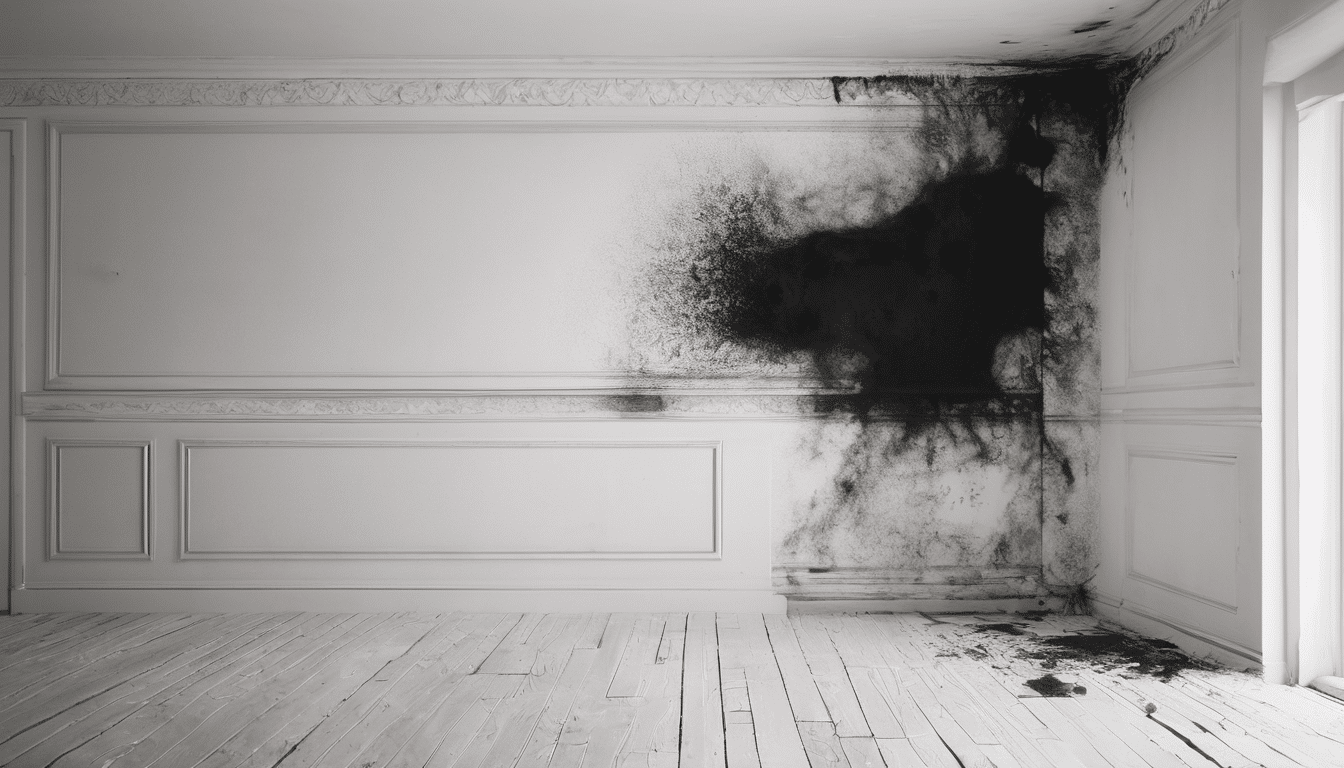
Understanding Black Mold Removal Dubai Apartments: A is essential. Black mold removal in Dubai apartments is not simply a cleaning task. In Dubai’s climate — where ambient humidity regularly exceeds 80% between June and September, and where air-conditioning systems run continuously for months — the conditions that allow Stachybotrys chartarum and other dark-pigmented moulds to colonise building materials are built into the environment itself. Understanding this is the first step toward solving it properly. This guide covers everything Dubai apartment residents, property managers, and building engineers need to know about Black Mold Removal in Dubai apartments — from identifying the problem through to obtaining a mold clearance certificate.
As an IAC2-certified indoor environmental consultant with over 20 years of field experience, and as the person who built the UAE’s only in-house microbiology laboratory operated by an indoor environmental services company, I have investigated hundreds of mold cases across Dubai’s apartment stock. The same patterns appear repeatedly: a building physics failure, a moisture source that was never addressed, and a surface treatment that temporarily concealed rather than resolved the problem. This guide is designed to break that cycle. This relates directly to Black Mold Removal Dubai Apartments: A.
Black Mold Removal Dubai Apartments: A – What Is Black Mold and Why Dubai Apartments Are Vulnerable
The term “black mold” is commonly used to describe Stachybotrys chartarum, a dark-coloured fungal species associated with chronic moisture and cellulose-rich materials such as gypsum board, ceiling tiles, and wallpaper. However, black mold removal in Dubai apartments often involves additional species — including Cladosporium, Aspergillus niger, and Alternaria — that also present with dark pigmentation. Species identification through laboratory analysis is essential before any remediation plan is finalised. When considering Black Mold Removal Dubai Apartments: A, this becomes clear.
Dubai’s apartment stock creates near-perfect conditions for mold colonisation. Thermal bridging through concrete structural elements causes localised cold spots on interior surfaces. When humid interior air contacts these cool surfaces, condensation forms — and in many apartments, this happens invisibly, behind wall linings, inside partition cavities, and within HVAC ductwork. The moisture accumulates over weeks before it becomes visible as staining or surface growth. The importance of Black Mold Removal Dubai Apartments: A is evident here.
Based on field investigations conducted by Saniservice across Dubai residential properties, apartments in buildings constructed before 2015 are disproportionately represented in recurring mold cases. Inadequate vapour management in the original building envelope, combined with increasing outdoor humidity trends, creates conditions where black mold removal in Dubai apartments is needed repeatedly — until the building physics failure is corrected. Understanding Black Mold Removal Dubai Apartments: A helps with this aspect.
Black Mold Removal Dubai Apartments: A – Identifying Black Mold in Dubai Apartments
Visual Indicators That Require Investigation
Dark staining on walls, ceilings, or around window reveals is the most commonly reported sign. However, surface appearance alone is insufficient for diagnosis. Paint discolouration, efflorescence from moisture migration, and shadow accumulation from poor ventilation can all resemble mold growth visually. Confirmation requires sampling. Black Mold Removal Dubai Apartments: A factors into this consideration.
Additional indicators include a musty or earthy odour that persists even after cleaning, visible condensation on interior surfaces during summer months, and recurrent respiratory irritation in occupants that improves when they leave the property for extended periods. These patterns, taken together, form a clinical picture that warrants a professional investigation. This relates directly to Black Mold Removal Dubai Apartments: A.
Diagnostic Tools Used in Professional Inspections
Professional black mold removal in Dubai apartments begins with diagnostic work, not surface treatment. Thermal imaging cameras detect temperature differentials that indicate moisture accumulation within wall cavities. Moisture metres confirm elevated water content in building materials. Borescope cameras allow inspection behind wall linings without destructive demolition. Air sampling using spore trap cassettes, analysed by an accredited laboratory, establishes the indoor spore count and species profile. When considering Black Mold Removal Dubai Apartments: A, this becomes clear.
At Saniservice’s in-house microbiology laboratory, surface and air samples from Dubai apartment investigations are analysed to species level. This is not standard practice across the industry — but it is the practice that allows remediation plans to be calibrated to the actual biological problem, not a generic assumption. The importance of Black Mold Removal Dubai Apartments: A is evident here.
Black Mold Removal Dubai Apartments: A – Root Causes Behind Black Mold in Dubai Apartments
Effective black mold removal in Dubai apartments is only possible when the moisture source driving growth is identified and corrected. Without this, remediation treats a symptom while the cause continues operating. The most frequently identified root causes in Dubai apartment investigations fall into three categories. Understanding Black Mold Removal Dubai Apartments: A helps with this aspect.
The first is condensation-driven moisture from HVAC system deficiencies. When air-conditioning equipment is undersized, poorly maintained, or incorrectly configured, it fails to adequately dehumidify indoor air. Relative humidity above 60% sustained over time is sufficient to support mold colonisation on many common building materials. Mold in AC ducts Dubai is a related and frequently overlooked problem in the same properties. Black Mold Removal Dubai Apartments: A factors into this consideration.
The second is water intrusion from building envelope failures — including roof membrane defects, inadequate waterproofing around penetrations, and inter-unit water migration from plumbing leaks in adjacent apartments. Water damage mold restoration in Dubai properties frequently begins with a leak that was repaired but whose moisture was never fully extracted from the surrounding materials. This relates directly to Black Mold Removal Dubai Apartments: A.
The third is construction-phase moisture — materials installed wet during the summer building season that were sealed into the building fabric before adequate drying occurred. This can result in mold growth that presents within the first two years of occupancy, well before any occupant-related cause is plausible. When considering Black Mold Removal Dubai Apartments: A, this becomes clear.
The Professional Black Mold Removal Process for Dubai Apartments
Understanding what a proper black mold removal process for Dubai apartments includes is essential for evaluating any service provider. A science-backed remediation protocol follows a defined sequence — and shortcuts at any stage compromise the outcome. The importance of Black Mold Removal Dubai Apartments: A is evident here.
Stage One — Assessment and Scope Definition
Laboratory-confirmed identification of species and contamination extent defines the remediation scope. Without sampling data, a contractor is estimating — and estimates tend toward either insufficient scope or unnecessary demolition. Industry standards referenced by IAC2 and the IICRC require that contamination boundaries be established before work begins. Understanding Black Mold Removal Dubai Apartments: A helps with this aspect.
Stage Two — Source Control
The moisture source must be addressed before any surface treatment is applied. In practice, this means coordinating with building management for HVAC correction, plumbing repair, or envelope sealing — before the mold remediation team begins physical work. Skipping this stage is the single most common reason black mold removal in Dubai apartments fails to deliver lasting results. Black Mold Removal Dubai Apartments: A factors into this consideration.
Stage Three — Containment and Removal
Affected materials are removed under containment conditions designed to prevent cross-contamination of unaffected areas. This includes negative air pressure within the work zone, HEPA filtration of exhausted air, and physical polyethylene barriers separating the remediation area from occupied spaces. For Dubai apartments where occupants may remain in the property during work, containment design is not optional — it is a clinical requirement. This relates directly to Black Mold Removal Dubai Apartments: A.
Stage Four — Cleaning and Treatment
Non-porous surfaces in the affected zone are cleaned using EPA-registered antifungal agents applied to the correct contact time. Antimicrobial fogging is used as a supplementary measure in HVAC systems and void spaces — never as a substitute for physical removal of contaminated material. This distinction is critical, and it is frequently misrepresented in the Dubai market. When considering Black Mold Removal Dubai Apartments: A, this becomes clear.
Containment Design and Occupant Safety During Removal
For black mold removal in Dubai apartments where families or vulnerable occupants are present, containment design determines whether the remediation process itself creates additional exposure risk. Negative pressure containment — where air within the work zone is maintained at lower pressure than surrounding areas — prevents mold spores disturbed during removal from migrating into clean spaces. The importance of Black Mold Removal Dubai Apartments: A is evident here.
HEPA filtration units positioned within the containment zone continuously filter particulates before air is exhausted. Saniservice remediation teams working across Dubai residential properties operate under protocols that align with IICRC S520 standards — the reference document for professional mold remediation. Occupant relocation during active removal phases is assessed case by case based on contamination severity and building configuration. Understanding Black Mold Removal Dubai Apartments: A helps with this aspect.
Post-Remediation Verification and Mold Clearance
Black mold removal in Dubai apartments is not complete at the point when visible mold has been removed. Verification through post-remediation testing is required to confirm that spore counts have returned to acceptable levels and that no hidden growth remains. This is what separates a science-backed service from a cosmetic one — the proof it leaves behind.
Post-remediation air sampling, conducted after containment is removed and the space has been returned to normal airflow conditions, provides the data required for a mold clearance certificate. In Dubai, mold clearance certificates are increasingly required by DHA (Dubai Health Authority) for healthcare facilities, by real estate agents for property transactions, and by landlords managing premium residential stock. The clearance certificate documents laboratory results confirming that remediation was successful — it is not a paper issued on the basis of visual inspection alone.
Hidden mold behind walls in Dubai properties is a particular challenge for verification. Borescope inspection of wall cavities following remediation, combined with ERMI (Environmental Relative Mouldiness Index) analysis where appropriate, provides a more complete picture than surface sampling alone.
Preventing Black Mold Recurrence in Dubai Apartments
The most effective investment following black mold removal in Dubai apartments is in the building systems that control humidity. HVAC systems should be serviced and humidity-verified at least twice annually — once before the summer season begins and once at its conclusion. Target indoor relative humidity is 50% or below, sustained consistently. Values above 60% measured over 48-hour periods are sufficient to trigger renewed colonisation on materials that were previously remediated.
Ventilation in wet areas — bathrooms, laundry spaces, and kitchens — should be confirmed as functional and exhausting to exterior air rather than into ceiling voids or adjacent building spaces. This is a building defect found regularly in older Dubai apartment stock and is a direct driver of bathroom mold and wall cavity contamination.
Regular moisture monitoring, thermal imaging surveys at six-to-twelve-month intervals following remediation, and annual indoor air quality sampling are the evidence-based tools for long-term recurrence prevention. Mold prevention in Dubai’s humid climate is not achieved through surface treatments — it is achieved through sustained control of the moisture conditions that allow growth.
Expert Tips for Dubai Apartment Residents
- Do not paint over dark staining without sampling first. Paint temporarily conceals mold growth but does not kill it. Laboratory sampling before any surface treatment ensures the correct scope of work is defined.
- Maintain your AC drain pan and condensate line. Blocked condensate drainage is one of the most common preventable causes of mold behind walls in Dubai apartments. Have it inspected during every service visit.
- Measure, do not guess. A calibrated digital hygrometer costs very little and gives you continuous data on indoor humidity. If readings regularly exceed 60%, investigate before visible mold appears.
- Coordinate with building management for envelope defects. Mold at window reveals, on external walls, or near the ceiling perimeter is frequently driven by building envelope failures — not occupant behaviour. Document and report these to building management with date-stamped photographs.
- Request laboratory results, not just a report. Any reputable black mold removal service for Dubai apartments should be able to provide laboratory analysis data alongside their findings — not just a written opinion.
Frequently Asked Questions
How long does black mold removal in a Dubai apartment typically take?
For a single room with contained contamination, professional black mold removal in a Dubai apartment typically takes one to three working days — including containment setup, material removal, cleaning, and HEPA filtration time. Larger or multi-room cases may extend to five to seven days. Post-remediation air sampling adds an additional 24-to-48-hour waiting period before results are available.
Is black mold in Dubai apartments dangerous to my family’s health?
Certain mold species identified in Dubai apartments — particularly Stachybotrys chartarum and some Aspergillus strains — are associated with mycotoxin production that can affect respiratory and immune function in sensitive individuals. The degree of risk depends on species, spore concentration, and duration of exposure. Laboratory identification and quantification, not visual assessment, determines the actual risk level in any specific case.
What does a mold clearance certificate in Dubai require?
A mold clearance certificate in Dubai should be supported by post-remediation air sampling and laboratory analysis confirming that indoor spore counts have returned to acceptable levels relative to outdoor baseline. DHA-compliant documentation requires that results come from an accredited laboratory. Visual inspection alone is not a sufficient basis for issuing clearance — a point that is sometimes overlooked by less rigorous service providers.
Can I remove black mold myself in my Dubai apartment?
Surface mold covering less than approximately 0.09 square metres on non-porous materials may be addressable with appropriate antifungal cleaning agents and personal protective equipment. Beyond this threshold, professional assessment is warranted. In Dubai apartments, where mold growth frequently extends into wall cavities, HVAC systems, and under flooring, DIY treatment consistently addresses only visible surface growth — leaving the broader contamination in place.
Why does black mold keep coming back in Dubai apartments after treatment?
Recurrence after black mold removal in Dubai apartments is almost always traceable to one of two causes: the moisture source was not corrected before remediation, or the original scope was insufficient and hidden growth was not addressed. Laboratory-guided investigation before remediation, and post-remediation verification after, are the only reliable tools for breaking this cycle.
How much does professional black mold removal cost in Dubai?
The investment in professional black mold removal for a Dubai apartment reflects the scope of contamination, the laboratory testing required, the remediation methodology applied, and post-remediation verification. What separates a professional service from a commodity is the documented evidence it produces — laboratory results, clearance data, and a root-cause finding that protects against recurrence.
Which areas of Dubai apartments are most commonly affected by black mold?
Based on Saniservice field investigations across Dubai residential properties, the most frequently affected locations are bathroom ceiling corners, the wall cavity behind external-facing walls (particularly north-facing facades with limited solar gain), areas adjacent to AC fan coil units, and ceiling spaces above kitchen extraction points. Apartment buildings in Jumeirah, Discovery Gardens, International City, and older JBR stock feature regularly in recurring mold investigation cases.
Black mold removal in Dubai apartments, approached with diagnostic precision and root-cause discipline, is a solvable problem. The evidence gathered through laboratory analysis, thermal imaging, and moisture mapping tells a clear story — and that story, once understood, points directly to a lasting resolution. If your apartment shows signs that warrant investigation, the first step is not surface treatment. It is measurement. See what your indoor environment actually looks like before deciding what it needs. Understanding Black Mold Removal Dubai Apartments: A is key to success in this area.