
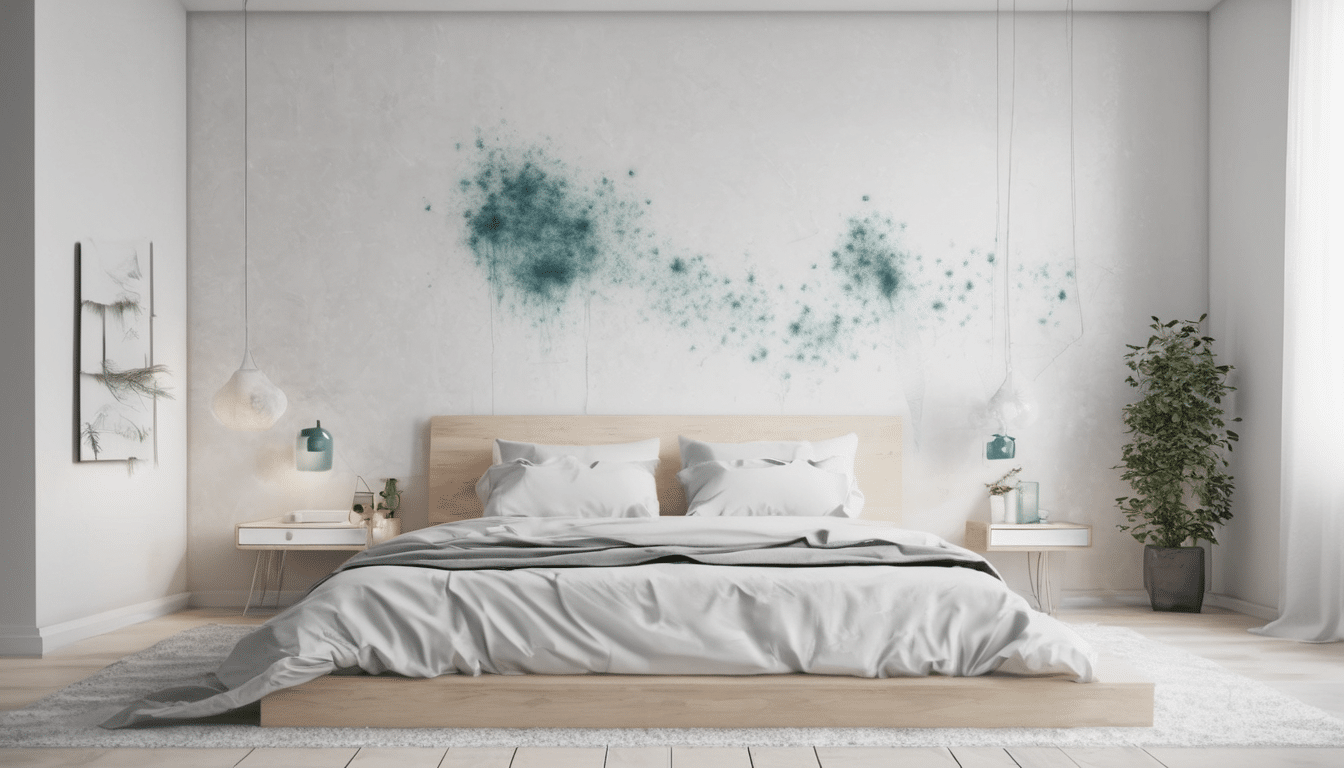
Understanding When Mold Remover Fails: Signs You Need Remediation is essential. There is a moment that most Dubai homeowners recognise: you apply a mold remover product, the staining disappears, and you feel the matter is resolved. Then, six weeks later, the same patch returns — often larger, sometimes in a neighbouring area. When mold remover fails, signs you need remediation become increasingly clear, yet they are easy to misread as a product problem rather than a building problem. This guide draws on field investigation experience and laboratory analysis to help you distinguish between a surface cleaning task and a remediation case that requires professional intervention.
In Dubai’s climate, where summer temperatures exceed 45°C and indoor relative humidity climbs rapidly the moment air-conditioning cycles off, mold growth is not a cosmetic nuisance — it is a measurable biological event driven by moisture physics. Understanding when mold remover fails and signs you need remediation can save a property from progressive material damage and, more importantly, protect the indoor environment that your family breathes every day. This relates directly to When Mold Remover Fails: Signs You Need Remediation.
When Mold Remover Fails: Signs You Need Remediation – Mold Remover vs Remediation: Understanding the Difference
A mold remover — whether spray-based, gel, or foam — is a contact treatment. It acts on visible surface growth, disrupting the cellular structure of fungal colonies at the point of application. Used correctly on non-porous surfaces with contained, low-concentration growth, mold removers perform a legitimate function. When considering When Mold Remover Fails: Signs You Need Remediation, this becomes clear.
Remediation, by contrast, is a systematic process. It includes moisture source identification, containment design, removal of compromised materials, treatment of affected substrates, post-removal verification through air and surface sampling, and clearance confirmation through a laboratory. The scope is entirely different.
When mold remover fails, signs you need remediation are essentially signals that the problem exists at a depth and scale that a contact treatment cannot address. Recognising those signals early determines whether a property can be corrected with focused intervention or requires more extensive material replacement. The importance of When Mold Remover Fails: Signs You Need Remediation is evident here.
When Mold Remover Fails: Signs You Need Remediation – Sign 1 — Mold Returns Within Weeks of Treatment
Recurrence is the clearest indicator that when mold remover fails, signs you need remediation have already been present for some time. If mold reappears on the same surface within four to six weeks of a thorough mold remover application, the moisture source driving growth has not been addressed.
Mold does not generate spontaneously. Every recurring colony has a water source — a condensation point, an active leak, a vapour-permeable wall assembly saturated with humidity. A mold remover removes the colony; it cannot remove the physics that created it. Understanding When Mold Remover Fails: Signs You Need Remediation helps with this aspect.
Based on field investigations across Dubai villas and apartments, recurring mold on bathroom ceilings or bedroom corners most commonly traces to inadequate ventilation, HVAC condensate issues, or envelope condensation caused by cold surface temperatures meeting humid indoor air. Until those root causes are corrected, mold remover application is temporary at best.
When Mold Remover Fails: Signs You Need Remediation – Sign 2 — Growth Spreads Beyond the Treated Area
A second clear signal that when mold remover fails, signs you need remediation are present is lateral or multi-surface spread. If you treat one wall and mold appears on an adjacent wall, ceiling, or floor within a short period, the contamination source is almost certainly within the building assembly — not on the surface you treated. When Mold Remover Fails: Signs You Need Remediation factors into this consideration.
Spread across multiple surfaces indicates airborne spore dispersal from a reservoir that the mold remover never reached. Hidden growth behind wall linings, inside ceiling voids, or within HVAC ductwork can shed millions of spores into the air continuously, seeding new growth on any surface where humidity allows colonisation.
In these cases, surface treatment with a mold remover product is the equivalent of treating symptoms while the underlying condition progresses. Borescope inspection and air sampling are typically required to locate the primary reservoir before any effective remediation can begin. This relates directly to When Mold Remover Fails: Signs You Need Remediation.
Sign 3 — The Musty Odour Persists After Cleaning
Microbial volatile organic compounds — the chemical signatures of active fungal metabolism — produce the characteristic musty odour associated with mold. These compounds diffuse through porous building materials and persist long after surface colonies have been treated with a mold remover.
If a musty odour remains in a room after thorough cleaning, the olfactory signal is indicating active mold growth that is not visible from the room’s interior. In Dubai properties, this pattern frequently points to growth within wall cavities adjacent to wet areas, under floor screeds where water has tracked, or inside fan coil unit drain pans. When considering When Mold Remover Fails: Signs You Need Remediation, this becomes clear.
Persistent odour after mold remover application is a reliable sign that when mold remover fails, signs you need remediation include hidden contamination that requires investigative methods — thermal imaging, moisture mapping, and targeted borescope inspection — rather than repeated surface treatment.
Sign 4 — Mold Is Growing on Porous or Structural Materials
Mold remover products are evaluated for efficacy on hard, non-porous surfaces. Tile grout, painted concrete, and coated metal surfaces respond reasonably well to contact treatment. Porous materials present a fundamentally different biological picture. The importance of When Mold Remover Fails: Signs You Need Remediation is evident here.
When mold colonises gypsum board, timber, MDF, mineral wool insulation, or fabric-based materials, the hyphae — the root-like structures of the fungal organism — penetrate the substrate. A mold remover applied to the surface disrupts visible surface growth but cannot reach the hyphal network embedded within the material.
This is a critical distinction. When mold remover fails on porous materials, signs you need remediation include physical removal of the contaminated substrate. IAC2 field guidance and industry remediation standards consistently identify porous material penetration as a remediation threshold, not a cleaning threshold. Attempting to treat deeply penetrated gypsum board with a spray product does not resolve the contamination — it conceals it. Understanding When Mold Remover Fails: Signs You Need Remediation helps with this aspect.
Sign 5 — Visible Mold Is Larger Than 0.1 Square Metres
Scale matters when determining whether a mold remover application is appropriate or when professional remediation is required. Industry guidelines generally position 0.1 square metres as a practical threshold. Growth below this area on a non-porous surface, with an identifiable and corrected moisture source, may be manageable with a quality mold remover and appropriate personal protection.
Growth above this area — and certainly anything approaching or exceeding 1 square metre — represents a contamination level that produces significant airborne spore loads during any disturbance. Disturbing a large mold colony without containment and HEPA filtration disperses viable spores throughout the property, cross-contaminating previously clean areas. When Mold Remover Fails: Signs You Need Remediation factors into this consideration.
When mold remover fails to contain growth within these boundaries, signs you need remediation include implementing negative pressure containment, using HEPA-filtered air scrubbers, and following a structured removal sequence. These are not DIY measures — they are professional remediation protocols designed to prevent cross-contamination during material handling.
Sign 6 — Occupants Are Experiencing Respiratory Symptoms
Indoor environmental investigators are trained to treat occupant symptom patterns as diagnostic data. When multiple residents of a property report persistent respiratory irritation, unusual fatigue, nasal congestion, or eye irritation that resolves when they leave the building, the pattern warrants environmental investigation rather than continued mold remover application. This relates directly to When Mold Remover Fails: Signs You Need Remediation.
Mold species common in UAE building environments — including Aspergillus, Cladosporium, and Stachybotrys in chronically wet assemblies — produce spores and metabolites that interact with the respiratory system. Laboratory air sampling, interpreted by an indoor environmental professional, can quantify spore concentrations and identify species present.
Symptom-driven cases are situations where when mold remover fails, signs you need remediation extend beyond property protection into occupant health considerations. A surface cleaning approach in these circumstances is insufficient. The investigation must identify every contamination source, and post-remediation clearance sampling must confirm that the indoor environment has returned to acceptable parameters. When considering When Mold Remover Fails: Signs You Need Remediation, this becomes clear.
Sign 7 — Air Sampling or Surface Testing Confirms Elevated Spore Counts
Laboratory data removes subjectivity from the assessment. When mold remover fails, signs you need remediation are often confirmed definitively through spore trap air sampling or surface tape lift analysis interpreted by a qualified laboratory.
An indoor spore count that significantly exceeds outdoor baseline levels — particularly when dominated by water-damage indicator species such as Chaetomium, Stachybotrys, or Ulocladium — indicates active mold reservoirs within the building that are shedding spores continuously. A mold remover product cannot address what it cannot reach. The importance of When Mold Remover Fails: Signs You Need Remediation is evident here.
At Saniservice’s in-house microbiology laboratory, surface samples from properties where clients had repeatedly applied commercial mold removers frequently showed viable hyphal fragments within the substrate beneath visually clean surfaces. This laboratory evidence is what determines the true scope of remediation required — not visual assessment alone.
Why Dubai’s Climate Changes the Equation
Dubai’s indoor environment operates under specific thermal and humidity pressures that accelerate mold risk compared with temperate climates. Summer outdoor dew points regularly exceed 25°C, meaning that any surface cooled below this temperature by air-conditioning becomes a condensation point. In buildings with envelope thermal bridging, inadequate insulation, or HVAC systems undersized for the space, these condensation events are continuous. Understanding When Mold Remover Fails: Signs You Need Remediation helps with this aspect.
Field investigations across Dubai, Abu Dhabi, and Sharjah properties built between 2000 and 2015 consistently identify wall cavity condensation and HVAC condensate overflow as primary moisture drivers behind recurring mold growth. These are building system failures — correcting them requires engineering decisions, not mold remover applications.
The practical consequence is that when mold remover fails in a Dubai property, signs you need remediation almost always include an HVAC assessment and building envelope moisture mapping as part of the investigation scope. Without addressing the thermal and humidity drivers specific to this climate, any remediation remains vulnerable to regrowth. When Mold Remover Fails: Signs You Need Remediation factors into this consideration.
What Professional Remediation Actually Involves
Understanding the remediation process clarifies why it differs so fundamentally from mold remover application. A structured remediation project follows a sequence designed to control contamination, remove the source, and verify the outcome.
Investigation and Scope Definition
Before any physical work begins, the moisture source must be identified and documented. Thermal imaging, moisture meters, and targeted borescope inspection locate hidden growth and active moisture pathways. Laboratory sampling defines the species profile and contamination extent. This relates directly to When Mold Remover Fails: Signs You Need Remediation.
Containment and Negative Pressure
Affected areas are isolated with polyethylene sheeting and negative pressure maintained by HEPA-filtered air scrubbers. This prevents spore dispersal to unaffected areas of the property during the physical removal phase.
Material Removal and Treatment
Porous materials penetrated by mold growth are physically removed and disposed of in sealed bags. Structural substrates are treated using appropriate antimicrobial protocols. HEPA vacuuming removes residual spore loads from surfaces and air. When considering When Mold Remover Fails: Signs You Need Remediation, this becomes clear.
Post-Remediation Verification
Air sampling and surface testing are conducted after remediation is complete and containment has been removed. Laboratory results confirming that indoor spore levels have returned to acceptable baselines provide the evidence-based clearance that a mold remover application can never deliver.
Expert Takeaways
- A mold remover treats the surface; remediation addresses the building system that allowed mold to establish.
- Recurrence within four to six weeks of treatment is the most reliable single indicator that when mold remover fails, signs you need remediation have been present from the start.
- Persistent musty odour after cleaning indicates hidden growth that surface products cannot reach.
- Porous materials — gypsum board, timber, insulation — require physical removal when mold has penetrated the substrate.
- Growth exceeding 0.1 square metres should be handled with professional containment protocols, not DIY mold remover application.
- Occupant symptom patterns correlated with time spent in a specific space warrant laboratory investigation, not repeated surface treatment.
- In Dubai’s climate, moisture source correction — envelope, HVAC, or drainage — is non-negotiable for lasting remediation outcomes.
- Post-remediation air and surface sampling is the only evidence-based method to confirm a remediation has been successful.
Frequently Asked Questions
How do I know when mold remover fails and signs I need remediation are serious?
The clearest indicators are recurrence within six weeks, persistent musty odour after cleaning, growth on porous materials such as gypsum board or timber, spread to adjacent surfaces, and elevated spore counts confirmed by laboratory air sampling. Any one of these signals warrants professional assessment rather than continued mold remover application. The importance of When Mold Remover Fails: Signs You Need Remediation is evident here.
Can I use a mold remover on large mold patches in my Dubai apartment?
Growth exceeding approximately 0.1 square metres should not be disturbed without containment measures. Disturbing a large colony without negative pressure and HEPA filtration disperses viable spores throughout the property, spreading contamination beyond the original area. Professional remediation protocols are designed specifically to prevent this cross-contamination during the removal process.
Why does mold keep coming back even after I use a mold remover product?
Recurrence indicates an active moisture source that the mold remover cannot address. In Dubai properties, common drivers include HVAC condensate issues, inadequate ventilation causing humidity accumulation, wall cavity condensation from thermal bridging, and water intrusion through the building envelope. Until the moisture source is identified and corrected, mold growth will continue regardless of how frequently the surface is treated. Understanding When Mold Remover Fails: Signs You Need Remediation helps with this aspect.
Is there a mold remover that works on walls inside Dubai villas with recurring humidity problems?
No mold remover product can compensate for an ongoing moisture problem within a building assembly. For Dubai villas with recurring humidity issues — particularly those with undersized HVAC systems, poor envelope insulation, or ventilation deficiencies — the correct approach is moisture source investigation first, followed by remediation if contamination is confirmed, and then building system correction to prevent regrowth.
What is the difference between mold remover for AC units and professional HVAC mold remediation?
Commercial mold remover products marketed for AC use treat accessible surfaces within the unit. Professional HVAC mold remediation, conducted under NADCA standards, involves complete internal inspection of ductwork and fan coil units, containment during cleaning, HEPA vacuuming of internal surfaces, and post-cleaning verification sampling. Where mold growth is confirmed within duct systems, a surface spray product is not an equivalent intervention. When Mold Remover Fails: Signs You Need Remediation factors into this consideration.
How much does professional mold remediation cost compared to mold remover products in the UAE?
Mold remover products are low-cost consumables. Professional remediation in UAE properties is scoped based on the area affected, materials involved, and investigative requirements — it is a service, not a product. The relevant comparison is not price per bottle versus service cost; it is the cost of repeated failed attempts with mold removers versus a single verified remediation with laboratory-confirmed clearance. Saniservice assessments establish the scope before any remediation work begins.
Does Saniservice issue mold clearance certificates after remediation in Dubai?
Post-remediation verification at Saniservice includes laboratory-analysed air and surface sampling to confirm that mold levels have returned to acceptable parameters. Documentation of this verification — supported by laboratory data from Saniservice’s in-house microbiology facility — provides the evidence base for clearance confirmation. This is fundamentally different from a visual inspection alone, which cannot confirm what laboratory analysis can.
When mold remover fails, signs you need remediation are not a failure of effort — they are the building communicating something important about moisture, materials, and systems. Reading those signals accurately, and responding with the appropriate level of intervention, is what separates a resolved indoor environment from a recurring problem. If the signs described in this guide are present in your property, the next step is an evidence-based investigation — not another application. Understanding When Mold Remover Fails: Signs You Need Remediation is key to success in this area.