
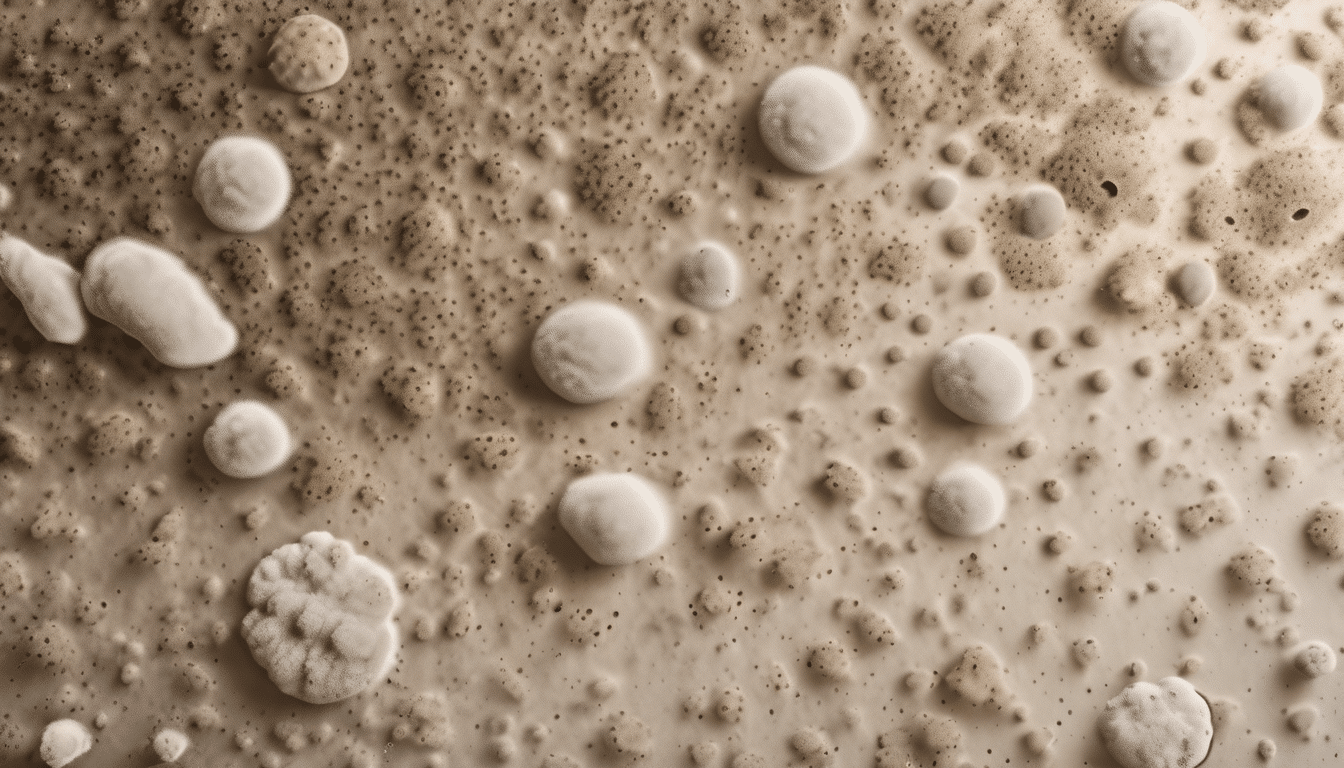
Understanding Mold Spores in Air: How Testing Reveals the Truth is essential. Mold spores in air testing reveals the truth that no surface inspection ever can. A property can appear visually clean, smell relatively neutral, and still contain airborne spore concentrations that indicate active mold growth somewhere within the building envelope. As an IAC2 Certified Indoor Air Consultant with over 20 years of field investigation experience, I have walked through properties where occupants reported persistent symptoms and no visible mold was found — until laboratory analysis told a different story entirely.
This is the central challenge with airborne mold contamination in Dubai and across the UAE. The region’s climate — with relative humidity routinely exceeding 80% during summer months and interior condensation forming inside walls, under floors, and within HVAC systems — creates conditions where hidden mold growth is not merely possible. It is predictable. And without proper air sampling, the source remains invisible while the exposure continues. This relates directly to Mold Spores in Air: How Testing Reveals the Truth.
The question is never simply whether mold is present. Every indoor environment contains some level of mold spores. The diagnostic question is: what species, at what concentration, and how does that compare to outdoor baseline conditions? That is precisely what mold spores in air testing is designed to answer. When considering Mold Spores in Air: How Testing Reveals the Truth, this becomes clear.
Mold Spores in Air: How Testing Reveals the Truth – Why Mold Spores in Air Testing Matters More Than Visual Insp
Visual inspection is a starting point, not a conclusion. Mold growth behind drywall, inside ductwork, beneath floor coverings, or within ceiling voids is completely invisible to the naked eye. Yet spores from those hidden colonies circulate continuously through the air that occupants breathe. In Dubai’s climate, HVAC systems run almost year-round, making them highly efficient distributors of airborne contaminants throughout every room of a property. The importance of Mold Spores in Air: How Testing Reveals the Truth is evident here.
Mold spores in air testing provides quantitative data — actual spore counts per cubic metre of air — that allows a trained investigator to make evidence-based decisions rather than educated guesses. When indoor spore concentrations exceed outdoor reference samples, or when specific genera like Stachybotrys, Aspergillus, or Chaetomium appear in elevated counts, those findings direct the investigation toward the source rather than treating symptoms. Understanding Mold Spores in Air: How Testing Reveals the Truth helps with this aspect.
Surface mold that is visible and cleaned without addressing the airborne component leaves the investigation incomplete. Post-cleaning air sampling confirms whether the environment has actually returned to baseline — or whether a hidden reservoir remains active. This verification step is what separates professional mold remediation from cosmetic treatment. Mold Spores in Air: How Testing Reveals the Truth factors into this consideration.
Mold Spores in Air: How Testing Reveals the Truth – How Air Sampling for Mold Spores in Air Works
Professional air sampling uses calibrated impaction devices — most commonly spore trap cassettes — to draw a measured volume of air through a collection medium at a controlled flow rate. The cassette is then sent to a certified laboratory, where analysts count and identify spores under microscopy, producing a report expressed in spores per cubic metre (spores/m³). This relates directly to Mold Spores in Air: How Testing Reveals the Truth.
Spore Trap Sampling
Spore trap cassettes such as the Air-O-Cell or Zefon Bio-Pump systems are the most widely used method in field investigations. They capture total fungal spore counts and allow identification by morphology. This method is rapid, cost-effective, and appropriate for initial screening and post-remediation verification. Results typically return within 24 to 48 hours from a certified laboratory. When considering Mold Spores in Air: How Testing Reveals the Truth, this becomes clear.
Culturable Air Sampling
For cases requiring species-level identification — particularly where mycotoxin-producing species are suspected — culturable sampling using Andersen impactors or similar devices allows spores to grow in laboratory conditions. This method takes longer but provides genus and species confirmation that spore trap morphology cannot always supply. In complex investigations involving occupant health concerns, Saniservice specialists typically deploy both methods in combination. The importance of Mold Spores in Air: How Testing Reveals the Truth is evident here.
ERMI and Dust Sampling
Environmental Relative Mouldinessness Index (ERMI) sampling analyses settled dust for mold DNA using MSQPCR methodology. This approach captures the historical contamination record of a space rather than a single moment in time. ERMI is particularly valuable when investigating properties with a long history of moisture events or where intermittent mold growth is suspected. Understanding Mold Spores in Air: How Testing Reveals the Truth helps with this aspect.
Mold Spores in Air: How Testing Reveals the Truth – What Mold Spore Air Test Results Actually Mean
Receiving a laboratory report containing dozens of fungal genera and spore count figures is one thing. Interpreting those results correctly is another. Mold spores in air testing reveals the truth only when results are read in context — meaning outdoor baseline samples, occupant use patterns, HVAC operation, and building history must all inform the interpretation. Mold Spores in Air: How Testing Reveals the Truth factors into this consideration.
A key diagnostic principle is the indoor-to-outdoor ratio. When indoor spore counts are significantly elevated relative to the outdoor reference sample collected on the same day, that differential indicates an indoor mold source. When indoor and outdoor profiles are comparable in both count and species diversity, the contamination is more likely environmental rather than building-derived. This relates directly to Mold Spores in Air: How Testing Reveals the Truth.
Certain genera carry particular significance regardless of count. Stachybotrys chartarum requires consistently wet cellulosic material to grow and does not disperse easily — its presence in air samples suggests prolonged water damage somewhere in the structure. Aspergillus and Penicillium species, often reported together as Asp/Pen in spore trap analysis, are among the most common indoor mold genera found in UAE properties with HVAC moisture problems. Chaetomium is a reliable indicator of cellulose degradation from sustained water exposure. When considering Mold Spores in Air: How Testing Reveals the Truth, this becomes clear.
The Dubai Context — Why Mold Spores in Air Testing Is Especially Relevant Here
Dubai’s built environment creates several conditions that amplify the value of air testing. Properties range from older low-rise villas in districts like Jumeirah and Al Quoz to modern high-rise apartments in Business Bay, JLT, and Dubai Marina — each with its own building envelope characteristics, HVAC configurations, and moisture vulnerabilities. The importance of Mold Spores in Air: How Testing Reveals the Truth is evident here.
The extreme temperature differential between outdoor summer conditions and aggressively cooled interior spaces creates condensation risk at walls, windows, and within duct systems. Supply air in oversized or poorly balanced HVAC systems often drops below the dew point of interior surfaces, promoting moisture accumulation in concealed locations. In post-construction properties that have sat vacant during summer months — a common scenario in the UAE market — HVAC shutdown combined with high ambient humidity regularly produces conditions where mold establishes before the first occupant arrives. Understanding Mold Spores in Air: How Testing Reveals the Truth helps with this aspect.
Mold spores in air testing in Dubai properties must account for the outdoor spore baseline, which shifts seasonally. Haboob events and high-dust periods affect outdoor spore profiles, which is why outdoor reference sampling on the day of indoor collection is not optional — it is essential to accurate interpretation. Mold Spores in Air: How Testing Reveals the Truth factors into this consideration.
When to Request Mold Spores in Air Testing
There are specific scenarios where air sampling should be the first diagnostic step rather than a follow-up measure. Understanding these situations helps property owners, facility managers, and real estate agents make informed decisions about when testing adds genuine value. This relates directly to Mold Spores in Air: How Testing Reveals the Truth.
- Occupants report persistent respiratory irritation, unexplained fatigue, or symptoms that improve when leaving the property and return upon re-entry
- A visible mold colony has been removed and the property needs verification that remediation was effective
- A property has a history of water intrusion, flooding, or plumbing leaks, even if no current visible mold is present
- A post-renovation inspection is required before reoccupation, particularly where building materials were disturbed
- A DHA mold clearance certificate is required for a property transaction or tenancy dispute resolution
- HVAC systems show visible contamination inside ductwork or at supply grilles
- A musty odour is detectable but no visible source has been identified
Mold Spores in Air Testing and Remediation Decisions
One of the most important applications of air sampling is scope definition. Without testing, remediation scope is determined by visual assessment alone — meaning hidden reservoirs are systematically overlooked. When air sampling reveals elevated Asp/Pen counts in a bedroom but not in adjacent rooms, investigators can prioritise thermal imaging and borescope inspection of that specific area to locate the concealed source before demolition work begins. When considering Mold Spores in Air: How Testing Reveals the Truth, this becomes clear.
Mold spores in air testing also determines remediation sequencing. In properties where multiple rooms show elevated counts, the species profile and concentration gradient across sampling locations helps identify primary sources versus secondary dispersal zones. This prevents unnecessary material removal while ensuring that the actual contamination source receives the appropriate intervention.
Post-remediation verification sampling — conducted after containment is removed and HEPA air scrubbing is complete — confirms that indoor spore concentrations have returned to levels comparable with or lower than outdoor baseline. Without this step, no remediation can be considered verified. Laboratory-confirmed clearance is the difference between a professional outcome and an assumption.
Key Takeaways for Property Owners and Facility Managers
- Mold spores in air testing reveals contamination that visual inspection cannot detect
- Always pair indoor air samples with outdoor reference samples collected the same day
- Species identification matters — genus-level data directs investigation toward likely sources
- Dubai’s climate creates specific building conditions that elevate the value of routine air sampling
- Post-remediation verification sampling is a required step in any professionally conducted remediation
- ERMI dust sampling adds historical context that single-event air sampling cannot provide
- Air purifiers alone do not eliminate mold sources — they manage airborne spore load while the source remains active
Frequently Asked Questions
How does mold spores in air testing reveal the truth when there is no visible mold?
Hidden mold growth inside wall cavities, HVAC systems, or beneath flooring continuously releases spores into circulating air. Laboratory analysis of air samples measures spore counts per cubic metre and compares them against outdoor reference levels. When indoor concentrations significantly exceed outdoor baselines, or when indicator species appear, this confirms active hidden growth even without visible evidence.
What spore count level is considered elevated in a Dubai property?
There is no universally mandated threshold, as interpretation depends on species type, outdoor baseline comparison, and occupant sensitivity. However, IAC2-aligned investigation practice treats any indoor-to-outdoor ratio significantly above 1:1 for the same species as a finding warranting investigation — particularly for genera like Stachybotrys, Chaetomium, or heavily elevated Aspergillus/Penicillium profiles.
How long does a professional mold air test take in Dubai?
On-site sampling for a standard Dubai villa or apartment typically takes one to two hours, depending on the number of sample locations required. Laboratory analysis for spore trap cassettes returns results within 24 to 48 hours. Culturable sampling or ERMI analysis requires additional processing time, typically five to seven business days.
Can mold spores in air testing be used to obtain a DHA mold clearance certificate?
Yes. Laboratory-confirmed air sampling results that demonstrate post-remediation spore concentrations at or below outdoor baseline levels form part of the documentation required for mold clearance reporting in Dubai. Saniservice specialists prepare documentation aligned with DHA requirements, ensuring reports are structured appropriately for regulatory submission.
Does running an air purifier affect air sampling results?
It can. HEPA air purifiers reduce airborne spore concentrations locally, which may suppress counts during sampling and underrepresent the actual contamination level. For accurate diagnostic sampling, Saniservice investigation protocols standardise HVAC and air purifier operation in the period before sampling to ensure results reflect true indoor conditions rather than filtered conditions.
Is mold spores in air testing the same as an HVAC mold inspection?
These are complementary but distinct assessments. Air sampling measures the total airborne spore load in a room or zone. HVAC mold inspection involves visual and swab assessment of supply ducts, coil surfaces, drain pans, and air handling units. In most Dubai investigations, both are conducted simultaneously, as HVAC systems are among the most common hidden mold sources in the UAE climate.
Why do air sampling results from the same room sometimes vary?
Spore concentrations are dynamic. They fluctuate with HVAC operation, occupant activity, door and window positions, and even time of day. This is why professional investigations follow standardised sampling protocols — controlling variables such as HVAC run time, room occupancy, and sample duration to produce comparable, reproducible data rather than incidental snapshots.
The Evidence Speaks Clearly
Mold spores in air testing reveals the truth that no walk-through, visual assessment, or symptom report alone can confirm. It transforms an invisible problem into quantifiable, laboratory-confirmed evidence — and that evidence determines every decision that follows, from remediation scope to post-clearance verification.
In Dubai’s climate, where moisture, temperature differentials, and continuous HVAC operation combine to create persistent hidden mold risk, air sampling is not a precaution for extreme cases. It is standard diagnostic practice for any investigation conducted with scientific integrity. The properties I have investigated over two decades in the UAE have consistently reinforced one principle: when the data speaks, assumptions become irrelevant.
If your property has a history of moisture events, if occupants are experiencing unexplained symptoms, or if you need post-remediation verification that meets laboratory-confirmed standards, the starting point is professional air sampling — not a visual check, and not a guess. Contact Saniservice specialists to understand what your indoor air data actually shows. Understanding Mold Spores in Air: How Testing Reveals the Truth is key to success in this area.