
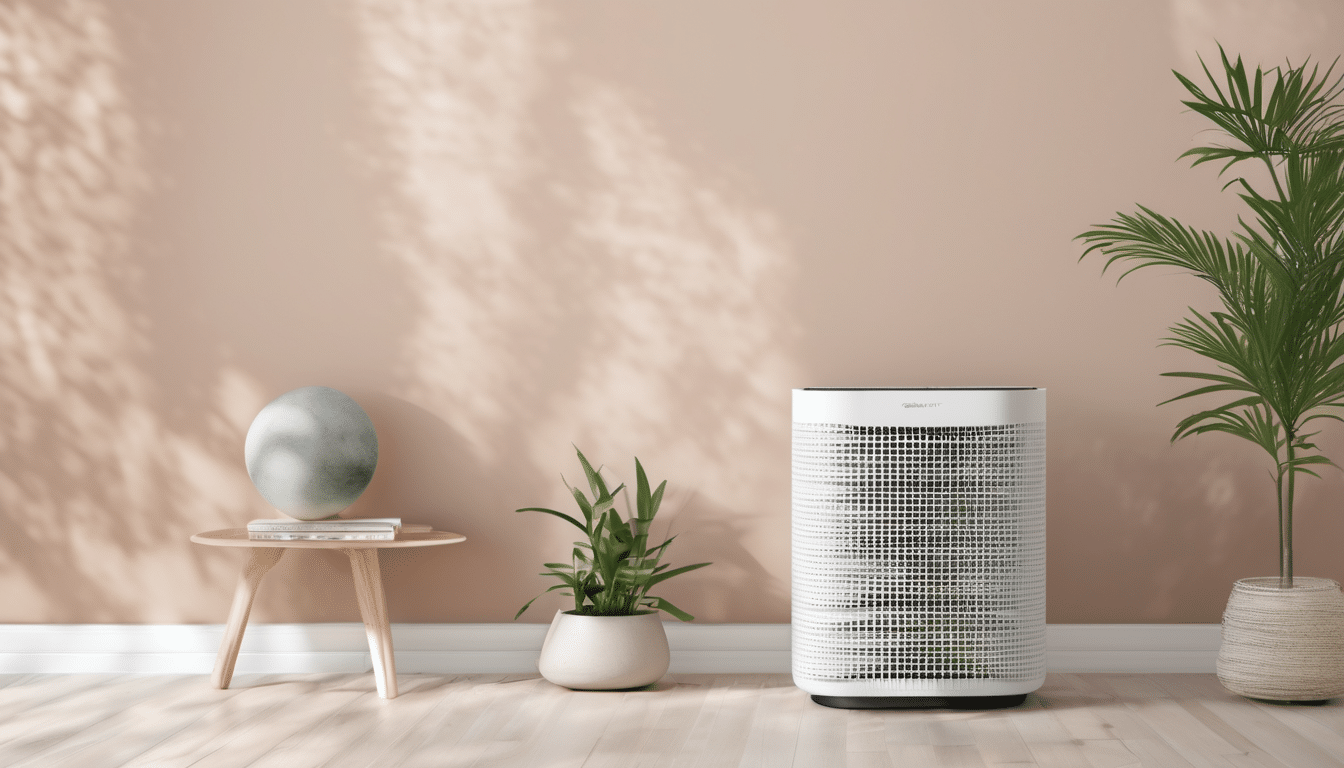
Understanding Air Purifier for Mold: HEPA vs UV vs Carbon Filters is essential. When homeowners in Dubai or Abu Dhabi notice a musty odour or discover discolouration on a wall, one of the first questions they ask is whether an air purifier can help. The short answer is: it depends entirely on which filter technology is inside the unit, and what you are actually trying to achieve. An air purifier for mold — specifically HEPA vs UV vs carbon filters — is not a single solution. It is a category of tools, each addressing a different part of the same problem. Understanding the distinction is what separates a useful purchase from a misplaced one.
In the UAE, where indoor relative humidity routinely rises above 60% during summer months and ducted HVAC systems circulate air through every room, airborne mold spore concentrations can be significantly elevated even when no visible mold is present. As an IAC2 Certified Indoor Air Consultant, I have assessed properties across Dubai, Sharjah, and Ras Al Khaimah where laboratory spore trap analysis confirmed elevated Cladosporium, Aspergillus, and Penicillium counts in rooms that appeared visually clean. In those situations, filter technology becomes a meaningful part of the occupant health conversation — provided expectations are correctly calibrated. This relates directly to Air Purifier for Mold: HEPA vs UV vs Carbon Filters.
This article compares the three primary filter types used in air purifiers for mold: HEPA mechanical filtration, UV-C germicidal irradiation, and activated carbon adsorption. Each section covers the mechanism, the evidence base, the limitations, and the practical fit for UAE indoor environments. A final verdict guides you toward the right combination for your specific situation. When considering Air Purifier for Mold: HEPA vs UV vs Carbon Filters, this becomes clear.
Air Purifier for Mold: HEPA vs UV vs Carbon Filters – How Mold Spores Move Through Indoor Air
Before comparing filter types, it helps to understand what you are actually filtering. Mold reproduces by releasing spores — microscopic particles ranging from roughly 2 to 40 micrometres in diameter depending on species. Common indoor genera such as Cladosporium typically fall between 3 and 7 micrometres. Aspergillus and Penicillium spores are smaller still, often sitting below 5 micrometres. The importance of Air Purifier for Mold: HEPA vs UV vs Carbon Filters is evident here.
These particles are light enough to remain suspended in circulating air for extended periods, particularly in rooms with active HVAC airflow. They settle on surfaces, re-suspend with foot traffic or air movement, and enter the respiratory tract when inhaled. An air purifier for mold functions by drawing room air through a filtration chamber, capturing or neutralising spores before returning cleaner air to the space. Understanding Air Purifier for Mold: HEPA vs UV vs Carbon Filters helps with this aspect.
What no air purifier can do is address the mold colony itself. If active growth is present behind a wall, inside an HVAC duct, or beneath flooring, the purifier is managing a symptom — not solving the problem. Root-cause remediation must precede or accompany any air purification strategy. Air Purifier for Mold: HEPA vs UV vs Carbon Filters factors into this consideration.
Air Purifier for Mold: HEPA vs UV vs Carbon Filters – HEPA Filters for Mold — Mechanical Capture at the Particle
High-Efficiency Particulate Air (HEPA) filtration is the most well-established technology in the air purifier for mold category. A true HEPA filter is rated to capture 99.97% of particles at 0.3 micrometres — the most penetrating particle size — which means it captures mold spores, which are significantly larger, at an even higher efficiency rate. This relates directly to Air Purifier for Mold: HEPA vs UV vs Carbon Filters.
How HEPA Filtration Works
HEPA filters use a dense mat of randomly arranged fibres. Particles are captured through three mechanisms: impaction (large particles travel in a straight line and collide with fibres), interception (mid-size particles follow airflow but contact a fibre), and diffusion (ultrafine particles move erratically and are absorbed by fibres). Mold spores fall primarily in the impaction and interception range, making HEPA filtration highly effective at removing them from circulating air. When considering Air Purifier for Mold: HEPA vs UV vs Carbon Filters, this becomes clear.
HEPA Pros for UAE Homes
- Physically removes spores from air — not reliant on chemical reaction or radiation exposure time
- Proven, verifiable performance standard — true HEPA is a defined specification, not a marketing claim
- No ozone or by-product emissions
- Effective against a broad range of particle-based contaminants including dust mites, pollen, and fine particulate matter common in Dubai’s desert environment
- Filter replacement is straightforward and the used filter can be visually inspected
HEPA Limitations
- Does not kill spores — captured organisms remain viable on the filter surface until disposal
- Filter replacement must be performed carefully to avoid re-releasing captured particles
- Requires adequate air change rate (ACH) for the room volume — an undersized unit in a large villa living area will underperform
- Does not address mycotoxins or volatile organic compounds (VOCs) produced by mold colonies
For the air purifier for mold comparison, HEPA is the non-negotiable baseline. Any unit without a true HEPA filter should not be considered for mold spore reduction. The importance of Air Purifier for Mold: HEPA vs UV vs Carbon Filters is evident here.
Air Purifier for Mold: HEPA vs UV vs Carbon Filters – UV-C Germicidal Filters for Mold — Irradiation Inside the
UV-C germicidal technology uses short-wave ultraviolet light (typically 254 nanometres) to disrupt the DNA and RNA of microorganisms, rendering them unable to reproduce. In the context of an air purifier for mold, UV-C is positioned as a means of inactivating mold spores and other biological contaminants as they pass through the irradiation chamber. Understanding Air Purifier for Mold: HEPA vs UV vs Carbon Filters helps with this aspect.
How UV-C Air Purification Works
Air is drawn through the unit and exposed to UV-C light for a defined dwell time. The effectiveness of germicidal UV is a function of two variables: intensity (measured in microwatts per square centimetre) and exposure duration. Consumer-grade air purifiers typically move air through the UV chamber rapidly, which limits actual dwell time and therefore limits the germicidal dose delivered to any given spore. Air Purifier for Mold: HEPA vs UV vs Carbon Filters factors into this consideration.
UV-C Pros for Indoor Mold Management
- Targets biological contaminants specifically — effective against bacteria, viruses, and fungal spores when dose is sufficient
- No physical filter media to become clogged or release particles on handling
- Can complement HEPA by inactivating organisms captured on filter surfaces (in some hybrid designs)
- Useful in healthcare-grade or high-sensitivity environments where microbial inactivation is a priority alongside particle removal
UV-C Limitations
- Efficacy is highly dependent on dwell time — most consumer units do not deliver a sufficient germicidal dose in a single pass
- Some UV-C lamps produce trace ozone, which is an indoor air quality concern in enclosed spaces
- Lamp output degrades over time and must be replaced on schedule — degraded lamps provide false reassurance
- Does not physically remove spores from air — an inactivated spore that is not captured by a subsequent filter returns to the room
- No effect on mycotoxins already present in the environment
In the air purifier for mold evaluation, UV-C is a supporting technology rather than a primary one. It performs best in combination with HEPA, not as a standalone solution. Be cautious of units marketed primarily on UV-C claims without a true HEPA stage. This relates directly to Air Purifier for Mold: HEPA vs UV vs Carbon Filters.
Activated Carbon Filters for Mold — Adsorption of Odours and VOCs
Activated carbon filtration works through adsorption — a process where gas-phase molecules bond to the highly porous surface of treated carbon granules. In the air purifier for mold context, activated carbon addresses the volatile organic compounds (VOCs) and musty odour molecules produced by active mold colonies, rather than the spores themselves. When considering Air Purifier for Mold: HEPA vs UV vs Carbon Filters, this becomes clear.
How Activated Carbon Filtration Works
Mold metabolism produces microbial volatile organic compounds (mVOCs) — molecules such as geosmin and various alcohols and aldehydes that create the characteristic musty smell associated with indoor mold growth. These gas-phase molecules are too small to be captured by HEPA filtration. Activated carbon provides a large surface area (a single gram of quality activated carbon can have a surface area exceeding 1,000 square metres) that physically traps these molecules through chemical attraction. The importance of Air Purifier for Mold: HEPA vs UV vs Carbon Filters is evident here.
Activated Carbon Pros for Mold-Affected Spaces
- The only filter technology that addresses mold odour at the molecular level
- Also effective against formaldehyde, cleaning product residues, and other indoor VOCs common in newly furnished Dubai apartments
- Complements HEPA by covering the gas phase that particle filters cannot address
- No ozone or harmful by-products
Activated Carbon Limitations
- Does not capture mold spores — provides no particle-removal function
- Carbon beds become saturated over time and must be replaced; a saturated filter can release previously adsorbed compounds back into the air
- Thin carbon pre-filters found in budget units offer minimal adsorption capacity — meaningful carbon filtration requires a substantial bed depth
- Addresses the odour signature of mold, not the biological risk
In the air purifier for mold filter comparison, activated carbon is essential for occupant comfort and VOC management, but it should never be interpreted as evidence that the mold source has been controlled. Understanding Air Purifier for Mold: HEPA vs UV vs Carbon Filters helps with this aspect.
Side-by-Side Comparison — Air Purifier for Mold Filter Technologies
| Criterion | HEPA | UV-C | Activated Carbon |
|---|---|---|---|
| Removes spores from air | Yes — physically captures | Partially — inactivates, does not capture | No |
| Addresses mold odour | No | No | Yes — adsorbs mVOCs |
| Inactivates spores | No — spores remain viable on filter | Yes — when dose is adequate | No |
| Addresses mycotoxins | Partially — captures toxin-bearing particles | Partially | Partially — adsorbs some VOC-phase toxins |
| Ozone risk | None | Low to moderate (lamp-dependent) | None |
| Maintenance requirement | Filter replacement every 6–12 months | Lamp replacement annually | Carbon bed replacement every 3–6 months |
Which Air Purifier Filter Is Best for Mold in Dubai and UAE Homes
The evidence consistently points toward a multi-stage approach. The most effective air purifier for mold combines true HEPA filtration with a substantial activated carbon stage, and optionally a UV-C stage for environments where biological inactivation is a clinical priority — such as rooms occupied by immunocompromised individuals, infants, or those with documented mold sensitivity. Air Purifier for Mold: HEPA vs UV vs Carbon Filters factors into this consideration.
In Dubai specifically, the combination of desert particulate and biological contamination means that HEPA alone is already working harder than in more temperate climates. Adding an activated carbon stage addresses the VOC signature that contributes to the indoor air quality complaints most commonly reported by residents during the summer months — even in properties without confirmed active mold growth. This relates directly to Air Purifier for Mold: HEPA vs UV vs Carbon Filters.
UV-C is a sensible addition in a well-designed multi-stage unit, but should not be the deciding factor in a purchase. If a unit carries UV-C as its primary marketing claim and offers only a thin pre-filter, it is not an effective air purifier for mold management. When considering Air Purifier for Mold: HEPA vs UV vs Carbon Filters, this becomes clear.
Expert Recommendations for Choosing an Air Purifier for Mold
- Verify HEPA certification: Look for units rated H13 or H14 under EN 1822 standards. “HEPA-type” or “HEPA-like” claims are not equivalent and should be disregarded.
- Match unit capacity to room volume: An air purifier performing 4–6 air changes per hour (ACH) for the target room is the minimum threshold for meaningful spore reduction. Calculate room volume in cubic metres and confirm the unit’s CADR (Clean Air Delivery Rate) is appropriate.
- Assess carbon bed depth: Thin carbon pre-filters weigh as little as 50–100 grams. Effective adsorption requires a substantially heavier carbon bed. Check manufacturer specifications before purchasing.
- Plan for filter maintenance: In Dubai’s dusty environment, HEPA filters may load faster than the manufacturer’s standard replacement interval. Inspect filters regularly and replace on condition rather than calendar alone.
- Do not substitute purification for remediation: If a professional mold assessment confirms active growth, no air purifier eliminates the need for proper remediation. The purifier manages ambient spore load; it does not resolve the source.
When Air Purification Is Not Enough — The 800Molds Position
An air purifier for mold is a legitimate tool for reducing ambient spore concentrations in rooms where the contamination source has been professionally remediated, or where elevated spore counts are attributable to outdoor infiltration rather than active indoor growth. However, field investigations conducted by 800Molds specialists regularly identify properties where air purifiers have been running for months with no reduction in occupant symptoms — because the root cause was never addressed. The importance of Air Purifier for Mold: HEPA vs UV vs Carbon Filters is evident here.
If occupants are experiencing persistent respiratory irritation, persistent odour despite ventilation, or visible discolouration on walls or ceilings, the appropriate first step is a professional indoor air quality assessment with laboratory-confirmed spore trap analysis — not a filter upgrade. The filter comparison in this article is relevant once the diagnostic work has been done and the scope of contamination is understood. Understanding Air Purifier for Mold: HEPA vs UV vs Carbon Filters helps with this aspect.
Frequently Asked Questions
Does a HEPA air purifier remove mold spores from the air?
Yes. A true HEPA filter — rated to EN 1822 H13 standard or equivalent — physically captures mold spores, which typically range from 2 to 40 micrometres in diameter. This makes HEPA mechanical filtration the most reliable single-stage technology for reducing airborne spore concentrations. It does not kill spores or address the mold source, but it does measurably reduce the spore load in treated room air. Air Purifier for Mold: HEPA vs UV vs Carbon Filters factors into this consideration.
Is UV-C light effective against mold in an air purifier?
UV-C irradiation can inactivate mold spores when the germicidal dose — a product of lamp intensity and exposure duration — is sufficient. In most consumer air purifiers, air passes through the UV chamber too quickly to deliver an adequate dose to every spore. UV-C performs best as a secondary stage within a multi-technology unit rather than as the primary filtration method. This relates directly to Air Purifier for Mold: HEPA vs UV vs Carbon Filters.
What does activated carbon do in an air purifier for mold?
Activated carbon adsorbs microbial volatile organic compounds (mVOCs) — the gas-phase molecules responsible for the musty odour associated with mold growth. It does not capture spores or inactivate organisms. In a well-designed multi-stage unit, activated carbon addresses the odour dimension of indoor mold while HEPA handles the particle dimension. When considering Air Purifier for Mold: HEPA vs UV vs Carbon Filters, this becomes clear.
What is the best air purifier filter combination for Dubai homes with mold concerns?
For Dubai and UAE indoor environments, the most effective configuration is a true HEPA filter (H13 or H14 rated) combined with a substantial activated carbon stage. UV-C can be added for environments with clinically sensitive occupants. The unit must be sized appropriately for room volume — typically targeting 4 to 6 air changes per hour — to deliver meaningful spore reduction in Dubai apartment and villa spaces.
Can an air purifier replace professional mold remediation in a Dubai property?
No. An air purifier manages ambient airborne spore concentrations but does not address active mold colonies growing on building materials. If a professional assessment — including laboratory spore trap analysis — confirms active mold growth, proper remediation must be completed first. Air purification then plays a maintenance role in keeping spore counts low after the source has been resolved.
How often should air purifier filters be replaced in the UAE climate?
In Dubai and across the UAE, the combination of fine desert particulate and high summer humidity typically causes HEPA filters to load more quickly than manufacturer standard intervals suggest. Activated carbon beds may also saturate faster in high-humidity conditions. Filter condition should be inspected every three months, with replacement determined by condition rather than calendar date alone.
Are there mold-specific air purifiers available for villas in Dubai and Abu Dhabi?
There is no universally agreed “mold-specific” air purifier category. What matters is the filter specification: true HEPA rated H13 or higher, a meaningful activated carbon stage, and a CADR appropriate for the room volume in question. For larger spaces such as villa living rooms or open-plan areas common in Dubai and Abu Dhabi properties, professional guidance on unit selection and placement is advisable. Contact 800Molds for a property-specific assessment before purchasing.
Conclusion — The Right Air Purifier for Mold Starts with the Right Diagnosis
The air purifier for mold — HEPA vs UV vs carbon filters — comparison consistently resolves to the same answer: no single technology is sufficient on its own, and no technology replaces a properly investigated indoor environment. True HEPA is the non-negotiable foundation for spore capture. Activated carbon is essential for VOC and odour management. UV-C adds value in specific circumstances when dose delivery is adequate and the unit is well-designed.
For homeowners across Dubai, Abu Dhabi, Sharjah, and the wider UAE, the practical recommendation is straightforward. Invest in a multi-stage unit with verified HEPA and substantial carbon filtration, size it correctly for your space, and maintain the filters on condition. If symptoms persist or laboratory testing reveals elevated spore counts despite running the unit, the investigation needs to go deeper than the filter specification. That is where professional indoor environmental assessment — backed by in-house microbiology laboratory analysis — provides the clarity that no air purifier can. Understanding Air Purifier for Mold: HEPA vs UV vs Carbon Filters is key to success in this area.