
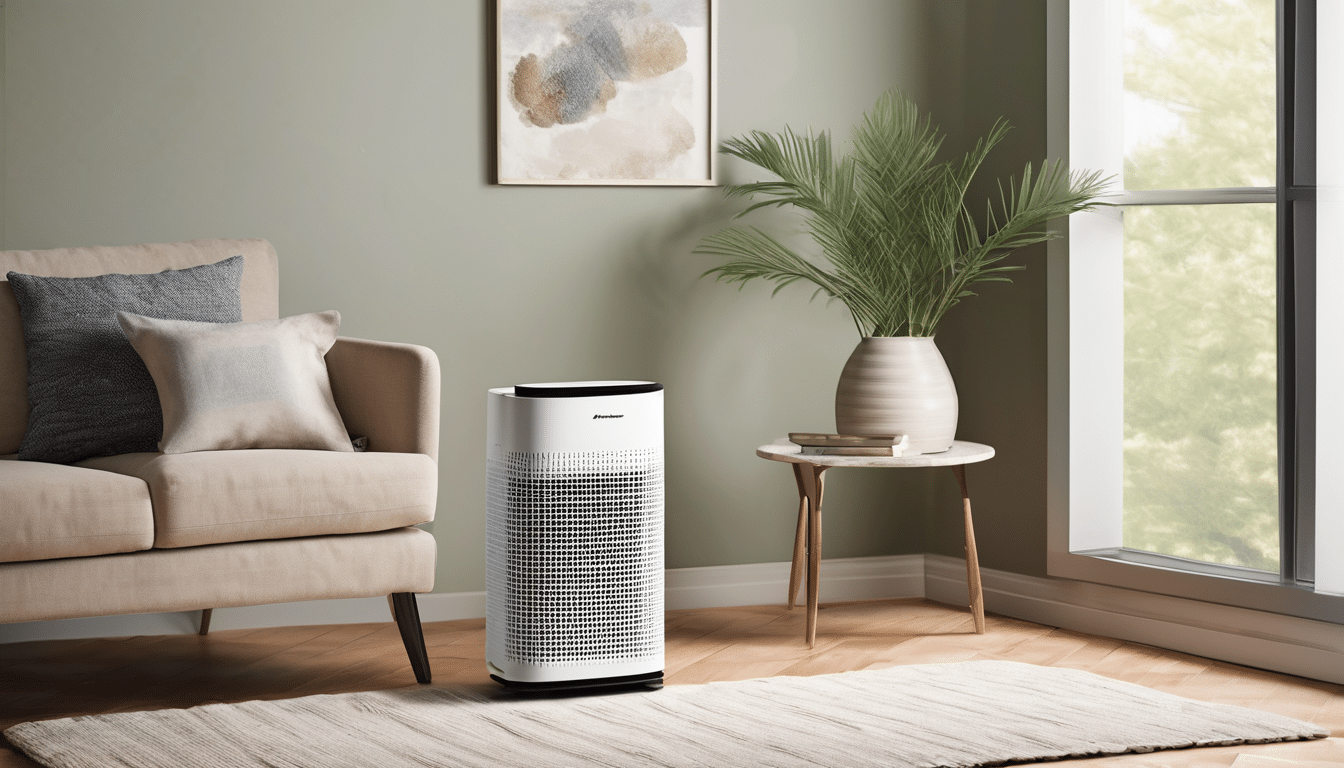
Understanding Air Purifier Maintenance to Prevent Filter Mold Growth is essential. Air Purifier Maintenance to prevent filter mould growth is something most Dubai homeowners never think about — until they notice that persistent musty smell returning, despite the device running continuously. In the UAE’s climate, where outdoor humidity regularly exceeds 80% and indoor humidity can accumulate rapidly without proper HVAC management, a neglected air purifier filter does not stay neutral. It becomes an active site for mould colonisation, quietly redistributing fungal spores into the very rooms it was installed to protect.
The question is not whether your air purifier can harbour mould growth — under the right conditions, it can. The question is what maintenance protocols prevent that outcome, and what signs indicate the problem has already taken hold. As an IAC2 Certified Indoor Air Consultant with more than 20 years of building diagnostics experience across UAE properties, I have encountered mould-colonised air purifier filters in villas in Jumeirah, apartments in JLT, and offices in Business Bay. The pattern is consistent: the device was present, but the maintenance was absent. This relates directly to Air Purifier Maintenance to Prevent Filter Mold Growth.
This article addresses that gap directly. Proper air purifier maintenance to prevent filter mould growth involves scheduled replacement, humidity management, correct placement, and an understanding of how different filter types interact with moisture. Each of these factors shapes whether your air purifier functions as protection or as an additional contamination source. When considering Air Purifier Maintenance to Prevent Filter Mold Growth, this becomes clear.
Why Air Purifier Filters Are Vulnerable to Mould in UAE Conditions
Filters capture particulates from the air — including mould spores, dust, and biological debris. In a climate like Dubai’s, where ambient humidity is high for extended periods, those captured particles do not simply sit inert. When moisture is present, organic material trapped in filter media becomes a substrate. Mould only requires three things to establish growth: a food source, warmth, and moisture. A loaded HEPA filter in a humid room provides all three. The importance of Air Purifier Maintenance to Prevent Filter Mold Growth is evident here.
The UAE summer months, from approximately May through September, present the highest risk. Air conditioning systems run continuously, pulling warm humid air across cold coil surfaces. When an air purifier is placed near an AC vent, the alternating cycles of cool humid air and warmer ambient air create condensation-like conditions within the filter housing. This micro-environment is precisely what mould colonisation favours. Understanding Air Purifier Maintenance to Prevent Filter Mold Growth helps with this aspect.
Beyond seasonal risk, the building type matters. Older villas with single-glazed windows, apartments with inadequate mechanical ventilation, and properties with a history of water intrusion all maintain higher baseline indoor humidity. In these environments, air purifier maintenance to prevent filter mould growth requires more frequent attention than standard manufacturer guidance suggests. Air Purifier Maintenance to Prevent Filter Mold Growth factors into this consideration.
The Core Air Purifier Maintenance to Prevent Filter Mold Growth Schedule
Manufacturer replacement intervals are typically calibrated for temperate climates with moderate air quality — not for Dubai’s combination of fine particulate pollution, humidity, and continuous operation. Applying those intervals without adjustment is one of the most common maintenance errors observed during indoor environmental assessments in UAE homes. This relates directly to Air Purifier Maintenance to Prevent Filter Mold Growth.
HEPA Filter Replacement
True HEPA filters should be replaced every three to six months in UAE residential environments. Properties with higher ambient humidity, visible mould history, or occupants with respiratory sensitivities should target the shorter end of that range. At the point of replacement, do not attempt to wash or vacuum HEPA filters — this releases trapped spores back into the air and damages the filter media’s structural integrity. When considering Air Purifier Maintenance to Prevent Filter Mold Growth, this becomes clear.
Pre-Filter Cleaning
Pre-filters, which capture larger particles before they reach the HEPA layer, should be checked every two to four weeks. In Dubai homes with pets, construction activity nearby, or occupants who keep windows open during cooler months, pre-filters load rapidly. A clogged pre-filter forces contaminated air to bypass filtration pathways, increasing the moisture load on downstream filter stages. The importance of Air Purifier Maintenance to Prevent Filter Mold Growth is evident here.
Activated Carbon Filter Replacement
Activated carbon filters manage volatile organic compounds and odour molecules. They are particularly relevant in mould contexts because mycotoxins — the chemical compounds produced by certain mould species — have an odour signature that carbon filtration addresses. However, saturated carbon filters lose adsorption capacity and can off-gas previously captured compounds. Replace activated carbon filters every three months under continuous UAE operation. Understanding Air Purifier Maintenance to Prevent Filter Mold Growth helps with this aspect.
UV-C Lamp Inspection
Air purifiers fitted with UV-C germicidal lamps require lamp replacement approximately every twelve months, even if the lamp appears to be illuminated. UV-C output degrades over time; a lamp that appears functional may be producing insufficient radiation to inactivate biological contaminants. Refer to device specifications for lumen output requirements and replacement intervals. Air Purifier Maintenance to Prevent Filter Mold Growth factors into this consideration.
Air Purifier Maintenance to Prevent Filter Mold Growth Through Humidity Control
No maintenance schedule replaces the fundamental requirement of humidity management. An air purifier operating in a room where relative humidity consistently exceeds 60% is working against its own filter lifespan. At 65% relative humidity and above, mould colonisation on filter media accelerates significantly. This is not a theoretical risk — it is a regularly documented finding in indoor environmental assessments across UAE properties. This relates directly to Air Purifier Maintenance to Prevent Filter Mold Growth.
Pairing an air purifier with a quality dehumidifier is the most effective structural intervention. In rooms where HVAC dehumidification is insufficient — a common finding in older Abu Dhabi apartments and large Sharjah villas with legacy ductwork — a standalone dehumidifier brings indoor relative humidity down to the 45–55% range where mould growth on surfaces and filter media is substantially reduced. When considering Air Purifier Maintenance to Prevent Filter Mold Growth, this becomes clear.
Humidity monitoring provides the data needed to make informed decisions. Basic digital hygrometers, placed at breathing height in occupied rooms, give a reliable picture of ambient conditions. Air purifier maintenance to prevent filter mould growth should be informed by measured humidity readings, not assumptions. If the reading is consistently above 60%, the maintenance interval shortens regardless of what the manufacturer’s schedule states. The importance of Air Purifier Maintenance to Prevent Filter Mold Growth is evident here.
Placement Decisions That Affect Filter Mold Risk
Where an air purifier is positioned within a room directly affects its filter’s vulnerability to moisture loading. Placement near bathroom doorways, under AC vents, or in corners with restricted airflow all increase the risk of filter mould colonisation. Air purifier maintenance to prevent filter mould growth is more effective when the device is positioned correctly from the outset. Understanding Air Purifier Maintenance to Prevent Filter Mold Growth helps with this aspect.
The recommended placement for mould-risk management is in the centre of the room or along a wall where airflow is unobstructed, away from direct AC discharge points, and at a minimum of 30 centimetres from any surface. This allows the device to draw room air uniformly rather than concentrating intake from a single high-humidity zone. Air Purifier Maintenance to Prevent Filter Mold Growth factors into this consideration.
In bedrooms, which are commonly the highest-concern rooms for occupant health, positioning near the sleeping area but away from the window line reduces the intake of overnight condensation-laden air. Dubai’s coastal geography means overnight humidity can be significantly higher than daytime readings, particularly in properties close to the Arabian Gulf coastline. This relates directly to Air Purifier Maintenance to Prevent Filter Mold Growth.
Recognising When Mould Has Already Colonised Your Filter
Air purifier maintenance to prevent filter mould growth is most effective when it is preventive. However, identifying active colonisation early is important for properties where maintenance has lapsed. Several field-observable indicators suggest that a filter may already harbour mould growth. When considering Air Purifier Maintenance to Prevent Filter Mold Growth, this becomes clear.
- A musty or earthy odour that intensifies when the device is running, rather than when it is off
- Visible discolouration on filter surfaces — grey, black, or greenish patches beyond normal dust accumulation
- Occupant symptoms — nasal irritation, eye sensitivity, or increased respiratory discomfort — that correlate with device operation
- A filter that appears heavily loaded well before the scheduled replacement date, particularly in rooms with visible condensation or damp walls
If any of these indicators are present, the filter should be replaced immediately rather than at the next scheduled interval. The replacement should be conducted with appropriate precautions — gloves, a well-fitted mask rated for fine particulates, and careful bagging of the used filter before disposal. Do not shake or compress a potentially mould-colonised filter during removal.
Air Purifier Maintenance to Prevent Filter Mold Growth in Commercial and Multi-Room Settings
For facility managers overseeing UAE office environments, hotels, or healthcare settings, air purifier maintenance to prevent filter mould growth requires a documented protocol rather than ad hoc replacement. IAC2 guidelines support a maintenance log approach — recording replacement dates, filter condition at removal, ambient humidity readings at the time of replacement, and any occupant complaints noted in the preceding period.
This documentation serves two purposes. It establishes a maintenance history that can be reviewed if indoor air quality complaints arise, and it creates a pattern that identifies rooms with accelerated filter loading — a reliable indicator that an underlying moisture or ventilation problem exists in that specific zone.
In healthcare and childcare settings across Dubai and Abu Dhabi, where occupant sensitivity is heightened, the maintenance interval for HEPA filters should be reassessed every 60 days regardless of visual condition. Laboratory analysis of used filter media — available through Indoor Sciences’ in-house microbiology laboratory — can confirm whether colonisation is occurring before it reaches a stage visible to the eye.
When Air Purifier Maintenance Is Not Enough
There is an important distinction between what air purifier maintenance to prevent filter mould growth achieves and what it cannot address. An air purifier captures airborne mould spores. It does not remediate the source of those spores. If a property has active mould growth behind walls, within HVAC ductwork, under flooring, or on ceiling cavities, an air purifier — however well maintained — is managing a symptom, not a root cause.
Based on field investigations across UAE properties, the presence of rapid filter loading in an air purifier is consistently one of the earliest indicators that an unidentified mould source exists somewhere in the building envelope. If filters are requiring replacement well ahead of schedule, professional mould investigation is warranted. Air sampling, surface sampling, and thermal imaging diagnostics provide the evidence base to confirm or exclude hidden mould growth — and to determine whether the building requires remediation rather than continued filter replacement.
Expert Takeaways for UAE Homeowners and Property Managers
- Shorten manufacturer-recommended filter replacement intervals for UAE climate conditions — three months for HEPA filters under continuous operation is a reasonable baseline
- Monitor indoor relative humidity and target a consistent 45–55% range; anything above 60% accelerates filter mould colonisation
- Position air purifiers away from direct AC discharge and bathroom doorways to reduce moisture loading on intake air
- Treat a musty odour from a running air purifier as a signal for immediate filter inspection, not the next scheduled maintenance date
- Document maintenance dates and filter condition; patterns of accelerated loading point toward an underlying building moisture problem
- Distinguish between air purification as ongoing management and mould remediation as root-cause resolution — both have their role, and neither replaces the other
Conclusion
Air purifier maintenance to prevent filter mould growth is one of the most straightforward yet consistently overlooked aspects of indoor environmental management in UAE homes and commercial spaces. In Dubai’s climate, a neglected filter does not remain passive — it becomes part of the contamination pathway the device was installed to interrupt. Scheduled replacement, humidity control, correct placement, and attentive observation of filter condition are the practical disciplines that keep air purifiers functioning as protective tools rather than hidden mould reservoirs.
For properties where filter mould is a recurring issue, or where occupant health concerns persist despite diligent maintenance, the next step is not a different air purifier — it is a professional indoor environmental assessment. Air purifier maintenance to prevent filter mould growth is necessary and valuable, but it operates within a larger building system. Understanding that system is where lasting indoor wellbeing begins.
Frequently Asked Questions
How often should I replace my air purifier filter in Dubai to prevent mould growth?
In Dubai’s humid climate, HEPA filters should be replaced every three to four months under continuous operation — shorter than most manufacturer guidelines, which are calibrated for temperate conditions. Pre-filters should be checked every two to four weeks. Higher ambient humidity, a history of water damage, or occupants with respiratory sensitivities all support the shorter replacement interval.
Can mould actually grow inside an air purifier filter?
Yes. HEPA and carbon filter media trap organic particulates including mould spores. When ambient humidity exceeds 60%, those trapped particles can become an active growth substrate. Field investigations across UAE properties regularly identify mould colonisation on filter media — particularly in rooms with inadequate HVAC dehumidification or proximity to moisture sources.
What are the signs that my air purifier filter has mould on it?
Key indicators include a musty or earthy odour that intensifies when the device is running, visible dark or greenish discolouration on filter surfaces beyond normal dust accumulation, and occupant symptoms — nasal irritation, eye sensitivity — that correlate with device operation. If any of these are present, replace the filter immediately and assess the room’s ambient humidity levels.
Does running an air purifier in a humid Dubai room make mould worse?
A well-maintained air purifier reduces airborne spore counts. However, a poorly maintained or mould-colonised filter can redistribute spores rather than capture them. The device itself does not increase ambient humidity. The risk is specific to filter media that has become saturated and colonised — which is precisely why air purifier maintenance to prevent filter mould growth matters in UAE conditions.
Should I use a dehumidifier alongside my air purifier in UAE homes?
In most UAE residential settings, yes. Air purifiers manage airborne particulates; dehumidifiers control the moisture levels that allow mould to establish on surfaces and filter media. Targeting indoor relative humidity between 45% and 55% significantly reduces filter colonisation risk and supports the air purifier’s operational effectiveness. This pairing is particularly valuable in older Abu Dhabi apartments and Sharjah villas with limited mechanical ventilation.
Can I wash my HEPA filter instead of replacing it to save money?
No. Washing a true HEPA filter damages the fibre matrix that gives the filter its capture efficiency, and the washing process releases trapped biological particulates — including any mould spores — back into the environment. Replacement is the only appropriate action. Attempting to extend filter life through washing undermines the core purpose of air purifier maintenance to prevent filter mould growth.
When should I call a professional rather than just replacing the filter?
When filters are loading faster than expected, when a musty odour persists after filter replacement, or when occupant health symptoms continue despite diligent air purifier maintenance, professional indoor environmental assessment is warranted. These patterns suggest an unidentified mould source within the building envelope — behind walls, in HVAC ductwork, or under flooring — that air purification alone cannot address. Understanding Air Purifier Maintenance to Prevent Filter Mold Growth is key to success in this area.