
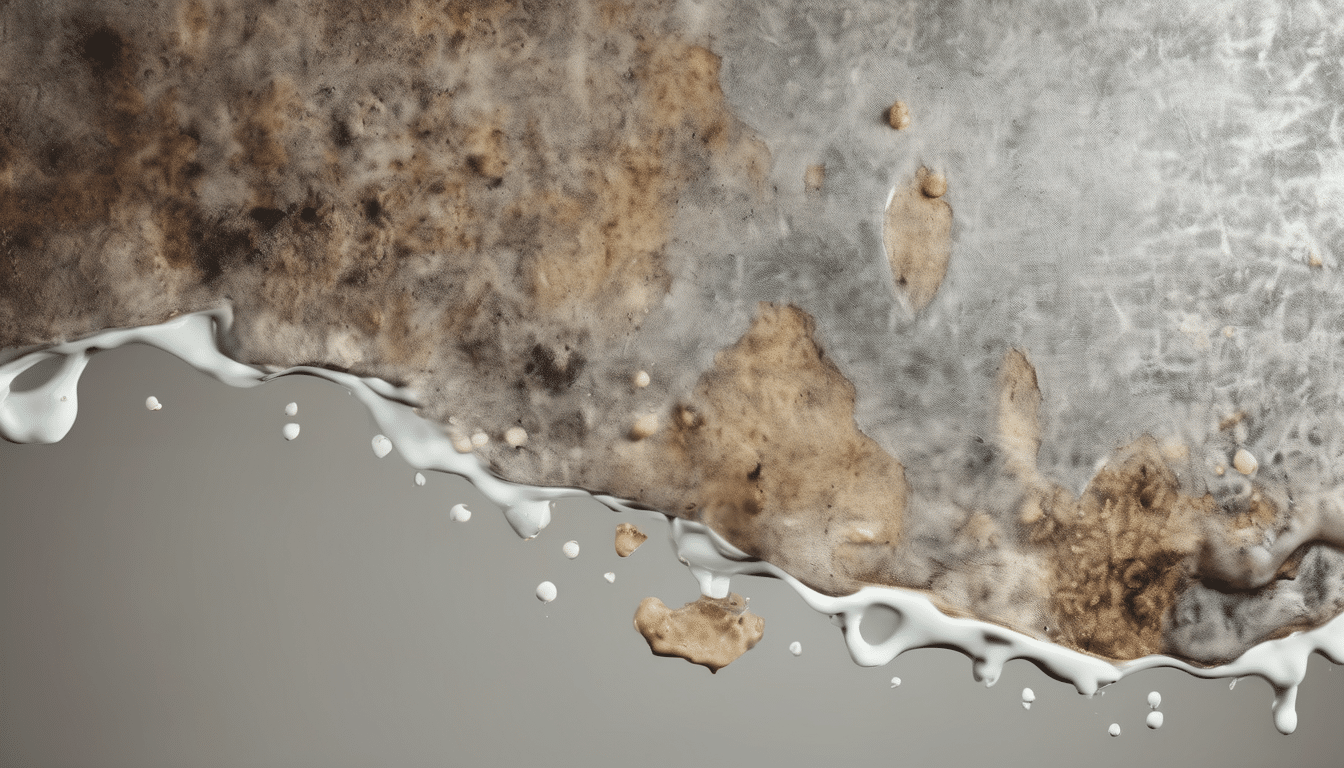
Understanding Mold After a Water Leak: What To Do First is essential. Mold after a water leak is not a slow process. In Dubai’s climate, where indoor humidity regularly climbs and air-conditioned buildings create condensation-prone surfaces, mold can begin colonising within 24 to 48 hours of a water event. What you do in those first hours — and days — determines whether you face a contained problem or a building-wide contamination.
Understanding mold after a water leak, what to do first, and how to evaluate your response options is essential knowledge for any homeowner or property manager in the UAE. This guide compares two primary response pathways — self-managed intervention and professional investigation — so you can make an informed decision based on the severity of your situation, not on panic or assumption. This relates directly to Mold After A Water Leak: What To Do First.
The comparison is not about which approach sounds better. It is about which approach addresses the root cause, prevents recurrence, and protects the health of the people living or working in the space. When considering Mold After A Water Leak: What To Do First, this becomes clear.
Mold After A Water Leak: What To Do First – Why Water Leaks Create Mold So Quickly in UAE Buildings
Dubai’s built environment creates near-ideal conditions for mold growth after any water intrusion event. Outdoor temperatures regularly exceed 40°C, while interiors are cooled to 20–24°C. This thermal contrast drives condensation into walls, ceilings, and around pipe chases — areas that rarely dry out without mechanical intervention. The importance of Mold After A Water Leak: What To Do First is evident here.
When a water leak occurs — whether from a burst pipe, a failed AC condensate drain, a roof membrane failure, or a bathroom plumbing fault — moisture penetrates porous building materials rapidly. Gypsum board, timber framing, acoustic insulation, and carpet underlays absorb water within minutes. Once moisture content in these materials exceeds approximately 20%, the biological conditions for mold germination are met. Understanding Mold After A Water Leak: What To Do First helps with this aspect.
From a building science perspective, the problem is not just surface wetness. It is the moisture stored within the material matrix — invisible to the eye, undetectable without instruments — that sustains mold growth long after the surface appears dry. This is why mold after a water leak, and what to do first, must always begin with understanding moisture depth, not just visible damage. Mold After A Water Leak: What To Do First factors into this consideration.
Mold After A Water Leak: What To Do First – Mold After a Water Leak — What to Do First: An Overview
Before comparing response strategies, there are non-negotiable immediate actions that apply regardless of which path you choose. These steps limit further damage and protect occupants during the critical window after a leak is discovered. This relates directly to Mold After A Water Leak: What To Do First.
Stop the Water Source
This seems obvious, but it is frequently overlooked in the initial panic. Mold after a water leak cannot be addressed if the leak continues. Identify and isolate the source — whether that means shutting off the building’s main water supply, isolating an AC unit, or contacting your building maintenance team immediately. When considering Mold After A Water Leak: What To Do First, this becomes clear.
Document the Damage
Photograph and video the affected areas before any drying or cleaning begins. Record dates and times. This documentation supports insurance claims, contractor briefings, and remediation planning. In our investigations, properties where early documentation was neglected often faced disputes about the original scope of damage. The importance of Mold After A Water Leak: What To Do First is evident here.
Improve Ventilation Carefully
Increase airflow to affected areas where possible, but avoid using standard fans that can spread mold spores if visible growth is already present. If in doubt, consult a professional before introducing airflow to a contaminated space. Understanding Mold After A Water Leak: What To Do First helps with this aspect.
Mold After A Water Leak: What To Do First – DIY Response: Pros, Cons, and When It Is Appropriate
The DIY approach to mold after a water leak — what to do first, what to clean, and how to dry — is appropriate only in a narrow set of circumstances. It is not a universal solution, despite what many online resources suggest. Mold After A Water Leak: What To Do First factors into this consideration.
When DIY Is Reasonable
- The affected area is less than 1 square metre of visible mold growth
- The water leak was clean water (not sewage, grey water, or AC condensate from a contaminated drain)
- The affected materials are non-porous and fully accessible (e.g., a tiled surface)
- No occupants have respiratory conditions, allergies, or compromised immunity
- The leak was discovered within 24 hours and immediate drying began
Pros of DIY Response
- Lower upfront cost — no service fees
- Immediate action possible without scheduling delays
- Suitable for genuinely minor, contained incidents
Cons of DIY Response
- No moisture measurement means no confirmation of drying completeness
- Surface cleaning does not address mold inside materials
- High risk of spreading spores to unaffected areas without proper containment
- No laboratory confirmation of mold species or mycotoxin risk
- False confidence — treated areas may appear clean while contamination continues behind walls
- No documentation suitable for insurance or future property transactions
In practice, DIY mold response after a water leak in Dubai frequently fails because occupants have no way to measure moisture in walls. A wall that looks and feels dry at the surface can carry moisture readings of 30–50% at depth — more than enough to sustain active mold colonies for months. This relates directly to Mold After A Water Leak: What To Do First.
Professional Response: Pros, Cons, and When It Is Necessary
A professional indoor environmental investigation for mold after a water leak takes a fundamentally different approach. The focus shifts from surface treatment to root-cause identification, moisture mapping, and scientifically verified remediation. When considering Mold After A Water Leak: What To Do First, this becomes clear.
When Professional Response Is Required
- Mold growth covers more than 1 square metre or affects multiple rooms
- The water source was sewage, grey water, or AC condensate
- Mold is suspected behind walls, under flooring, or within the HVAC system
- Occupants are reporting health symptoms — respiratory irritation, headaches, or persistent fatigue
- Previous mold cleaning has not resolved the problem
- The property is a rental, commercial space, or subject to insurance or regulatory requirements
Pros of Professional Response
- Moisture mapping with calibrated instruments confirms actual drying progress
- Air and surface sampling identifies species and contamination extent
- Containment and negative pressure protect unaffected areas during remediation
- Post-remediation verification provides documented clearance
- Root cause analysis prevents recurrence
- Laboratory findings support insurance documentation and health risk assessment
Cons of Professional Response
- Higher upfront cost compared to DIY
- Scheduling may introduce a short delay in response
- Findings may reveal more extensive damage than initially anticipated — which, while accurate, can be confronting
The third point deserves emphasis. A professional investigation that reveals more damage is not a failure — it is the system working correctly. Mold after a water leak, what to do first professionally, means finding the full truth of the problem, not just the visible portion. The importance of Mold After A Water Leak: What To Do First is evident here.
Side-by-Side Comparison: DIY vs Professional Mold Response
| Criteria | DIY Response | Professional Response |
|---|---|---|
| Moisture detection | Visual only — unreliable | Calibrated meters and thermal imaging |
| Mold identification | None — species unknown | Laboratory-confirmed species and count |
| Containment | Rarely applied | Engineered containment and negative pressure |
| hidden mold detection | Not possible without tools | Borescope, thermal imaging, air sampling |
| Health risk assessment | None | Species-specific and occupant-specific |
| Recurrence risk | High — root cause often unresolved | Low — root cause identified and corrected |
| Documentation | None | Full laboratory and clearance reporting |
| Cost | Low initially — potentially high long-term | Higher initially — cost-effective long-term |
Hidden Mold After a Water Leak — What to Do First When Nothing Is Visible
One of the most challenging scenarios we encounter in our investigations is mold after a water leak where no visible growth is present — yet occupants are experiencing symptoms and a musty odour persists. This situation demands a professional approach from the outset. Understanding Mold After A Water Leak: What To Do First helps with this aspect.
In Dubai’s construction typology — gypsum board on metal stud framing, with insulation behind — water from a pipe fault or AC condensate overflow travels vertically and horizontally through wall cavities before any surface staining appears. By the time the wallpaper bubbles or paint discolours, the mold colony behind the board may already span several square metres.
Borescope inspection, thermal imaging, and air sampling are the only reliable tools for detecting this class of contamination. Mold after a water leak, what to do first in a hidden contamination scenario, is to measure and sample before opening any wall — not after. Opening walls without containment in a mold-positive environment is one of the most common causes of cross-contamination we document in secondary investigations.
Mold After a Water Leak — What to Do First for Health-Sensitive Occupants
For families with young children, elderly residents, or individuals with asthma, allergies, or compromised immunity, the stakes around mold after a water leak are meaningfully higher. Certain mold species — including Stachybotrys chartarum, Chaetomium, and elevated concentrations of Aspergillus/Penicillium — produce mycotoxins that may cause adverse health effects beyond standard mold exposure.
In these cases, the first action should be temporary relocation of sensitive occupants from the affected space until a professional assessment has been completed. This is not an overreaction — it is a calibrated precaution based on the biological reality of water-damaged buildings. Any occupant reporting persistent respiratory symptoms, skin irritation, or unexplained fatigue following a water leak should also consult a medical professional in parallel with the environmental investigation.
Cost Comparison in the UAE Context
Understanding the financial dimension of mold after a water leak — what to do first in terms of investment — requires thinking across a longer time horizon than the initial incident.
A basic DIY approach may cost AED 50–200 in cleaning products and equipment. However, if the root cause is not resolved and mold recurs — as it frequently does when moisture mapping is absent — the eventual professional remediation cost is significantly higher than it would have been at first response. Remediation of a contained, early-stage water leak typically ranges from AED 1,500 to AED 5,000. Remediation of a building-wide contamination following repeated failed DIY attempts can reach AED 15,000 to AED 50,000 or more, depending on material replacement scope.
Professional mold inspection and assessment in Dubai typically costs between AED 800 and AED 2,500 depending on property size and investigation scope. This investment, made at the point of the water leak event, frequently prevents the far greater costs of advanced remediation, material replacement, and health-related disruption.
Verdict and Recommendation
Mold after a water leak — what to do first — is ultimately a question of scope, risk, and time horizon. The comparison above leads to a clear, evidence-based conclusion.
For minor incidents on non-porous surfaces, with clean water, detected within 24 hours, and affecting no vulnerable occupants: A careful, informed DIY response is acceptable as a first measure — provided you monitor closely for signs of recurrence over the following 2–4 weeks.
For any other scenario — and particularly for Dubai’s building typology where moisture migrates invisibly through wall cavities: A professional investigation is the only reliable approach. Mold after a water leak, what to do first in a UAE context, is to measure before you assume, and to verify before you conclude the problem is resolved.
The recurring theme in our case histories is not that homeowners failed to act — it is that they acted on what they could see, rather than on what the building was hiding. Surface cleanliness is not the same as environmental safety. A professional investigation, with laboratory support and post-remediation verification, is the only method that provides meaningful confidence that mold after a water leak has been genuinely resolved — not merely concealed.
If you have experienced a water leak in your property in Dubai, Abu Dhabi, Sharjah, or elsewhere in the UAE, the first step is always the same: stop the source, document the damage, and arrange a professional moisture assessment before making any assumptions about the extent of the problem. Understanding Mold After A Water Leak: What To Do First is key to success in this area.